The hour on the ground
60 minutes, 5 stages, 1 plan
60
minutes on site
5
stages
1
plan
Stage 1 · At the gate
0–10 min
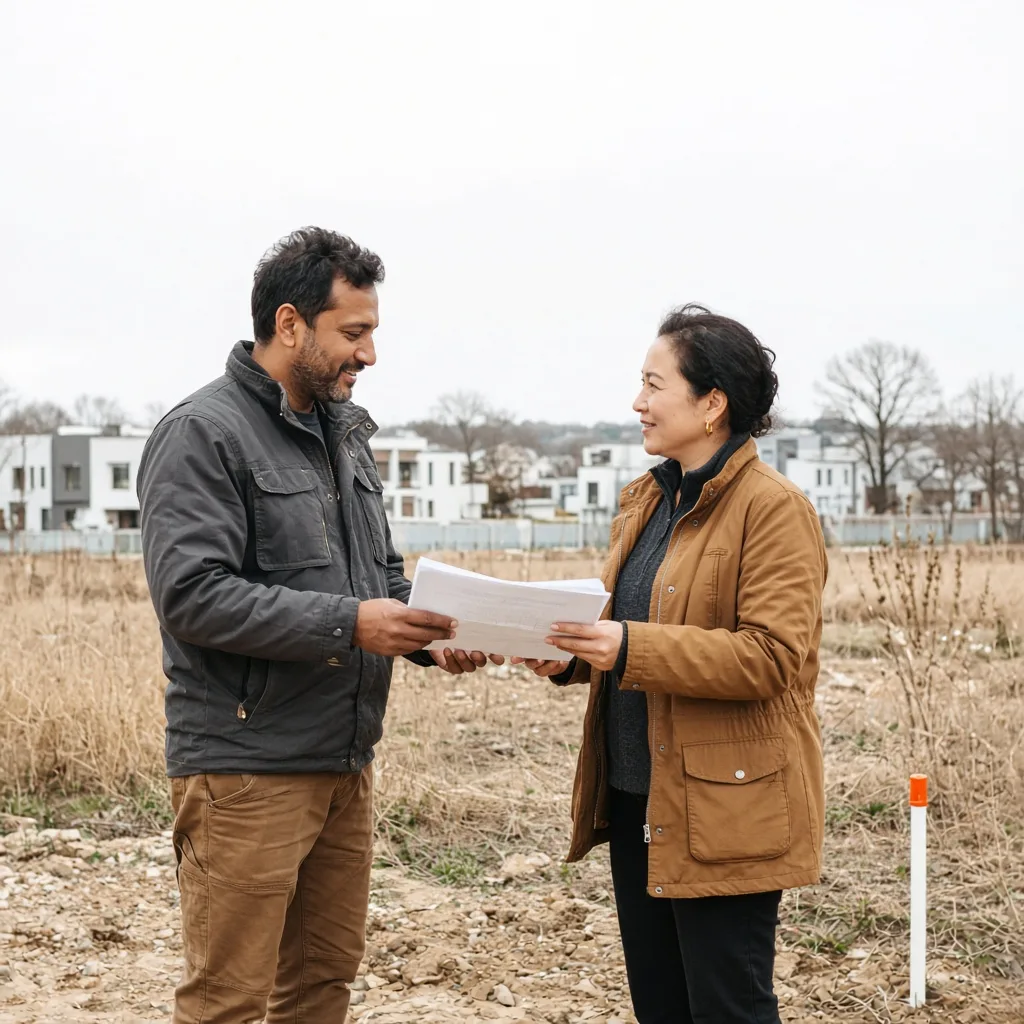
The first ten minutes stay at the gate. You and the surveyor read the deeds and any old plan together, using the records and title research Hana Sørli prepared before anyone travelled. An old dimension, a neighbour’s fence or a pin you have never seen gets named here, before the walk. If you have a copy, this is the moment it earns its place. If you do not, say so; the hour still starts from what Hana found and from what you know of the plot. Nothing is shot yet. The point of these ten minutes is to agree which line the visit is about, so the next stretch of time is spent looking for pins rather than guessing which boundary you meant.
Stage 2 · The walk
10–25 min
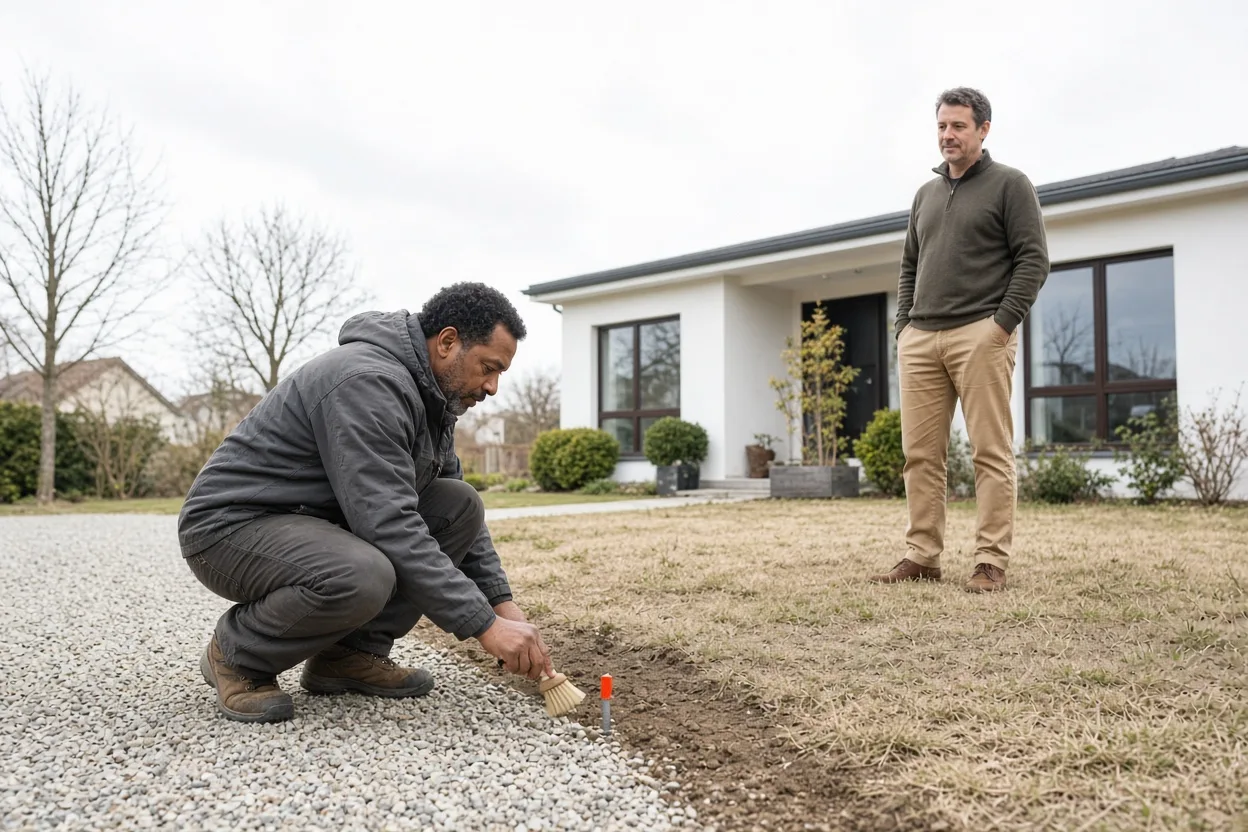
From ten minutes to twenty-five you walk the line with the owner. Tomasz Reyes leads that walk. The job is to look for the pins already in the ground: in turf, at a hedge corner, beside a fence, sometimes at the edge of a drive. You set the pace. Corners you care about, a stretch a neighbour has recently fenced, a slope where a house might sit, all belong on this loop. Felix Marlowe walks with the stakes and string but does not mark yet, because marking comes after the pins and corners have been seen. Most of the hour is this kind of walking. The instrument stays packed until the line is clear to the people who will live with it.
Stage 3 · The tripod
25–40 min
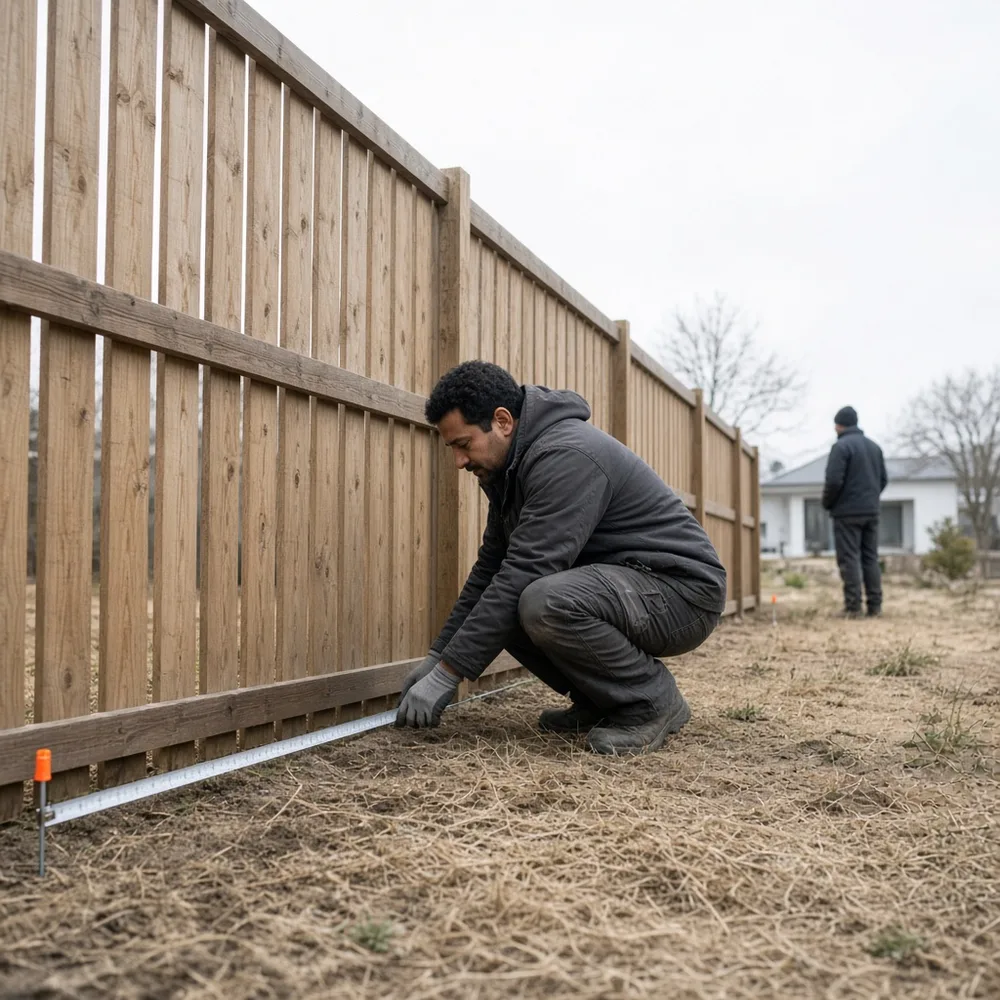
Minutes twenty-five to forty are the instrument’s turn. The tripod goes down and the total station shoots the pins and the corners agreed on the walk. This is one concentrated spell, not a morning of measuring for its own sake. Lukas Brandt‘s GNSS work is a different booking, used for slopes and larger plots; a standard hour on a house plot or garden line stays with the total station. You can stand where you can see the shots without crossing the line of sight. What is shot is what was found and what you pointed out. If a pin is missing and an existing record shows where it should be, that fact is written down for a later pin reset rather than invented on the spot.
Stage 4 · The marks
40–50 min
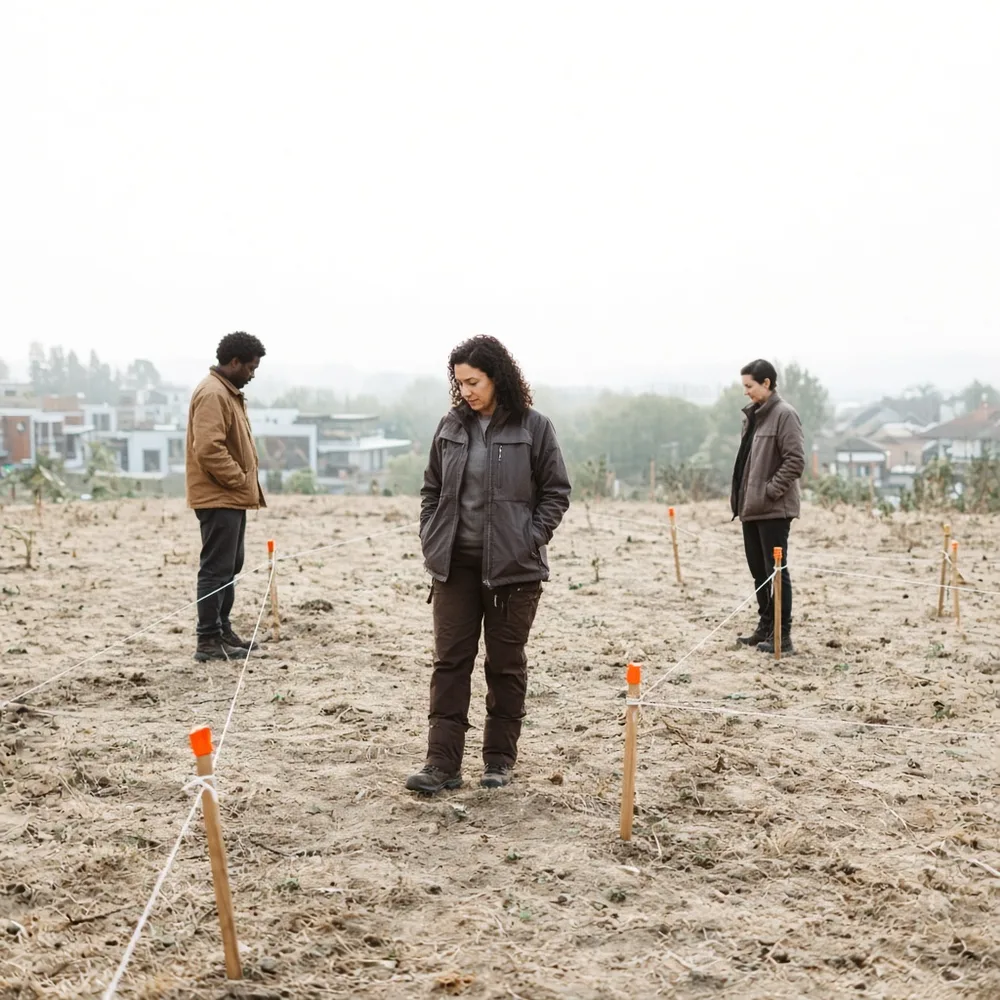
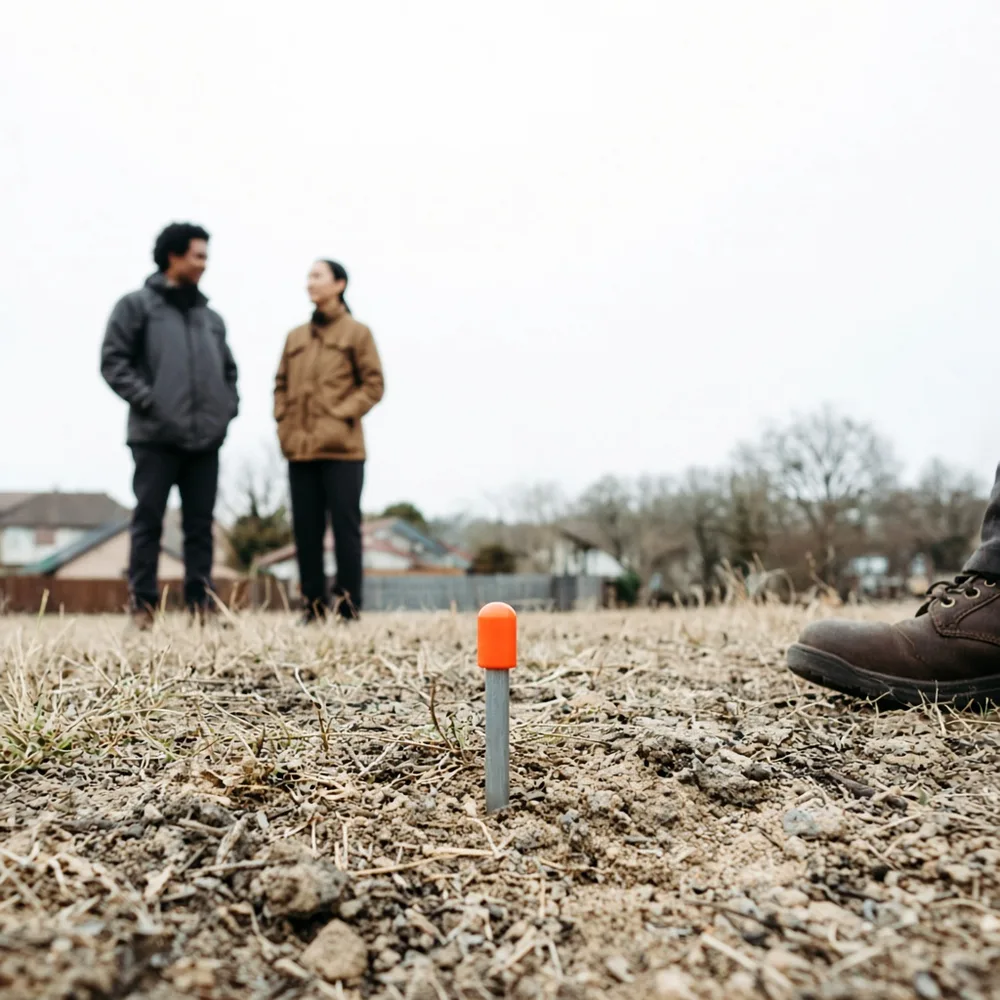
From forty to fifty minutes the line is marked with stakes, string and caps you can see. Felix Marlowe sets them. The marks show what was found: pins that were already there, corners that were shot, and any gap where a pin was not in the ground. They are there so you, and a builder if you have one, can look along the same line after the team has gone. String on pale soil and caps on the pins are the visible record of the hour. They are not the measured plan. They are the reason the plan, when it arrives, should match something you have already stood next to and recognised.
Stage 5 · The sketch
50–60 min
The last ten minutes are at the field sketch. It is folded out and you agree what, if anything, comes next. That may be nothing more than the written note of the hour. It may be a residential boundary survey, a pin reset, setting-out for a builder, or a topographic survey. The sketch and the note are part of the $180 visit. No further work is booked on the plot unless you ask for it. The five stages are then finished: read, walk, shoot, mark, agree. You keep the sense of the line. The office keeps the measurements that Amara Okonjo will draw if a plan is what you decided you need.
Before you come
What to have ready at the gate
Have the address of the plot, any deeds, and any old plan if you have one. Two dates that suit you are enough when you first write. You do not need to prepare a speech; the first ten minutes are for reading those papers together. If a pin might sit under a driveway, a hedge or turf, say so, and make sure that edge can be reached during the walk. Wear what you would wear to walk your own boundary. The visit starts between 7:30 and 15:00, Monday to Saturday. Priya Nandakumar confirms the start when she replies. Office hours for that call or email are Monday to Friday, 8:30–17:30, on +1 555 0142 090 or visits@sokuten.example.
Afterwards
After the visit
You leave with three things from the day itself only if they were part of the hour: the field sketch, the written note, and the marks on the ground. Stakes, string and caps stay so the line remains visible. The measured plan is the later piece. It follows within 10 working days as a PDF and one paper copy. Ines Calloway signs a boundary plan. Amara Okonjo draws it. An extra paper copy, folded A2 and posted, is $25. If you book the survey within 60 days of the visit, the $180 fee is credited in full against that survey. The invoice for the plan is sent after the plan, and it is due in 14 days.
Weather
If it rains
The hour depends on seeing the line, the pins and the marks. If rain hides the ground or makes the walk unsafe, the visit moves rather than forcing a shot you cannot check with your own eyes. Email visits@sokuten.example or call +1 555 0142 090 and Priya Nandakumar will offer another start between 7:30 and 15:00, Monday to Saturday. The five stages do not change on the new day. Reading at the gate still comes first. The tripod still comes out only after the walk. Sundays and public holidays stay closed. The fee for the hour remains $180, credited in full if a survey is booked within 60 days.