Corinne Abara asked for an hour on the ground because a neighbour’s new fence had gone up along the garden and she was no longer sure the posts followed the boundary. She did not want a dispute prepared. She wanted the pins, if they were still there, found and the line marked where she could see it. Sokuten Survey booked the visit at her plot, within the ordinary round of house plots and garden boundaries the firm takes from its office at 14 Ferrow Lane, Brookmere.
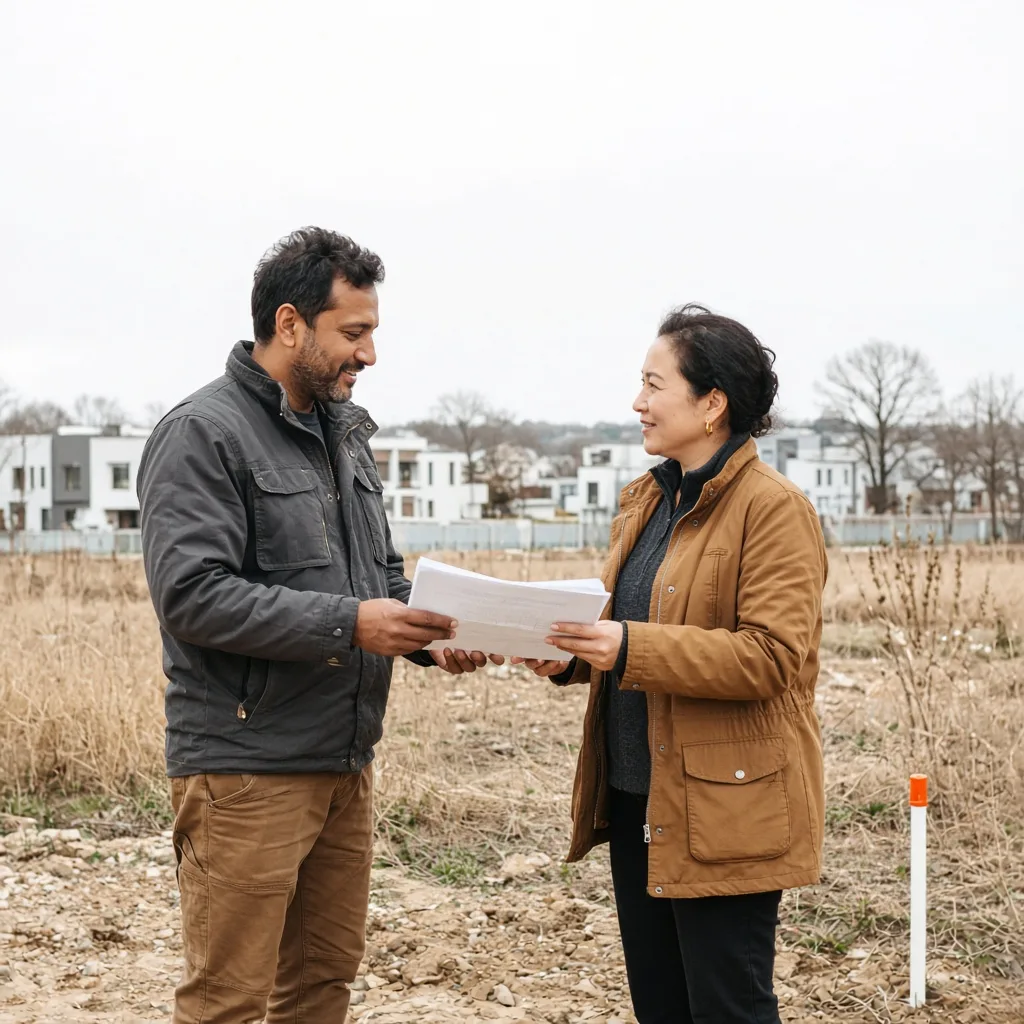
Before anyone travelled, Hana Sørli did the records and title research that precedes every visit. The deeds and an older plan were the papers that mattered. They described a line the new fence might or might not have followed. That reading is the reason the first ten minutes of the hour happen at the gate, with the owner, rather than at a desk after the fact. Corinne brought what she had. The rest was already in the file.
From ten minutes to twenty-five they walked the line. The new fence was obvious. The pins were not. Garden turf had closed over the two old marks, and nothing in the fence itself announced where the recorded boundary sat. The walk was slow on purpose. Most of an hour at Sokuten Survey is spent this way. Tomasz Reyes, the field lead, looks for pins already in the ground before the total station leaves its case. Felix Marlowe walks with stakes, string and pin caps and does not set them until the shots are done.
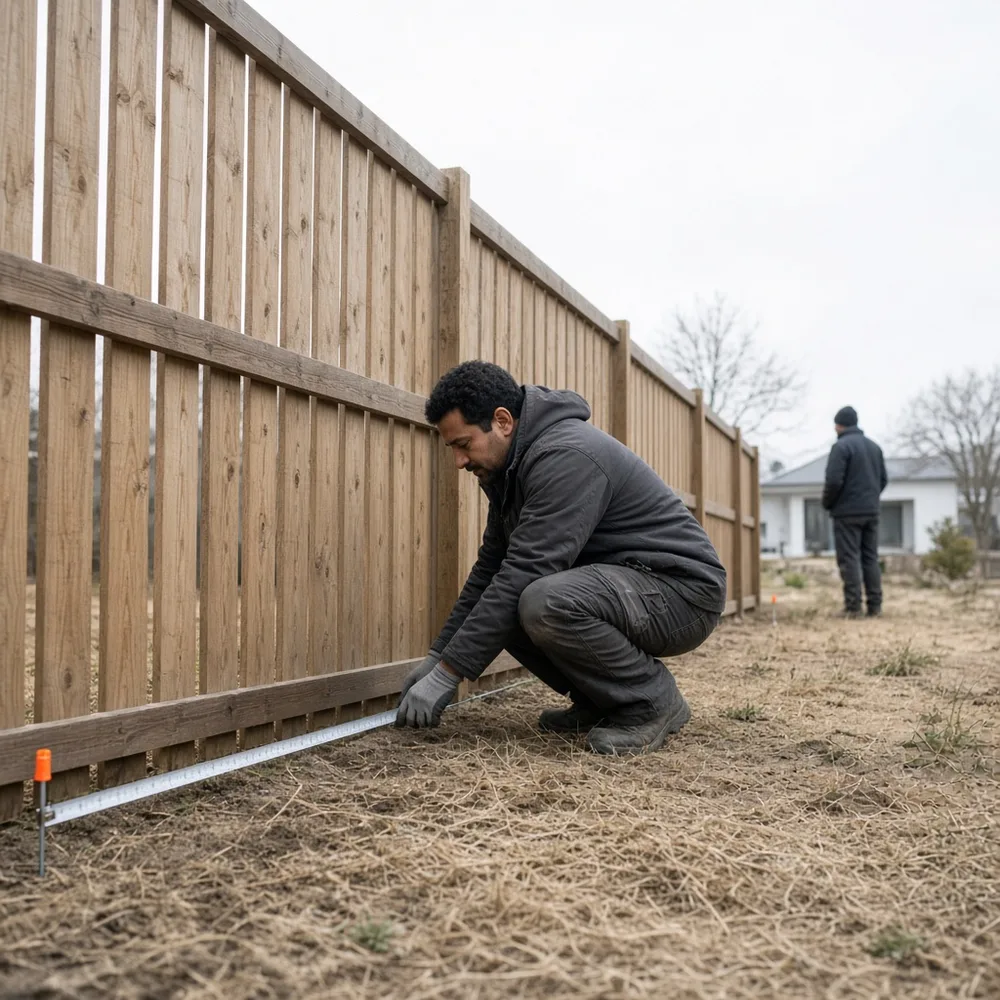
The two pins were found under the turf. Once they were clear, the tripod went down. The stage between twenty-five and forty minutes is the only one given to the instrument: shoot the pins and the corners that the walk has already agreed. With those shots, the relationship to the new fence could be stated plainly. The fence sat 40 cm inside the line. That was the measurement of this visit. It was not a guess read off the posts, and it was not a figure carried in from another job.
Between forty and fifty minutes the found pins and the line were marked with stakes, string and caps. The marks were there so Corinne could stand at the garden and see the same thing the note would describe. A fence can look decisive simply because it is new. Caps and string are quieter, and they are easier to check against the pins than a memory of where a post seemed to be. The neighbour was not booked as a client. The hour had been booked with the owner who asked for it. What the marks showed was the measured line, not a settlement between the two households.
The last ten minutes were the field sketch, folded out on site. This is where the visit either stops or turns into a survey. Corinne and the surveyor agreed that a signed boundary plan should follow. The sketch and the written note were part of the $180 visit. The residential boundary survey was the next piece of work: a plot within 1,000 m², pins found or reset, plan drawn by Amara Okonjo and signed by Ines Calloway, the licensed land surveyor who signs every boundary plan the firm issues. Because the survey was booked from that visit, the $180 fee was credited in full, as it is whenever a survey is booked within 60 days.
The measured plan followed within 10 working days, as a PDF and one paper copy. It recorded the pins found under the turf and the fence 40 cm inside the line. It did not instruct the neighbour to move anything. Sokuten Survey does not take court disputes, and a plan is not one. Corinne had the paper she could show, the marks she could see, and a number that came from the pins rather than from the fence. If a further folded A2 copy had been needed, it would have been $25 posted. She had the copy the survey includes.
The useful order was the ordinary one. Read the deeds at the gate. Walk until the old pins show themselves. Shoot only then. Mark what was found. Agree the next step while the sketch is still in hand. The fence had looked like the boundary because it was built. The pins had been there longer, 40 cm away, under the turf.