
Conditions we treat
what we treat
People come for neck and shoulder pain from the desk, a back that stiffens when they sit, a wrist or knee that no longer trusts load, or rehabilitation after surgery. The first visit decides the plan.
WHERE
conditions
IT HURTS
Neck and shoulder
Neck and shoulder trouble in our rooms is often a desk pattern. The head sits forward, the shoulders stay slightly lifted, and by afternoon the side of the neck aches. Reaching for a bag, or turning to look behind you, feels narrower than it used to.
Clara Mendes treats neck and shoulder. On the first visit we measure how you move, watch how you describe a day at the screen, and start hands-on treatment in the same hour. The plan may include a short set of movements and, if the desk is part of the cause, a workstation review. Priya Nair sees shoulders after surgery. Say so when you book if an operation came first. Lena, a software tester of 34, returned to full days at her desk after six sessions over eight weeks plus a workstation review. That course was hers, not a timetable we hand to everyone.
Lower back
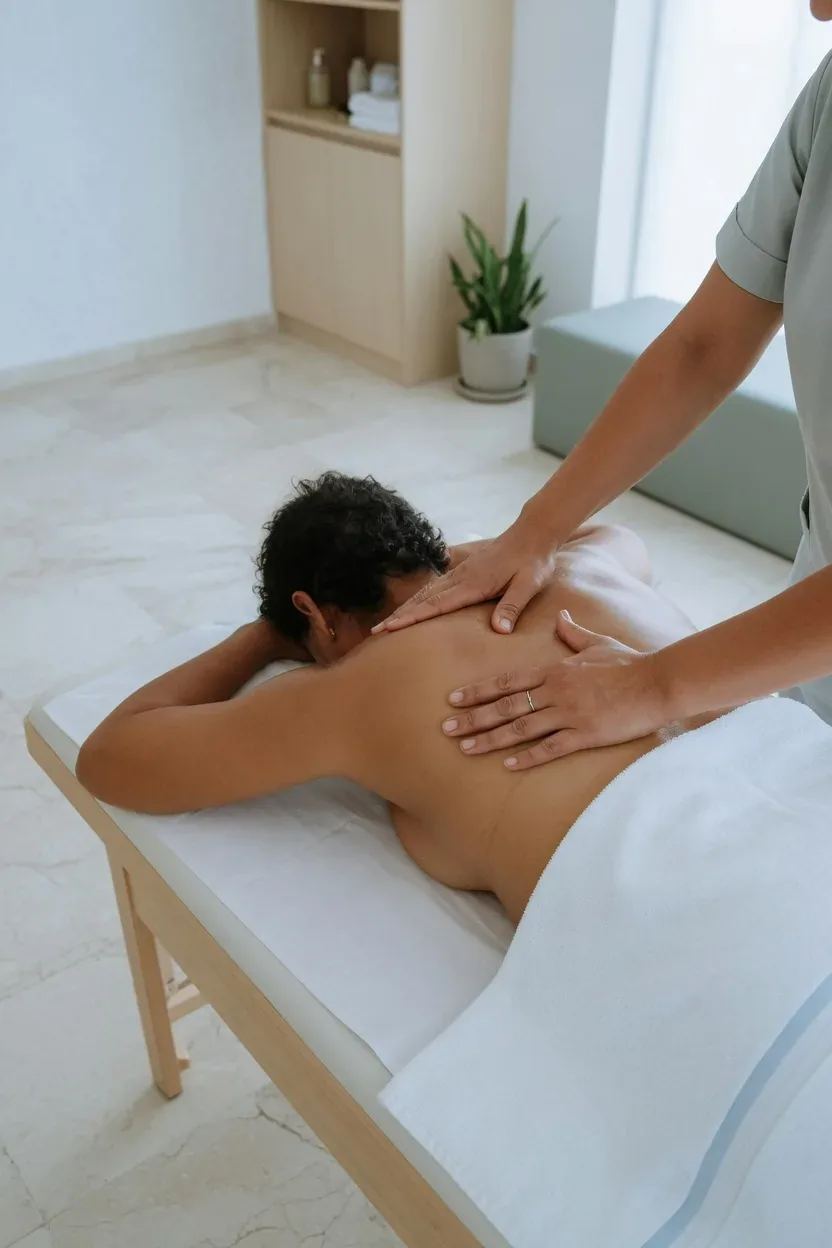
Lower-back stiffness here often builds from sitting, eases when you walk, and returns when the meetings stack up. It is not always a dramatic injury. The back has stopped sharing work with the hips, and the chair has become the place you endure.
Amara Osei treats back pain and desk-related pain. We look at how you hinge, how long you sit before you shift, and whether the hips do their share. Treatment may be hands-on work, a different way of standing up, and practice in the studio or in Desk Reset. Noor, 41, came with stiffness from sitting, joined Desk Reset for eight weeks, and had three follow-ups with Amara. Your spacing is set after we test you, then reviewed at week six.
Wrist and elbow
Wrist and elbow pain here often comes from hours of keyboard and mouse: a forearm that stays tight, a wrist that aches by evening, an elbow that complains when you lift a kettle. The arm is doing a small job at its end point, over and over.
Jonah Reed treats hand, wrist, and elbow. We test grip and wrist range, and we look at how the arm is supported, before we treat. Hands-on work is paired with a few changes you can keep: where the mouse sits, how hard you grip, when you stop and open the hand. A workstation review, at your office or by video, lasts 45 minutes and costs $80. You do not need a referral to start.
Hip and knee
Hip and knee pain may follow an operation, or it may be a joint that avoids load while you sit and then overdoes it when you walk. Stairs, low chairs, and the first minutes after standing are the complaints we hear most.
Tomasz Wolski leads post-surgery rehabilitation for knee and hip. If you have had a replacement or a ligament repair, bring the surgeon’s protocol. We work inside it. If there has been no operation, we still test how you take weight before we add strength. Marcus, 58, walks to work again and takes the stairs at the station after twelve rehab sessions over fourteen weeks with Tomasz. His course is his own. Yours is written from your tests and your protocol.
After surgery
A knee, hip, or shoulder replacement, or a ligament repair, needs a period of protection before ordinary strength work is useful. We do not improvise around your surgeon’s instructions. Tomasz Wolski sees knee and hip rehabilitation. Priya Nair sees shoulders after surgery.
The post-surgery session is 60 minutes and costs $90. Early visits focus on what the protocol allows: swelling, safe range, and the way you walk or reach. Later visits restore strength and return you to stairs, desks, and ordinary walking. Protect, Restore, and Return are described on our after-surgery page. Tell Elena Duarte the operation and the date so the right therapist is in the room.
Posture headaches
Some headaches we see start at the desk: pressure by mid-afternoon, tightness at the base of the skull, and shoulders that have crept up while you concentrate. They often travel with neck stiffness rather than arriving on their own.
Clara Mendes assesses these patterns with the neck and shoulder work she leads. If the history points more to a sitting back, Amara Osei may share the plan. We do not treat every headache. On the first visit we ask what brings it on and how the neck moves. If we find a movement problem, we treat that and send a written plan the same day. If it is not our work, we say so. Follow-ups, when needed, fall every one to two weeks, with a review at week six.
Who sees which problem?
Neck and shoulder: Clara Mendes, or Priya Nair when the shoulder follows surgery. Lower back and desk-related pain: Amara Osei. Hand, wrist, and elbow: Jonah Reed. Hip and knee, including replacement and ligament repair: Tomasz Wolski. Posture headaches that sit with the neck: Clara Mendes. Desk Reset classes: Sofia Lindgren.
Usual spacing is not a package. The first visit is 60 minutes. Follow-ups are every one to two weeks with a home programme, and we review at week six. Where a story names a number of sessions, that number belongs to that person. We recommend your visits only after we have tested how you move.
Do I need a referral?
No. Book a first visit online or by phone on +1 555 0142 300 without a referral. That visit is 60 minutes and costs $95, and it includes assessment and the first treatment. Elena Duarte can prepare a receipt with treatment codes for your insurer. Whether a particular insurer pays that receipt is a question for the insurer.
If a surgeon has given you a protocol, bring it and we will follow it. If you are unsure which therapist to ask for, tell Elena whether this is a desk problem or a recovery after surgery, and which part hurts. She will place you with the person who leads that work.