Eye Exams
one hour, five stages
A comprehensive eye exam at Hitomi Vision is sixty minutes and $120. It is one sitting in one room: five stages, and time at the end to go through the plan.
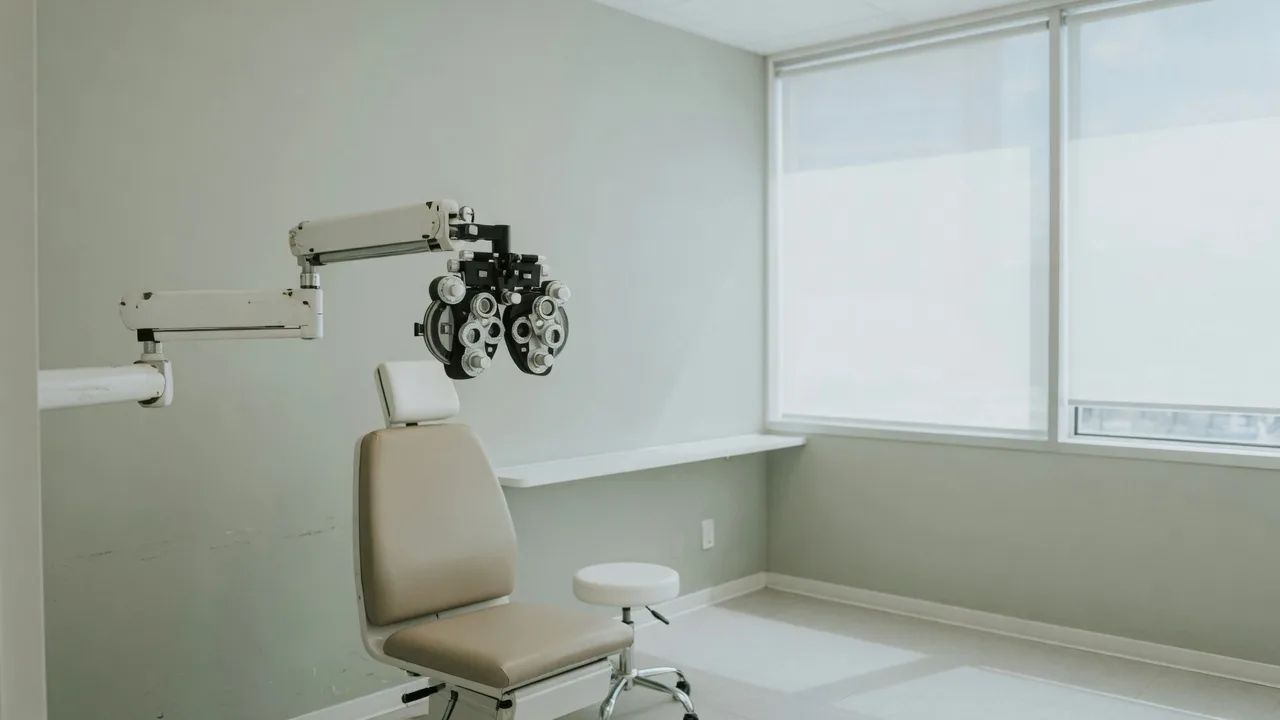
The sixty-minute exam
five stages, one hour
History and symptoms, ten minutes. We ask what fails and when: blur after screens, a headache by four o’clock, a burn that arrives late in the day, a child who skips lines. We note the glasses or contact lenses you already wear, and the work or the classroom those eyes have to serve.
Refraction, fifteen minutes. You look through the phoropter while we find the lens that clears the chart. This stage answers how much lens the eye wants at distance and at near. For a child who is not a confident reader, picture targets and games carry the same question.
Binocular vision and working distance, ten minutes. We look at how the two eyes work as a pair, and we measure the distance you actually use. A monitor and a road sign are different tasks.
Eye health and tear film imaging, ten minutes. The slit lamp, and a retinal image when the plan needs one, show the surface, the lids, and the structures we are there to see. A short tear break-up time is written down.
Explanation and plan, fifteen minutes. We say what we found, what we suggest, and what it will cost. The hour is $120.
What we measure
lens and tissue
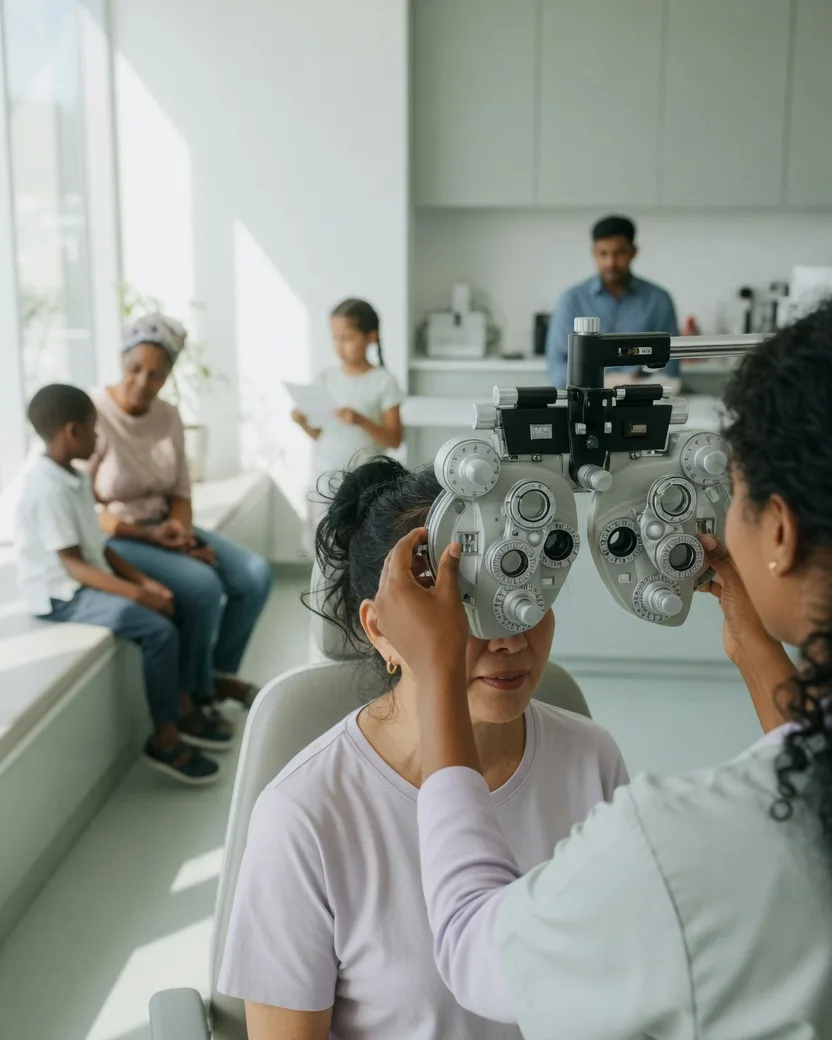
Refraction:
the lens that clears
the chart.
Refraction is the lens. It tells us what clears the chart in the chair. It does not, by itself, tell us whether you can hold that focus at a desk, or whether a child’s two eyes point at the same place on the board. Binocular testing sits beside the refraction for that reason, and it is part of the same hour, not an extra product.
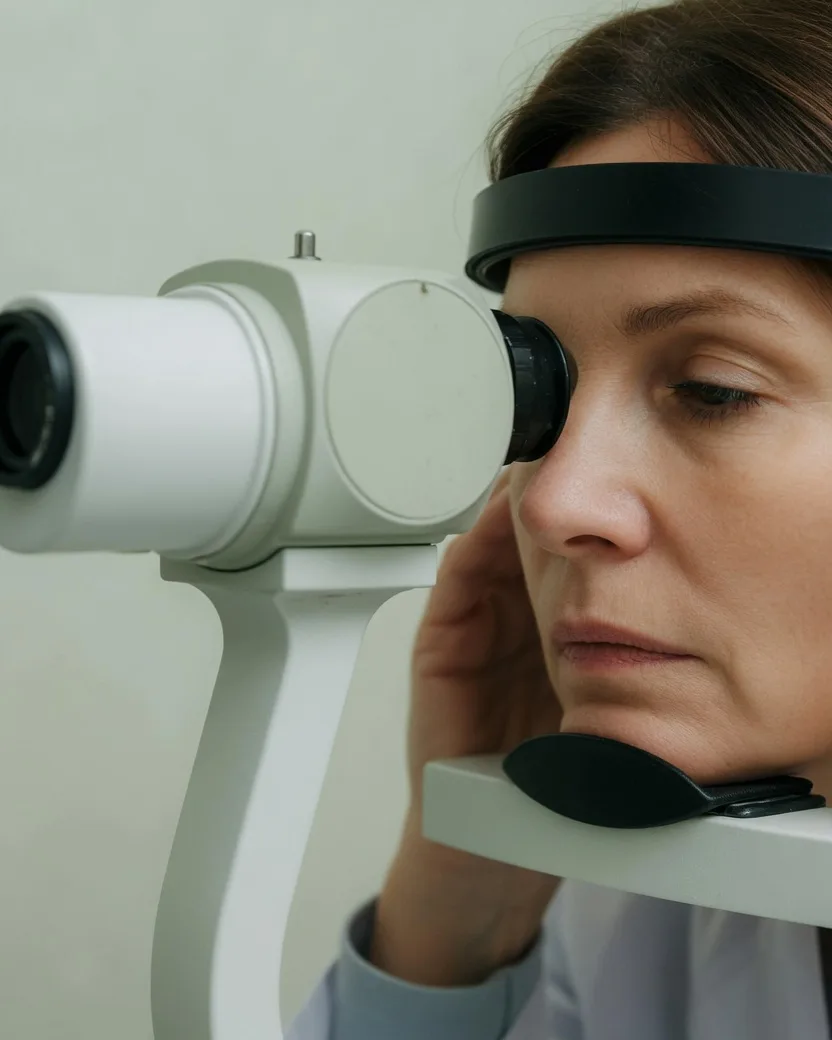
The slit lamp:
the surface, the lids,
the tear film.
Eye health is the tissue. At the slit lamp we look at the cornea, the tear film, and the lids. When imaging belongs in the visit, Samuel Achebe, the clinical technician, runs the retinal camera. The picture is a record for the optometrist to read with you in the explanation. It is described in ordinary words.
The two photographs on this page are those stages: refraction at the phoropter, and the slit lamp with the chin on the rest. They are the middle of the hour. The history comes before them, and the plan comes after. Nothing in the hour is a step you have to interpret alone.
What to bring
before you come
Bring the glasses you wear now, and any contact lenses, with their case and the name of the solution or the lens. If you use drops, bring the names. An old prescription is useful as history, and we will measure again rather than copy it. Children do not need to prepare a reading test at home. A note from school about the board or about skipped lines is worth handing to Dr. Tomas Reyes if you have one.
Come as you are. The rooms are bright, and the visit is one appointment in one exam room. If the question is only the desk, only dryness, or only a child between five and fifteen, say so when you book. Those visits have their own length and their own fee, and they are the better use of the chair when the comprehensive hour is more than you need.
If you already know you want frames, you can see Ines Kowalczyk after the explanation, or on another day. Lenses are quoted once the prescription and the working distance are known.
The fee
one fee, in us dollars
The comprehensive eye exam is sixty minutes and $120. The fee covers the five stages, including the explanation. It does not include frames or lenses. Frames start at $160. Lenses are quoted after the exam. The same prices are published in every language, in US dollars.
A narrower question has a narrower visit. The screen-work eye assessment is forty-five minutes and $85. The dry eye evaluation is forty minutes and $90. The children’s vision exam, ages five to fifteen, is fifty minutes and $95. A contact lens fitting, including two follow-ups, is $110. A follow-up check within six months of an exam here is twenty minutes and $40.
Book on +1 555 0142 208 or at hello@hitomivision.example. Monday to Friday 10:00–19:00, Saturday 9:00–16:00. Sunday and public holidays the clinic is closed. Ask for Dr. Elena Marsh if you want the director for an adult binocular case.
Mon–Fri 10:00–19:00 · Sat 9:00–16:00 · Sun and public holidays closed