About
the clinic since 2011
Hitomi Vision is an independent optometry clinic on the second floor of 14 Linden Row, Northgate. We opened in 2011 and we still see office workers and school-age children in three exam rooms and a small frame room.
The clinic in 2011
since 2011
Hitomi Vision opened in 2011 on the second floor of 14 Linden Row, Northgate. A lift comes up from the street door. There were three exam rooms and a small frame room then, and those are still the rooms we work in. The waiting area was a pale sofa, a side table, and a plant. People who have been coming for years recognise that corner before they recognise any piece of equipment.
The clinic was opened for two groups we still book every week: adults who spend the day at a screen, and children of school age. A visit is an appointment with a named clinician. The comprehensive exam is sixty minutes. When the question is narrower, the book has a shorter visit, and every fee is published in US dollars before you arrive.
The front window on Linden Row shows plants and a pale frame display. We have kept the address and stayed independent. Current instruments matter, and so does this: the person who measured you is in the building when the plan is explained. You leave with the findings said aloud, and with the fee already on the list.
Office workers and school desks
adults and children
Office workers usually arrive with a clock time. Tired eyes by four o’clock, blur that grows after a long stretch at a monitor, a dry burning feeling, and a neck that has been helping the eyes cope. Those are the symptoms we take in the first ten minutes of a history. Screen distance, a near add, and the way the two eyes hold a target are things we can measure. Dr. Jonah Whitfield leads the screen and workplace work. Dr. Elena Marsh leads adult binocular vision.
School-age children arrive with a different list, and with a parent. A book held close, lines skipped, reading avoided, eyes rubbed, the board soft from the back of the room. Ages five to fifteen are seen by Dr. Tomas Reyes. The test uses games and picture targets when a letter chart is not fair. Myopia, when we find it, is reviewed every six months.
We keep both groups in one clinic because the sequence is the same. History, refraction, binocular vision, eye health, then a plan. The rooms are shared. The questions are not blurred together.
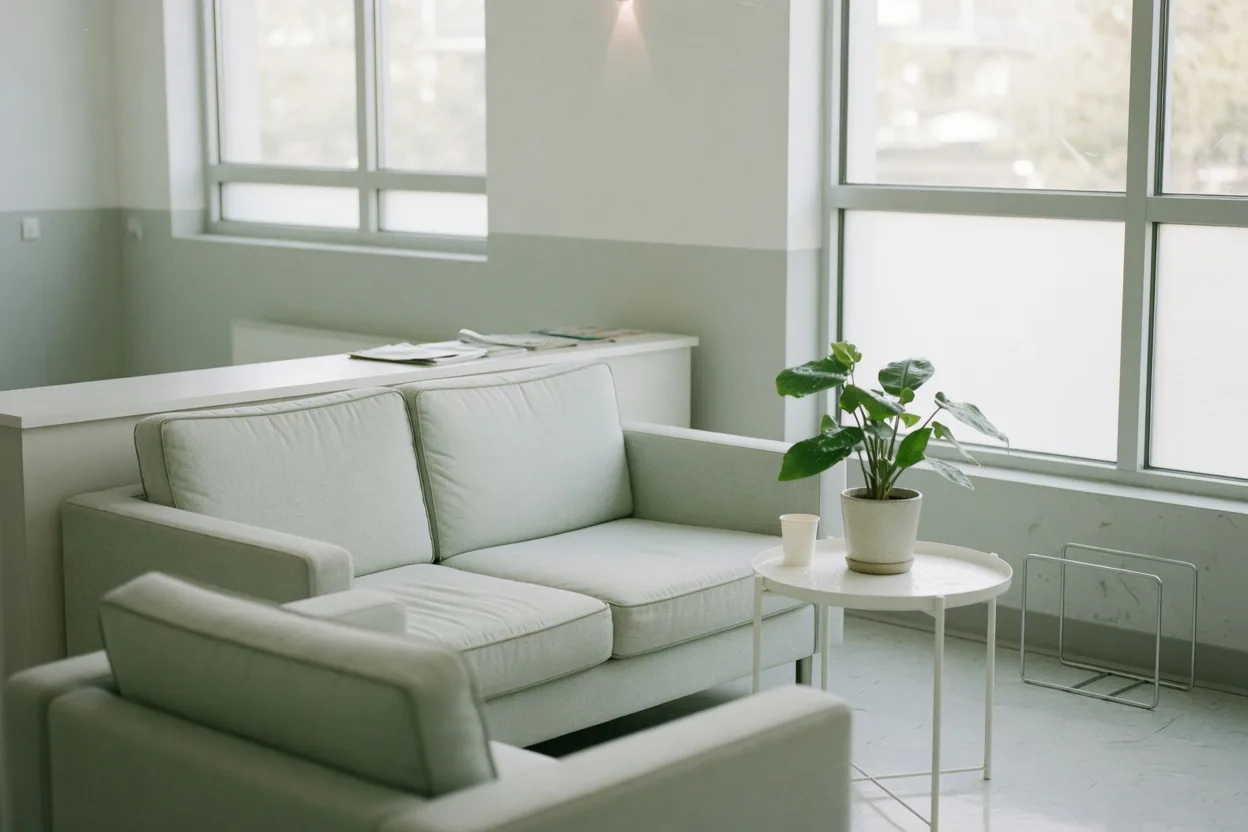
2011
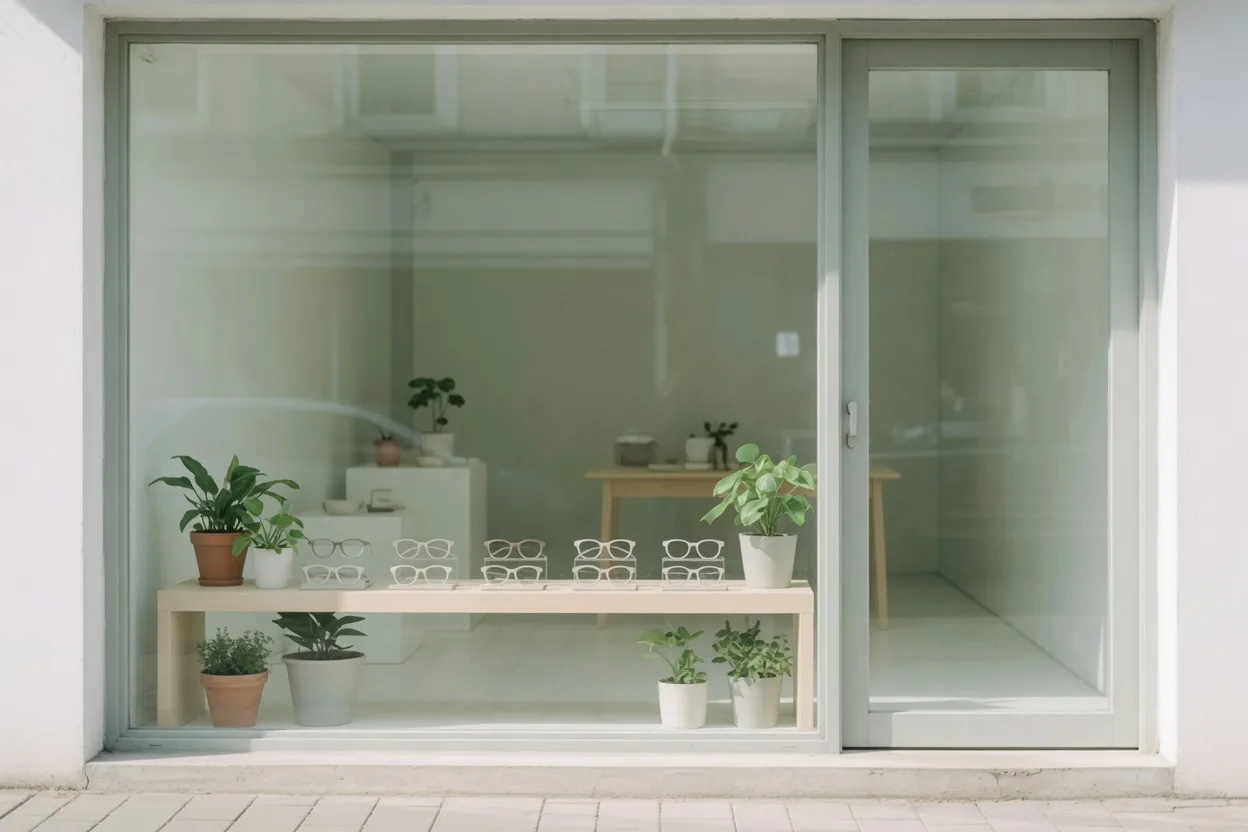
today
2011 and today
then and now
Two photographs sit with this account of the building. One is the waiting room: pale sofa, side table, plant, empty of people, the light of the row coming in. Its caption is 2011. The other is the front window as you meet it from the street now: plants, a pale frame display, no large sign. Its caption is today.
We keep the pair because the clinic is easier to read when the address has stayed put. Second floor, lift from the street door, three exam rooms, one frame room. If you are coming for the first time, the window is what you look for on Linden Row. At the top of the lift, Hana Lindgren meets you at the desk. The exam rooms are just beyond that waiting room.
The photographs are of the rooms, not of a renovation story. We still answer the phone on +1 555 0142 208 and email at hello@hitomivision.example.
Dr. Elena Marsh
founder and director
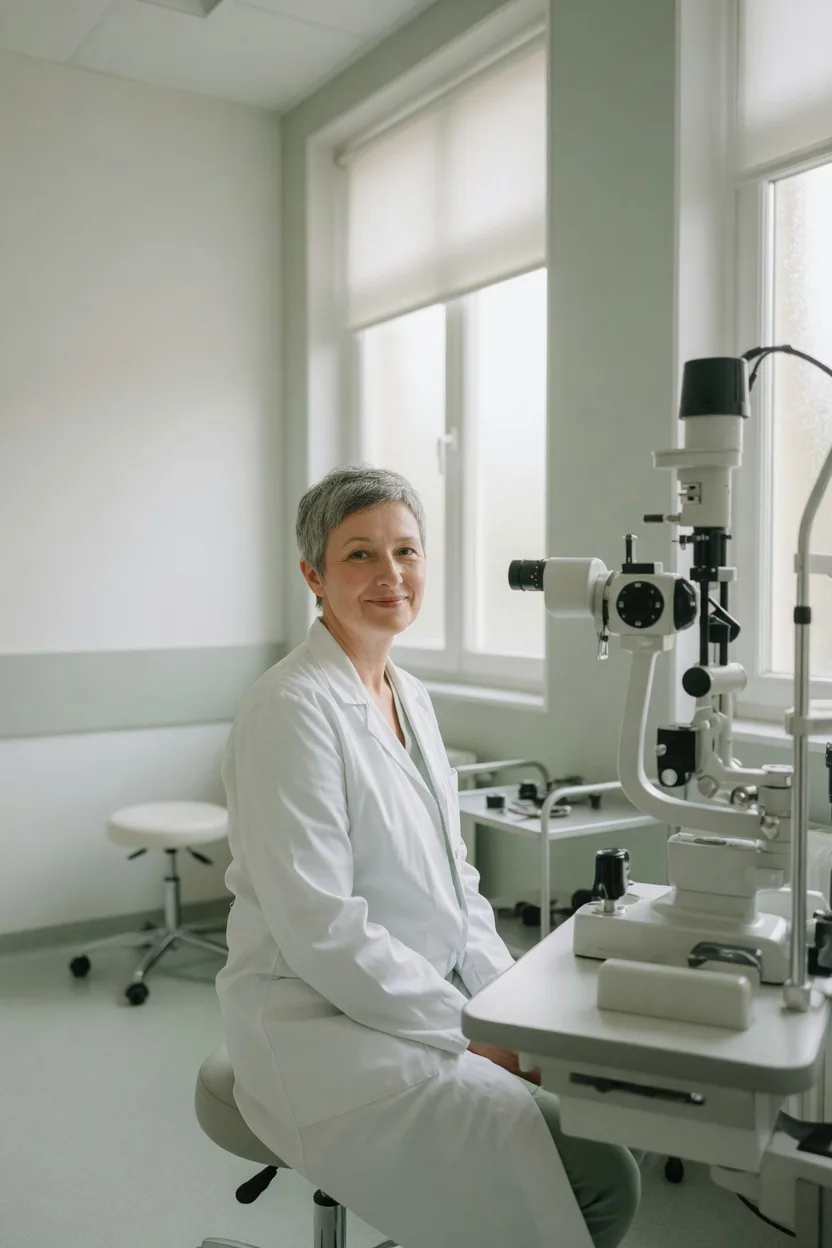
At the slit lamp,
then the explanation.
Dr. Elena Marsh, OD, is founder and director. Her clinical work is with adults, and with binocular vision: how the two eyes aim, focus, and stay comfortable at the distance the work actually uses. She is often at the slit lamp, and she still expects the last part of a comprehensive exam to be a conversation. Fifteen minutes of the sixty are kept for the explanation and the plan.
She does not see every person who books. Dr. Tomas Reyes sees children’s vision and myopia follow-up. Dr. Priya Nair sees dry eye and contact lenses. Dr. Jonah Whitfield sees screen and workplace vision. Ines Kowalczyk fits frames and lenses. Samuel Achebe is the clinical technician for imaging. Hana Lindgren runs the front desk and the book.
Ask for Dr. Marsh by name when the question is an adult binocular one. If another clinician is the better match, the desk will say so when you book. The director’s photograph on this page is her at the slit lamp.
How we practise
how we work
We measure, and then we advise. A headache at four, a skipped line, a lens that stings by evening: each can have more than one cause. The exam is how we separate them. An individual account on this site is one person’s record. Results differ. We can measure your eyes. We cannot promise you someone else’s afternoon.
We keep time for the explanation. In the comprehensive exam the last fifteen minutes are the plan: what was found, what we suggest, what it costs, and what a follow-up is for. A follow-up check within six months is twenty minutes and $40. You should be able to say, in your own words, which part was the refraction and which part was distance, habit, or the tear film.
We stay small enough to know the book. Three exam rooms and a frame room means the clinician, the technician, the optician, and the desk share one corridor. The published hours are the real hours. Monday to Friday 10:00–19:00, Saturday 9:00–16:00, Sunday and public holidays closed.
Mon–Fri 10:00–19:00 · Sat 9:00–16:00 · Sun and public holidays closed