Case Stories
individual accounts
Three accounts from the clinic, each about one person. They are individual accounts, and results differ. We cannot promise the same result. We can measure.

week 0, 4 pm, second coffee
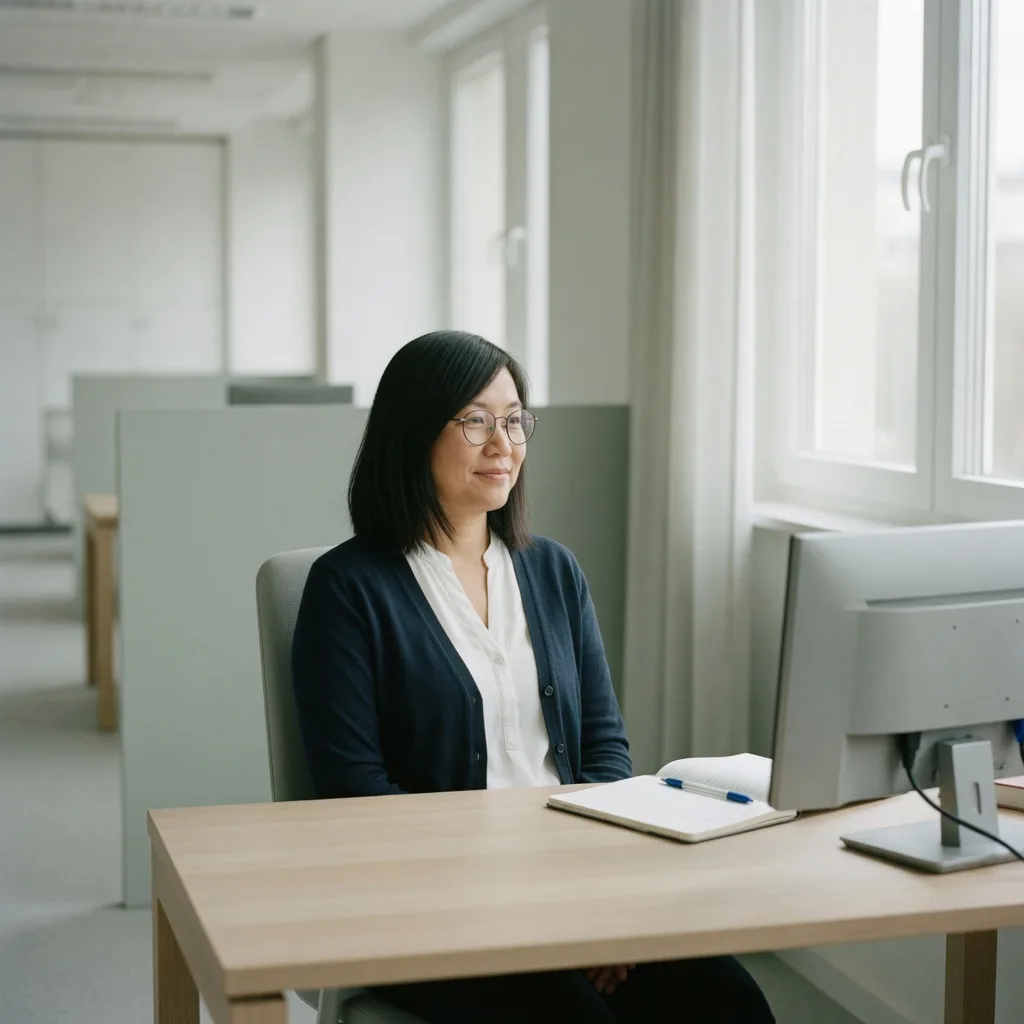
week 6, same desk, new lenses
M., 46, accountant
case one
M. is 46 and works as an accountant. She booked because headaches arrived around four o’clock and stayed for the rest of the desk day. In the history she described a screen that had crept closer over months. We measured it at 55 cm. Refraction found a near add of +0.75. Distance vision and the monitor were not the same task, which is why a single distance pair would have been the wrong order.
We prescribed occupational lenses for 50–70 cm and asked her to move the screen to 65 cm. We also said those lenses were not for driving. At the six-week check she reported afternoons without headaches. The photographs carry two captions. Week 0 — 4 pm, second coffee: leaning toward the monitor, a slight squint. Week 6 — same desk, new lenses: thin metal glasses, sitting upright.
This is an individual account. Results differ. We cannot promise the same result. We can measure. A headache can have causes this clinic does not treat. The record here is the distance, the add, the lenses, the new screen position, and her report at six weeks.
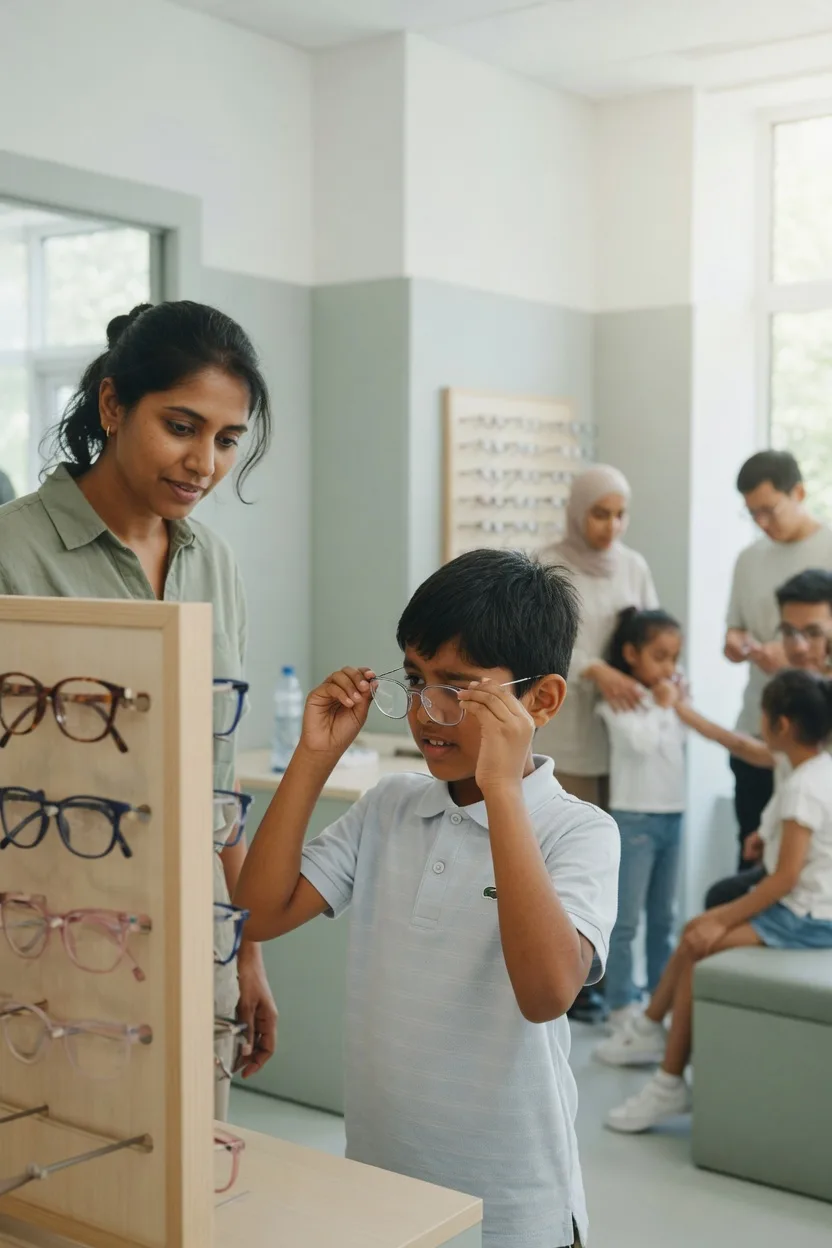
the frame wall

the front row
L., 9, primary school
case two
L. is nine and in primary school. Parents and teacher described board blur and skipped lines. Reading material sat close to the face. The children’s exam did not depend on fluent letter-chart reading. Picture targets and age-appropriate tasks carried the parts that needed them, with a parent in the room. Refraction showed mild myopia of −1.25 in both eyes.
The plan was a first pair of glasses, a front-row seat, and follow-up every six months. The front-row seat is a suggestion to the school so the board is usable. The six-month visits use the follow-up check: twenty minutes and $40 when the visit falls within six months of an exam here. Ines Kowalczyk fitted the first frames with the parent present. The children’s exam itself is fifty minutes and $95.
The photographs show a boy trying frames at the pale wood wall with a parent, and later reading the board in new glasses. This is an individual account. Results differ. −1.25 is L.’s measurement, not a figure we expect from every child who skips a line.
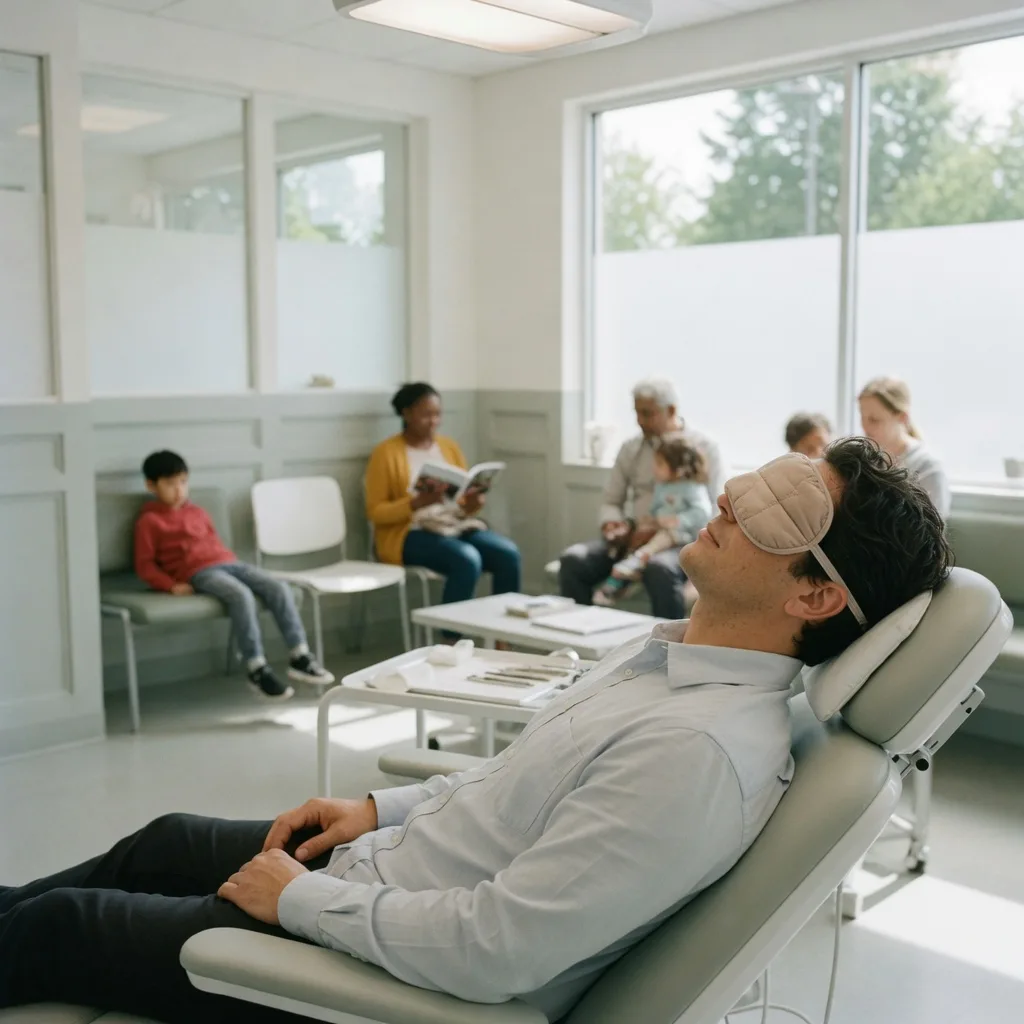
week 0, the compress chair
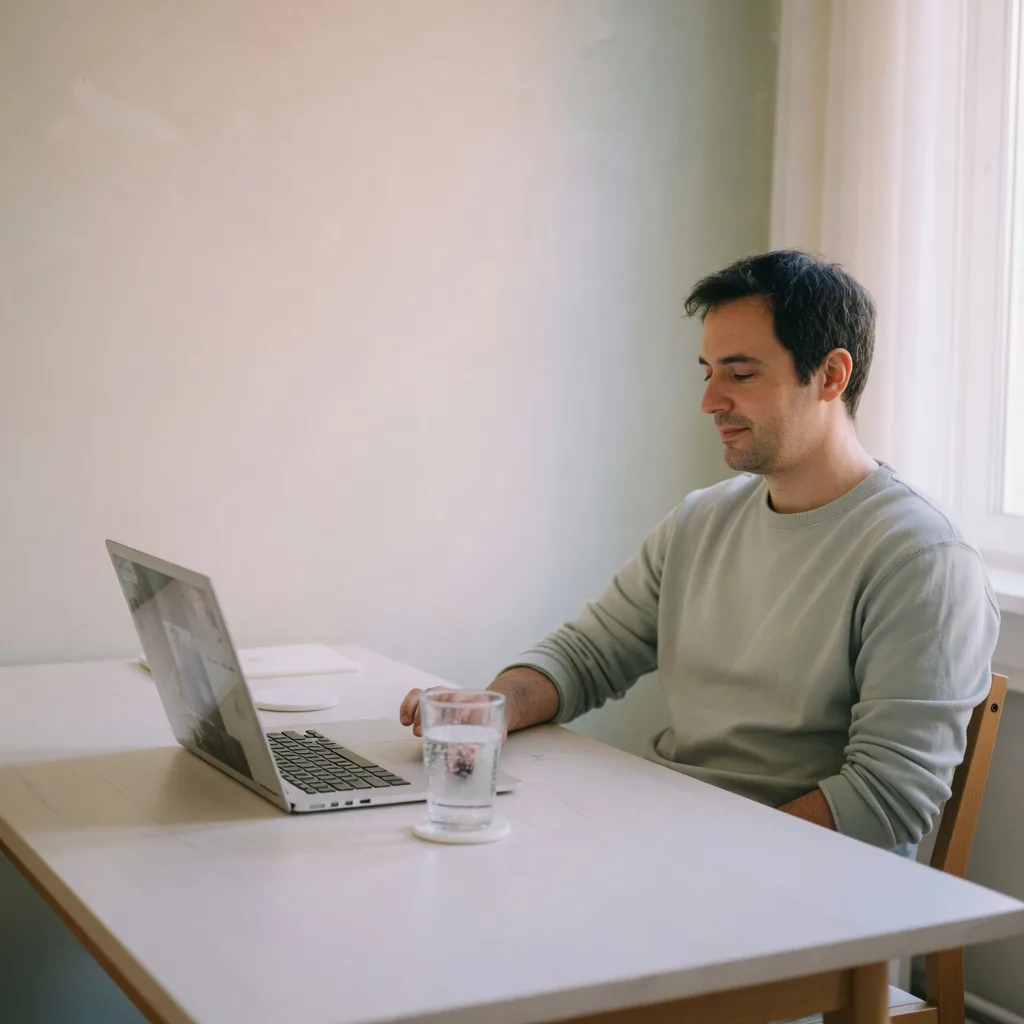
week 8, evening, no burn
D., 31, software engineer
case three
D. is 31 and works as a software engineer. His eyes burned. His contact lenses felt uncomfortable by evening and acceptable earlier in the day. The dry eye evaluation looked at the surface and timed the tear film. Break-up was short. That matched the history: a heated office, a long screen day, a lens asked to last until night.
The plan had three parts. A lid care routine he could repeat at home, including a warm compress of the kind shown in the treatment-chair photograph. A change to daily lenses, so a drying lens was not asked to survive the whole day. And 20-20-20 breaks through the workday. The contact lens fitting is $110 and includes two follow-ups, which is how the lens change was reviewed. At eight weeks he was comfortable through the workday. The later photograph is that kind of evening: desk, laptop, a glass of water, eyes comfortable.
This is an individual account. Results differ. We are reporting D. at eight weeks. We are not publishing a timetable for the next engineer who books.
Mon–Fri 10:00–19:00 · Sat 9:00–16:00 · Sun and public holidays closed