(Which pan, which hob)
Which Pan for Which Hob
Choosing the right cookware depends on how you cook and the specific heat source in your kitchen. Match your stovetop with the thermal qualities of carbon steel, cast iron, copper, and enamel.
Four Cookware Materials
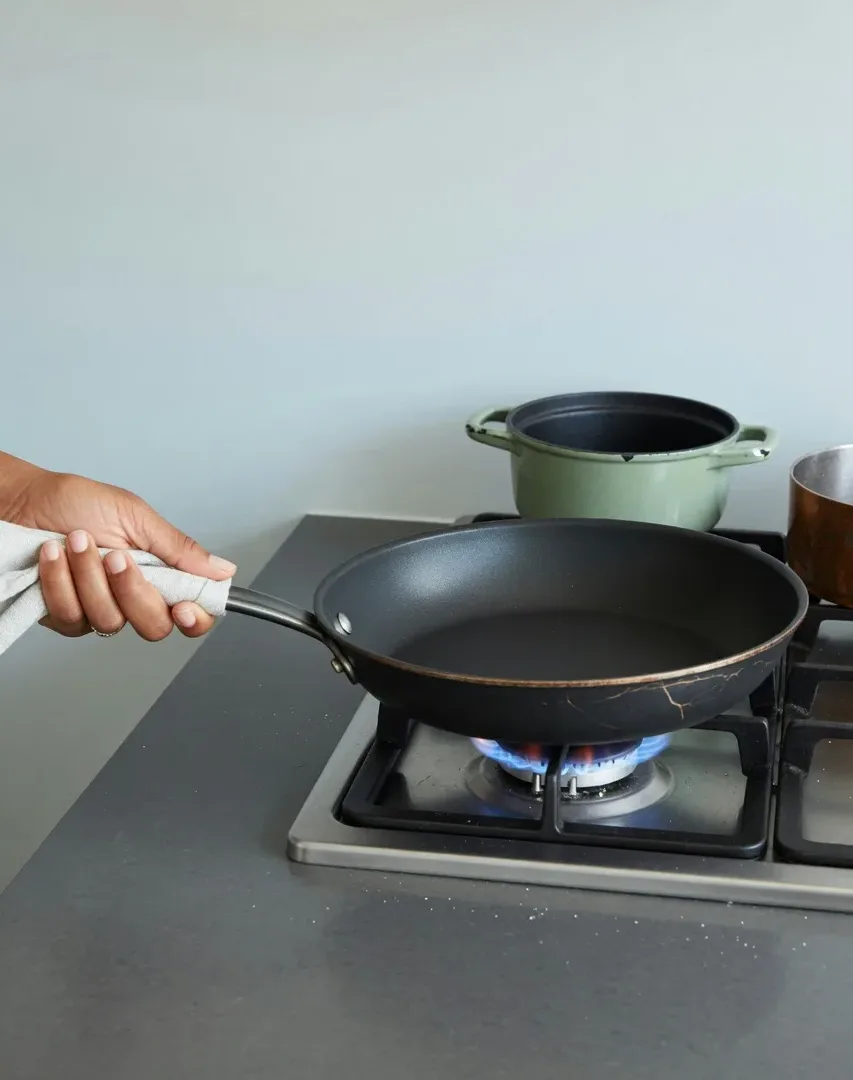
(01)
Carbon steel
Carbon steel responds quickly to flame changes, making it ideal for eggs, seared meats, and high-heat stir frying.
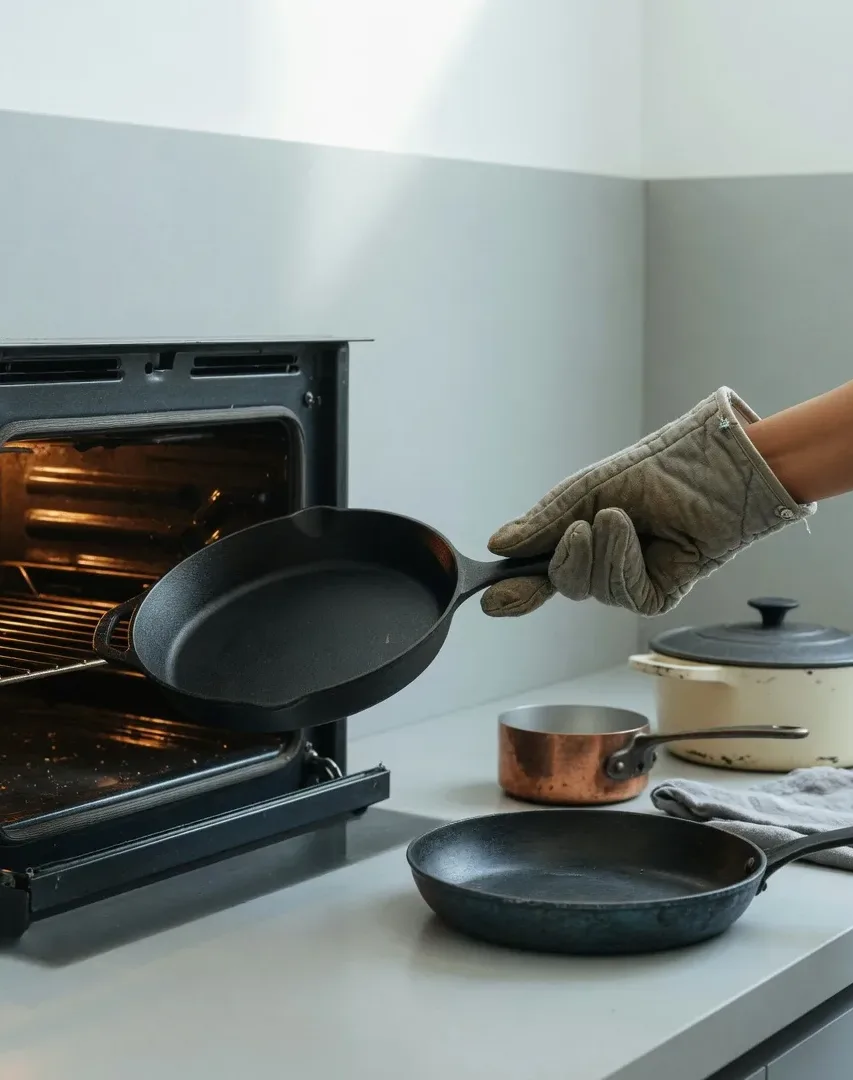
(02)
Cast iron
Cast iron is thicker and slower to heat, but once warm, it holds temperature steadily through cold additions and transfers smoothly from stove into the oven.
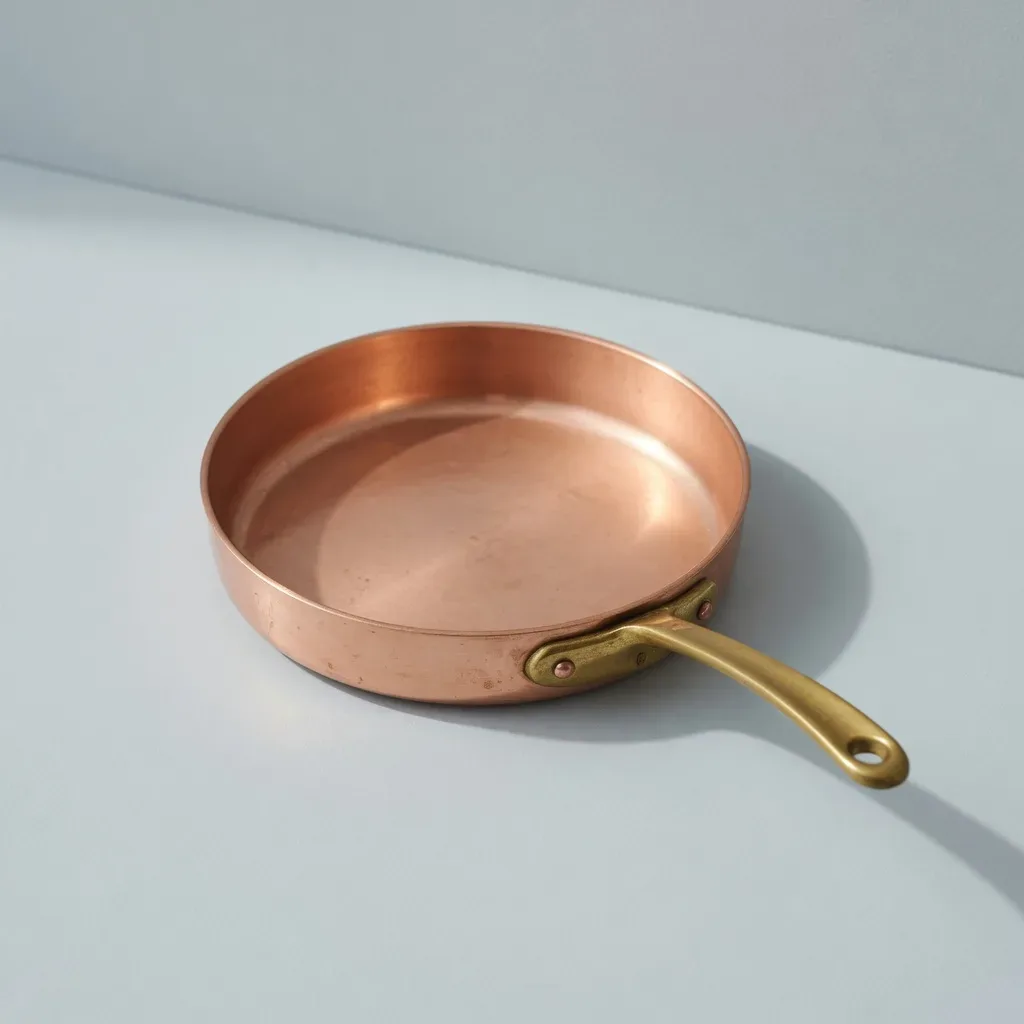
(03)
Copper
Solid copper delivers rapid, uniform heat conductivity, preventing hot spots when reducing sauces or cooking sugar, though bare copper must be lined with tin for food contact.
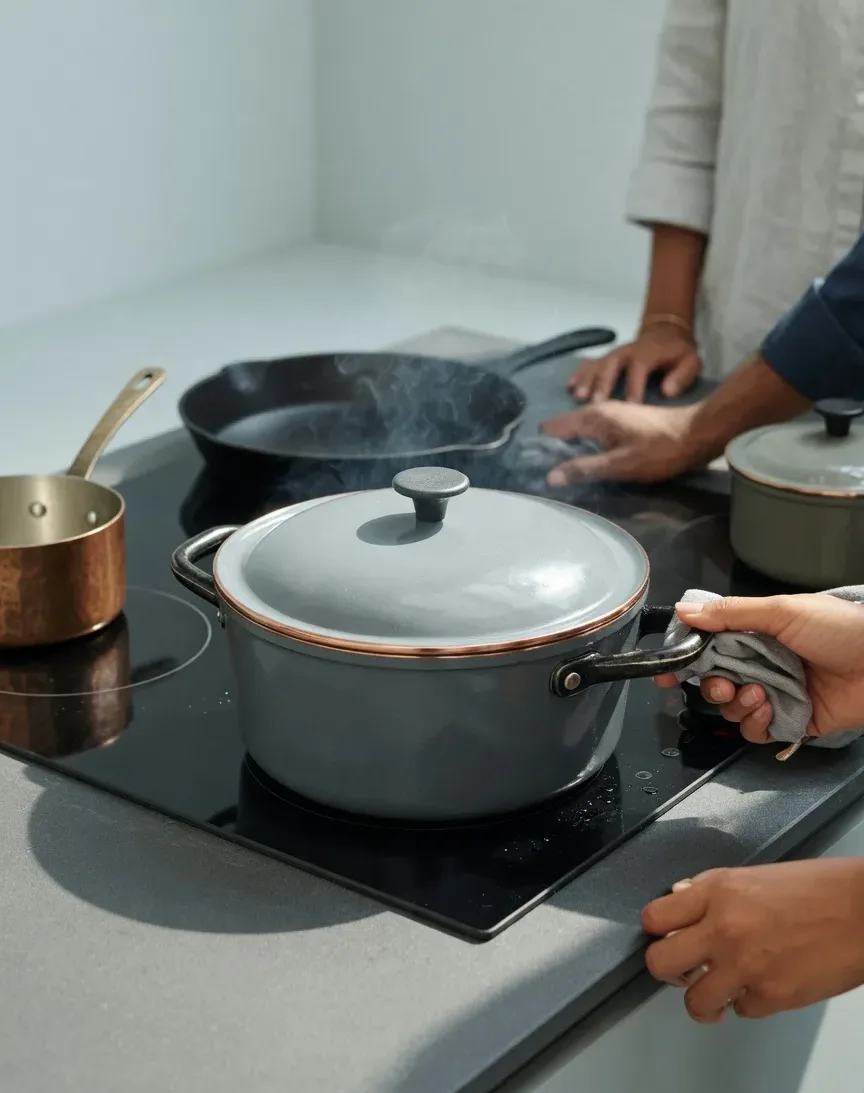
(04)
Enamel
Enamel fuses a glass layer over iron, preventing mineral reactions with wine, tomatoes, and vinegar while requiring no seasoning.
(Compatibility)
Stovetop and Oven Compatibility
On gas burners, all four materials perform reliably because the flame wraps around curved bases. Induction hobs require magnetic ferrous metals; carbon steel and cast iron work instantly, as do iron-core enamel casseroles, whereas pure copper requires an iron sandwich base to trigger induction sensors.
Ceramic-radiant electric surfaces favor flat-bottomed cast iron and carbon steel to ensure continuous thermal contact. For open fire embers and enclosed baking ovens, cast iron and carbon steel with riveted metal handles excel without risk of heat degradation.
| Hob | Works best | Note |
|---|---|---|
| Gas | All four materials | The flame wraps around curved bases, so every material performs. |
| Induction | Carbon steel, cast iron, iron-core enamel | Pure copper needs an iron sandwich base to trigger the hob. |
| Ceramic-radiant | Flat-bottomed cast iron and carbon steel | A flat base keeps thermal contact continuous. |
| Open fire & oven | Cast iron and carbon steel with riveted metal handles | Heat does not degrade the pan. |