(Seasoning & care)
Seasoning & Care
Bare iron and carbon steel require simple routine care to build a protective cooking patina and prevent rust. Following three repeatable steps keeps your cookware performing for twenty years.
The Three Daily Steps: Wash, Heat, Oil
Daily care for unlined cookware consists of three direct actions.
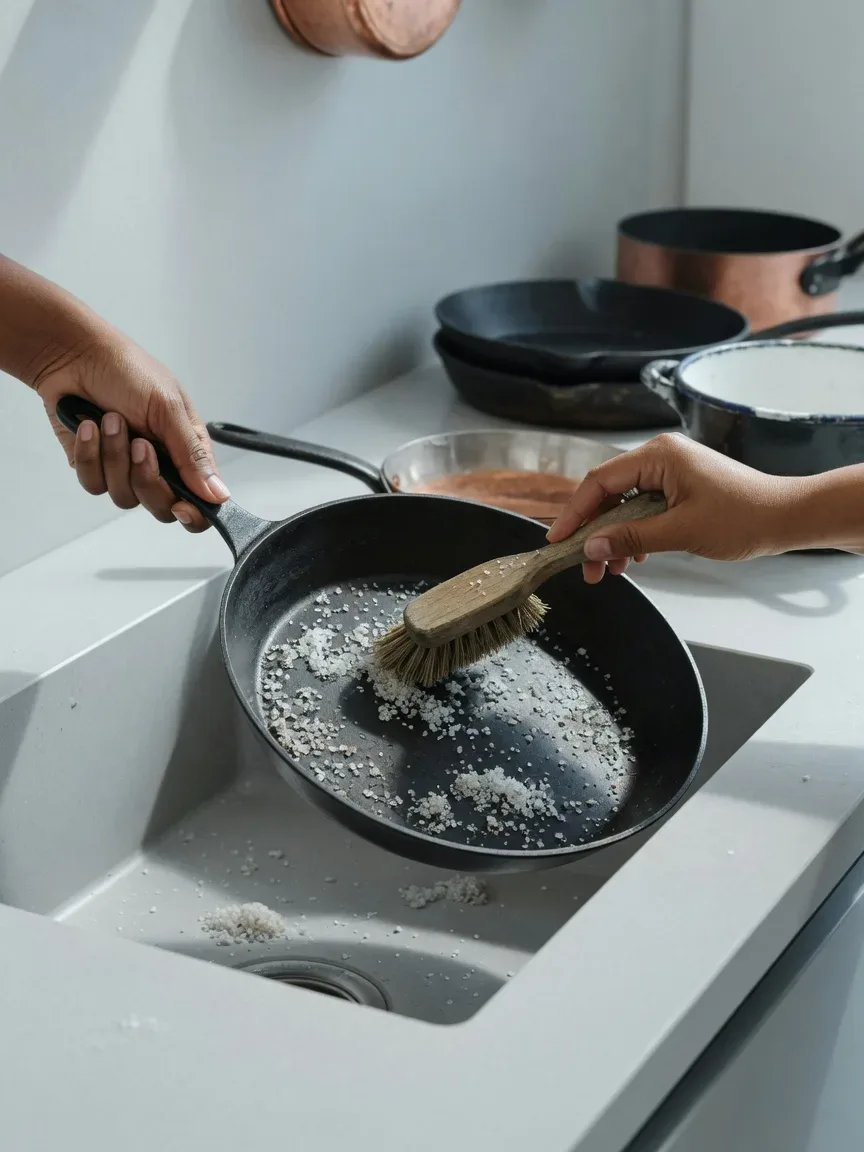
(01)
Wash
First, wash the pan under hot tap water using a stiff brush or coarse salt while the metal is still warm from cooking; avoid harsh dish detergents that strip the oil polymer.
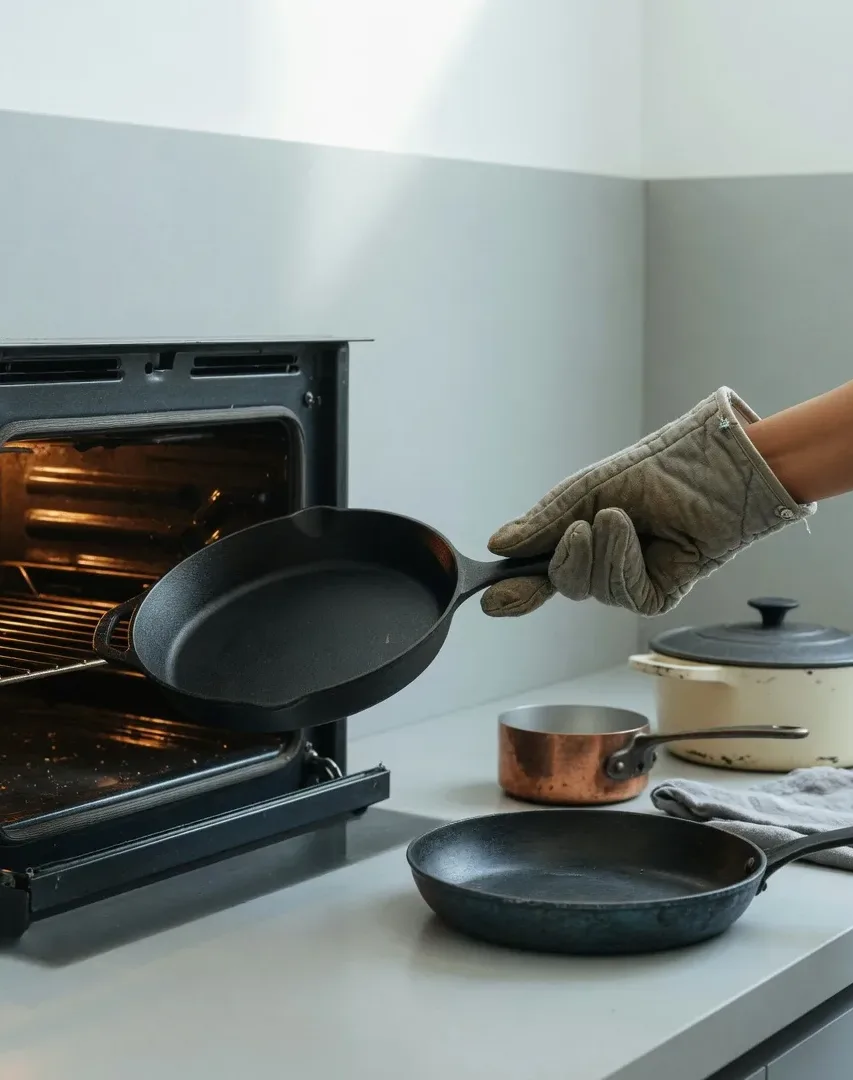
(02)
Heat
Second, place the pan directly onto a low hob burner to heat until all surface moisture evaporates completely.
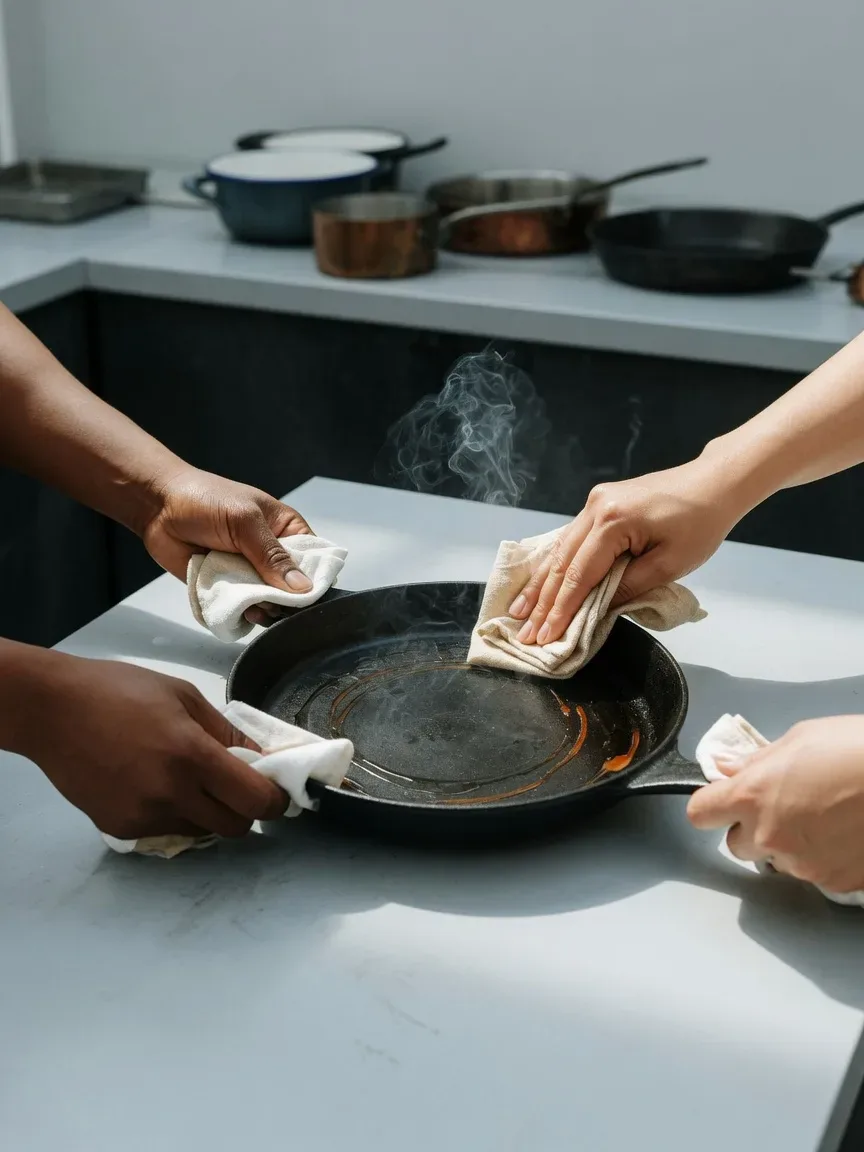
(03)
Oil
Third, apply a tiny drop of cooking oil with a clean cloth or towel across the interior until the metal shows a dry, satin sheen.
(When the pan needs the bench)
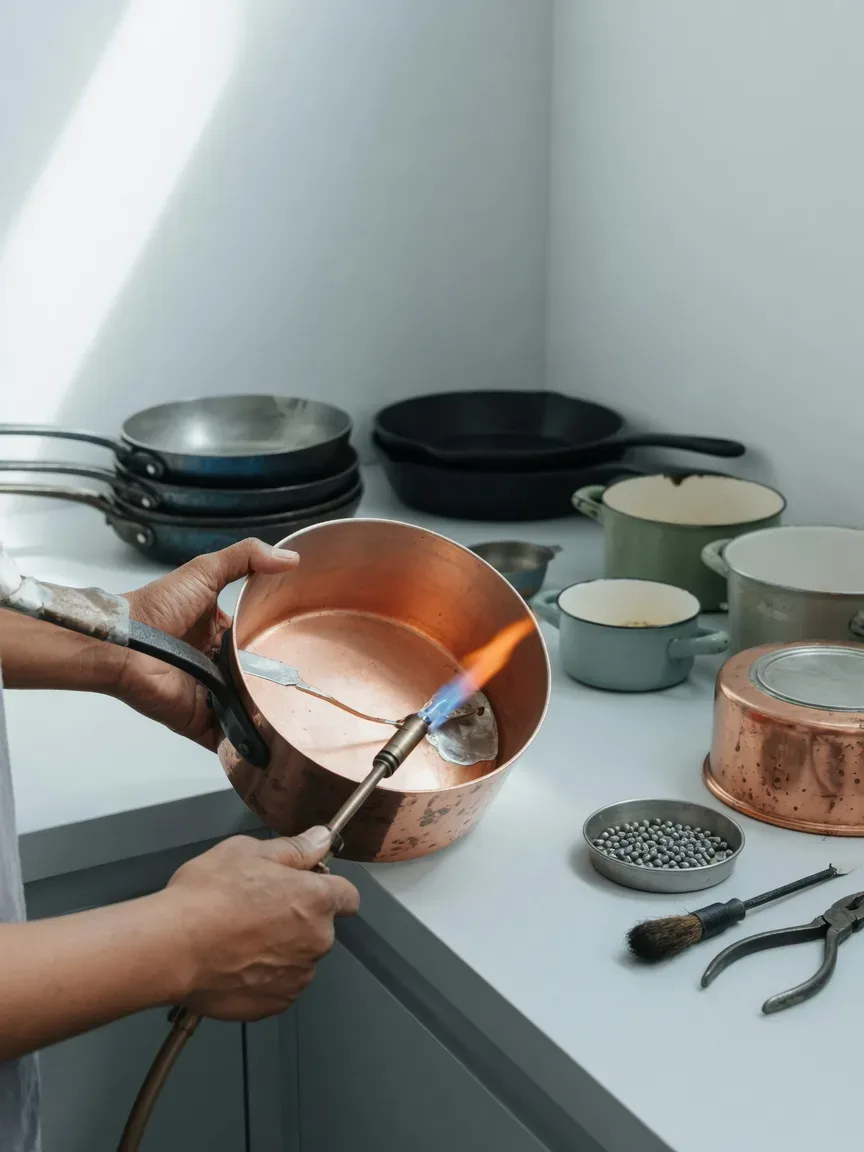
The workshop takes it from here
Deep pitting, a loose rivet or a worn tin lining are all jobs for the bench at Harbour Street.

(Questions)
Questions about iron and enamel
(01)
How do you remove surface rust from iron?
Surface rust appears when moisture lingers on unseasoned iron or carbon steel. If light orange spotting forms, scrub the metal firmly with coarse kitchen salt and a damp scrubbing brush until bare dark grey iron reappears, rinse thoroughly, and immediately heat dry over your hob. Once completely dry, rub cooking oil into the warm pores. If deep pitting or widespread corrosion occurs, our Harbour Street workshop provides complete rust removal and re-seasoning for €38, returning the pan to working condition within 7–10 days.
(02)
Does enamelled cookware require seasoning?
Enamelled cookware never requires oil seasoning because its durable porcelain enamel glaze seals the underlying iron against moisture and oxidation. You can cook tomatoes, vinegar braises, and wine reductions directly in enamel without reactive metallic flavors or stripping a patina. Wash enamel casseroles with warm water, mild soap, and a soft sponge, avoiding wire scouring pads. If baked residue adheres to the enamel base, soak the interior in warm water with baking soda before gently wiping it clean with a cloth.