The round
( round )
02
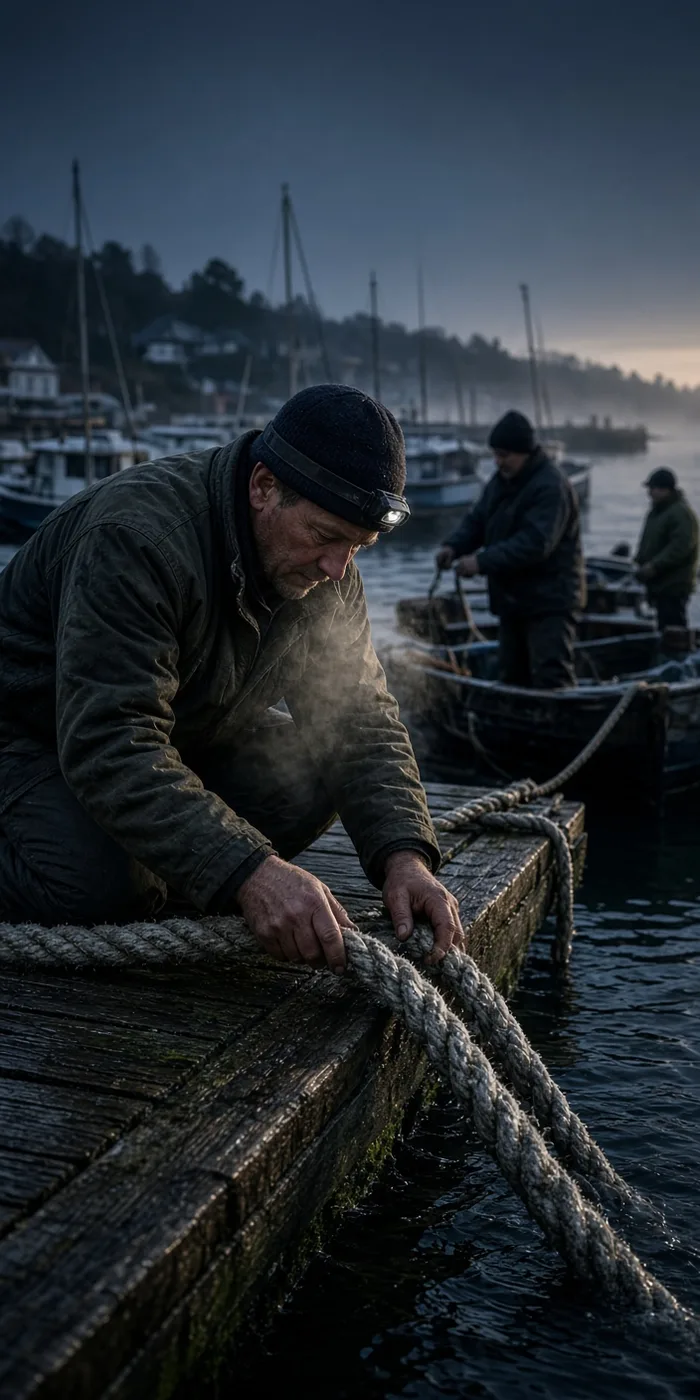
The Morning Round
Every day of the season, the harbour master walks the berths at 06:30. The round takes about 50 minutes, from the fuel berth to the outer moorings.
Walked atfirst light.
06:30 Fuel berth
The morning round starts at the fuel berth at 06:30, every day of the season, from 1 April to 31 October. It takes about 50 minutes and ends at the outer moorings. The office opens at 07:00, and Samir Haddad runs fuel and pump-out from 07:00 to 19:00, so the first minutes belong to the harbour master alone. Ines Marlow stands on the wet pontoon with the clipboard, looks along the hoses and the first lines, and notes any boat that was not there at dusk. The order of the walk does not change: fuel berth, then Pontoon A, Pontoon B, Pontoon C, then the outer moorings. What changes is the weather, the tide and who came in late.
06:40 Pontoon A
At 06:40 the round is on Pontoon A, the 36 finger berths for boats up to 7.5 m. Ines works down the fingers, one cleat at a time, with 2.0 m under the boats at low water and the 16A leads kept out of the walkway. A line that has crept is eased back. A boat sitting hard against a neighbour is written down so Tomas Reyes can see it when allocations are discussed later. Owners who are already aboard usually get a nod rather than a conversation; the round is a check, not a meeting. By the end of A she knows which small boats are ready to leave and which will still be there at the evening check.
Pontoon B
Pontoon B is next: 28 finger berths for boats from 7.5 m to 10 m, 2.4 m at low water, water and 16A power on the berth. The boats are heavier and the leads are longer, so Ines gives each cleat a longer look. This is the stretch she talks about when someone asks what the job actually is. She puts it plainly: “I walk the same planks every morning. The boats change a little, and the weather changes a lot, but the round is how we know who is here.” Nothing on B is signed or sold during the walk. If a berth needs a decision, it waits for Tomas and for office hours.
Pontoon C
Pontoon C holds 14 finger berths for boats from 10 m to 12 m, in 3.0 m at low water, again with water and 16A power. The round slows down. A longer boat takes more of the finger, and a lazy spring can put the stern somewhere it should not be. Ines checks the bow line, the stern line and the slack, then moves on. C is still part of the same 50 minutes. It is not a separate inspection and it does not wait for the yard. If Henrik Vale needs to know that a boat on C is coming out, that note goes to the office when the round is finished, not halfway along the pontoon.
Outer moorings
The round ends at the 22 swing moorings in the outer basin, boats up to 9 m in 3.5 m at low water. From the fuel berth to the last mooring is about 50 minutes. Ines reads the swing of each boat, looks for a picked-up warp and then walks back toward the office, which is open from 07:00. The day on the pontoons is not over at breakfast. Mei Lin Choi keeps the evening watch and makes the evening check at 21:00, after the office has closed at 19:00, covering the fingers and the outer basin again. The morning round and that evening check are the two fixed passes of every season day.
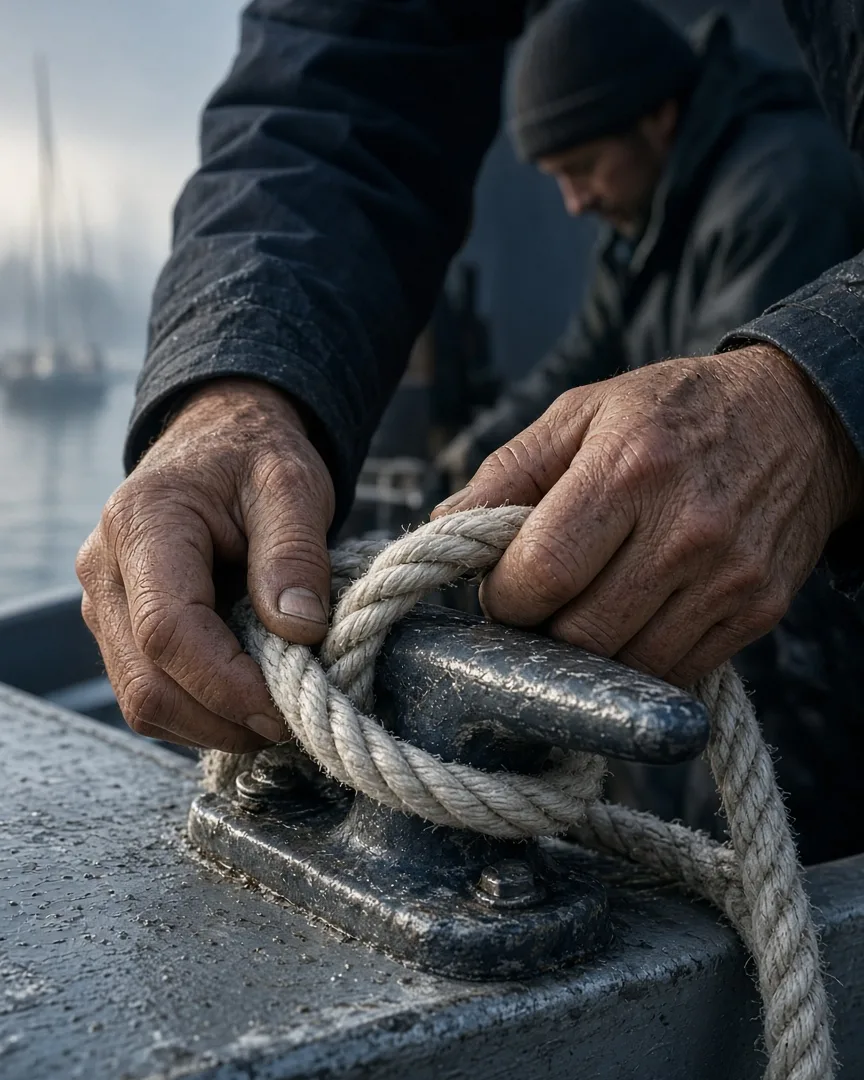
“I want the first look at every line, at 06:30, while the pontoon is still quiet.”