Desk workers
for people who sit
We treat the neck, shoulder, back, and arm pain that long desk days leave behind, and we run a small class for people who want guided practice after work. Assessment still comes first.
AT THE
what the desk asks
DESK
What the desk asks of you
A desk rarely injures you in one moment. It asks for the same posture for hours: head forward, shoulders slightly up, back quiet, hands ahead of the body. By late afternoon the neck aches, the shoulder feels crowded, and standing is the first relief since lunch.
The first visit is still 60 minutes and $95. We watch you move, not only the chair you describe. Amara Osei treats back pain and desk-related pain. Clara Mendes treats neck and shoulder. Jonah Reed treats hand, wrist, and elbow when the keyboard is the loudest part. If the desk itself should change, a workstation review is 45 minutes at your office or by video.

Desk Reset
Desk Reset is a small-group class led by Sofia Lindgren, our exercise physiologist. It lasts 50 minutes, costs $28, and is limited to six people. The class meets on Tuesday and Thursday at 18:15, and on Saturday at 10:00, inside clinic hours.
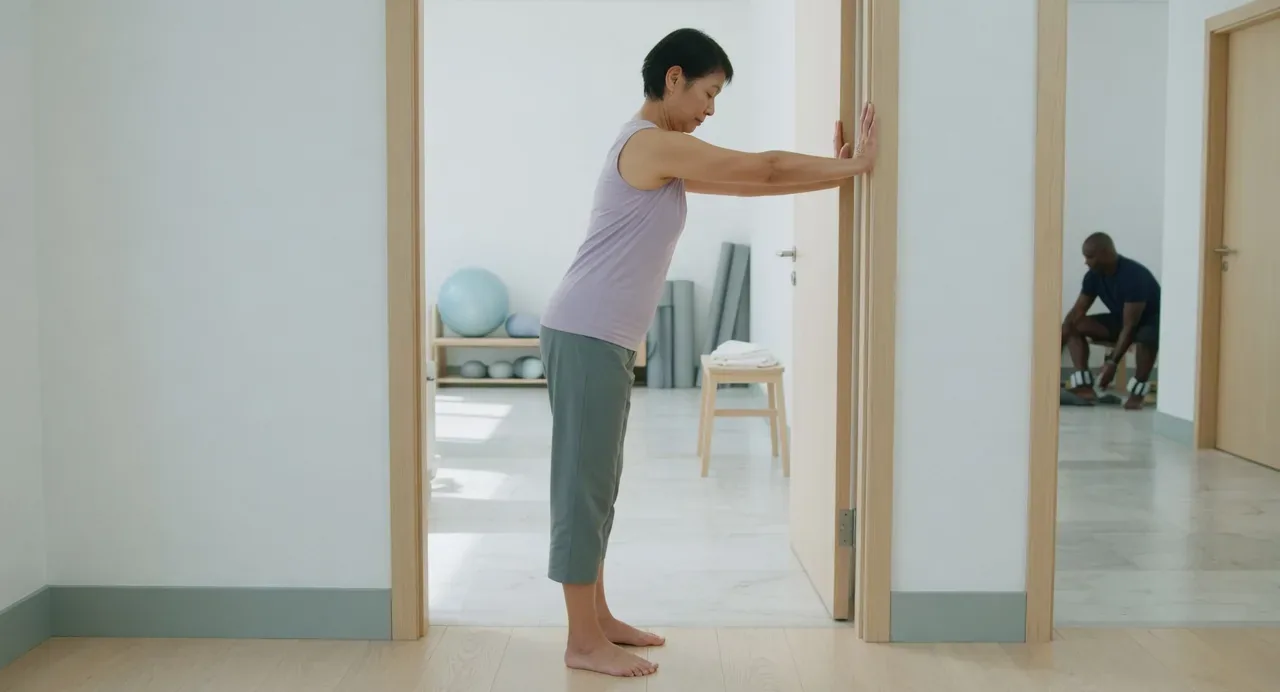
You practise what desk bodies lose: opening the chest, rolling the shoulders without hiking them, and standing from a chair with the hips sharing the work. It is not a fitness class, and it is not a substitute for assessment if you are in pain. Noor, 41, used Desk Reset for eight weeks for lower-back stiffness from sitting, plus three follow-ups with Amara. Wear clothes you can sit and stand in. If a class is full, Elena Duarte will offer the next date.
Workstation review
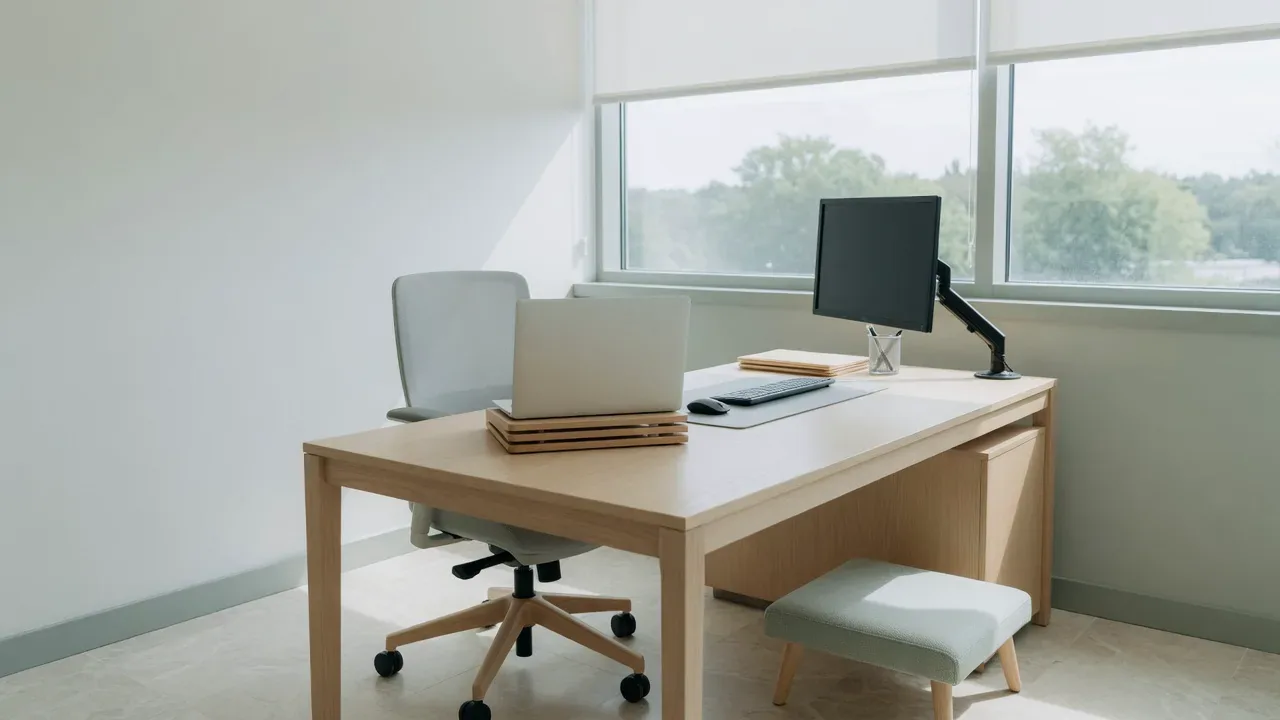
A workstation review looks at the desk you actually use. We do it at your office or by video: 45 minutes, $80. The point is a few changes you will still see on Monday. Screen height. Where the mouse lives. Whether your feet reach the floor. How far you reach for the keyboard.
We will not sell you a list of equipment. If a monitor arm, a laptop stand, or a footrest would change the day, we say which and why. If the chair is fine and the habit is the problem, we say that too. Lena’s course for shoulder and neck ache included a review alongside six sessions over eight weeks. For a video review, bring daylight photos of the desk from the side and from the front.
Shoulders that never quite drop
The first habit we watch is shoulders that stay slightly raised. Typing, concentrating, and carrying a bag can park the shoulder blades in a shrug. The neck then works overtime, and a headache may join by afternoon.
In the clinic we loosen that brace before we ask you to strengthen. A chest opening in the studio shows the difference between forcing the shoulders back and letting them rest. Your home programme will be short. One movement between meetings is worth more than a list you save and forget. If the shoulder pain follows an operation rather than the desk, book Priya Nair. Tell Elena which history is yours.
Sitting past the point of ease
The second habit is staying seated after the back has asked you to move. Stiffness that eases when you walk, then returns in the next meeting, is a pattern Amara treats often. A different chair does not cancel a long day. We help you notice the moment the back stops sharing, and give you a way to stand, hinge, and sit again that fits between meetings.
Desk Reset is where you can practise that with other people, for 50 minutes, if you want a set time and a small group. Individual follow-ups stay available at $75 for 45 minutes, or $55 for a short 30-minute visit when the plan is already clear and you only need a check.
REACH
WITHOUT BRACING.
reaching by bracing
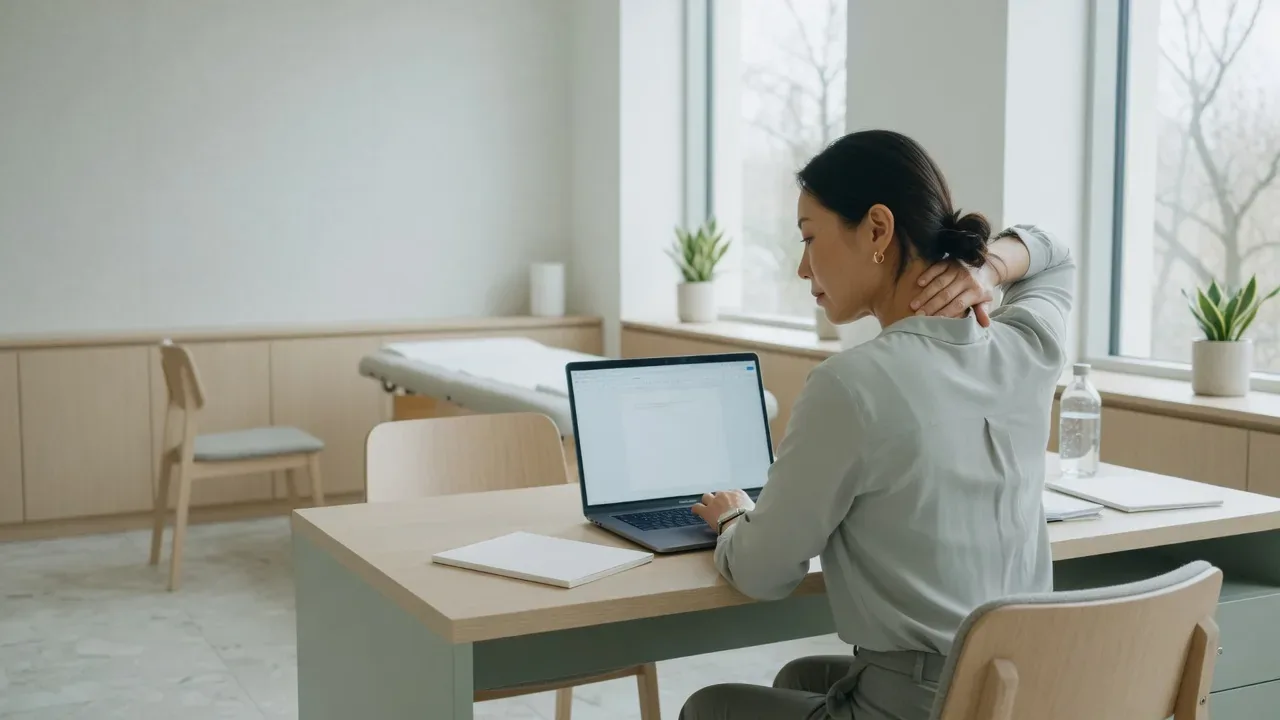
The third habit is reaching forward by bracing: chin toward the screen, ribs into the desk, arm stretched to a mouse that sits too far away. The shoulder works at its end point for hours. In the studio we call the alternative reaching without bracing. The arm should arrive at the keyboard with the neck still quiet.
Why bracing costs you
Jonah looks at the wrist and elbow when that reach has become forearm pain. A workstation review often moves the mouse and the screen before any new exercise is added. None of these three habits is a diagnosis. They are what we test on the first visit. The written plan, sent the same day, names the one or two changes that matter for your desk.