 ·
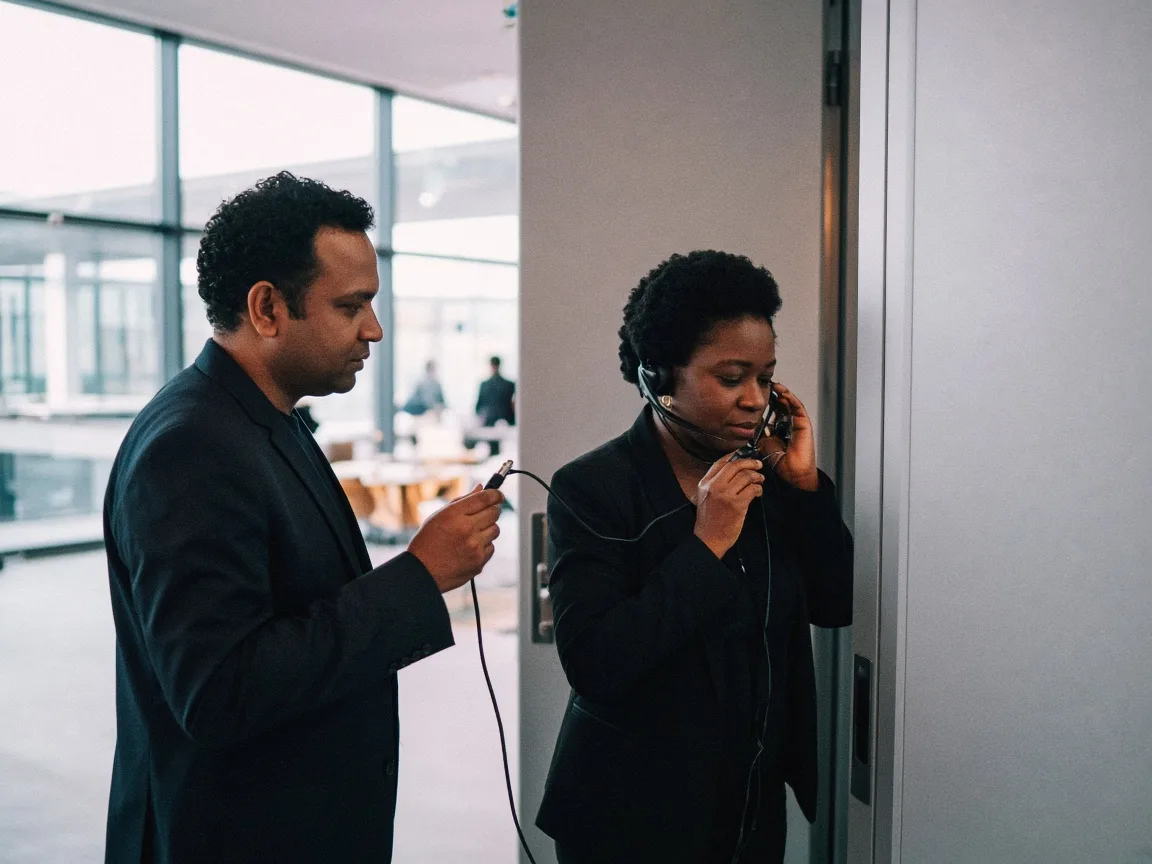
At 08:15 on every conference morning, forty-five minutes before delegates take their seats, the interpreting booths at Koe Interpreters begin their sound check. In the quiet hall, an interpreter slips on a headset while the venue’s audiovisual technician stands outside the booth door with a cable tester and an audio monitoring console. Over the next thirty minutes, they do not merely verify that sound passes from the lectern microphone into the booth earpieces; they calibrate the acoustic working environment upon which the entire meeting depends.
Simultaneous interpreting requires extraordinary auditory precision. An interpreter does not listen to a presentation the way a casual audience member does. In the booth, we must perceive every consonant, unpick rapid technical jargon, identify foreign accents, and register quiet hesitations, all while speaking continuously into our own console microphone. If the incoming audio is muffled, clipped, or contaminated with background hum, the interpreter’s brain must expend enormous cognitive effort simply reconstructing missing phonemes. Within an hour, auditory fatigue sets in, concentration falters, and translation clarity degrades.
The sound check resolves these physical hazards before the meeting opens. Our interpreters work systematically with the technician through a standard acoustic checklist. First, we test direct microphone feeds from every podium, panel table, and roving handheld unit. We ensure that volume levels are balanced across all channels so the interpreter is not startled by sudden volume jumps when the floor moves from a soft-spoken chair to an energetic panelist. Second, we verify the frequency response, adjusting equalizer settings to eliminate muddy bass resonance and attenuate piercing high frequencies that cause ear fatigue over a 6.5-hour day.
Equally vital is the check of the outbound transmission. We verify that each booth’s console connects cleanly to the delegate receiver system. The technician walks the hall with a wireless receiver and earpiece, confirming that the English, Traditional Chinese, Japanese, French, or German channels are broadcasting on their assigned frequencies without cross-talk or static. We also verify the operation of the cough button and mute switches, ensuring that booth colleagues can confer or cough without broadcasting extraneous noise to delegates.
When a conference involves three languages and uses an English relay, the 08:15 sound check takes on an added layer of importance. In a relay setup, the Japanese or German booth listens directly to the English booth’s rendition to translate speeches into their target language. The acoustic link between the two booths must be pristine. A minor delay, impedance mismatch, or signal hum in the relay feed will compound across both booths, compromising the experience of everyone in the room.
By 08:45, the sound check is complete. The technician secures the cable runs, the consoles are locked to verified levels, and our two interpreters per booth sit down with their glossary notes to review the morning agenda. When the opening gavel strikes at 09:00, the audience will hear a calm, effortless voice in their earpieces. They will rarely consider the thirty minutes of technical calibration that made such effortless listening possible.