From foam model to factory floor
Industrial and product design · since 2011
Haverholt · 8 people · 9 projects a year
Foam to factory
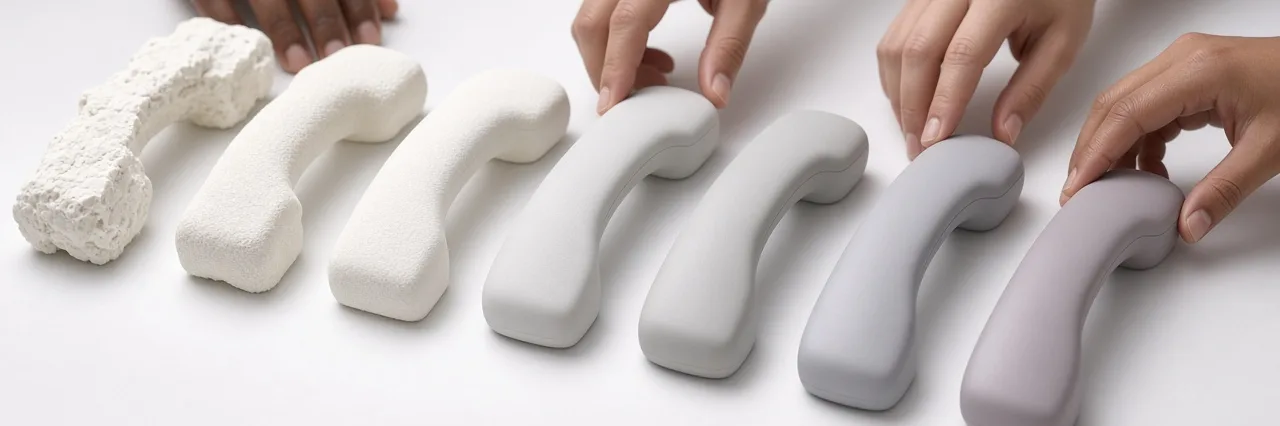
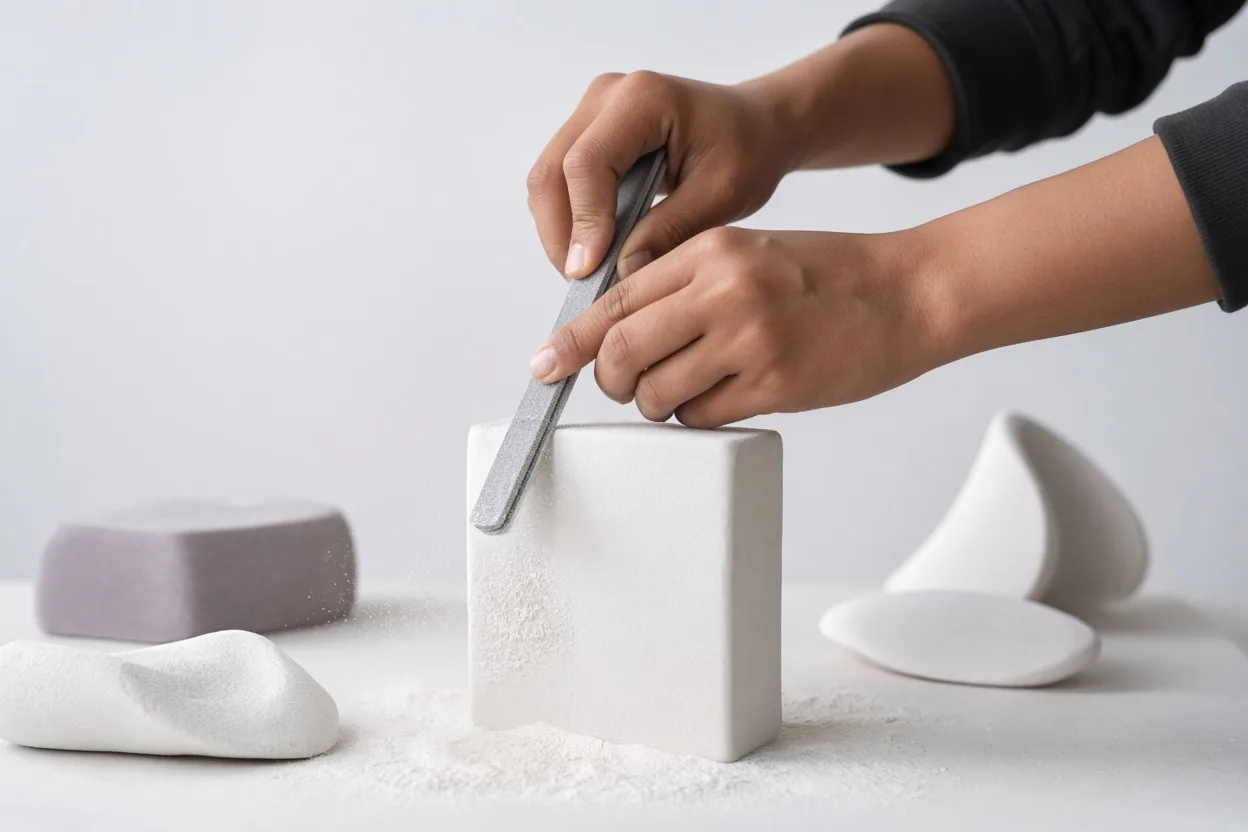
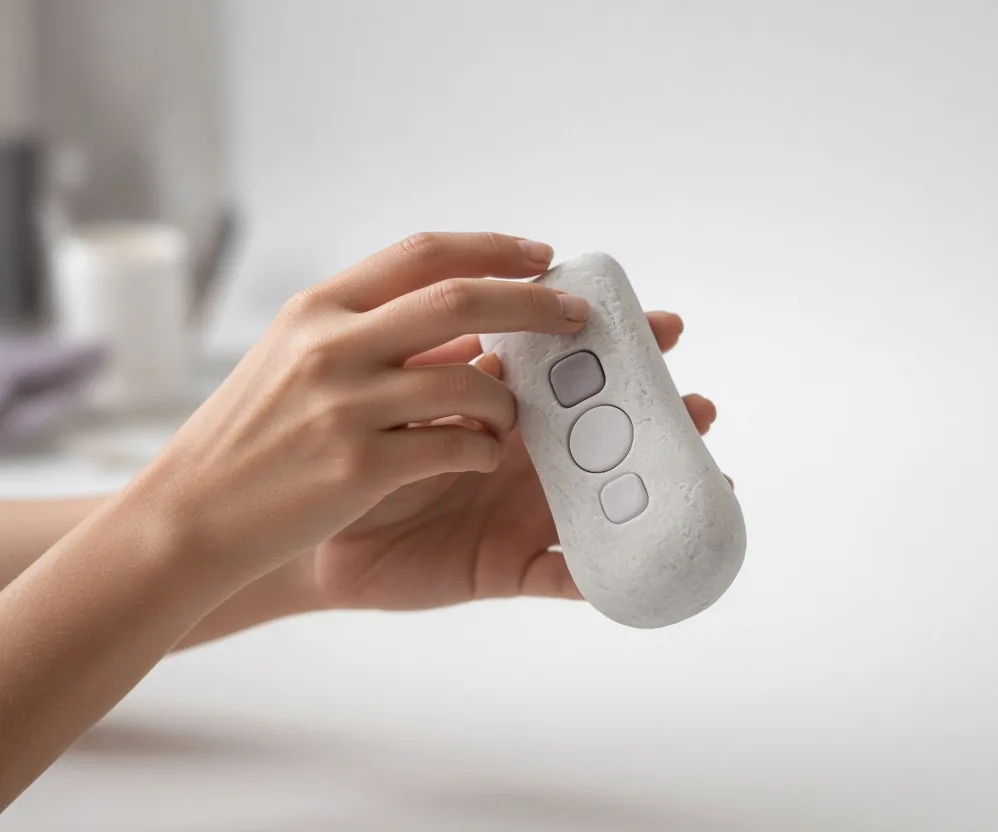
Cradle handset, foam models 1 to 41, in the order they were sanded.
The problem
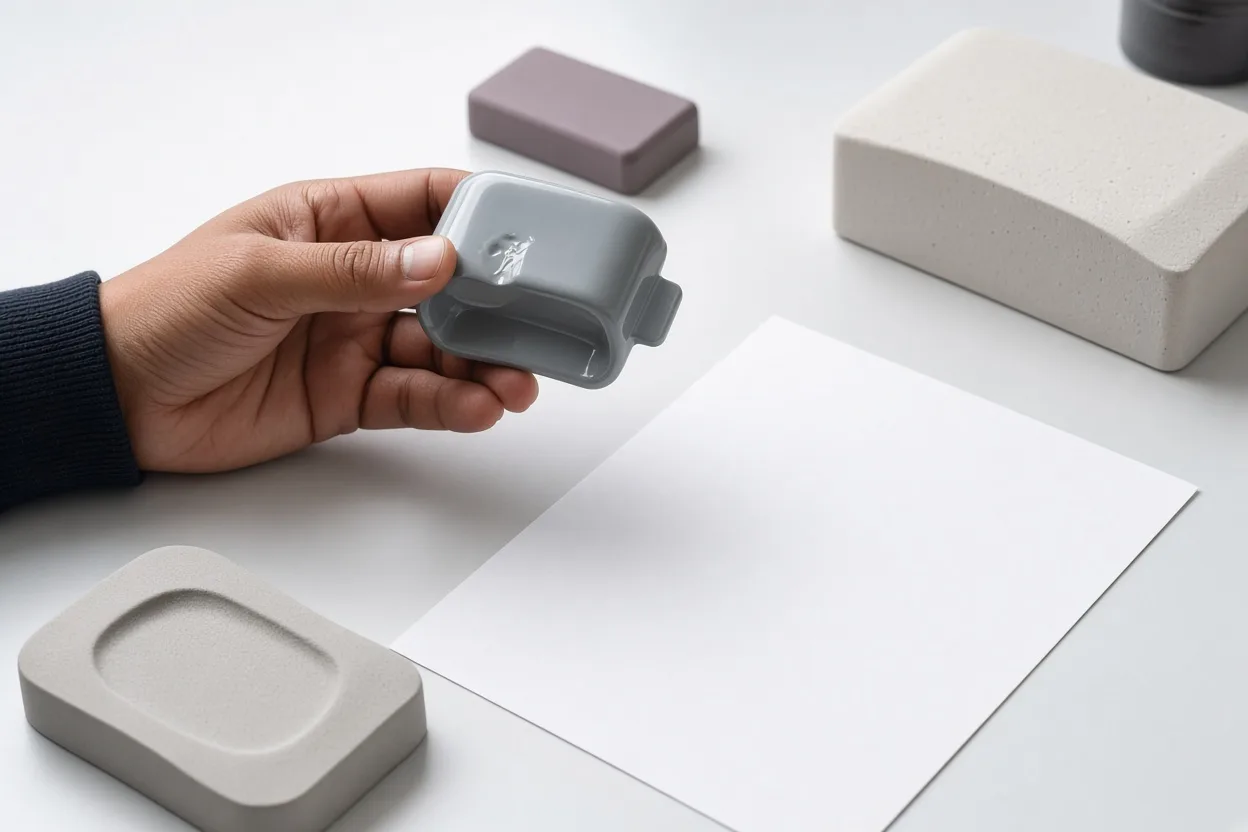
What clients bring
Medical · Consumer
A client usually arrives with a digital model that looked convincing on screen and a first sample that failed the moment someone held it. Screens hide the physical facts of weight, balance and edge. When a part is produced without being tested in a real hand, a small miscalculation in grip quietly undoes months of careful engineering.
The gap lives in small details that specifications overlook. A bedside button must be found by touch in a dark ward. A kettle lid must open with one wet hand without burning knuckles. A moulded casing must release from its tool without cracking the ribs inside it. None of this shows up in a drawing that tested well.
We close the gap with foam, people and the factory floor. We take at most nine projects a year, so the same eight designers and engineers stay with you from the first brief to the first-off sample. Real hands test every curve long before any steel is cut for tooling, and the factory is in the room early.
Method
01 Research
Weeks 1–4
We watch the product being used where it lives. Observation visits to clinics, homes and shop floors show how people really handle equipment and where the friction is, before any concept sketching begins.
02 Foam
Weeks 5–12
Dozens of hand-sanded foam models, held by real users. In our own model shop we carve high-density foam to explore volume, balance and button placement, and put each shape in a hand long before digital CAD.
03 Engineering
Weeks 13–24
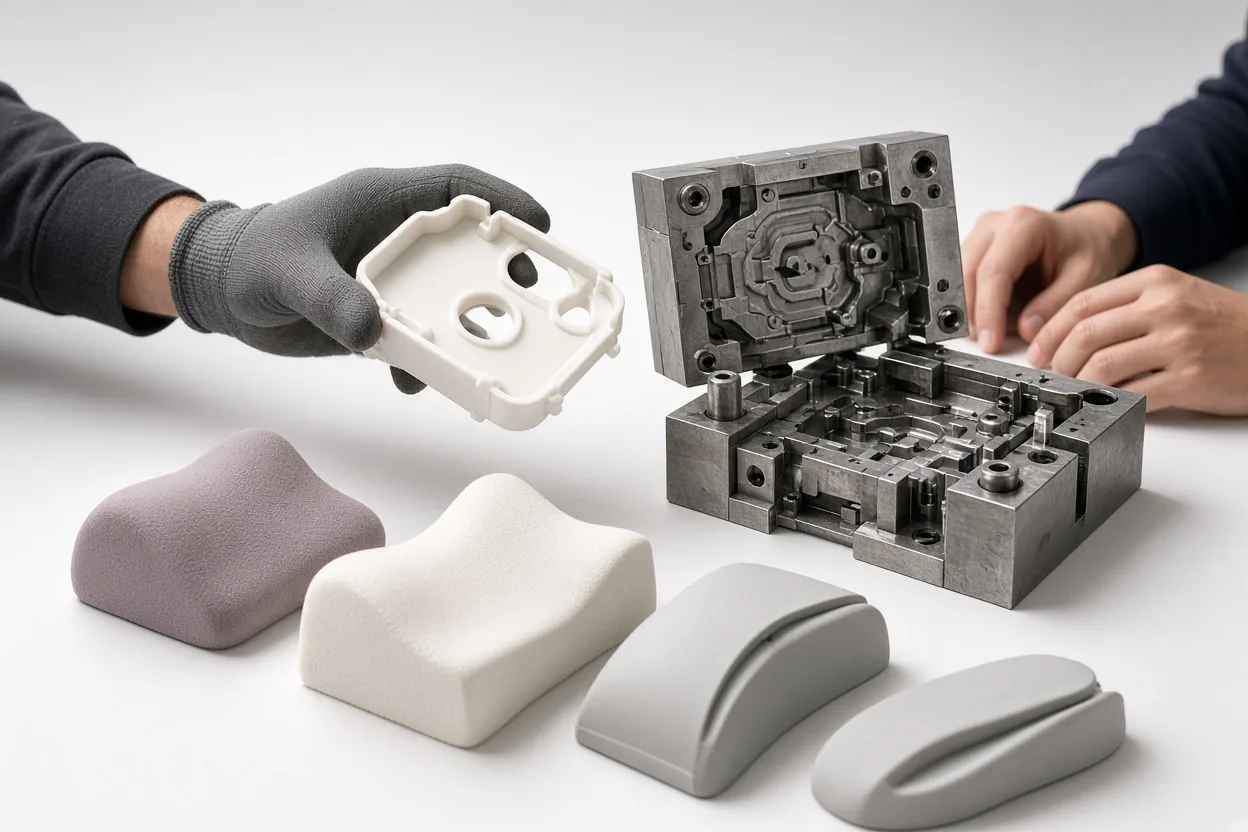
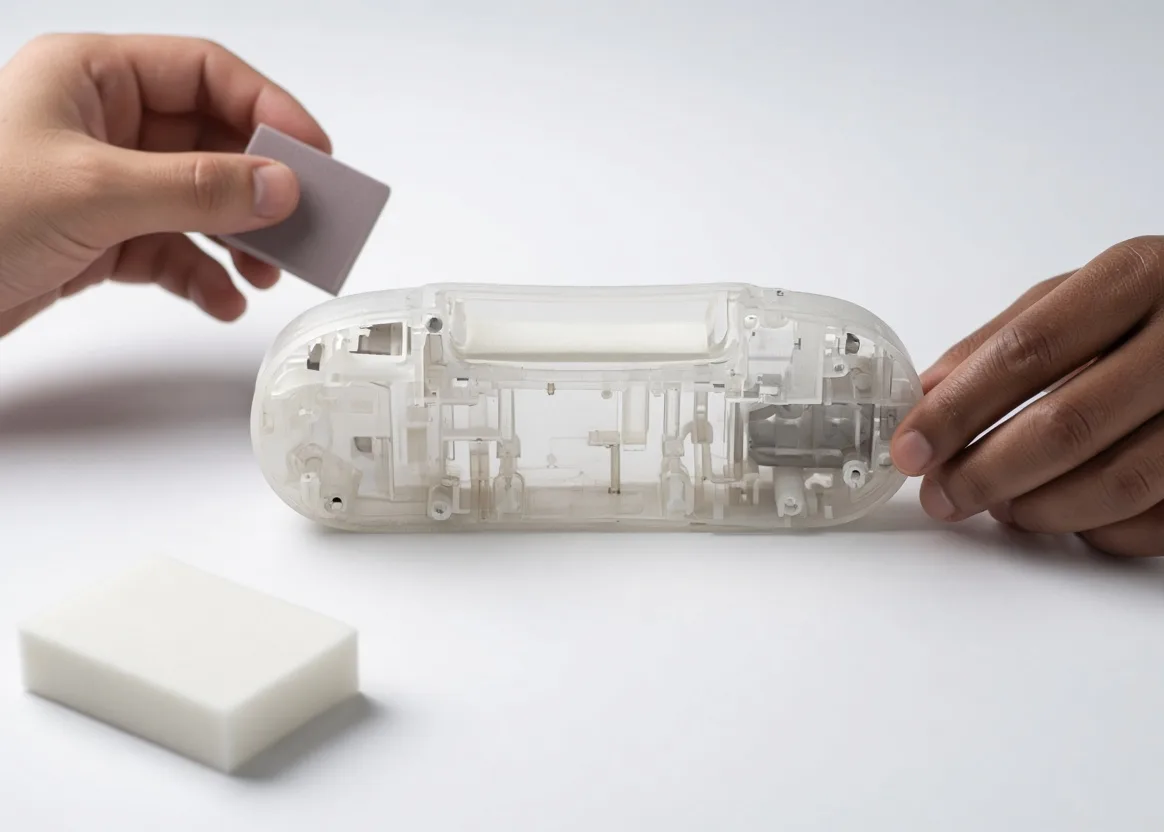
Wall thickness, draft angles, parts that click together. We translate the proven shape into production CAD and resolve parting lines, ribs and snap fits so parts assemble cleanly, without glue or force.
04 Tooling
Months 7–18
We stand next to the first-off samples at the factory. We travel to the tool maker, review the trials, check mould release and inspect first-off parts against the colour, material and finish sheet.
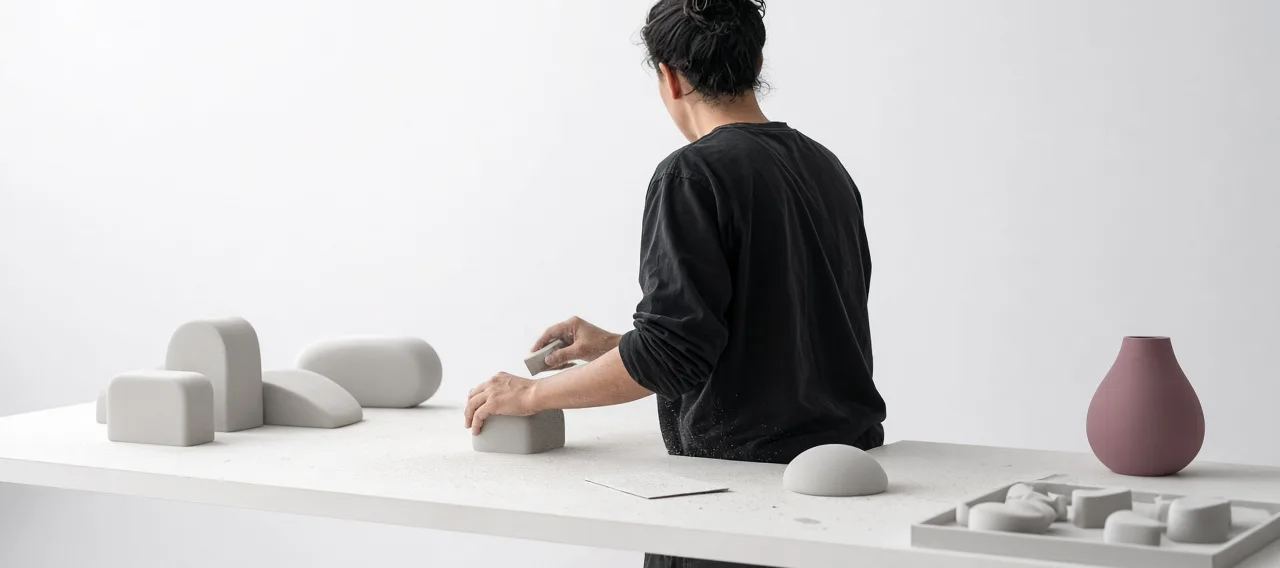
Model shop · Haverholt · foam, sanding, resin
Proof
Before · foam model 12
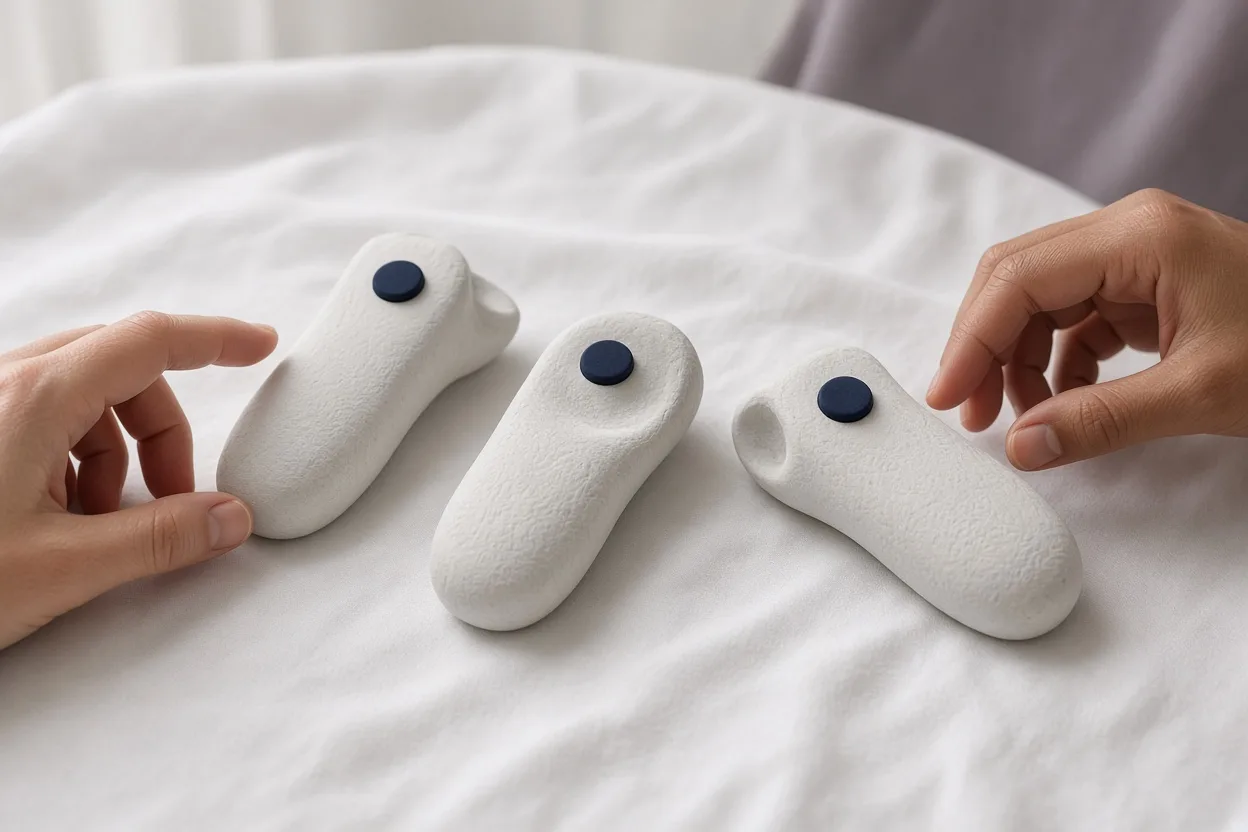
Cradle handset. Night nurses could not find the call button by touch, and patients dropped the handset off the bed.
After · production part
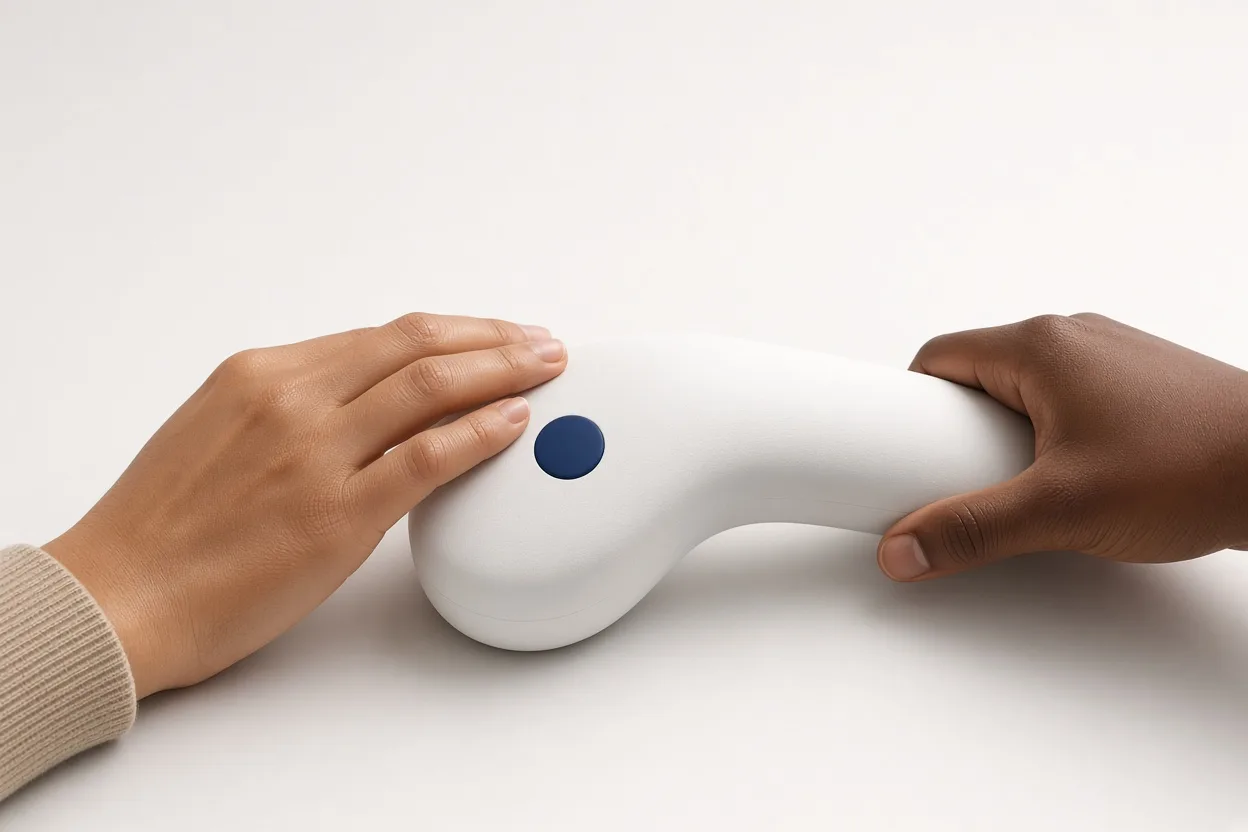
A sculpted grip that rests in the hand, a button found by touch and a clip for the bed rail.
41 foam models · 14 months to first tool sample · Mar 2025
Before · foam model 08
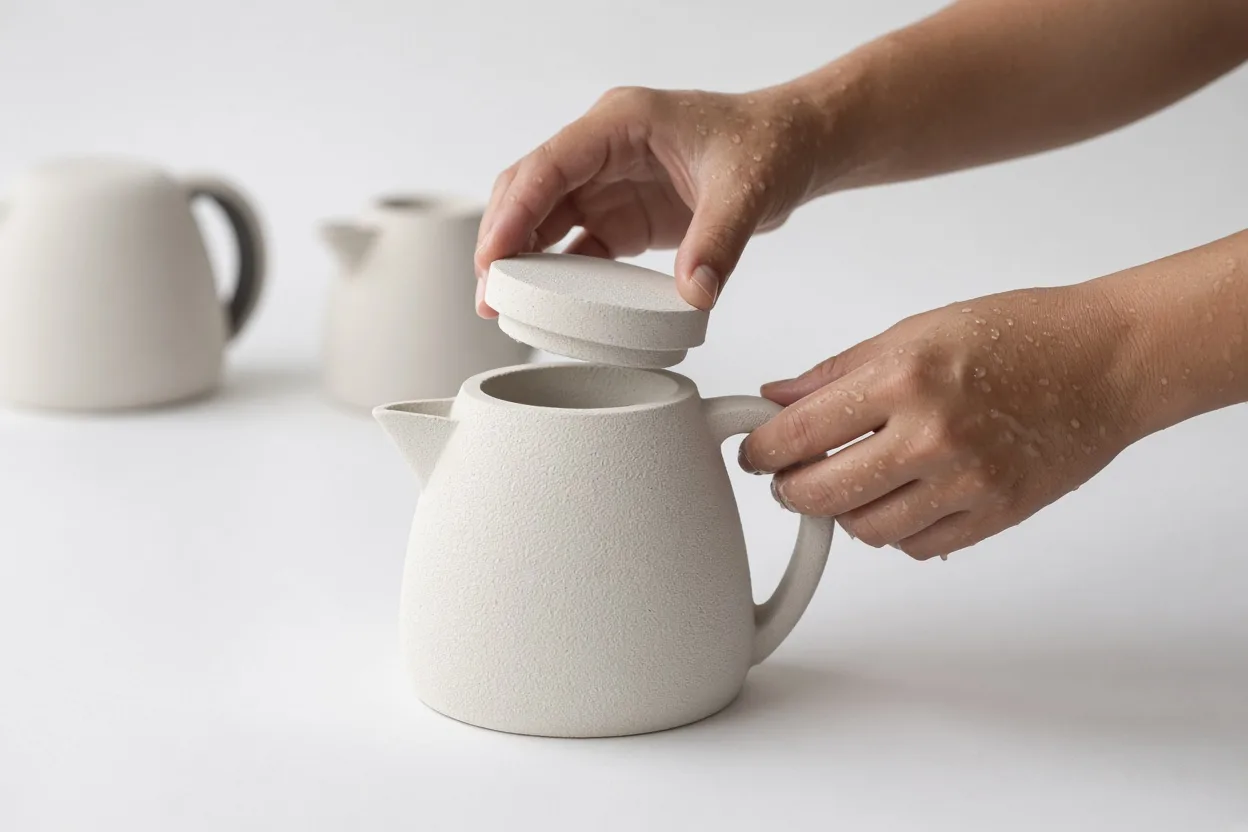
Mora kettle. The handle burned knuckles and the lid needed two dry hands to open.
After · production part
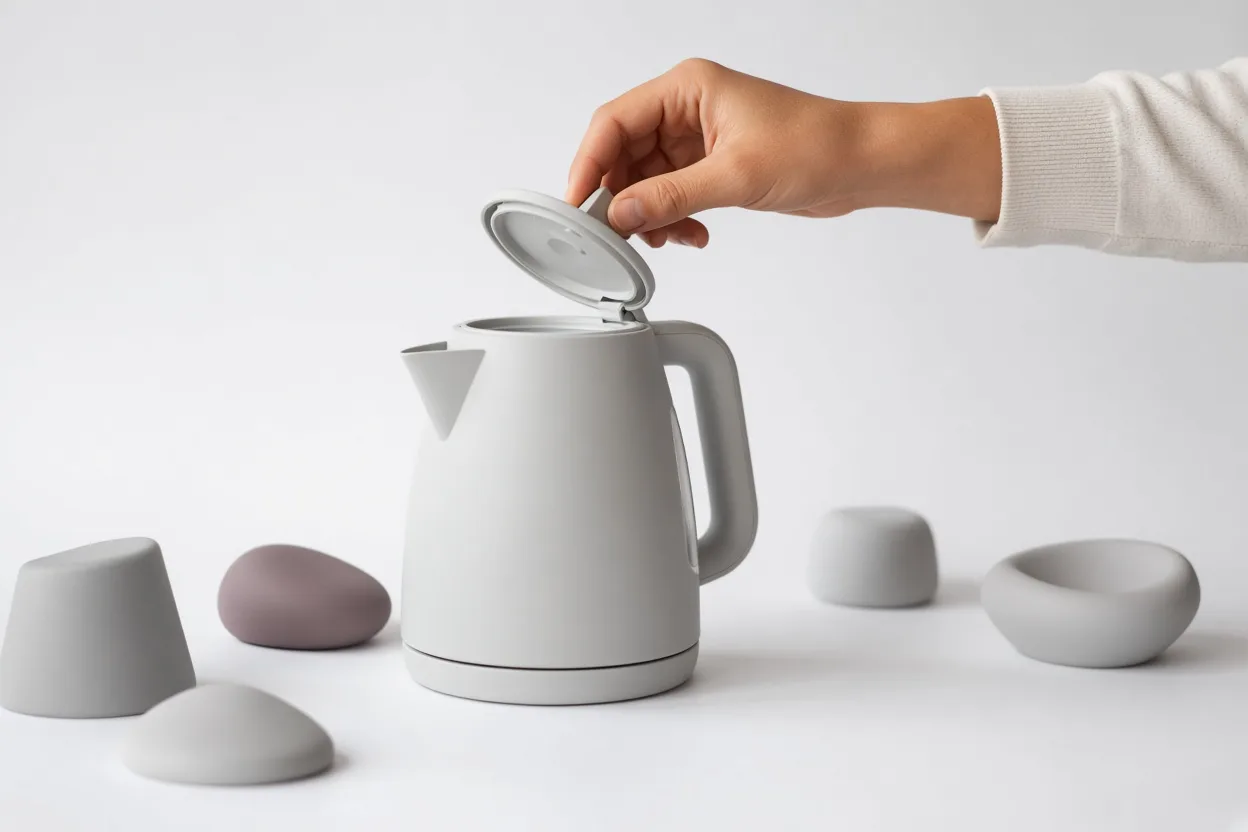
An offset handle that keeps knuckles clear and a lid released with one touch.
23 foam models · 11 months to first tool sample · Oct 2024
Products that prove it
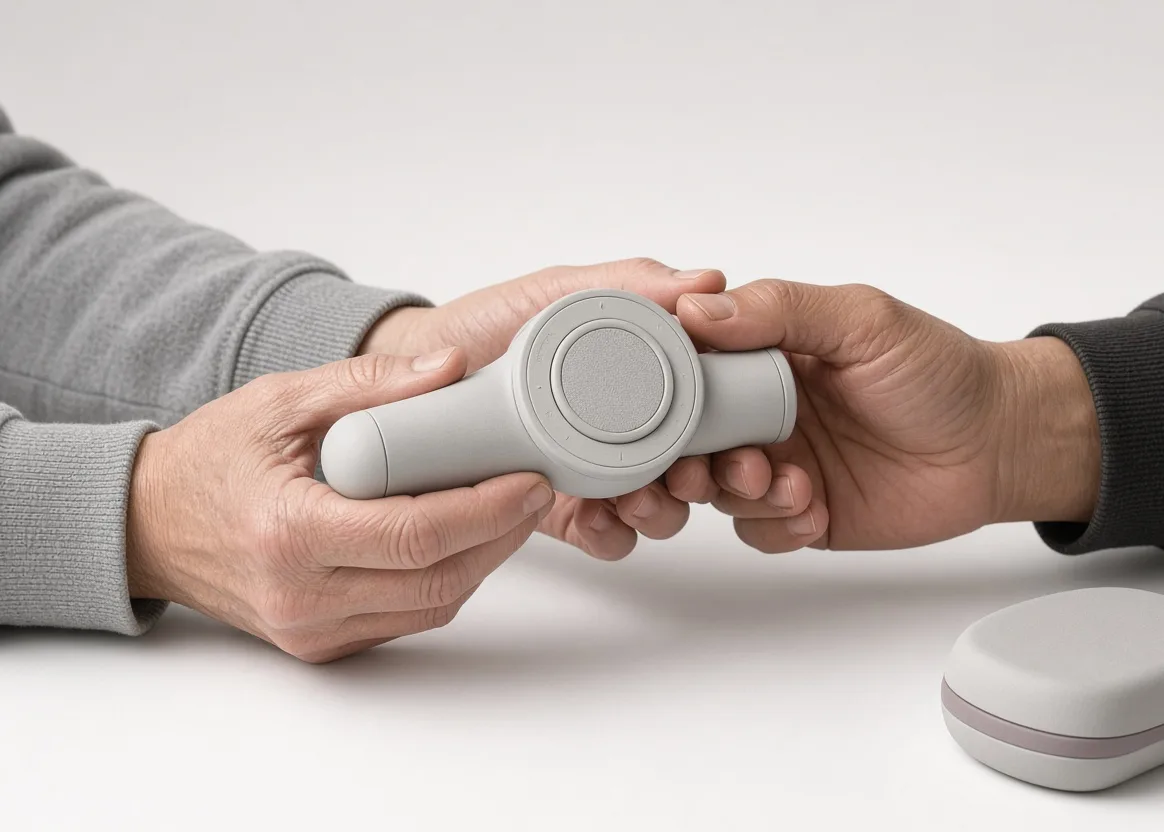
Patients with stiff fingers could not read or turn the dose dial. Through 56 foam and resin studies we developed a high-contrast, magnified scale and a light ratcheting dial, tested with patients in clinic.
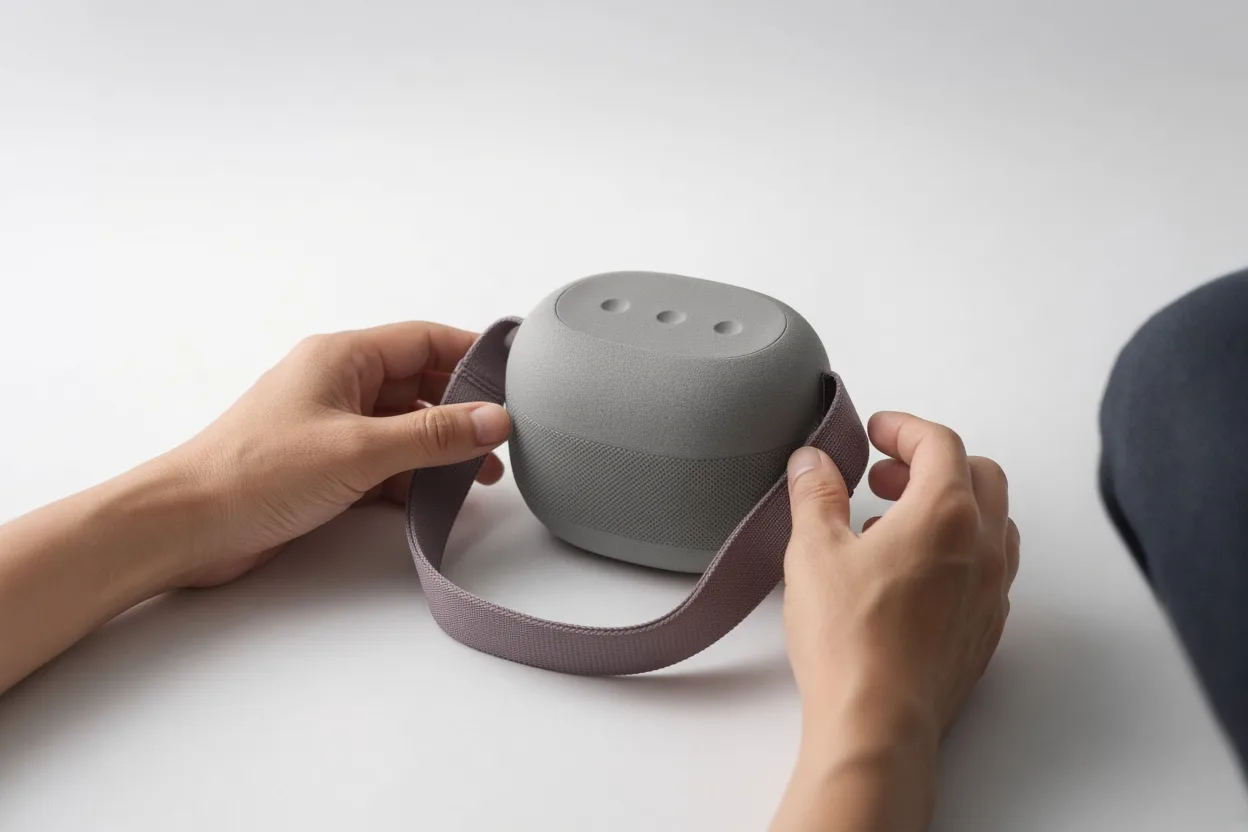
The first sample cost twice its target and could not be assembled without glue. We re-engineered the enclosure into three interlocking moulded parts with snap fits, halving the unit cost and removing adhesive entirely.
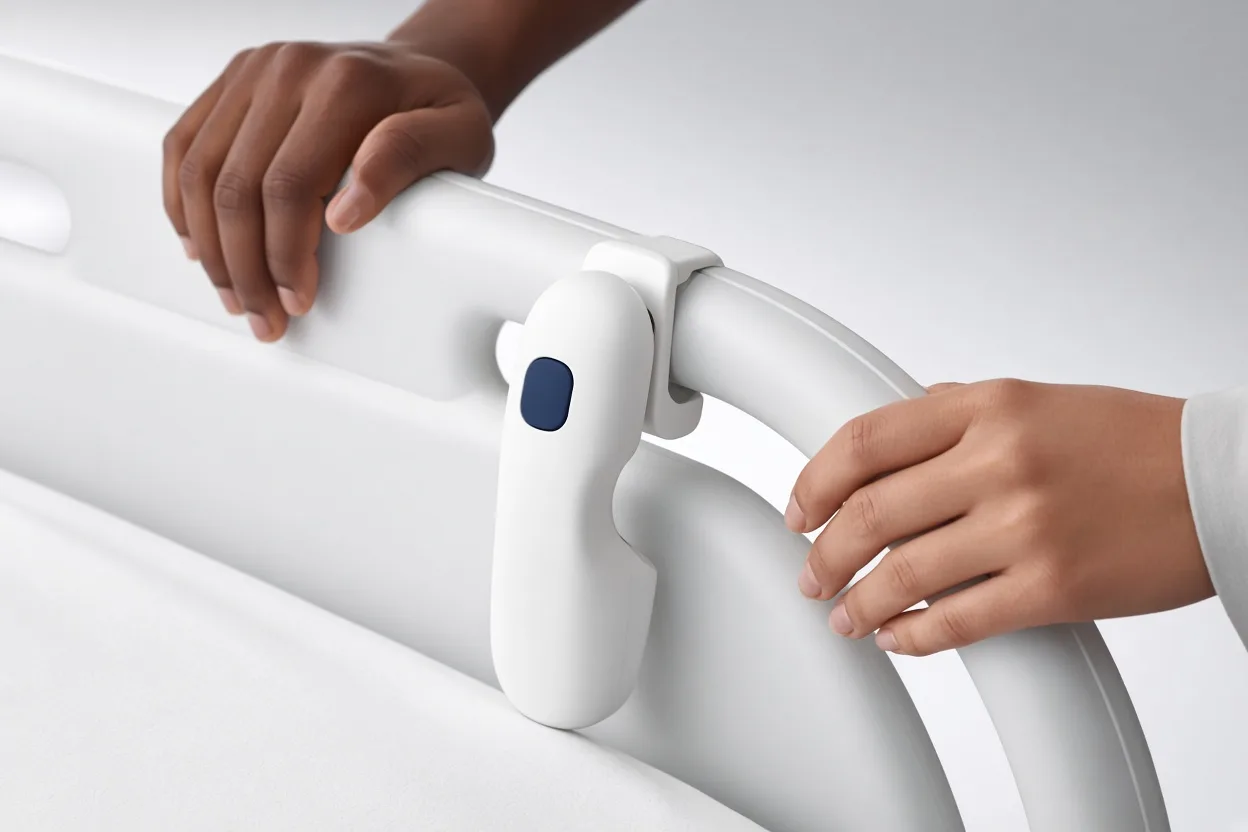
Night nurses could not find the call button by touch, and patients dropped the handset off the bed. Forty-one hand-sanded prototypes gave a thumb recess, a navy button you can find in the dark and a clip for the bed rail.
Why foam
A drawing cannot tell you where a thumb will rest. A piece of foam can, in an afternoon.
Foam models made in our own shop: 138 for the four cases on this page.
Start a project
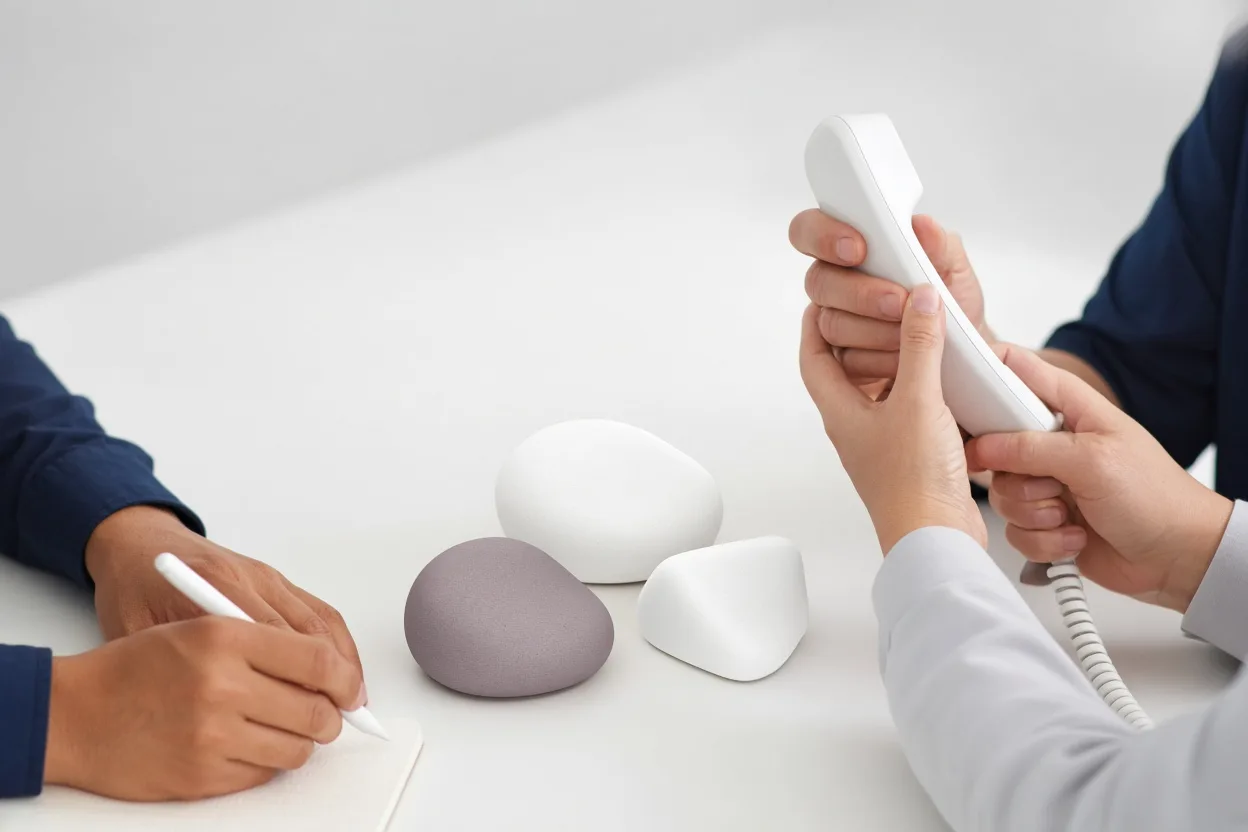
Every project starts with a discovery workshop: one full day at our studio or yours, and a written problem statement within 5 working days. The fee of €2,400 is deducted from the next stage if you go ahead. Write or call, and Paul replies within 3 working days with two dates.
€2,400 · one day
Mon–Fri 09:00–18:00
+00 31 555 0172