Medical devices
Handsets, pens and bedside devices, tested in the hands that use them.
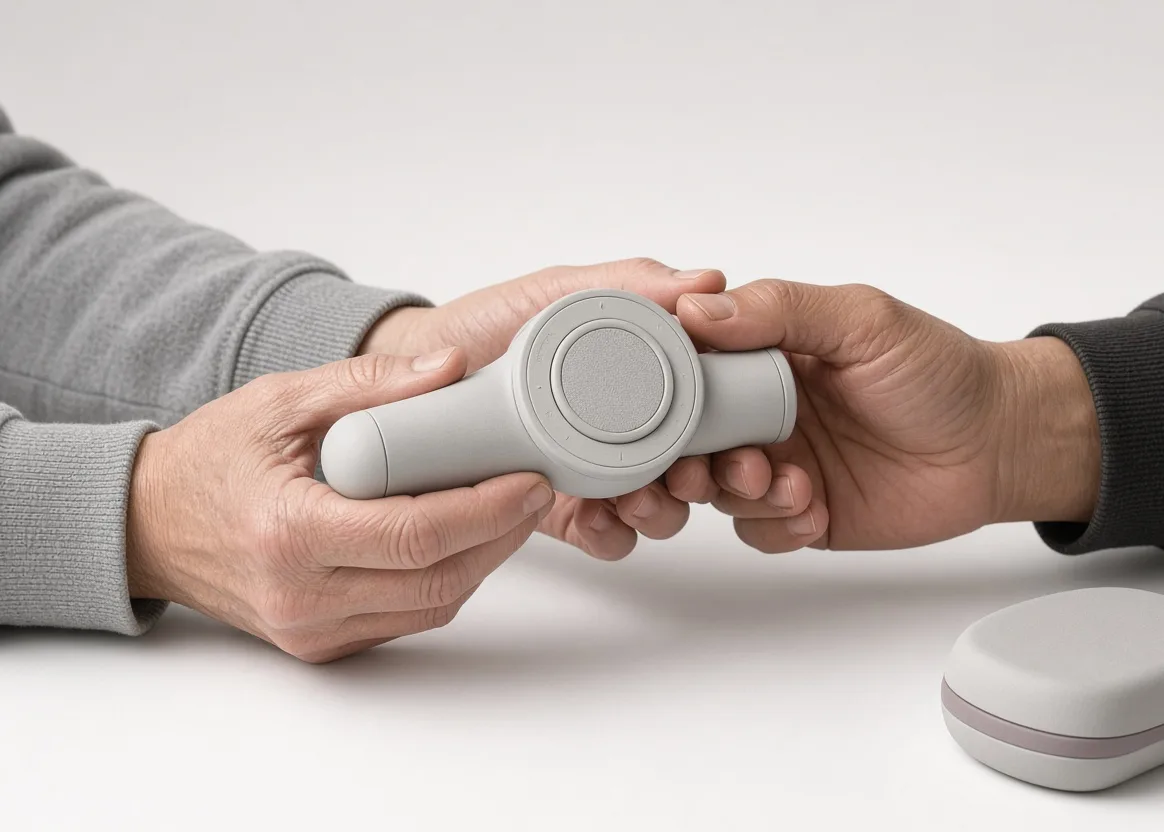
We design medical devices and clinical equipment that stay intuitive for tired users and fit human-factors expectations. Our physical prototyping process resolves handling risks before regulatory submissions begin.
Regulated products
Usability files
Usability files and human-factors engineering
Medical device development demands clear proof that a product can be operated safely under stressful, unpredictable clinical conditions. Led by Amara Okafor, our medical design practice develops complete usability engineering files aligned with international human-factors expectations. We study how nurses, clinicians, and patients handle devices during night shifts, emergency interventions, and home self-administration. By building physical ergonomic prototypes early, we identify confusion around dials, indicators, and buttons before software or tooling investments solidify. Every grip profile and tactile interaction is tested repeatedly with representative end users, transforming abstract risk management matrices into intuitive, clear physical instruments.
Case studies
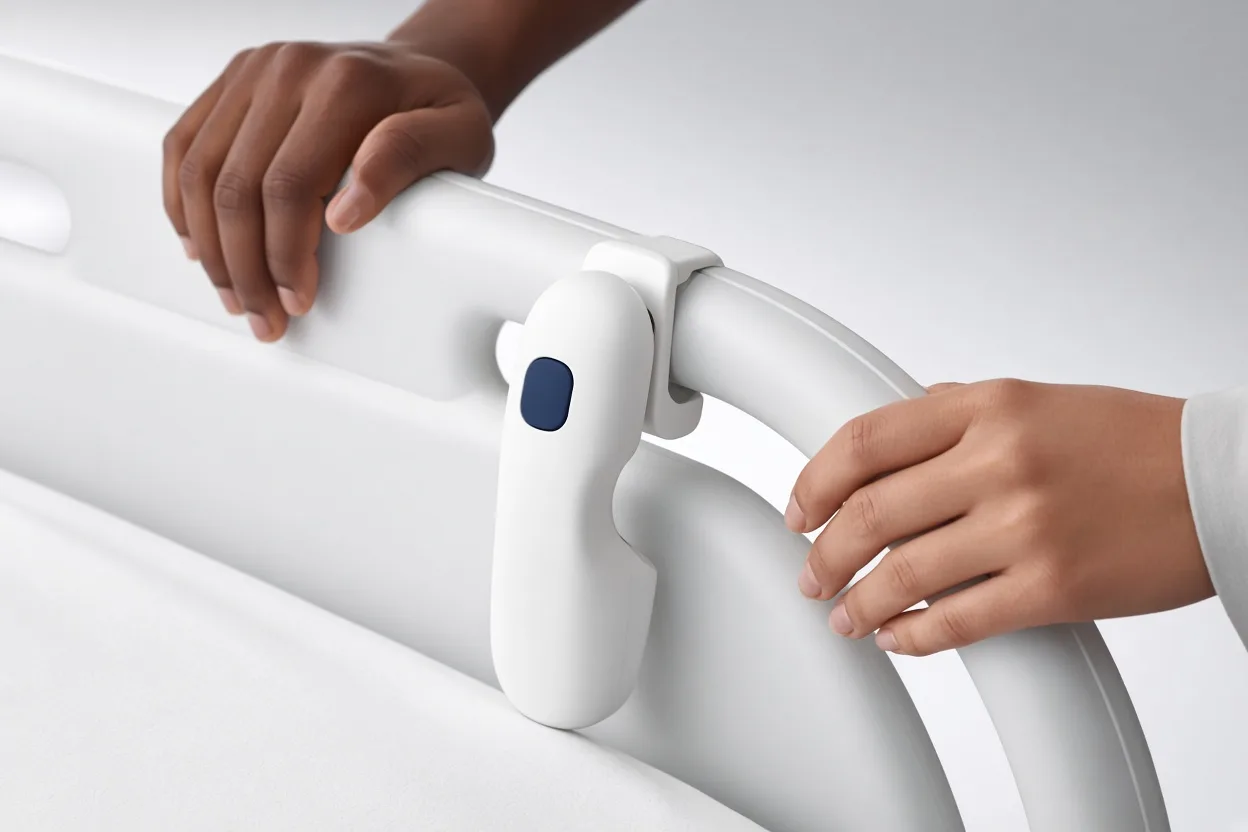
Case study: Cradle nurse-call handset
Completed in March 2025 for a hospital equipment maker, the Cradle handset demonstrates how tactile prototyping solves severe clinical handling problems. Night nurses working in dim patient rooms frequently struggled to locate the primary emergency call button by touch alone, while bedridden patients regularly knocked the device onto the floor. Across fourteen months, we produced forty-one hand-sanded foam models to develop an asymmetrical thumb depression and a balanced rail-clip profile. The final device features a distinctive soft navy tactile button set within a smooth matte white housing made for daily hospital cleaning.
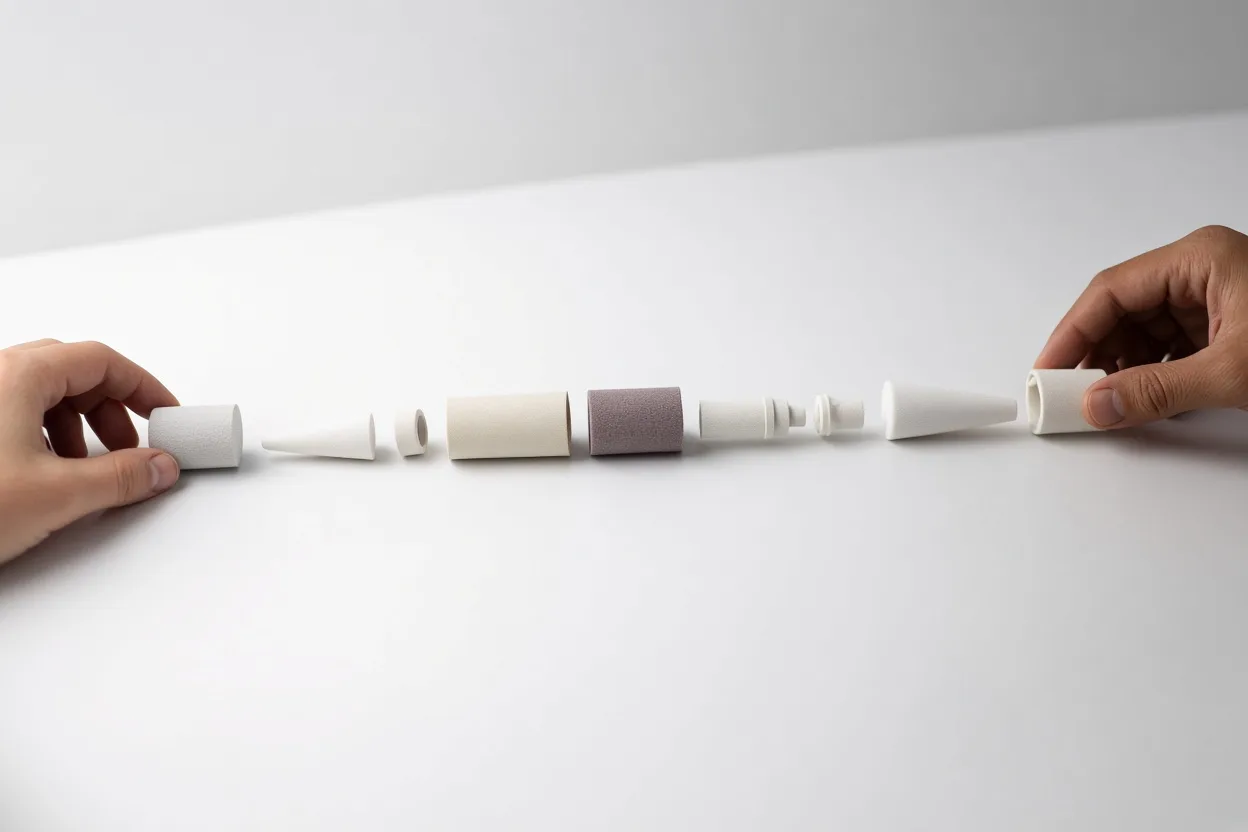
Case study: Tally reusable dose pen
Developed for a pharmaceutical device supplier and delivered in June 2025, the Tally dose pen is a reusable injection pen tailored for patients experiencing arthritis or reduced grip stability. Existing injection pens featured tiny dose numbers and stiff rotating barrels that users with limited pinch strength could not adjust accurately. Our studio evaluated fifty-six physical mechanism prototypes over eighteen months, perfecting an enlarged dose dial that clicks audibly with minimal torque. The final enclosure provides high visual legibility, dependable dosage confirmation, and comfortable one-handed stabilization during delicate daily injections.
In the clinic
Why early testing
Why do medical devices require early physical testing in clinical environments?
Screen renderings and digital simulations cannot replicate the physical reality of a busy hospital ward or an elderly patient's trembling hands. In clinical environments, equipment must be operable in low light, through latex gloves, and under acute emotional stress. Design researcher Lena Brandt conducts structured observation visits inside healthcare settings to observe how staff interact with medical equipment during peak shift changes. Building high-density foam and functional resin prototypes allows clinicians to evaluate balance, weight distribution, and tactile feedback directly. Resolving ergonomic flaws in physical models helps reduce dosing errors and lowers the risk of delays during formal human-factors validation.