Consumer products
Kettles and speakers designed for the factory line from the first foam model.
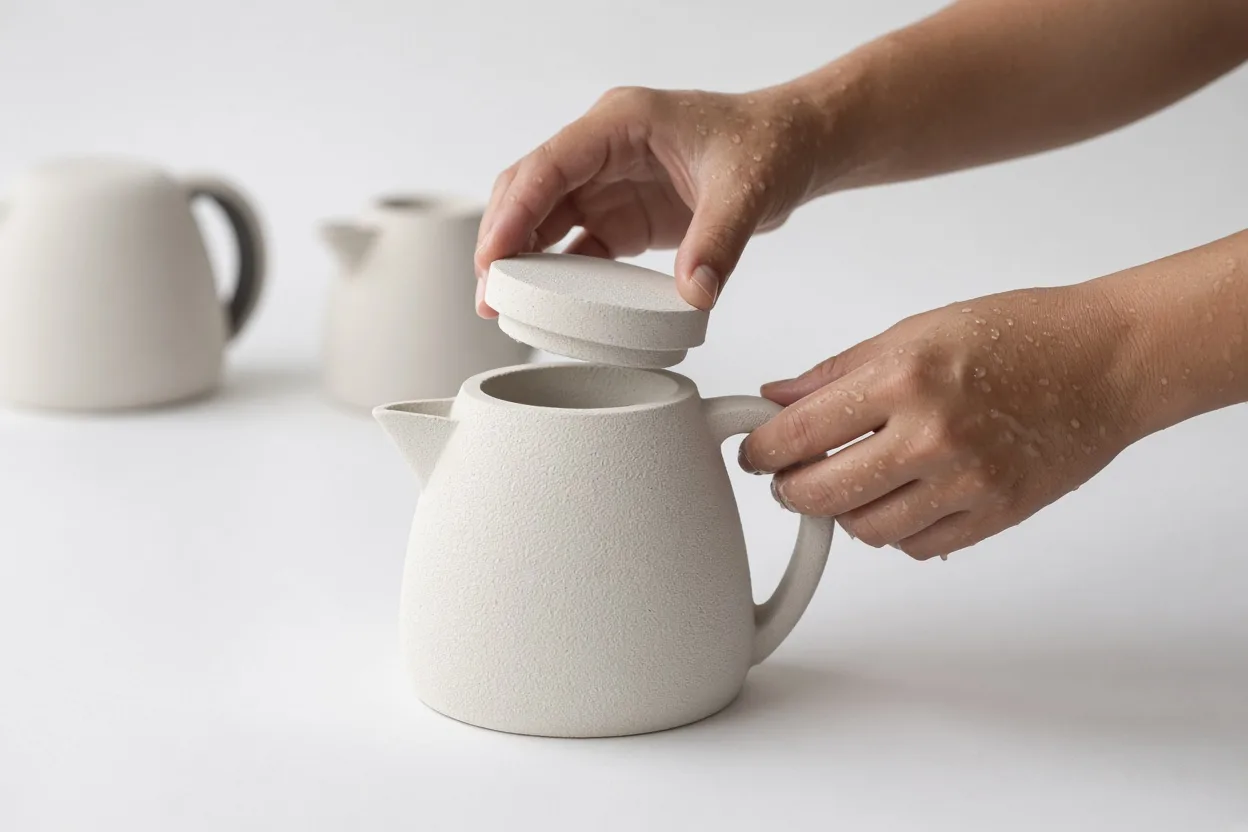
We develop consumer products that unite functional elegance, sensible manufacturing economics, and refined tactile character. Our studio ensures that every assembly detail and surface finish supports long-term durability on the market.
Consumer products
Cost, assembly, finish
Balancing unit cost, assembly logic, and finish
Designing commercial consumer goods requires disciplined coordination between industrial design intent, production tooling constraints, and target retail pricing. Industrial designer Hyun-woo Park and engineer Mateo Ruiz collaborate from the opening brief to strip out unnecessary internal fasteners and optimize wall sections for rapid moulding cycles. Concurrently, Sofia Lindqvist establishes color, material, and finish (CMF) strategies that convey premium tactile quality without driving up secondary processing costs. By eliminating adhesive bonding and refining molded interlocking snaps, we reduce assembly line labor and allow straightforward end-of-life disassembly. Every contour is physically validated to ensure production efficiency matches market desirability.
Case studies

Case study: Mora 1.2 litre electric kettle
Created for a kitchen appliance maker and finished in October 2024, the Mora kettle illustrates how thoughtful physical design eliminates daily domestic frustrations. Early consumer market samples exhibited handle geometry that exposed knuckles to escaping steam during boiling, while the release button required two hands to refill the pot beneath a running faucet. Over eleven months and twenty-three successive foam study models, we reshaped the steam evacuation channel and balanced the vessel's center of gravity. The production kettle features an intuitive single-finger thumb trigger, allowing smooth one-handed opening and pouring even when hands are wet or soapy.
Case study: Pell portable speaker
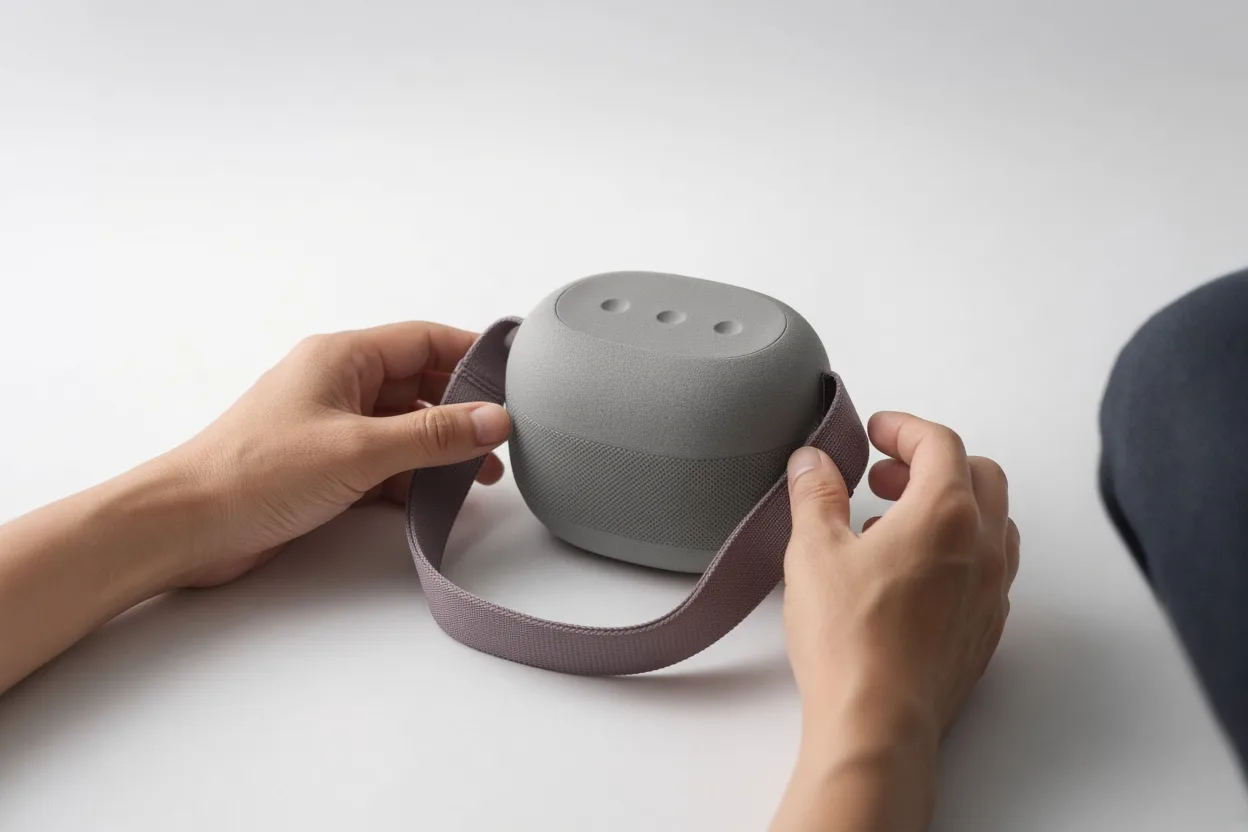
Commissioned by an ambitious audio start-up, the Pell portable speaker arrived at our Haverholt studio with an initial bill of materials priced at double its retail target. The early prototype relied heavily on glued interior flanges, making automated factory assembly impossible and repair unfeasible. Across nine months of focused development, our team evaluated eighteen functional prototypes to re-engineer the entire enclosure around self-locating snaps and minimal mechanical screws. Completed in January 2025, the final speaker achieved target manufacturing costs while delivering a tactile soft-grey casing complemented by an integrated mauve-grey woven carrying strap.
Before tooling
Why physical prototypes
How do physical prototypes prevent costly assembly errors before tooling?
Computer models frequently disguise subtle interference fits, poor finger clearances, and awkward manufacturing sequences that only become obvious when parts are handled physically. By machining high-density foam mockups and assembling high-resolution resin parts in our Haverholt shop, we test the exact order of mechanical assembly with technicians' hands. Mateo Ruiz examines part clearances, draft angles, and snap deflections under real physical strain before steel cutting begins. Catching an unworkable internal boss or an awkward wiring channel in an appearance model can save costly tool modifications and avoid factory line stoppages during initial production runs.