Method
Research, foam, engineering, tooling: four stages with the same eight people.
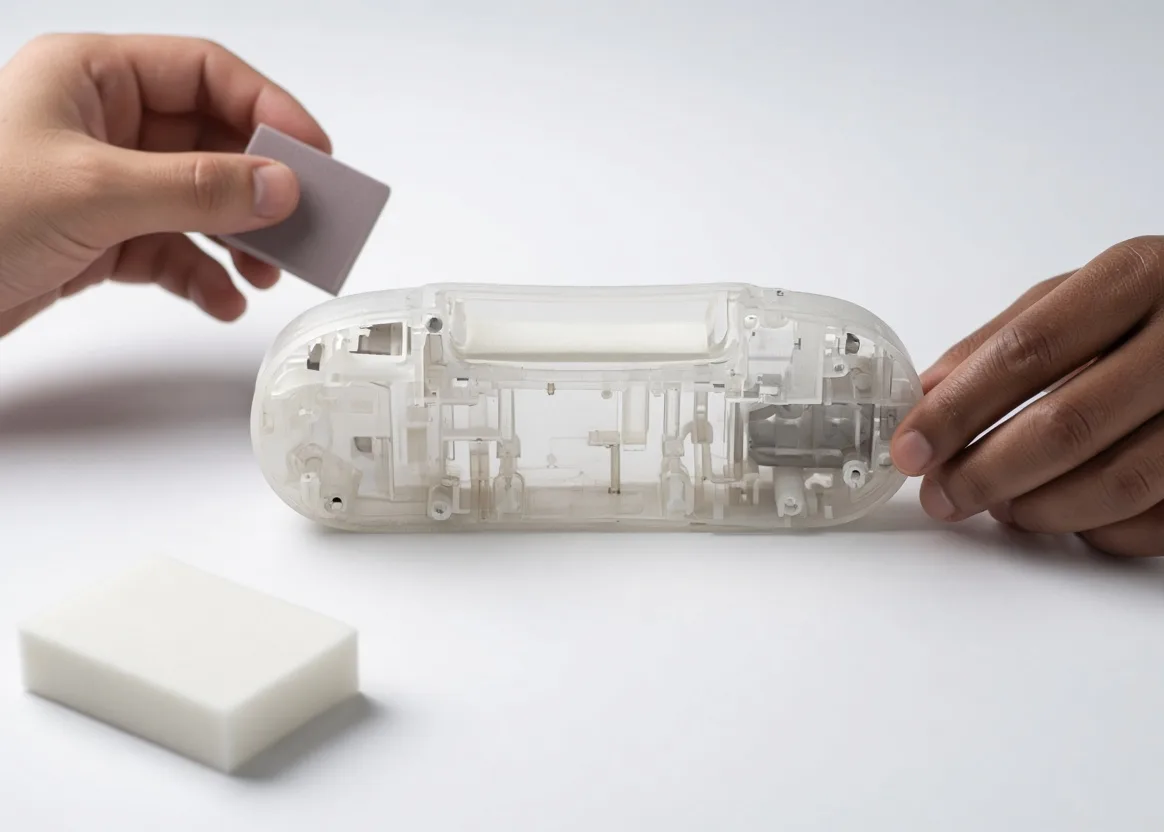
Our design process spans four clear phases, advancing directly from contextual field research to factory floor tooling support. We sand physical models early and often to eliminate design errors before tooling steel is cut.
Research
01 Research
Weeks 1–4
Led by Lena Brandt
Stage 01: Research in the field
Covering weeks 1 to 4, our research phase investigates how products behave in real environments. Led by design researcher Lena Brandt, we observe people using existing equipment in clinics, homes, and workshop floors. Rather than relying on self-reported survey answers, we document awkward hand postures, lighting challenges, and unexpected workarounds. What you get from this stage is a findings report, user observation logs, and a prioritized functional brief that guides all subsequent physical prototyping.
In the field
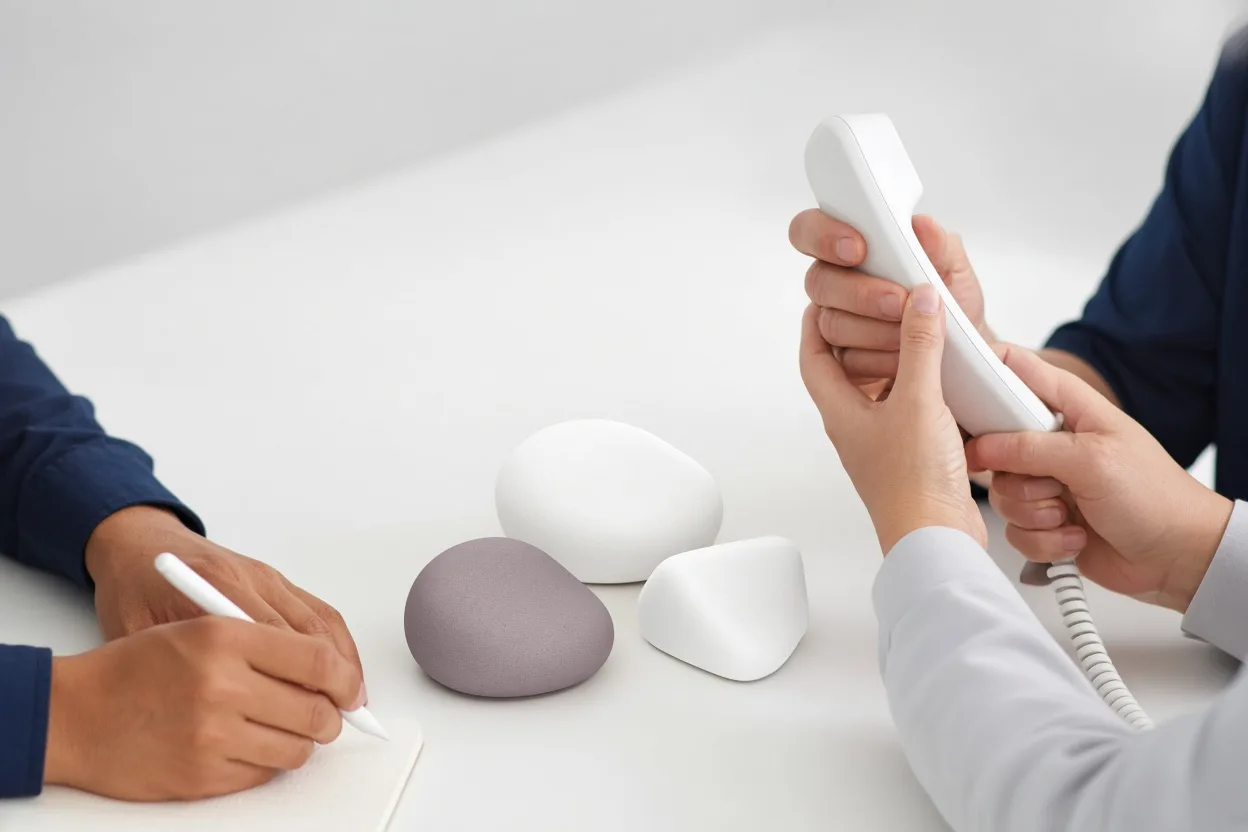
Notes taken beside a nurse holding a handset, at the bedside.
On the desk
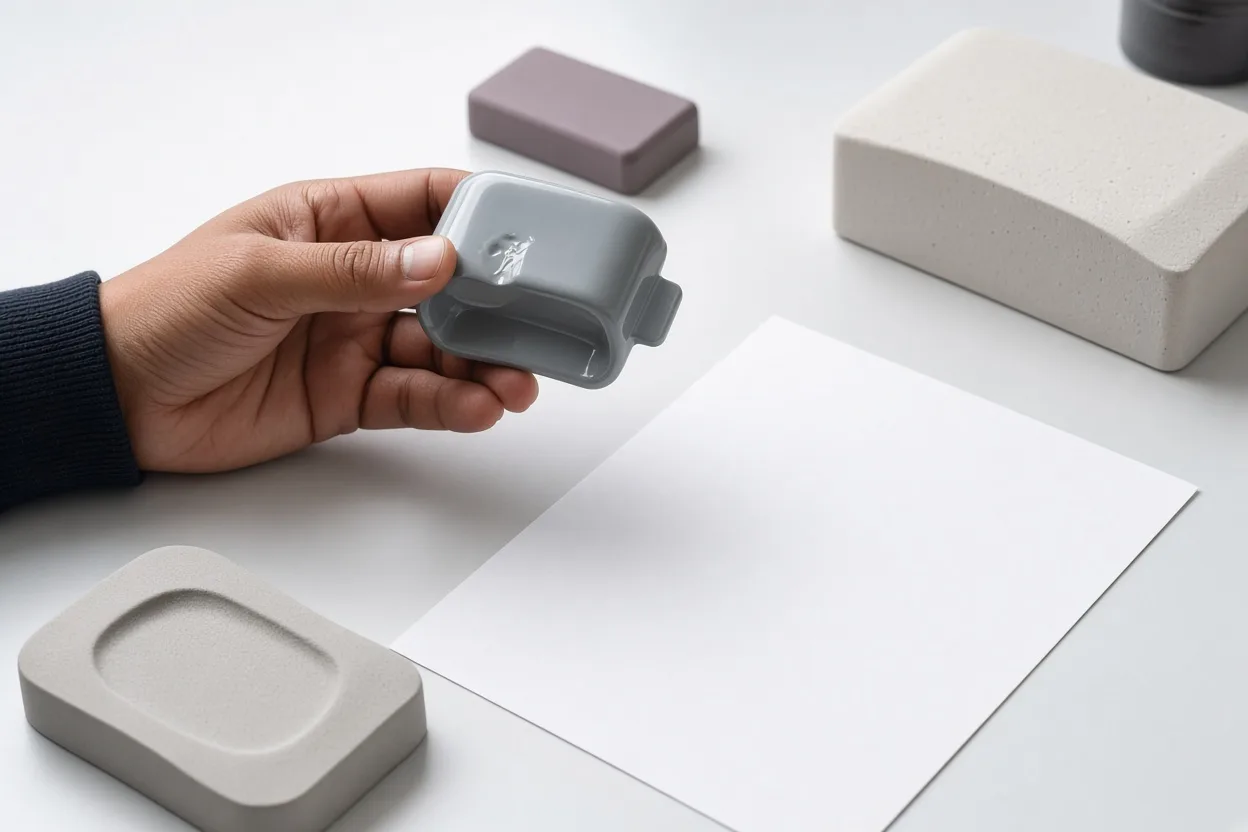
A production sample with a flaw, next to the drawing that tested well.
Foam
02 Foam
Weeks 5–12
Led by Ines Varga and Kofi Asante
Stage 02: Foam prototyping at the bench
Spanning weeks 5 to 12, the foam phase turns preliminary research insights into three distinct design directions. Guided by Ines Varga and head of model shop Kofi Asante, we shape and sand dozens of high-density foam models by hand. Real users and stakeholders hold each physical iteration to evaluate grip thickness, thumb reach, and visual balance. What you get includes up to fifteen hand-sanded models, a collaborative review day at our Haverholt studio, and one validated form direction selected for detailed engineering.
Foam models in sequence
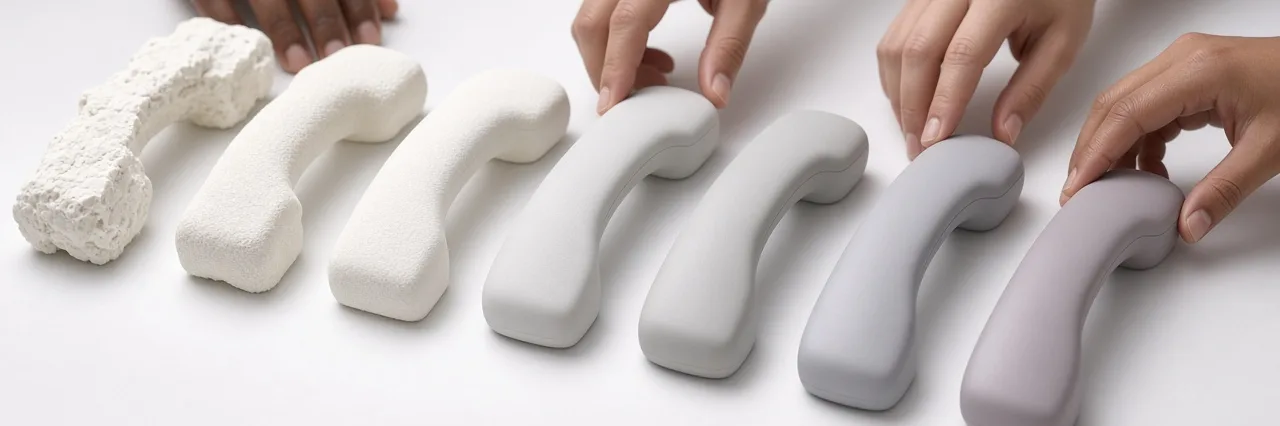
Seven of the forty-one Cradle models, from rough to refined.
At the bench
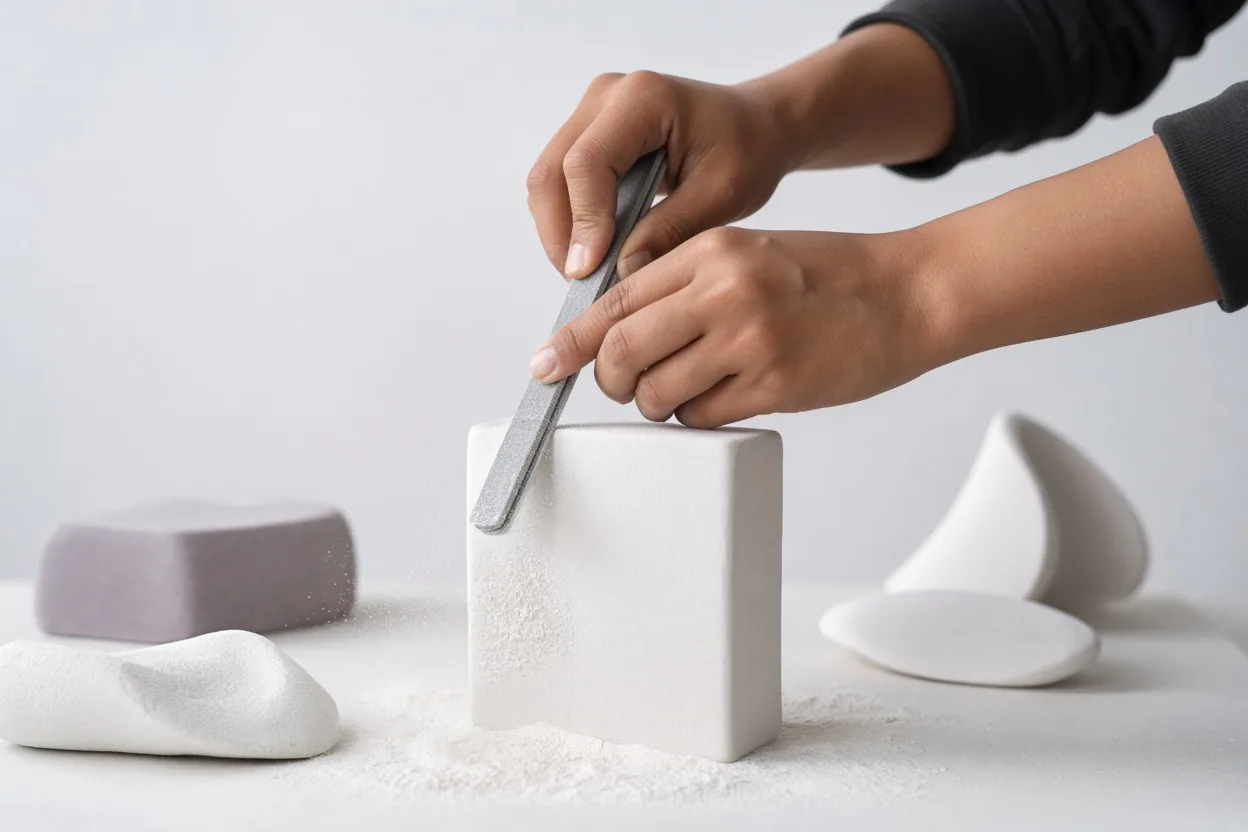
Sanding a foam block by hand; each pass changes the shape a little.
Engineering
03 Engineering
Weeks 13–24
Led by Mateo Ruiz
Stage 03: Engineering for production assembly
Running through weeks 13 to 24, mechanical engineer Mateo Ruiz translates the approved appearance model into robust production CAD. We analyse structural wall thickness, draft angles, shut-offs, and internal clip interfaces to ensure dependable part ejection during injection moulding. Usability documentation and colour, material, and finish specifications are aligned simultaneously. What you get is a production CAD package, full tooling analysis data, a functional resin appearance model, and a complete hand-off pack ready for tooling vendors.
Parts laid out
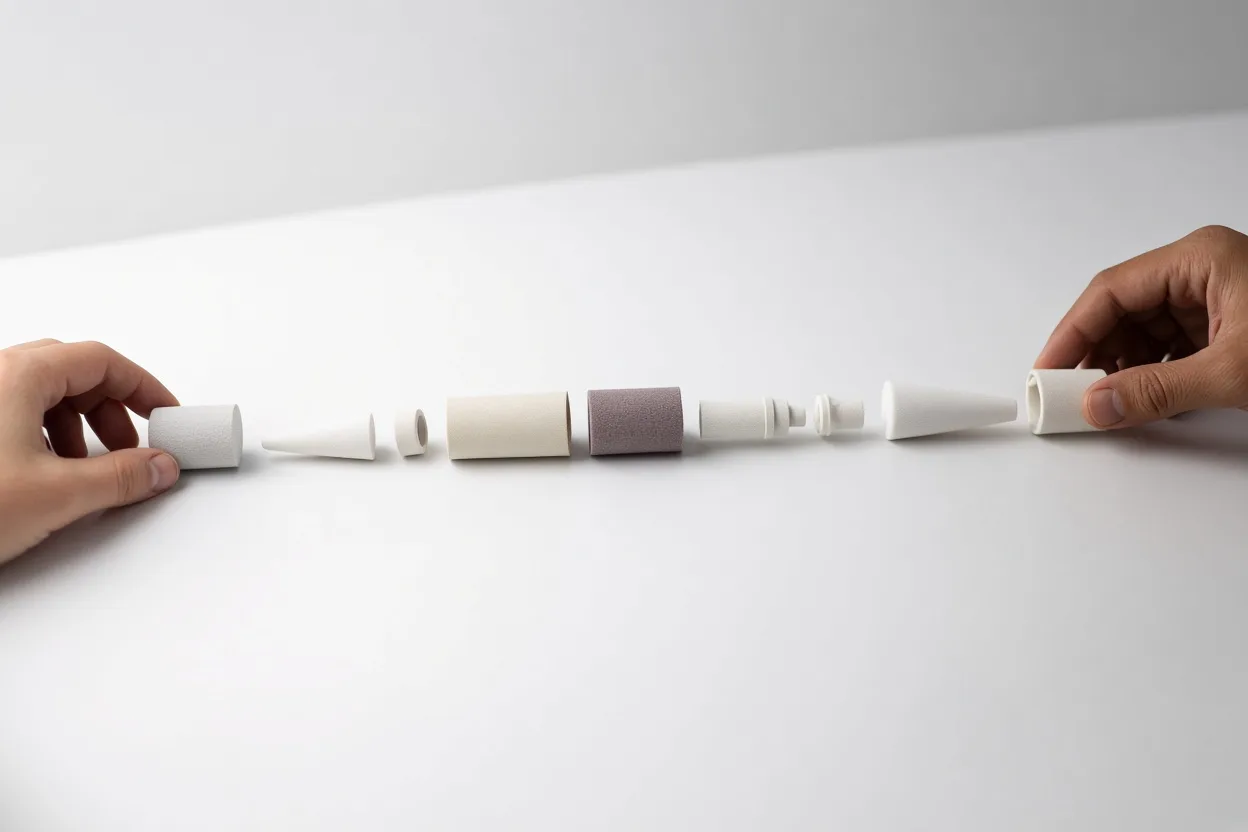
Dose-pen parts in a row, ready for wall and draft checks.
A part that fits
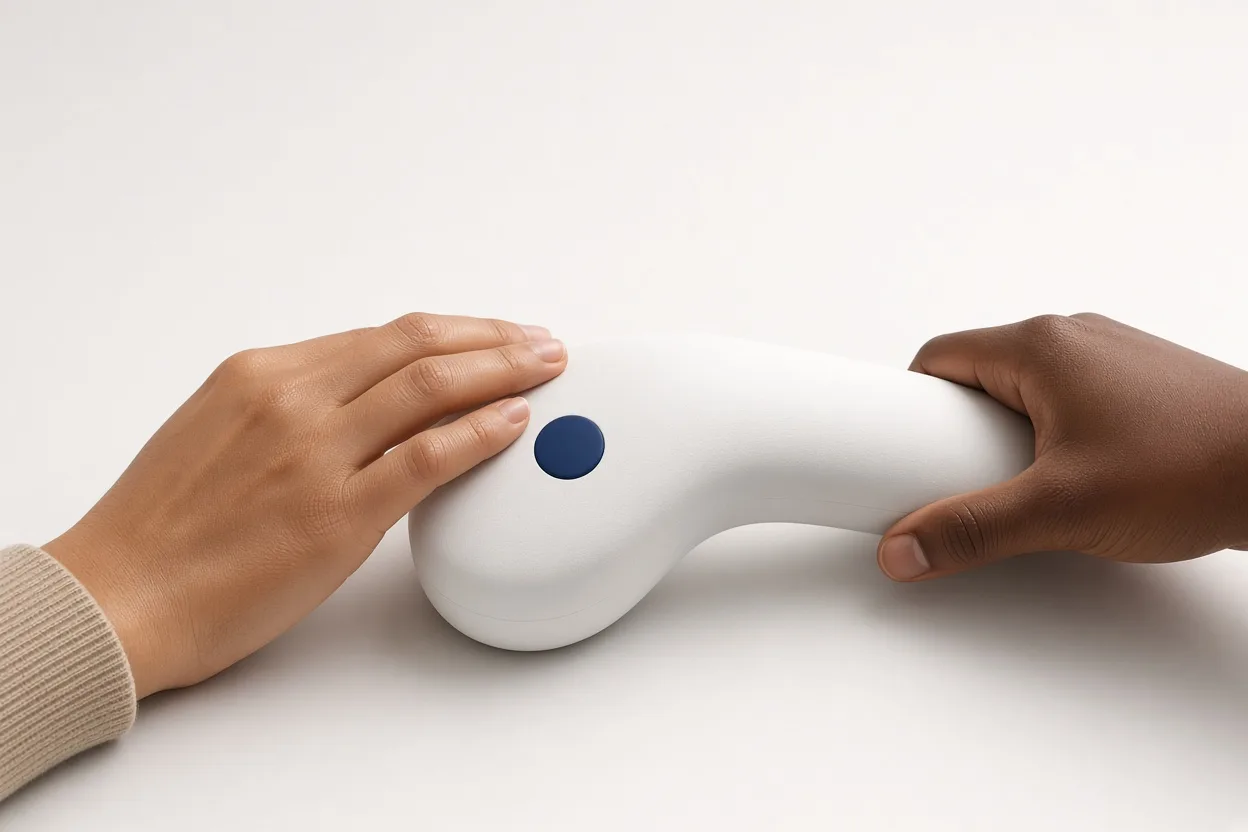
The finished handset: parts that click together without glue.
Tooling
04 Tooling
Months 7–18
Led by Mateo Ruiz and Paul Moreau
Stage 04: Tooling support on the factory floor
Extending from month 7 to month 18, our tooling phase bridges the critical gap between digital files and manufactured reality. We work directly with selected tooling suppliers, reviewing steel cuts and attending factory trials in person to inspect first-off molded samples. When sink marks, tight tolerances, or gate witness marks arise, we adjust geometries immediately. What you get is continuous on-site engineering supervision, sample review reports, and verified production approvals before high-volume manufacturing commences.
Finished product
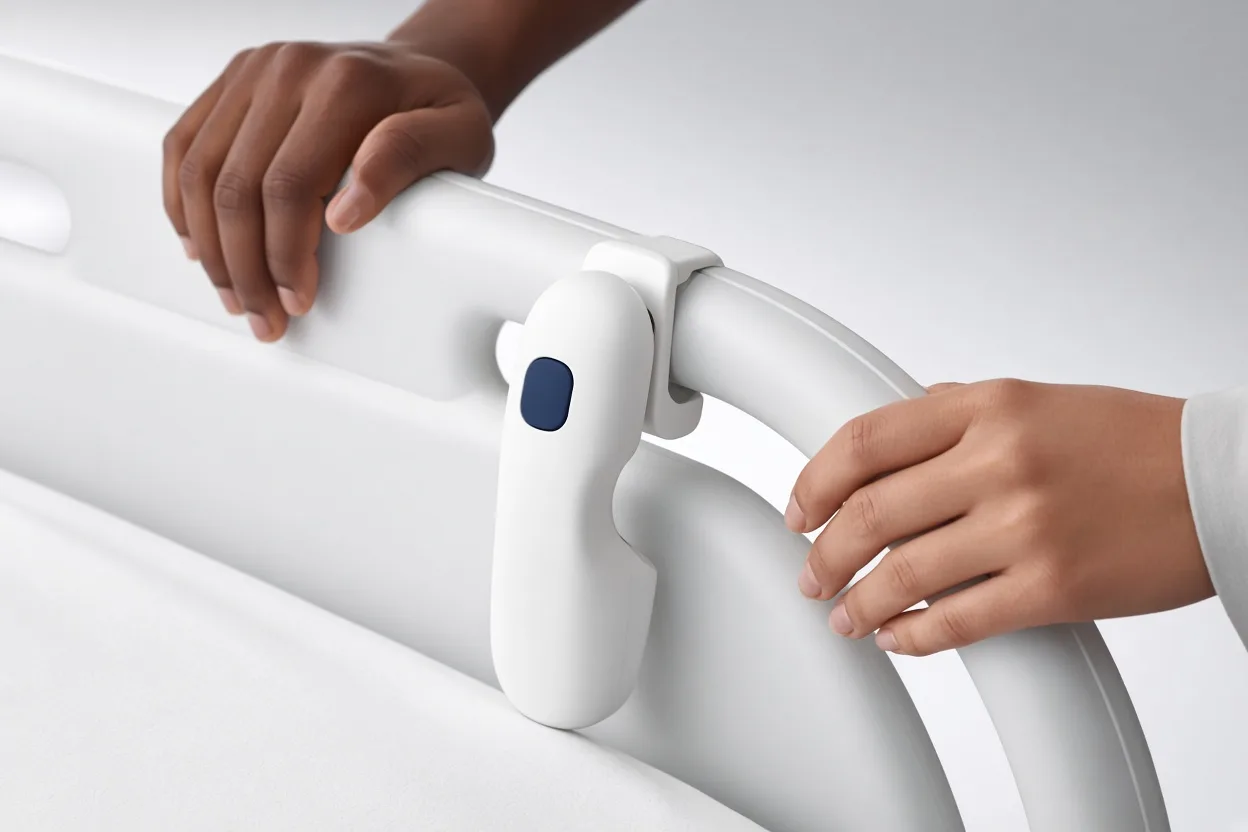
The Cradle handset clipped to a bed rail, as it ships.
First-off check
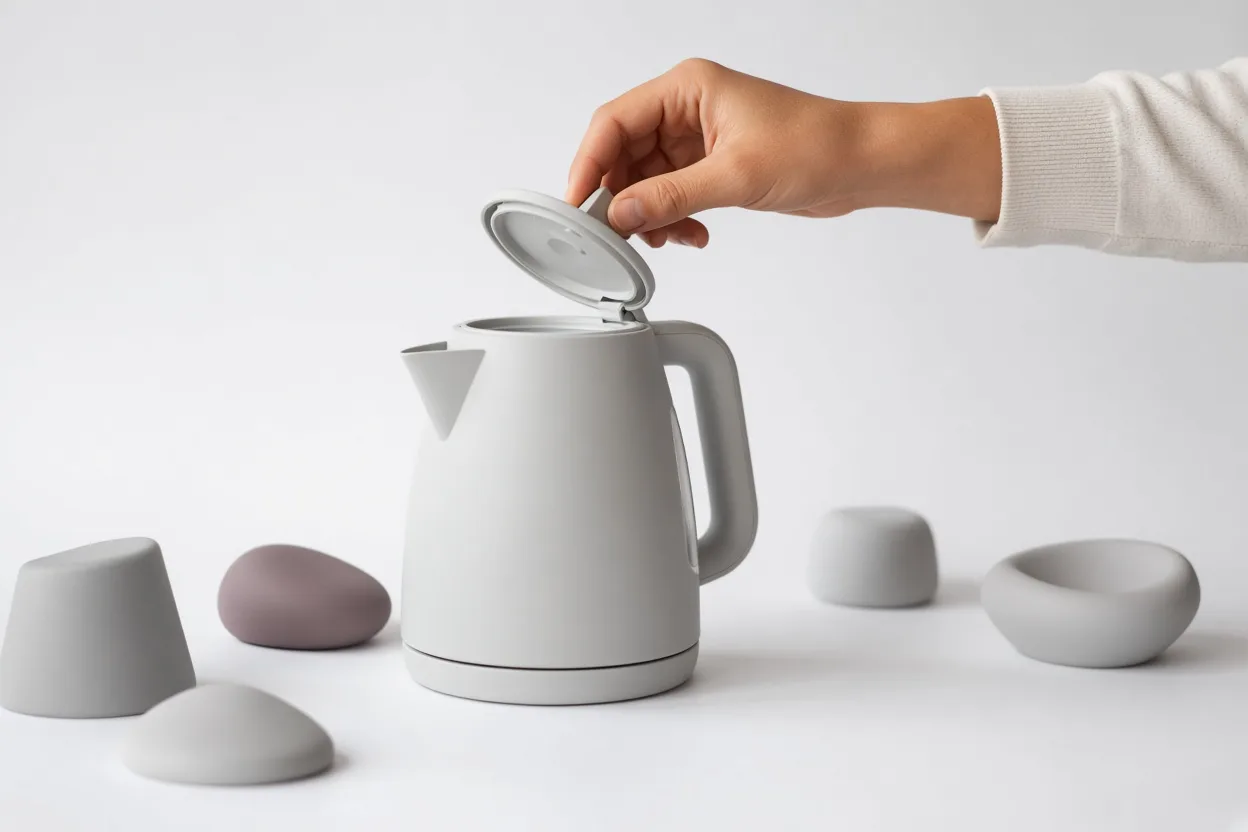
The Mora kettle, opened with one hand after first-off sample review.
Adapting
Regulated and high-volume work
How does the four-stage design process adapt to regulated or high-volume programs?
While the core progression from research to tooling remains constant across every studio engagement, regulated medical devices and high-volume consumer goods introduce specialized validation checkpoints. For medical hardware, Amara Okafor integrates formal human-factors usability files alongside Lena Brandt's field observation data to meet strict regulatory submissions. In consumer programs, Mateo Ruiz and Hyun-woo Park emphasize rapid cost modeling and assembly cycle reduction during the engineering phase. Regardless of product complexity, our project workload never exceeds nine assignments annually, ensuring the same senior team remains actively engaged at every stage.