Course Modules and Certification
[ CERTIFICATION ]
The curriculum comprises eight certified modules designed to prepare technicians for national civil aviation authority licence examinations. Training combines theoretical knowledge, practical task books, and formal bench assessments.

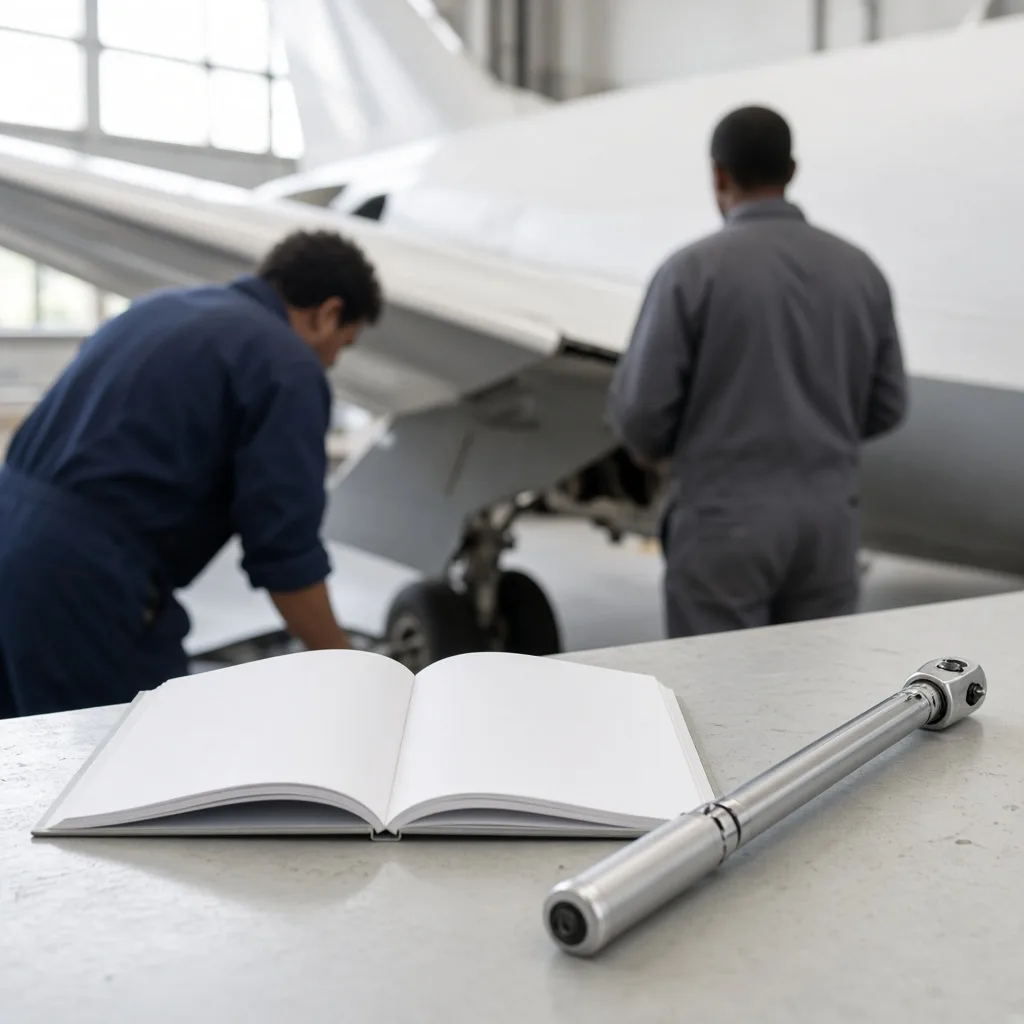
Core Modules M1 Through M4
Module 1 covers Mathematics and Physics across months 1 and 2, delivering 220 hours assessed by written examination. Module 2 addresses Electrical and Electronic Fundamentals across months 2 to 4, providing 260 hours evaluated through written examination and practical bench testing. Module 3 focuses on Materials, Hardware, and Maintenance Practices from months 3 to 6, spanning 420 hours assessed via a comprehensive practical task book. Module 4 covers Airframe Structures and Systems across months 7 to 9 for 380 hours, examined through task book verification and oral technical examination. Each module integrates continuous practical demonstrations in our workshops, ensuring students understand structural load paths, riveting standards, electrical distribution systems, and fundamental mechanical principles before advancing to active aircraft systems.
M1
M1 Mathematics & physics
- Arithmetic, algebra, geometry and units used in maintenance calculations
- Mass, force, work, energy and power on real components
- Fluids, heat, light and sound as they appear in aircraft systems
- The physics of flight: lift, drag and stability
Assessment: Written exam
M2
M2 Electrical & electronic fundamentals
- Direct and alternating current circuits and Ohm’s law
- Semiconductors, digital logic and basic electronic components
- Batteries, generators, motors and distribution
- Bench practice with multimeters, oscilloscopes and soldering
Assessment: Written exam and bench test
M3
M3 Materials, hardware & maintenance practices
- Aircraft metals, composites, corrosion and its control
- Fasteners, lockwire, cotter pins and torque practice
- Hand tools, measuring and calibration discipline
- Task cards, maintenance manuals and record keeping
Assessment: Practical task book
M4
M4 Airframe structures & systems
- Structure, load paths and sheet-metal repair on a riveting jig
- Flight controls and cable rigging
- Hydraulics, landing gear and brakes
- Fuel, air-conditioning and pressurisation systems
Assessment: Task book and oral examination
M5
M5 Powerplant (turbine engines)
- Turbine engine theory and the sections of a turboprop and a turbofan
- Fuel, oil, starting and ignition systems
- Borescope inspection and engine-mount checks
- Ground runs and structured troubleshooting
Assessment: Task book and written exam
M6
M6 Avionics & instruments
- Flight instruments, navigation and communication systems
- Wiring practice, harnesses and connectors
- Data bus diagnostics
- Bench testing and fault isolation
Assessment: Bench test and written exam
M7
M7 Human factors & regulation
- Why capable people make errors, and how systems catch them
- Fatigue, shift handover and communication
- Duplicate inspection as a habit, not a formality
- Regulation, the maintenance organisation and the authority
Assessment: Ongoing case reviews
M8
M8 Hangar practice & type familiarisation
- Task cards worked on live airframes in both hangars
- Type familiarisation on a turboprop and a light jet
- Line placement under supervision
- Final college assessment and supervised sign-offs
Assessment: Supervised sign-offs and final assessment
| Module | Months | Hours | How it is assessed |
|---|---|---|---|
| M1 Mathematics & physics | Months 1–2 | 220 h | Written exam |
| M2 Electrical & electronic fundamentals | Months 2–4 | 260 h | Written exam and bench test |
| M3 Materials, hardware & maintenance practices | Months 3–6 | 420 h | Practical task book |
| M4 Airframe structures & systems | Months 7–9 | 380 h | Task book and oral examination |
| M5 Powerplant (turbine engines) | Months 9–11 | 360 h | Task book and written exam |
| M6 Avionics & instruments | Months 10–12 | 300 h | Bench test and written exam |
| M7 Human factors & regulation | Months 1–18 | 120 h | Ongoing case reviews |
| M8 Hangar practice & type familiarisation | Months 13–18 | 340 h | Supervised sign-offs and final assessment |
Advanced Modules M5 Through M8 and Authority Examinations
Module 5 covers Powerplant turbine engines across months 9 to 11 for 360 hours, assessed by task book and written paper. Module 6 delivers Avionics and Instruments in months 10 to 12 over 300 hours, tested through bench diagnostics and written examination. Module 7 runs across all 18 months, providing 120 hours of Human Factors and Regulation evaluated by written case reviews. Module 8 provides 340 hours of Hangar Practice and Type Familiarisation during months 13 to 18, assessed through supervised sign-offs and practical examinations. Students should note that civil aviation licences are issued exclusively by the national aviation authority following its independent examinations; Tsubasa College provides preparatory training and does not issue licences, and examination outcomes depend entirely upon the authority.
[ RELATED ]