Veterinary nursing diploma · since 2004
Nursing,
learned on
the ward.
A two-year diploma for people who want to work beside vets in clinics and animal hospitals. Every week, you spend real shifts on our teaching ward, six students to one tutor.
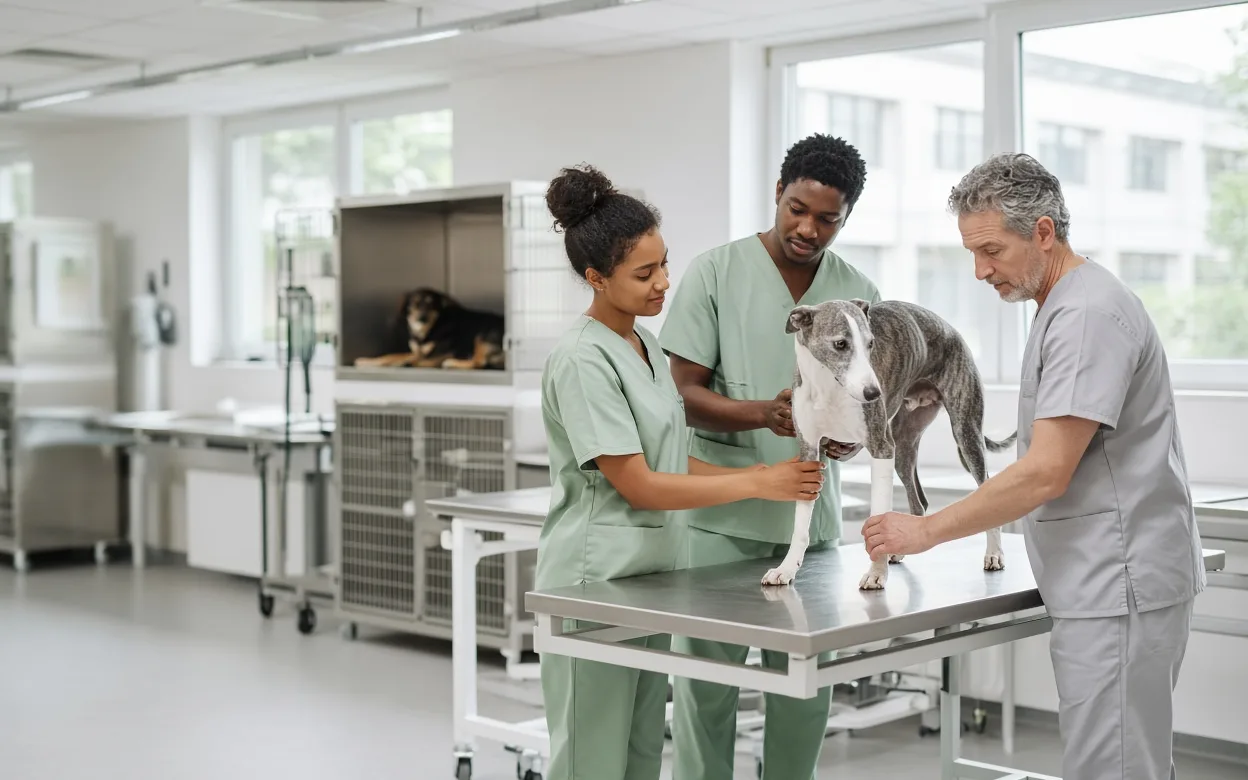
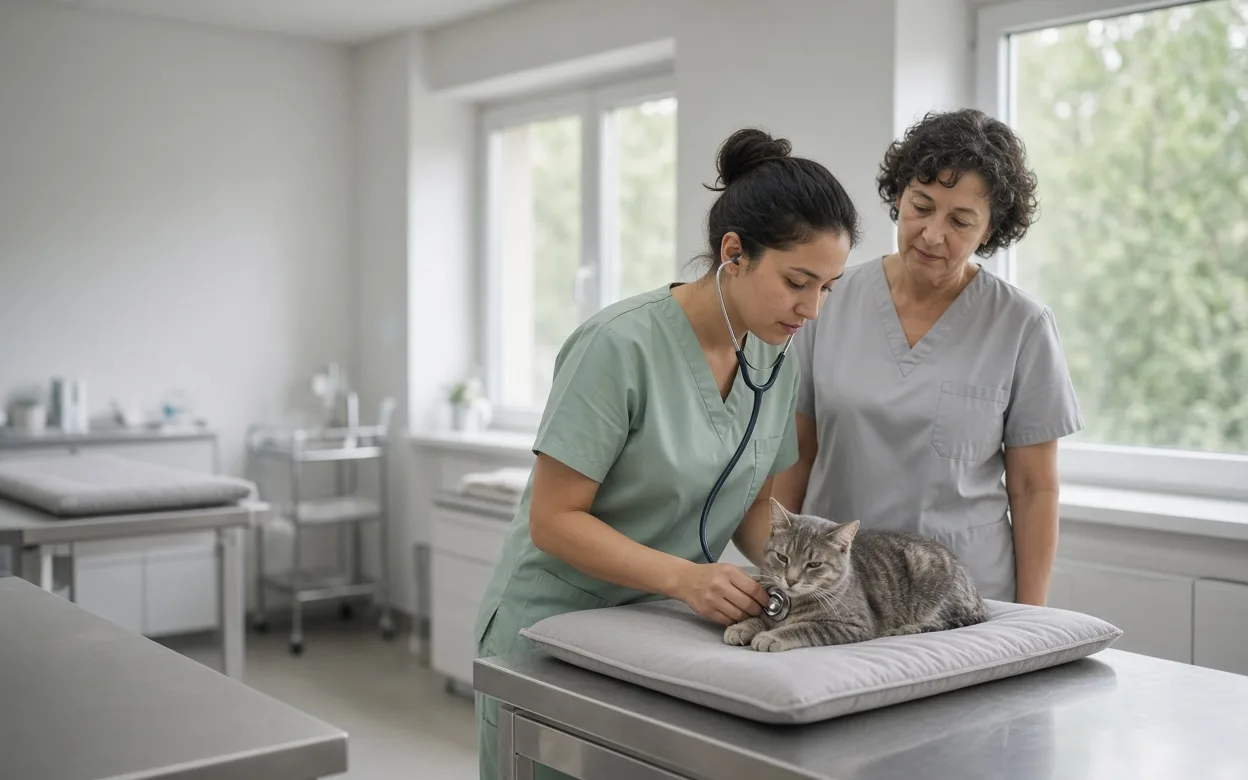
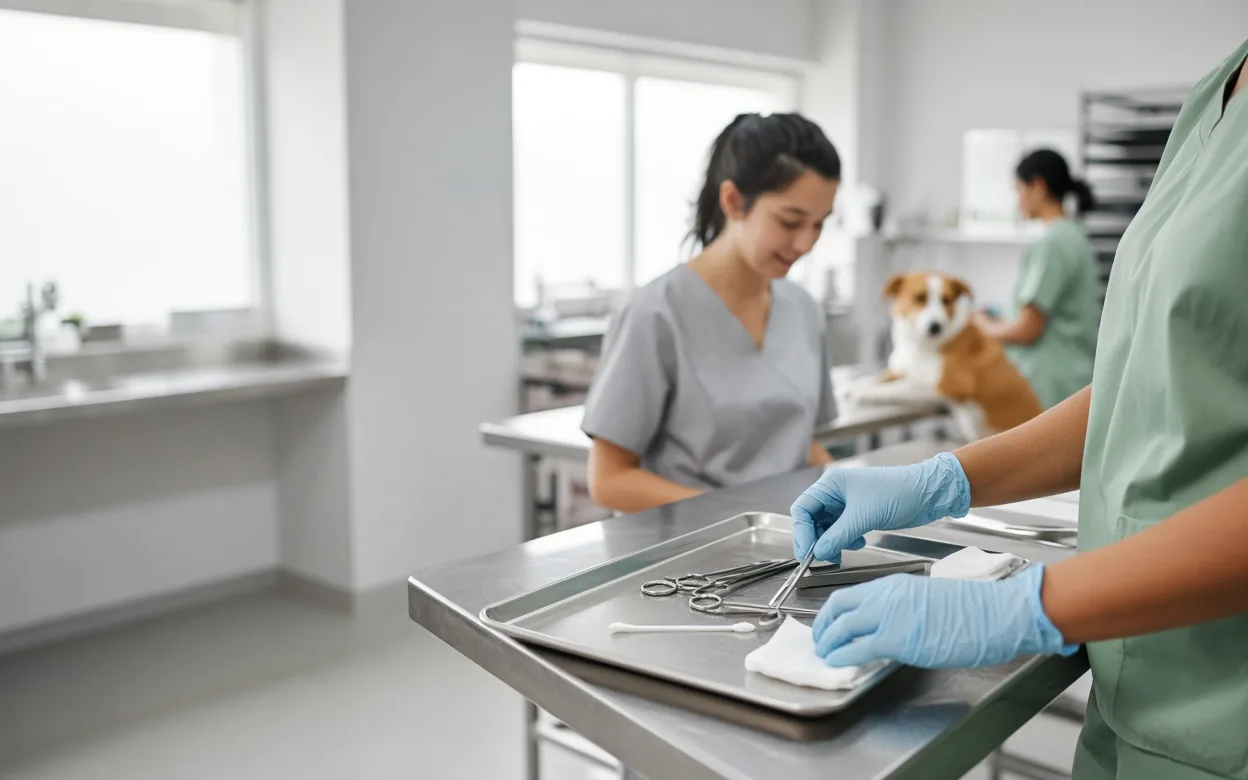
Who it is for
five ways in
The diploma is for adults who want to nurse animals beside vets, in clinics and in animal hospitals. You might be changing career, leaving school, already working in a clinic, supporting someone who is applying, or taking students into your own clinic.
Career changers
You are moving into animal nursing from other work, and a previous animal job is not required. Entry asks for age 17 or over, a reference, and a 45-minute interview with a handling session.
Read moreSchool leavers
You can apply from school at 17 or over, with a reference and a handling session. Some students begin with the 10-week foundation certificate, on Mondays and Thursdays, and then join the diploma.
Read moreClinic staff
If you already work in a clinic, the evening course is 12 Tuesdays, from 18:30 to 21:00. It can stand alone, and some staff later join the two-year diploma.
Read moreParents & supporters
The open day is Saturday 16 January 2027, from 10:00 to 13:00, with a ward tour, time with the tutors, and a bandage to try. Ward visits run on Wednesdays at 15:30, for up to 6 visitors.
Read morePartner clinics
Twenty-two clinics and animal hospitals take students on placement. Each one takes 1 or 2 students in a block, across the 40 weeks of the diploma.
Read moreA training day
07:45 to 17:00
A training day runs from 07:45 to 17:00 on the teaching ward and in the rooms beside it. The morning is handover, kennel rounds and a practical class. After that you rotate into theatre assist or imaging and lab, then a lecture, then feeds and notes. Six students stay with one tutor. Lunch at 12:00 is on the full timetable; the rows here are the working hours.

Morning handover at the ward desk.
07:45
Ward handover
Six students and a tutor meet at the ward desk with the overnight notes. You hear which animals are in the kennels, what changed, and which tasks your group will take before rounds.
Ward desk
08:30
Morning rounds and observations
In the kennels you take temperature, pulse and breathing, and you write those observations down before you move to the next patient. The tutor stays with the same six students for the whole round.
Kennels
10:00
Practical class
The class is handling, bandaging and injections on models, held in the skills room. You repeat the sequence with the tutor beside you, and you use the same skills on later ward shifts.
Skills room
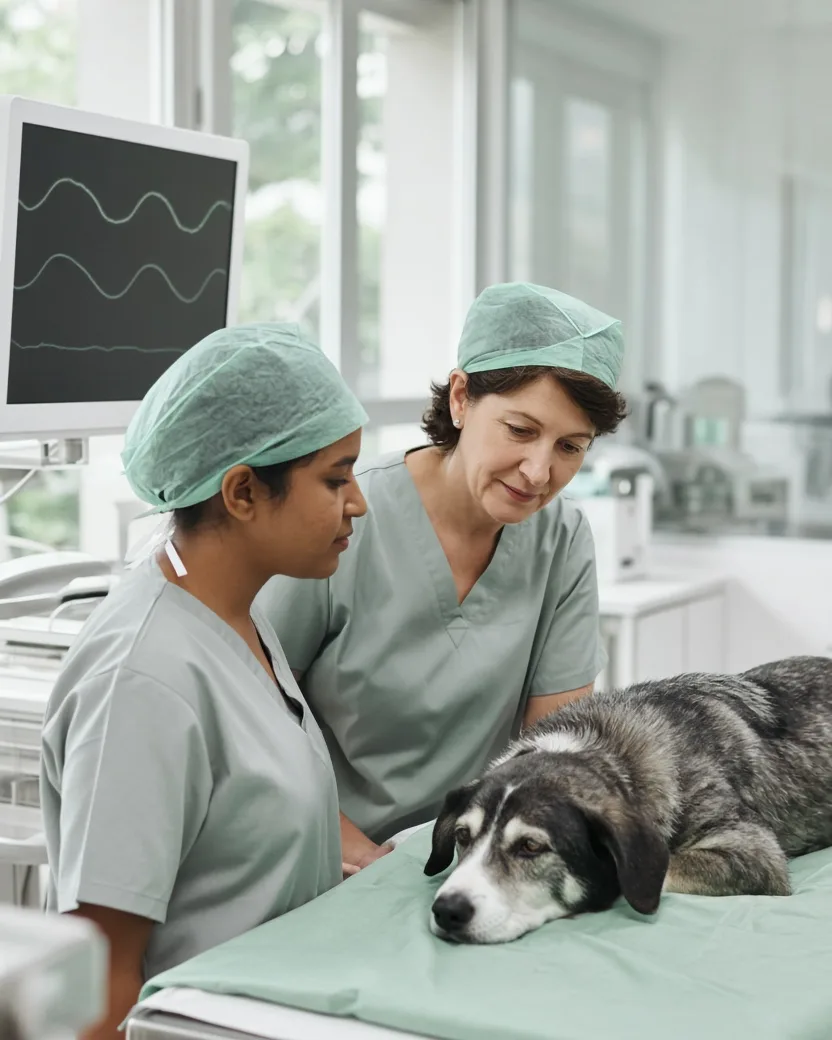
A student beside the vet at the anaesthesia monitor.
13:00
Rotation: theatre assist or imaging
You spend this block either in theatre assist, beside the vet at the anaesthesia monitor, or in imaging and lab. There you help position a calm patient for an X-ray, or you prepare a sample.
Prep & theatre / Imaging
15:00
Lecture
The lecture is anatomy, pharmacology or nursing care, and the subject changes with the week. It is held in the lecture room, after the rotation and before you go back to the kennels.
Lecture room
16:30
Evening feeds, medication round, ward notes
Back in the kennels you give the evening feeds, complete the medication round and write the ward notes before you leave the patient. The tutor checks those notes with the group of six.
Kennels
17:00
Handover to the late vet
The day closes at the ward desk with a handover to the late vet. You pass on the inpatients, the medication and anything that changed since the morning, and the teaching shift ends at 17:00.
Ward desk
The diploma
six parts, two years
Six parts make the diploma. They run across two full-time years, with ward shifts each week and 40 weeks on placement.
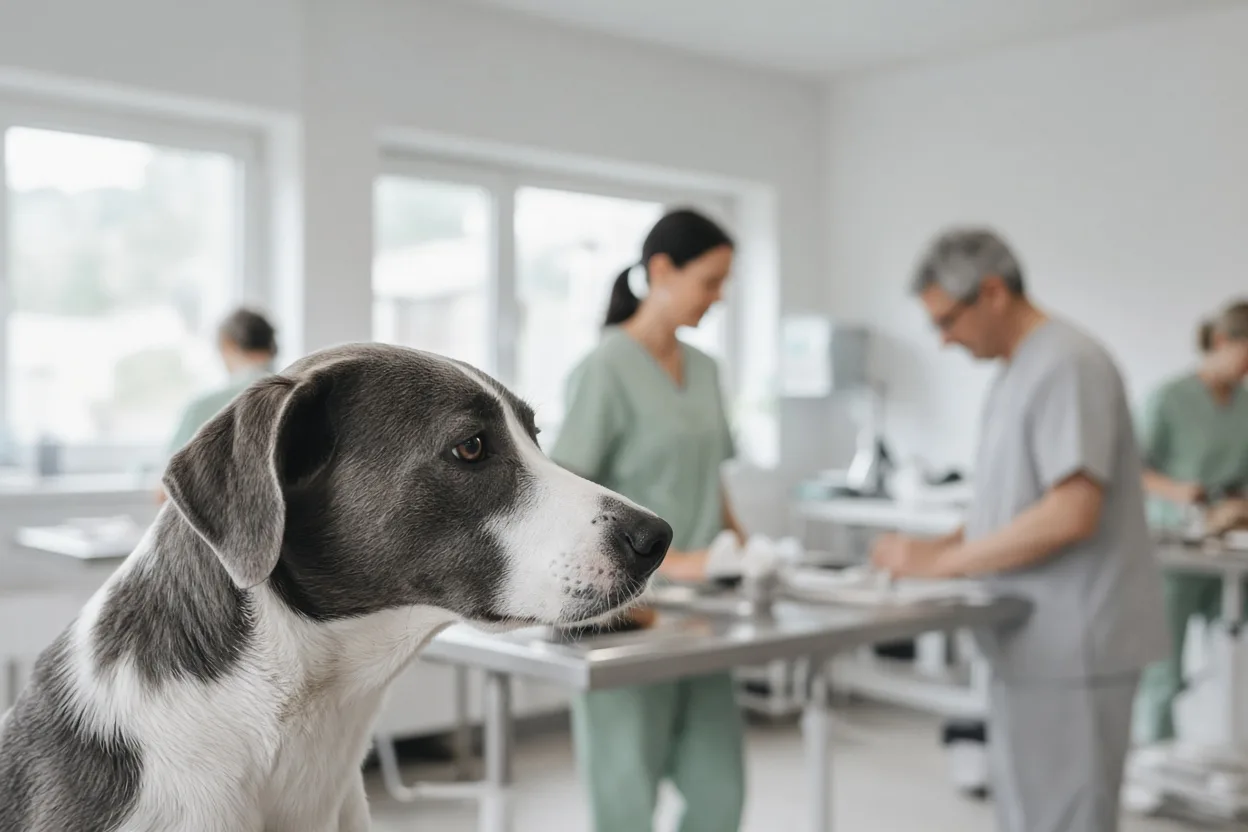
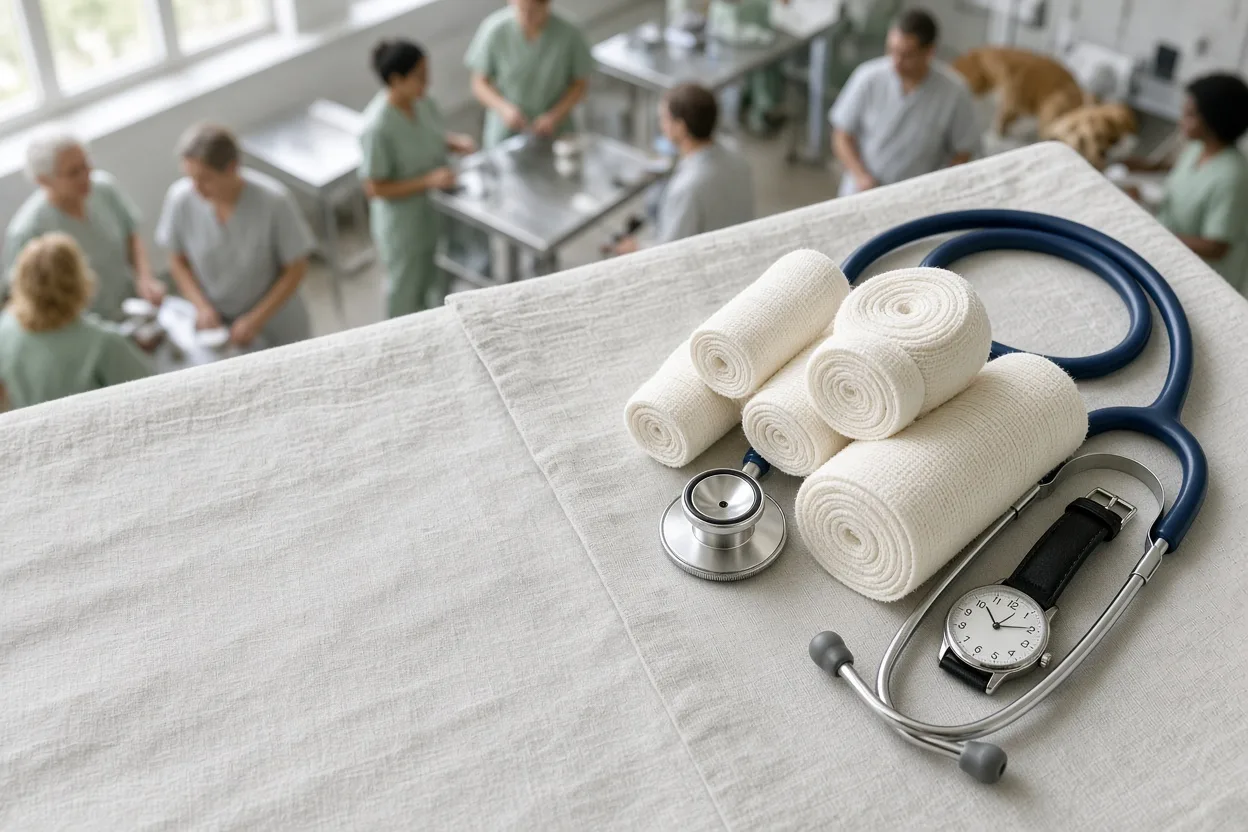
Foundations, ward nursing, theatre assist, imaging and lab, and pharmacy are taught here, on the ward and in the rooms next to it. Placement, the sixth part, is 40 weeks in 22 partner clinics and animal hospitals. Each clinic takes 1 or 2 students in a block. The taught hours are foundations 260, ward nursing 420, theatre assist 300, imaging and lab 200, and pharmacy 140.
How the course is built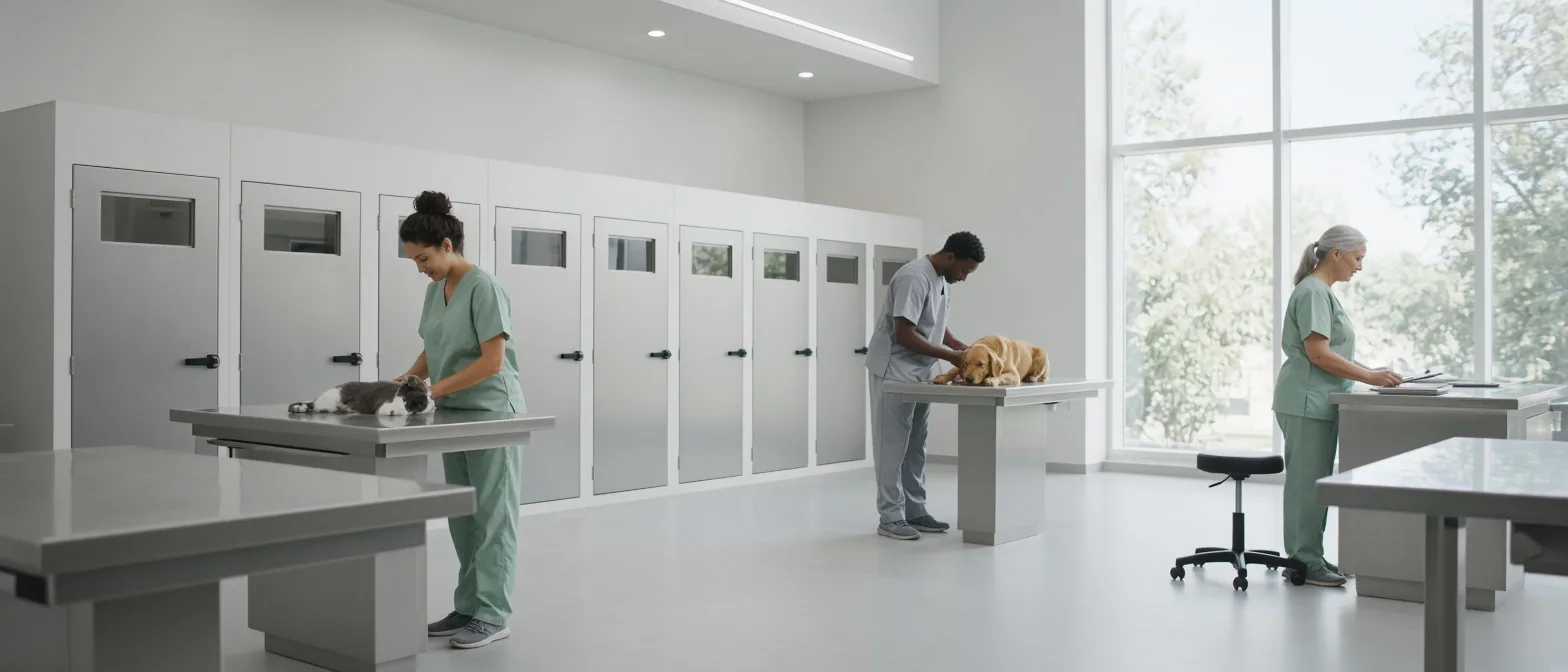
The teaching ward
One tutor to six students, on every shift.
The ward has 18 kennels for calm, stable inpatients and post-operative patients referred by partner clinics, with the owner's consent. A vet is on site from 07:45 to 17:00. We do not take emergencies; the nearest emergency service is listed on the Visit page.
Inside the wardTutors
seven people
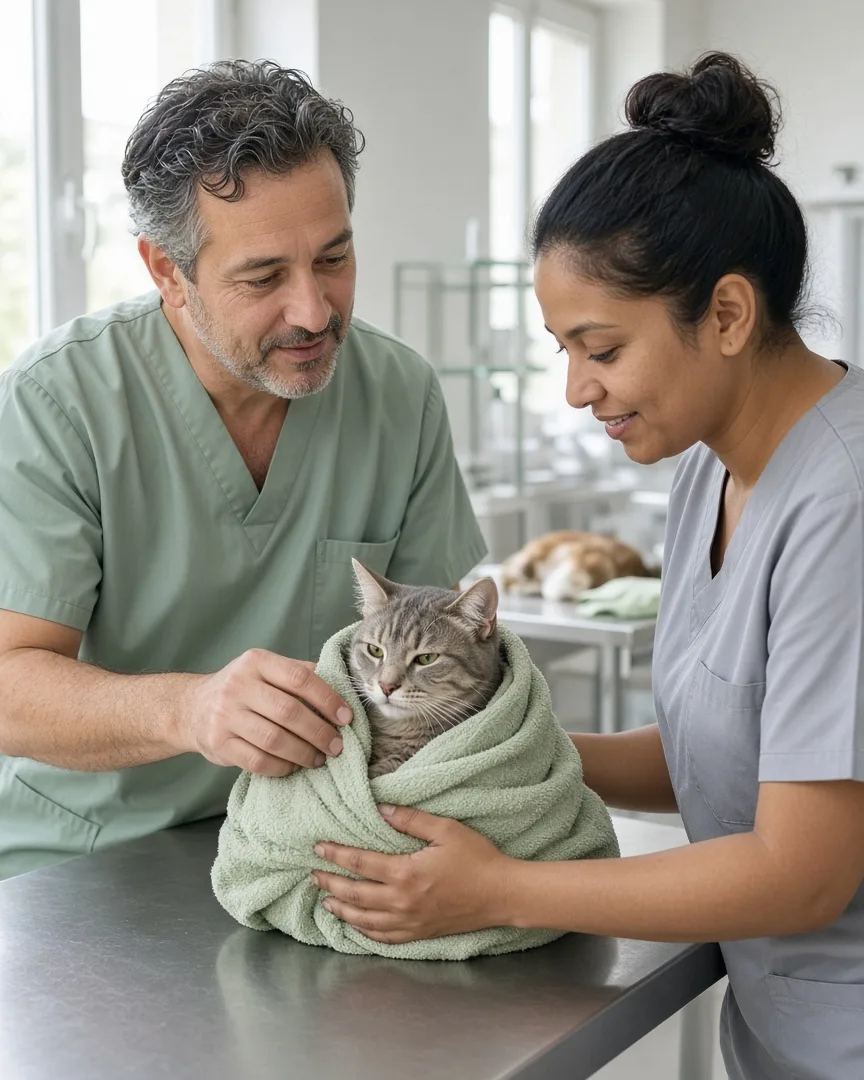
Seven people teach and support the diploma. On the ward you are 1 of 6 students with one tutor, and that ratio holds on every shift. Dr Margit Halvorsen leads the college. Owen Mbeki runs ward nursing. Lucía Ferraz, Ji-woo Han and Tomasz Wierzbicki teach theatre, imaging and pharmacy. Aisha Rahman places students with the 22 clinics. Pieter de Wit looks after admissions and student support.
- Dr Margit HalvorsenFounder and principal, vet
- Owen MbekiHead of ward nursing
- Lucía FerrazTheatre and anaesthesia tutor
- Ji-woo HanImaging and lab tutor
- Tomasz WierzbickiPharmacy tutor
- Aisha RahmanPlacements coordinator
- Pieter de WitAdmissions and student support
Students
three ways through
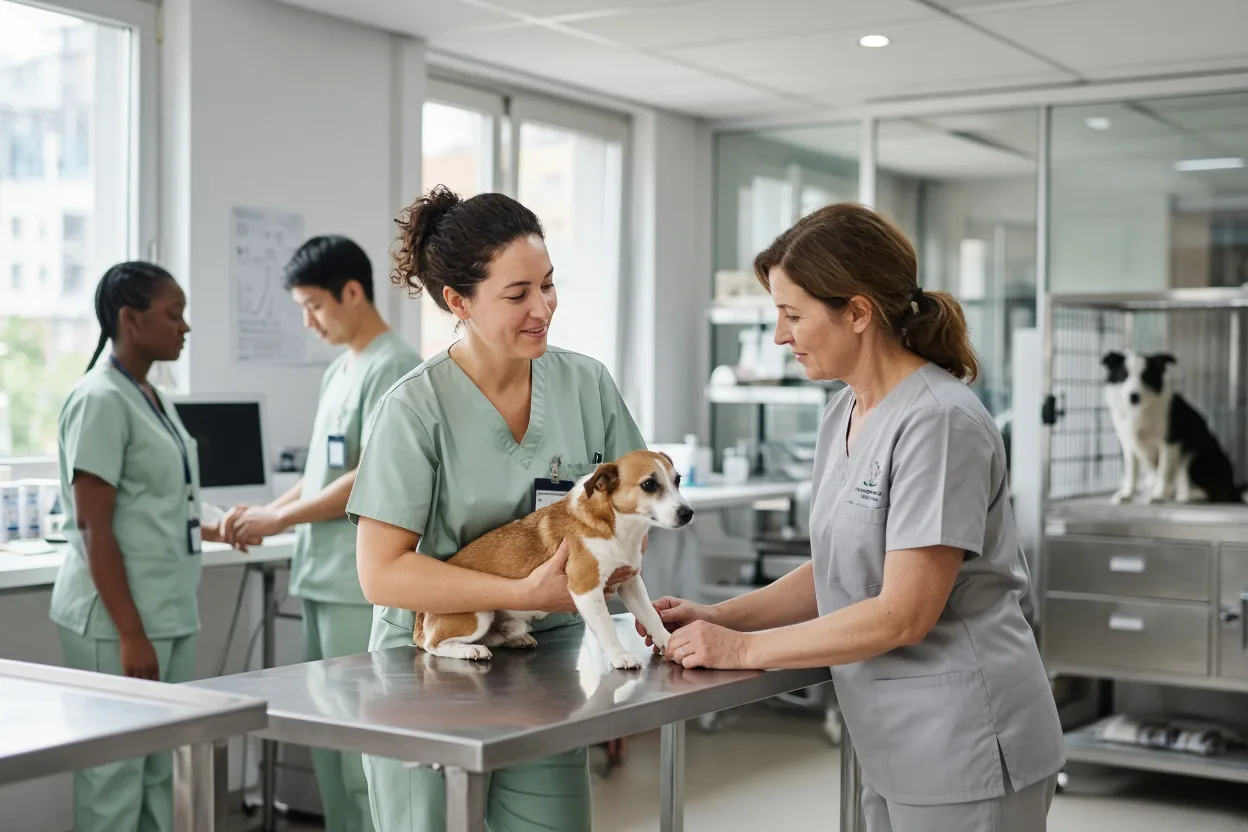
Career changer · 2023 intake
I left a bank for this ward. What I practise on placement, in a city small-animal clinic, is the work we did here, six students with one tutor.
Hana Okafor is 34. She joined the 2023 intake after working in a bank, and a previous animal job was not required for entry. She needed to be 17 or over, to bring a reference, and to attend an interview and a handling session. She is on placement in a city small-animal clinic, one block inside the 40 weeks every diploma student spends with partner clinics.
On college weeks she was 1 of 6 students with one tutor. The day ran from the 07:45 handover to the 17:00 handover, with kennel rounds, a practical class, and either theatre assist or imaging. Her placement is among the 22 partner clinics.
Hana Okafor, 34. Placement in a city small-animal clinic.
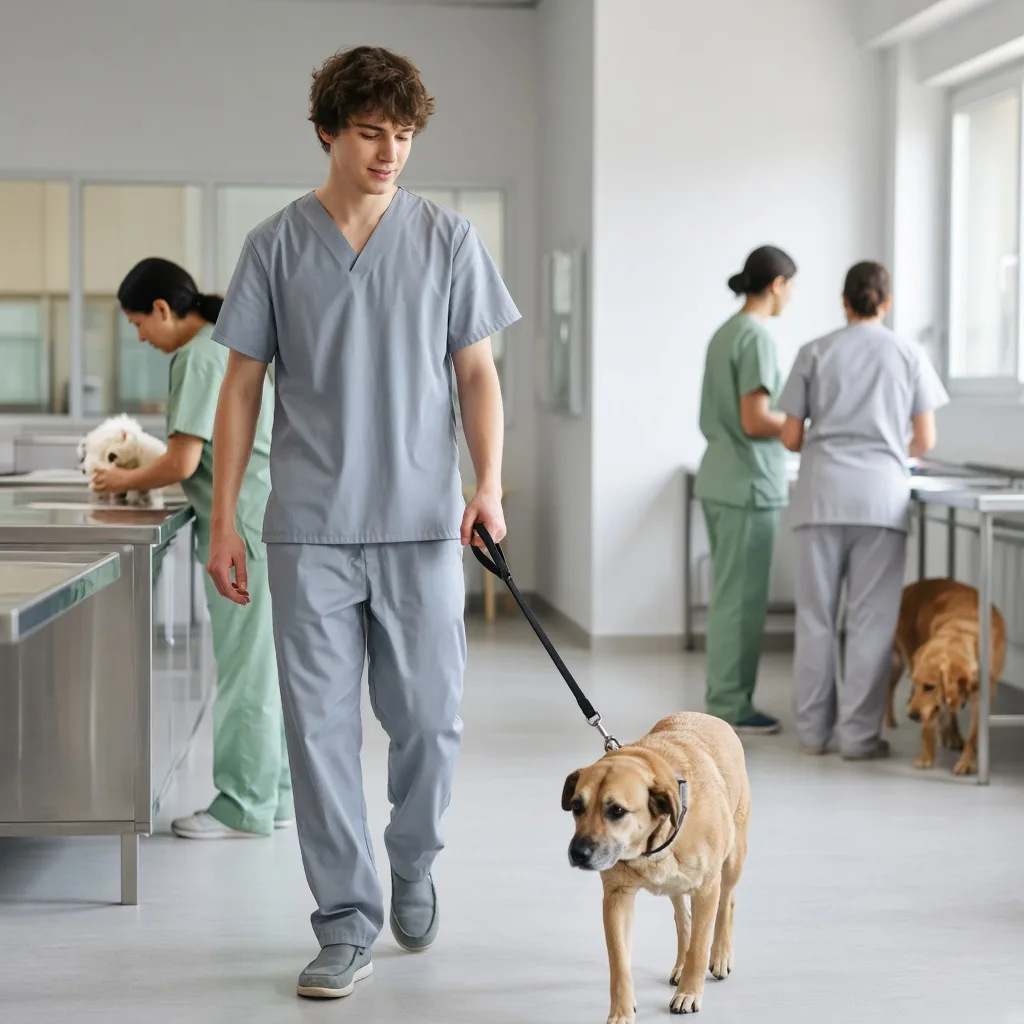 Leo Brandt, 19 · School leaver, 2024 intakeStraight from school, foundation firstLeo came straight from school. He began with the foundation certificate, 10 weeks on Mondays and Thursdays, and then joined the diploma. His placement is in a mixed practice, one of the 22 partner clinics.
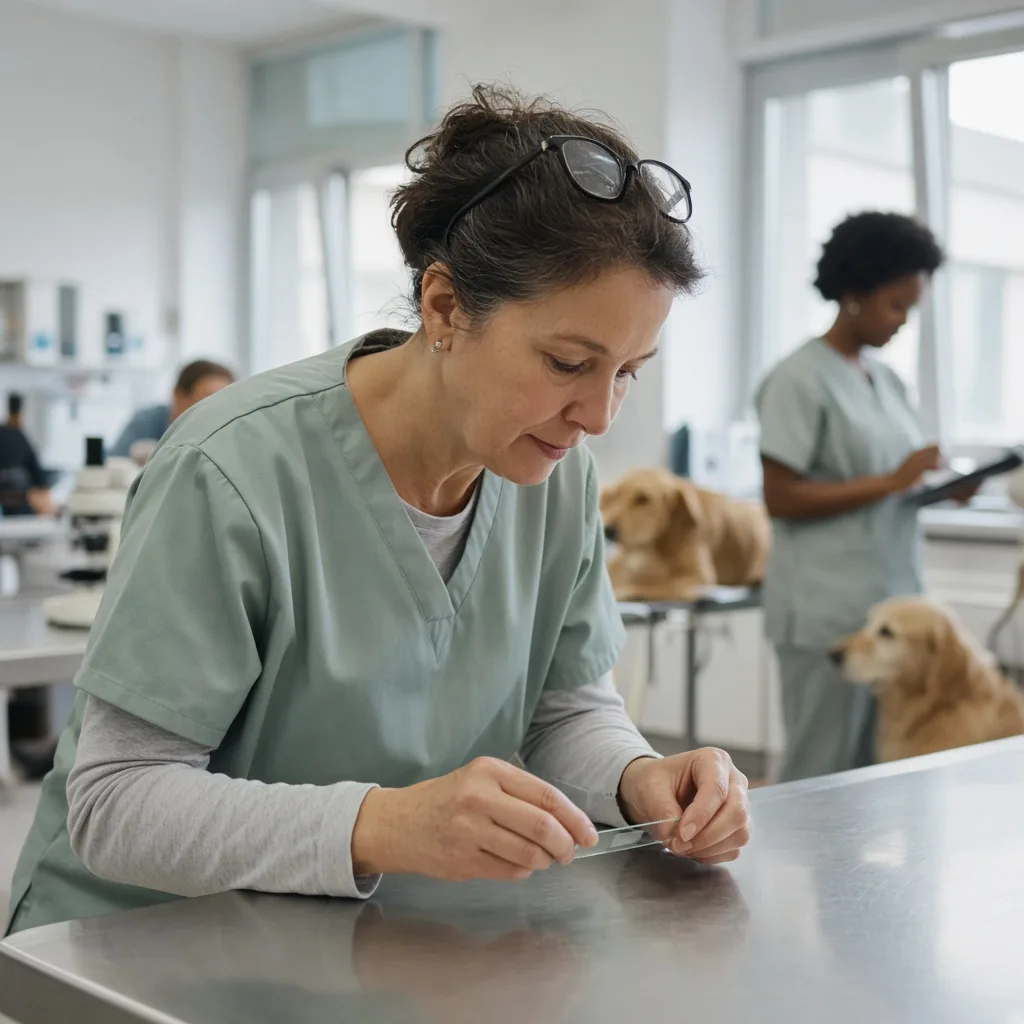 Grace Liang, 46 · Clinic receptionist, now in year twoFrom the front desk to year twoGrace was a clinic receptionist. She started on the evening course, 12 Tuesday evenings from 18:30 to 21:00, and then joined the diploma. She is now in year two.
Fees
six items
| Item | What it covers | Fee |
|---|---|---|
| Application | Interview and handling session. | €40 |
| Diploma tuition, per year (2 years) | All teaching, ward shifts and placement support. | €6,900 |
| Kit and scrubs (one-off) | 3 sets of scrubs, fob watch, stethoscope, bandage scissors. | €260 |
| Foundation certificate | 10 weeks, part-time, Mondays and Thursdays. | €1,150 |
| Evening course for clinic staff | 12 evenings, Tuesdays 18:30–21:00. | €780 |
| Ward taster day | 1 day, 09:00–15:00, ages 16 and over. | €45 |
Tuition can be paid in ten monthly instalments. Four bursaries per intake cover half of the first year's tuition.
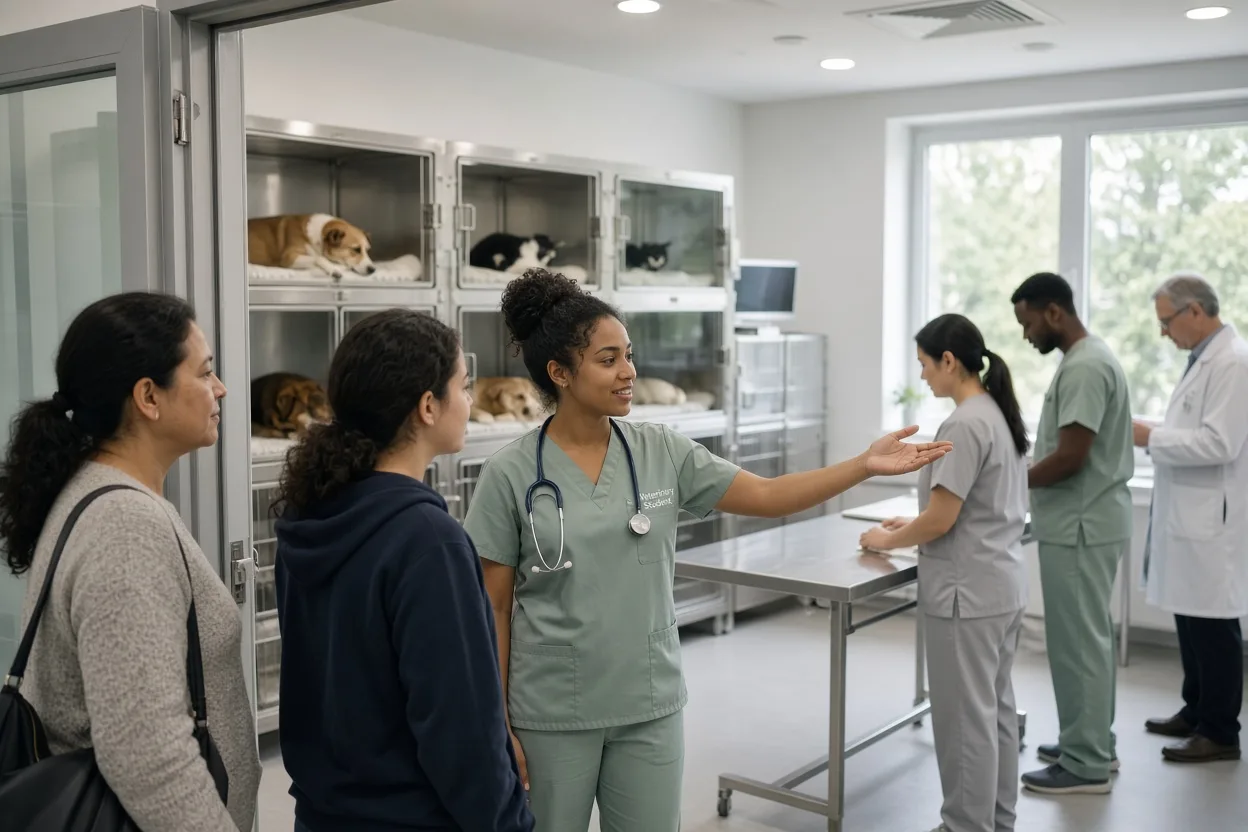
Next intake
February 2027: twenty-four places.
The February 2027 intake has 24 places on the diploma. Applications close on Friday 8 January 2027. Interviews and the handling session fall between 11 and 20 January, an offer follows within 10 working days, and induction week is 25 to 29 January. Term starts on Monday 1 February 2027.
24
places
40
weeks on placement
6
students per tutor
The intake letter
The intake letter carries open-day dates, application deadlines and one note from the ward. It is sent six times a year, including the dates for February 2027 and the September intake that follows.