A training day
Hour by hour, from the 07:45 handover to the 17:00 handover.

The day
07:45 to 17:00
A training day runs from 07:45 to 17:00 on the teaching ward and in the rooms beside it. The photograph beside each part stays with you as you read. Six students stay with one tutor the whole way, and the times below are the working timetable on college weeks. On placement weeks you follow the hours of your clinic.
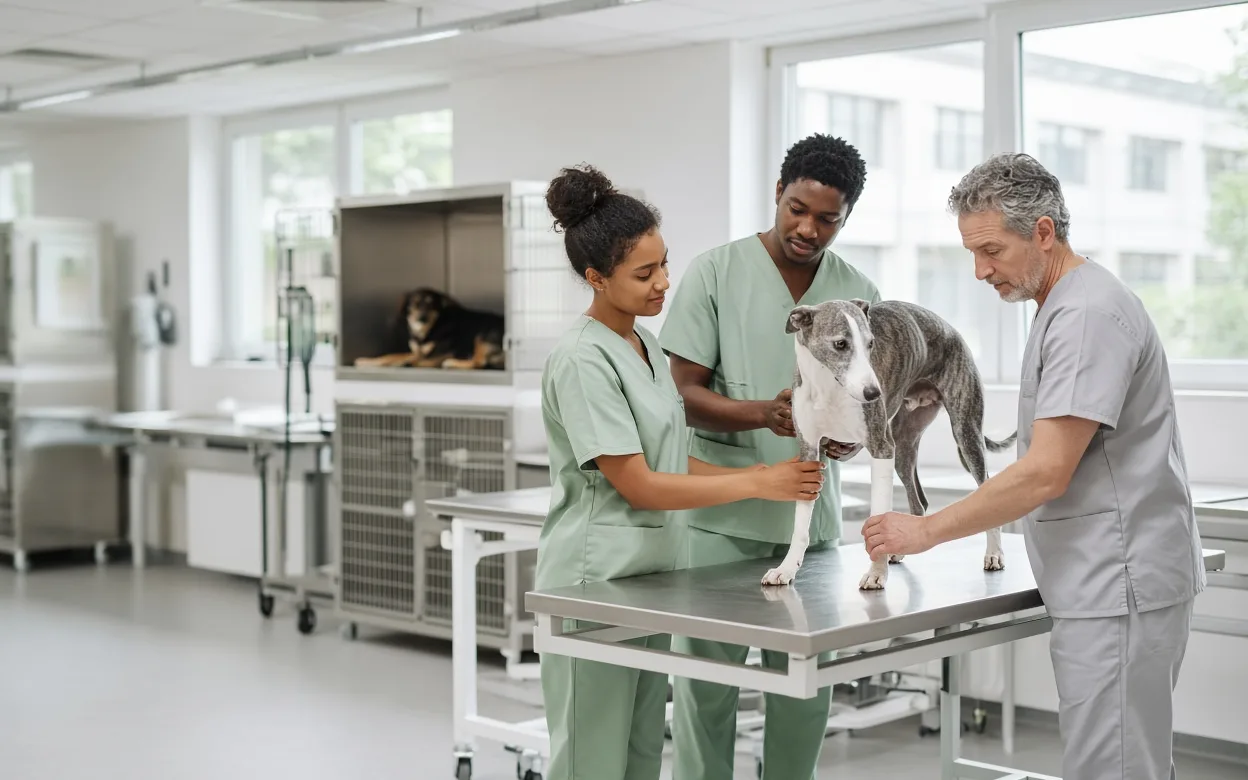
A tutor checks a fresh bandage while two students steady the patient.
Morning
07:45
Ward handover
Six students and a tutor meet at the ward desk with the overnight notes. The night vet or the late nurse tells you which animals are in the kennels, what changed since yesterday and which tasks your group will take before rounds. You are given a patient or two to follow all day, and you write your first line of the day's notes before you leave the desk.
Ward desk
08:30
Morning rounds and observations
In the kennels you take temperature, pulse and breathing, check each water bowl and each bandage, and write the numbers down before you move to the next patient. The tutor stays with the same six students for the whole round, asks what you noticed and shows you what you missed. Nothing is rushed; a calm round makes calm patients.
Kennels
10:00
Practical class
The class is handling, bandaging and injections on models, held in the skills room. A tutor demonstrates once, then you repeat the sequence with the tutor beside you until your hands know it. The same skills turn up on later ward shifts, so you try them on a calm patient the same week.
Skills room
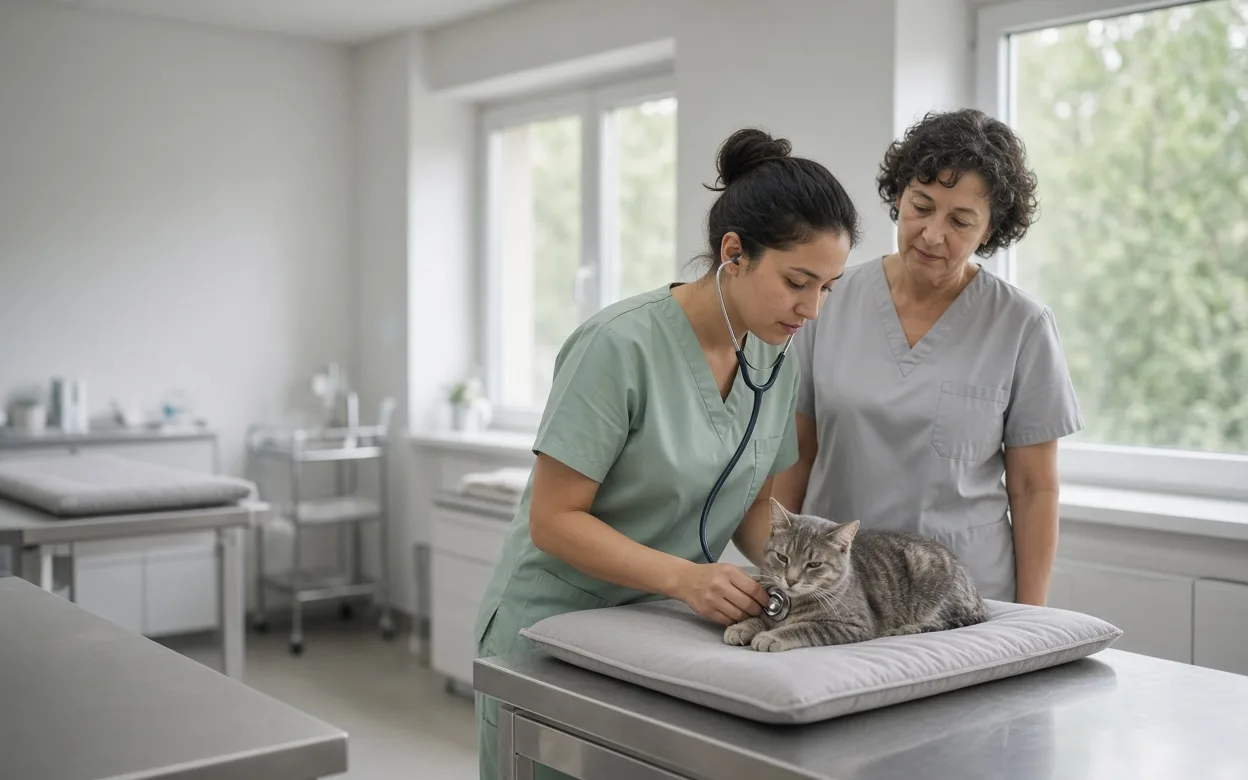
Listening to a cat's chest during the midday rotation.
Midday
12:00
Lunch
One hour away from the ward. Students eat in the common room or on the terrace, and tutors eat in the same place. The kennels are covered by the vet and the nurse on shift, so nobody is called back during lunch. It is the one part of the day with no notes to write.
Common room
13:00
Rotation: theatre assist or imaging
The afternoon block is a rotation. In theatre assist you prepare the patient and watch the anaesthesia monitor beside the vet. In imaging and lab you help position a calm patient for an X-ray, or prepare a sample for the microscope. Groups swap each week, so every student does both.
Prep & theatre / Imaging
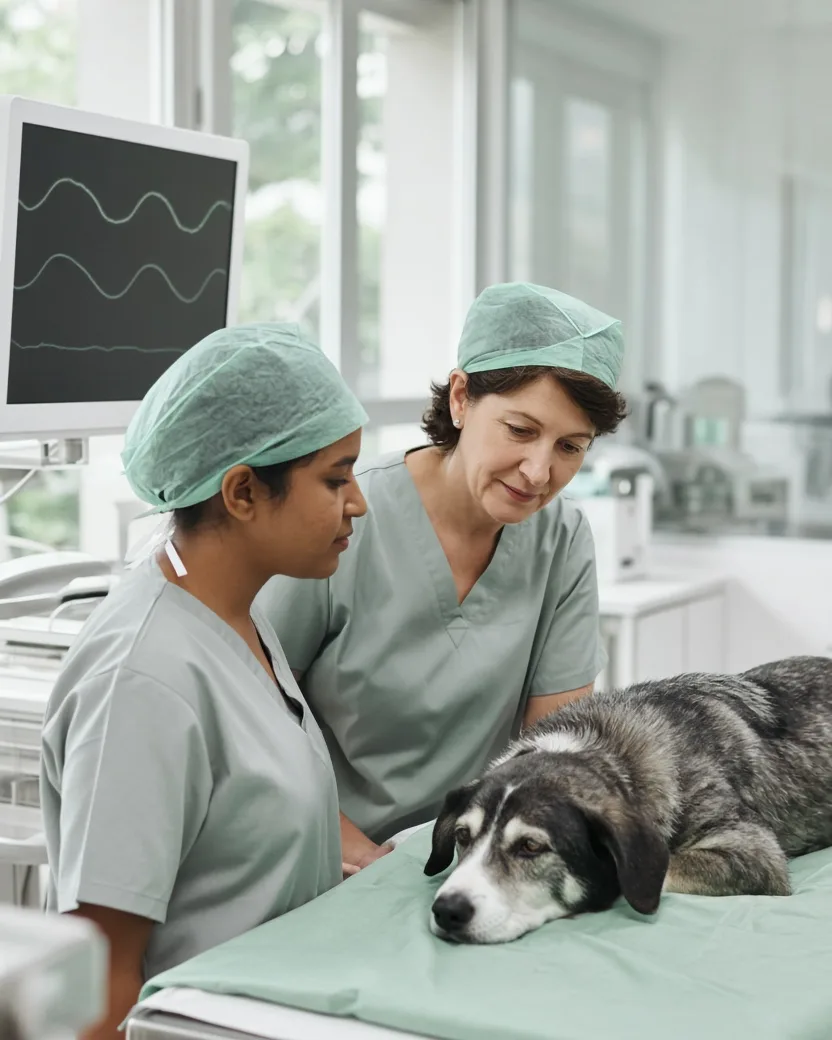
A student beside the vet at the anaesthesia monitor.
Afternoon
15:00
Lecture
The lecture is anatomy, pharmacology or nursing care, and the subject changes with the week. It is held in the lecture room, after the rotation and before you go back to the kennels, and it is tied to something you handled that day, so a drug name has a patient attached to it.
Lecture room
16:30
Evening feeds, medication round, ward notes
Back in the kennels you give the evening feeds, complete the medication round and write the ward notes before you leave the patient. Each dose is checked by a second person. The tutor goes through the notes with the group of six and sends back anything that would puzzle the next shift.
Kennels
17:00
Handover to the late vet
The day closes at the ward desk with a handover to the late vet. You pass on the inpatients, the medication and anything that changed since the morning, and the teaching shift ends at 17:00. The weekend feeds rota is separate: 08:00 to 11:00, one weekend in six.
Ward desk
A week
Monday to Friday
| Day | Morning, 08:30–12:00 | Afternoon, 13:00–16:30 |
|---|---|---|
| Monday | Ward nursing round, then the practical class | Theatre assist for group A, imaging and lab for group B; lecture at 15:00 |
| Tuesday | Ward nursing round, then the practical class | Rotation continues; lecture at 15:00 |
| Wednesday | Ward nursing round and a skills-room assessment | Groups swap rotation; lecture at 15:00; ward visits 15:30–16:30 |
| Thursday | Ward nursing round, then the practical class | Theatre assist or imaging and lab; lecture at 15:00 |
| Friday | Ward nursing round and the weekly case review | Pharmacy practice; lecture at 15:00; handover to the late vet at 17:00 |
Weekends are covered by the feeds rota, 08:00 to 11:00. Each student takes one weekend in six, with a vet on call. The rotation, the lecture subject and the case review change with the term; the shape of the week stays the same.
Where to next
for applicants
Applications for February 2027 close on Friday 8 January.