The teaching ward
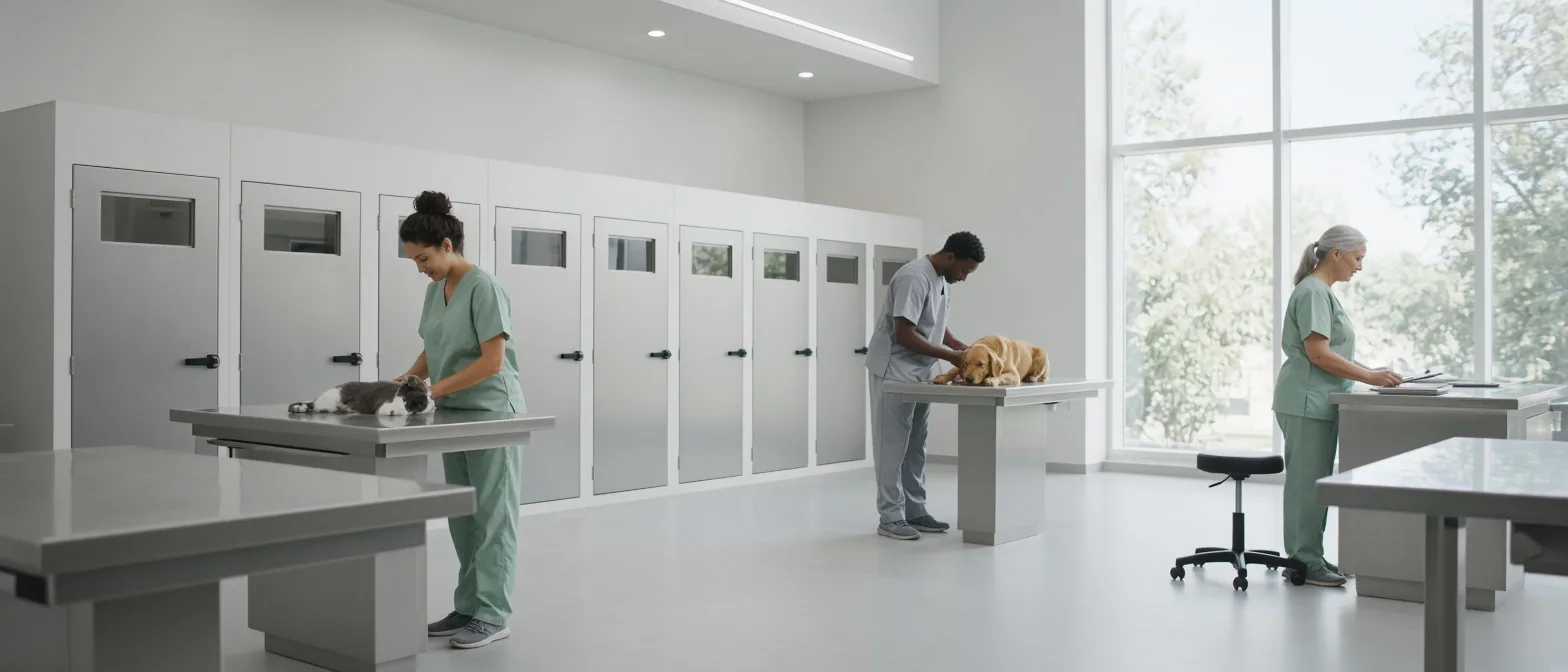
Eighteen kennels, a prep room, a theatre and an imaging room, all built for teaching.
Three rooms
where you learn the work
The ward is the heart of the college. It was designed so that six students and a tutor can stand around any patient without getting in the way, and so that every room opens onto the next. You spend part of every college week here.
Kennels
18 kennels

The ward opened in 2004 with 8 kennels and now has 18, in a long room with tall windows so the animals can see daylight and the students can see the animals. Dogs and cats are housed apart, with quiet space for patients that need it.
Each kennel has its own chart, and each chart is filled in by students. The 07:45 handover happens at the desk at the end of the room, and the morning round starts in the kennel nearest the door. By the end of the first term you know the room without looking.
Prep & theatre
anaesthesia and surgery
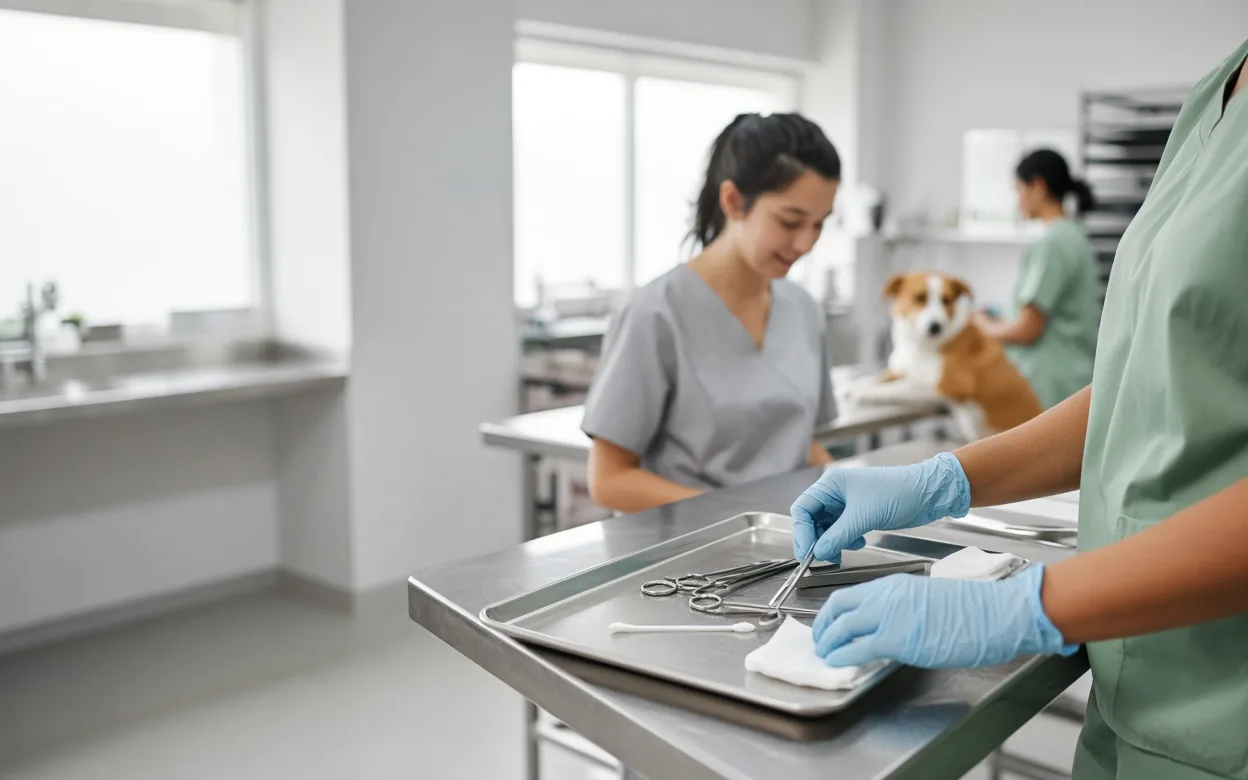
In the prep room you lay out instruments and swabs on a steel tray, clip, clean and prepare the patient, and check the anaesthesia equipment with the nurse. Everything has a place and a checklist, and a second person signs it off.
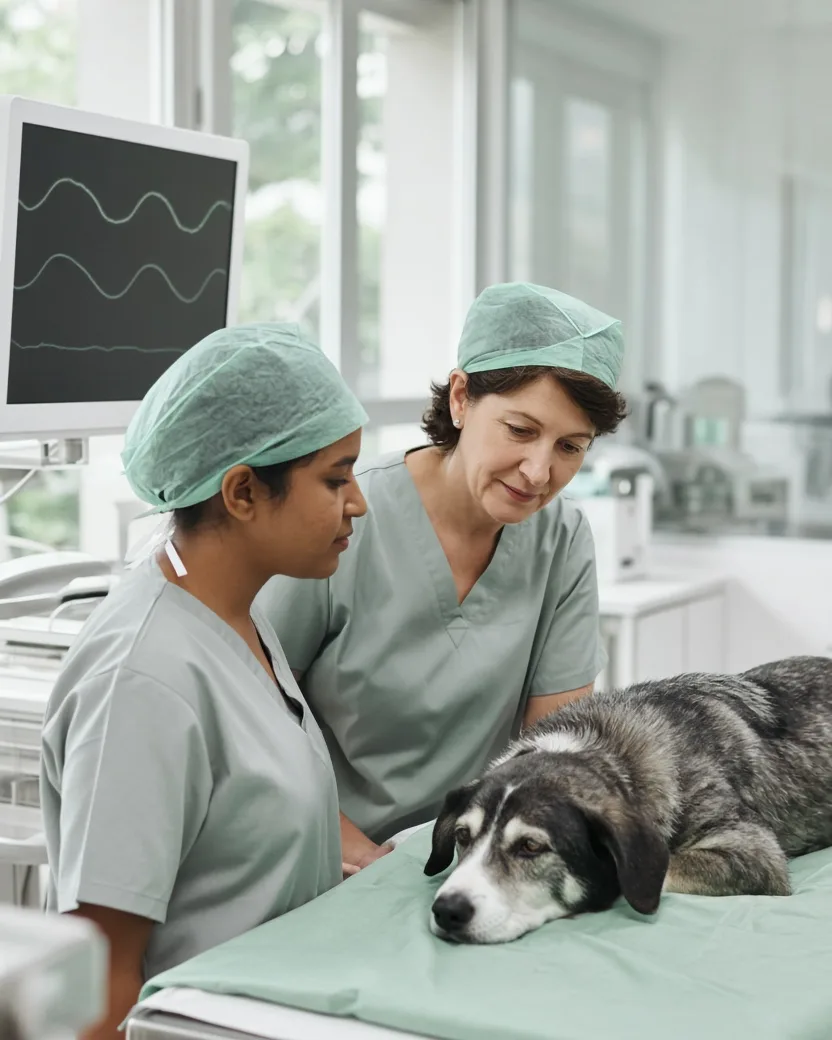
Next door, the theatre is where you watch the anaesthesia monitor beside the vet. You do not operate; you prepare, observe, record and speak up. Lucía Ferraz teaches here, and the calm of the room is part of what she teaches.
Imaging & lab
X-ray and samples
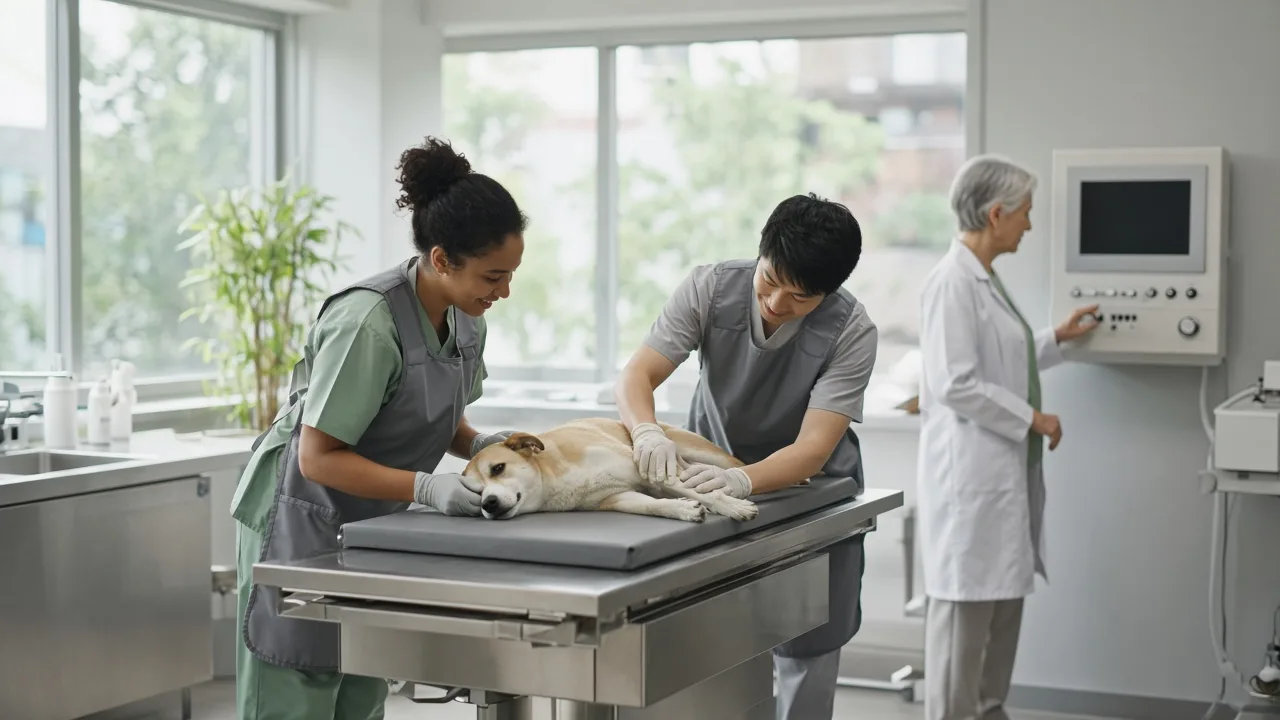
The X-ray room has a table, a control console behind a lead screen and a rack of lead aprons. You learn to position a calm patient so that the image is clear the first time, and to keep yourself and the patient safe while you do it.
The laboratory is next door: a bench, a microscope and a centrifuge for the routine tests a clinic runs. Ji-woo Han teaches both rooms, and students handle every piece of equipment themselves.
How animals come to the ward
referred, calm, with consent
Partner clinics refer calm, stable inpatients and post-operative patients to the ward. Every owner is asked for consent before an animal comes, and every plan is set by a vet. A vet is on site from 07:45 to 17:00, and students never work alone with a patient.
We do not take emergencies; the nearest emergency service is listed on the Visit page.
Welfare rules
five rules on the wall
- One
Calm first
A patient is approached quietly and handled with as few hands as it needs. If an animal is distressed, the task waits.
- Two
Rest is part of care
Kennels are quiet between rounds. Students do not visit a resting patient for company or for a photograph.
- Three
Consent from every owner
No animal comes to the ward without the owner's agreement, and owners are told what students will and will not do.
- Four
A vet sets every plan
Students carry out nursing care under a vet's direction. Doses are checked by a second person each time.
- Five
Write it down
What you observed and what you did goes into the ward notes before you leave the patient.
Where to next
for applicants
Applications for February 2027 close on Friday 8 January.