Trained to arrive first.
KYU
KYU
COLLEGE
- Sep · Classroom
- Dec · Skills lab
- Mar · Ride-along
- Jul · Qualify
ABOUT
A college for the first eight minutes
We teach the work that happens before the hospital.
Kyukyu College was founded in 2011 at 41 Wexford Lane in Northmere by Dr. Ruth Adeyemi-Holm and two veteran station paramedics to train clinicians for the demanding first eight minutes of emergency care. We focus entirely on pre-hospital medicine, teaching clinical assessment and interventions that must be delivered before an ambulance reaches the hospital bay. Education takes place in structured scenarios within our dedicated skills lab, drill hall, and ambulance simulators.
To preserve rigorous instruction, each intake is strictly limited to twenty-four students, maintaining an eight-to-one student-to-instructor ratio in the skills lab. Every tutor and clinical mentor continues to work active shifts on frontline response units, ensuring that training reflects the unvarnished realities of the road.
TERM
How a year is arranged
One year, three terms, each in a different room.
The diploma is built as a sequence you can feel: a term of classroom foundations, a term of scenarios in the skills lab, a term on the road. Each is twelve weeks, and each is taught at the same ratio of one instructor to eight students.
01
Classroom
Term one
Foundations and bioscience
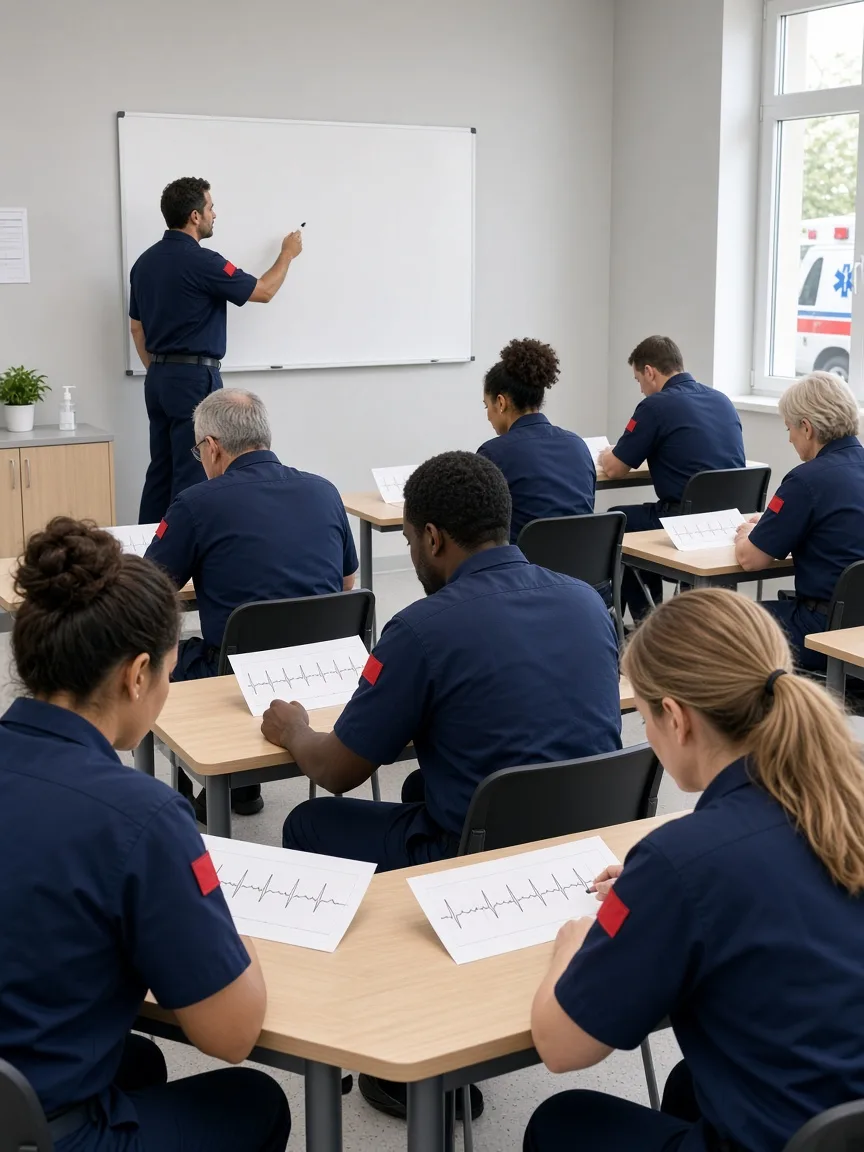
Anatomy, emergency pharmacology, cardiology and ECG interpretation, taught through case studies and patient assessment, so the clinical knowledge is there before the simulation suite.
12 weeks · September to December · 1 instructor per 8 students
02
Skills lab
Term two
Simulation and scenarios
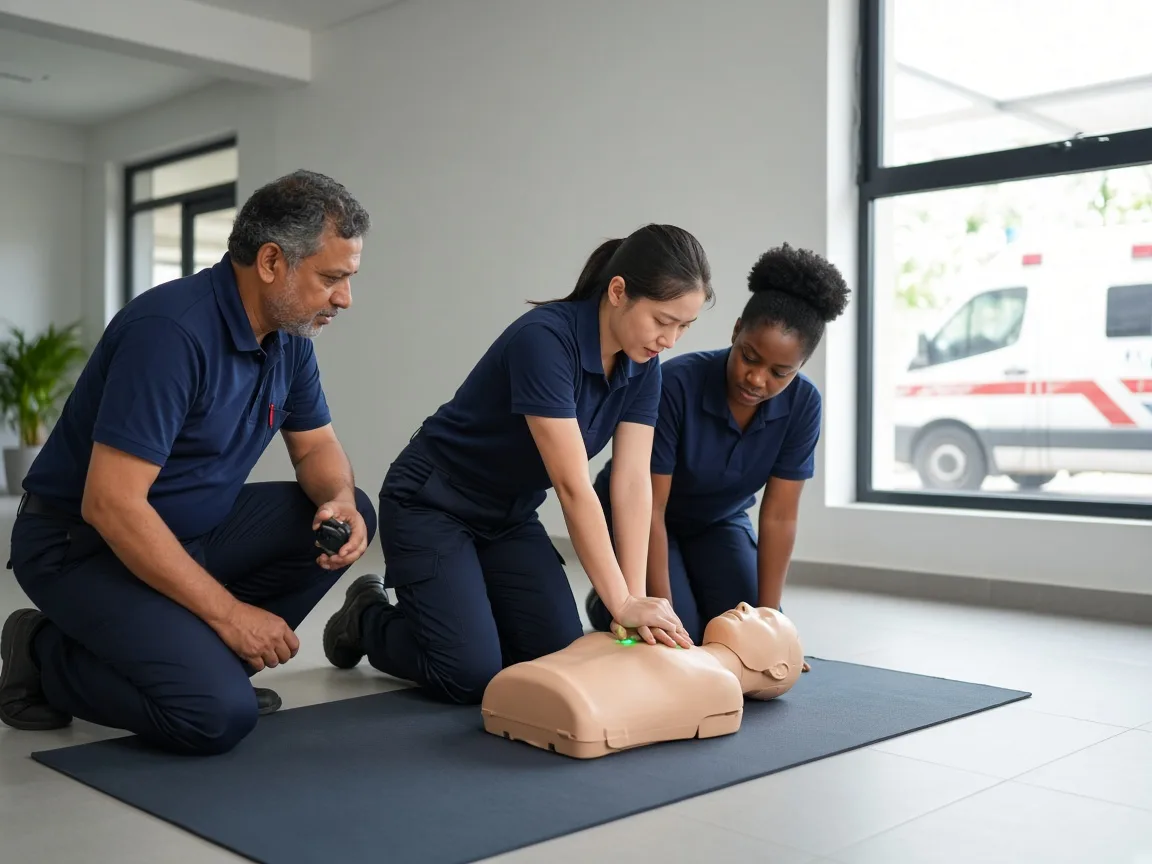
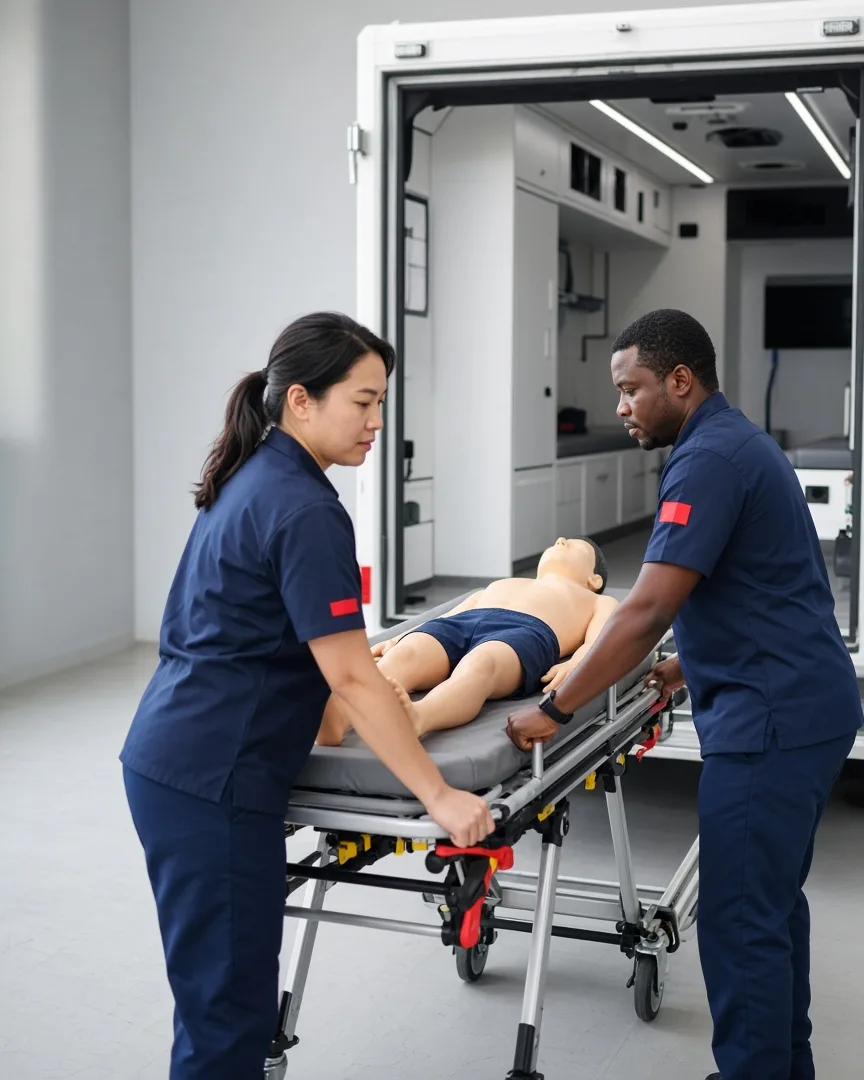
Training moves into the skills lab and two ambulance-body simulators: extrication, airway management, intravenous access and timed chest compressions, watched by working paramedics.
12 weeks · January to March · 1 instructor per 8 students
03
Ride-along
Term three
Operational placements
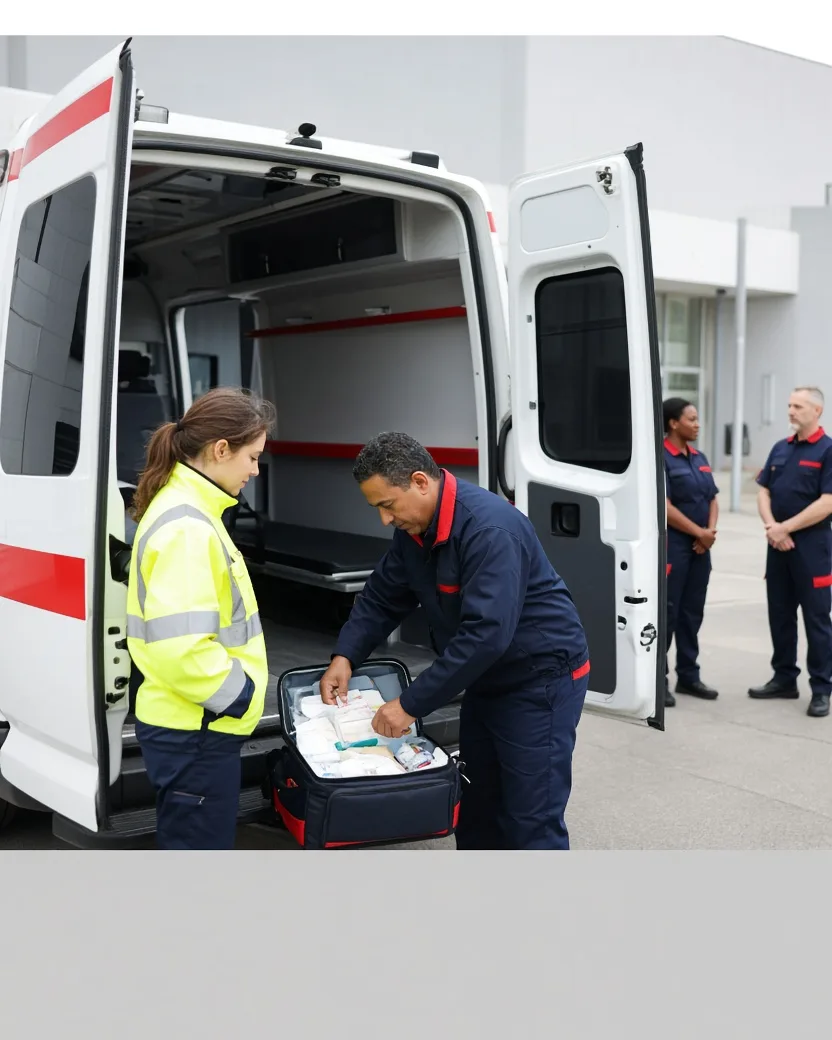
Under registered paramedic mentors, students work frontline shifts across Northmere, applying the protocols to real dispatches before final assessment and qualification.
12 weeks · March to June · 1 instructor per 8 students
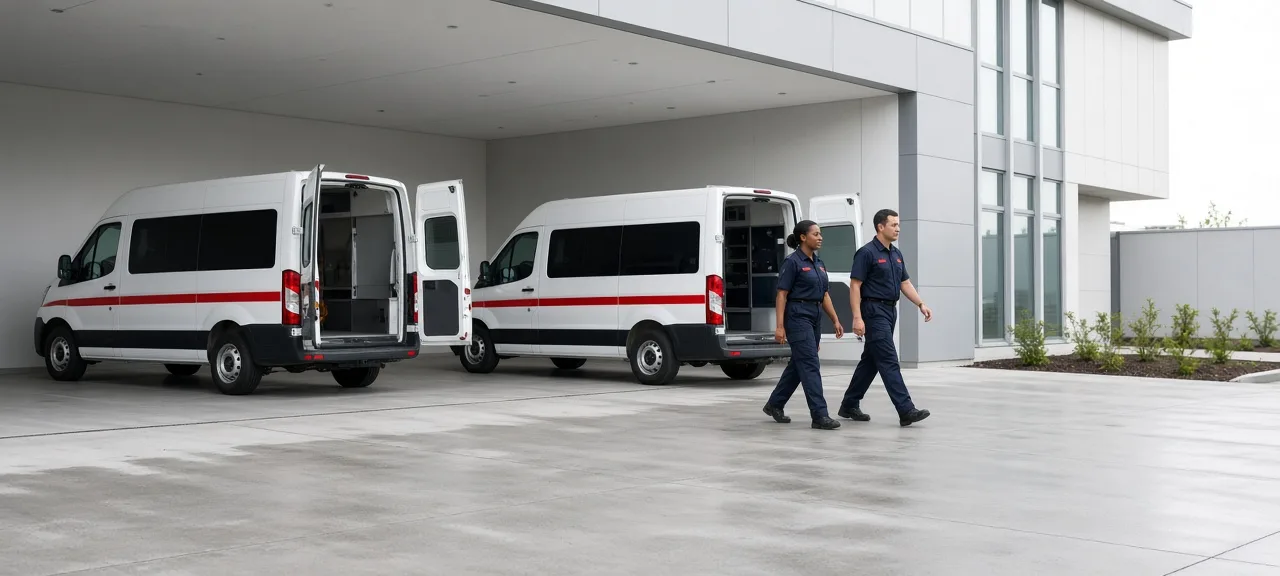
The bay at Northmere station, 06:40, before the day crews sign on.
WEEK
What a ride-along week asks
On placement, students leave the simulator and join working crews across the district. Shifts demand punctuality, resilience and stamina, built around twelve-hour blocks that follow the real rhythm of frontline emergency service.

- Monday07:00–19:00Day shift. Vehicle checks, kit restocking and calls beside your paramedic mentor.
- Tuesday07:00–19:00Day shift. More dispatches, patient handovers at the emergency department, treatment charts.
- WednesdayRest dayRecover, then write your reflective log: procedures done, hard calls reviewed.
- Thursday19:00–07:00Night shift. Twelve hours of out-of-hours trauma and urgent calls until morning handover.
- Friday10:00–12:00Debrief with your tutor at the college: placement cases and treatment decisions.

FACTS
The course in four numbers
36
weeks a year
Three focused terms of twelve weeks.
480
hours on shift
Frontline experience with active crews.
8
students per instructor
Small lab groups, direct supervision.
24
places per intake
September and February.
FEES
Courses and what they cost
Fees are set out plainly, with no hidden institutional costs. Tuition can be paid in three instalments a year, due in September, January and April. Two bursaries of $3,000 a year support students with real financial need, and a one-off application fee of $60 applies to every application.
| Course | Length | Intake | Fee |
|---|---|---|---|
| Paramedic Diploma Three twelve-week terms a year; qualify in July of Year 2. | 2 years full-time | Sep / Feb | $14,800 per year |
| Emergency Medical Technician Certificate The foundation for working on an ambulance crew. | 1 year | Sep | $9,600 |
| Foundation Term (science and fitness, pre-entry) Science and fitness before entry. | 12 weeks | Sep / Feb | $2,400 |
| Ride-along placement supplement (uniform, insurance, vaccinations) Uniform, insurance and vaccinations. | Per year | — | $640 |
| Advanced Life Support refresher For qualified clinicians: scenarios and resuscitation review. | 3 days | Monthly | $720 |
| Emergency driving theory Regulations, vehicle handling and awareness. | 2 days | Monthly | $480 |
ENTRY
Who the course accepts
- 01Aged 18 or over at the start of the programme.
- 02A school-leaving certificate with English, maths and a science, or our Foundation Term.
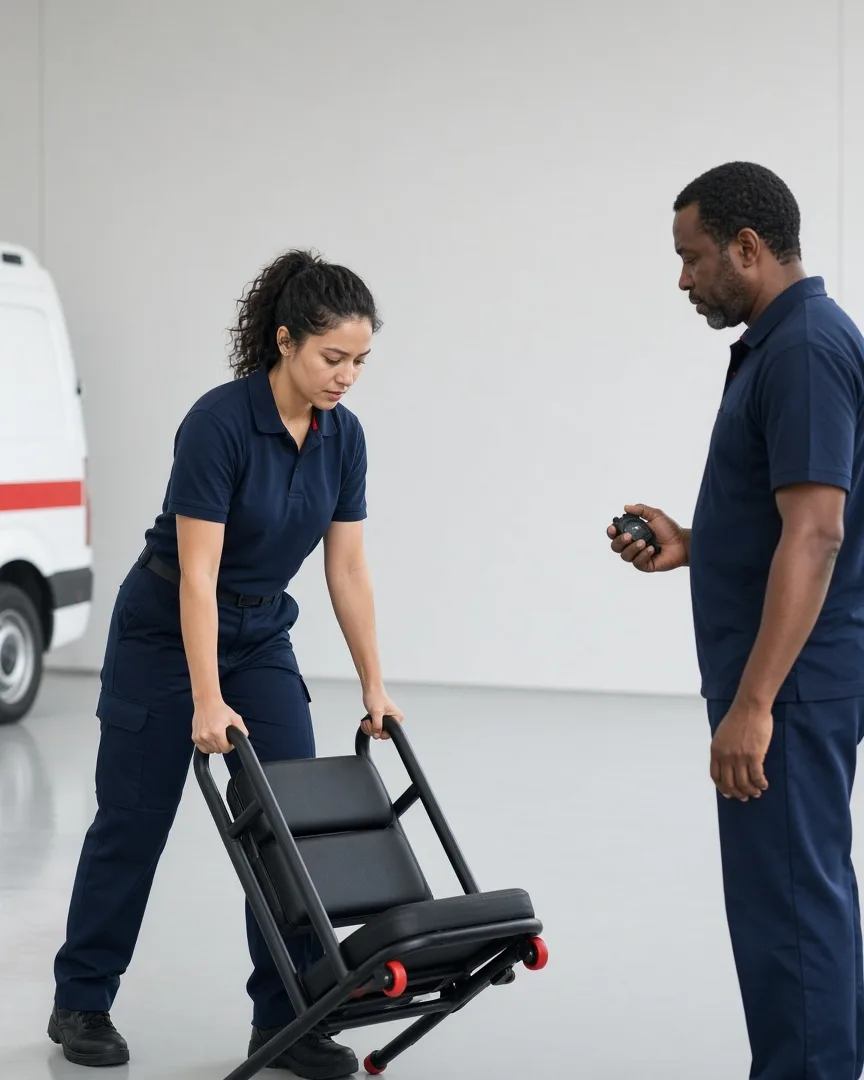
- 03Pass the fitness and manual-handling assessment: a weighted carry-chair lift and a 3-minute step test.
- 04Health clearance and the required occupational vaccinations before placement.
- 05A satisfactory background check. A driving licence is welcome but not required to start.
NOTES
From the classroom and the road
Graduates, students and instructors write about what the work and the training feel like from the inside: night shifts, second careers and why every compression is timed.
VISIT
Open evening, first Thursday of the month
Tour the skills lab and the ambulance-body simulators and meet the teaching staff. Open evenings run on the first Thursday of every month, 18:00 to 20:00, at 41 Wexford Lane, Northmere. Admissions staff and tutors are on hand to talk about entry, placements and funding.
Office Mon–Fri 08:30–17:00 · Skills lab Mon–Sat 07:30–21:00