ABOUT
The college
About the College
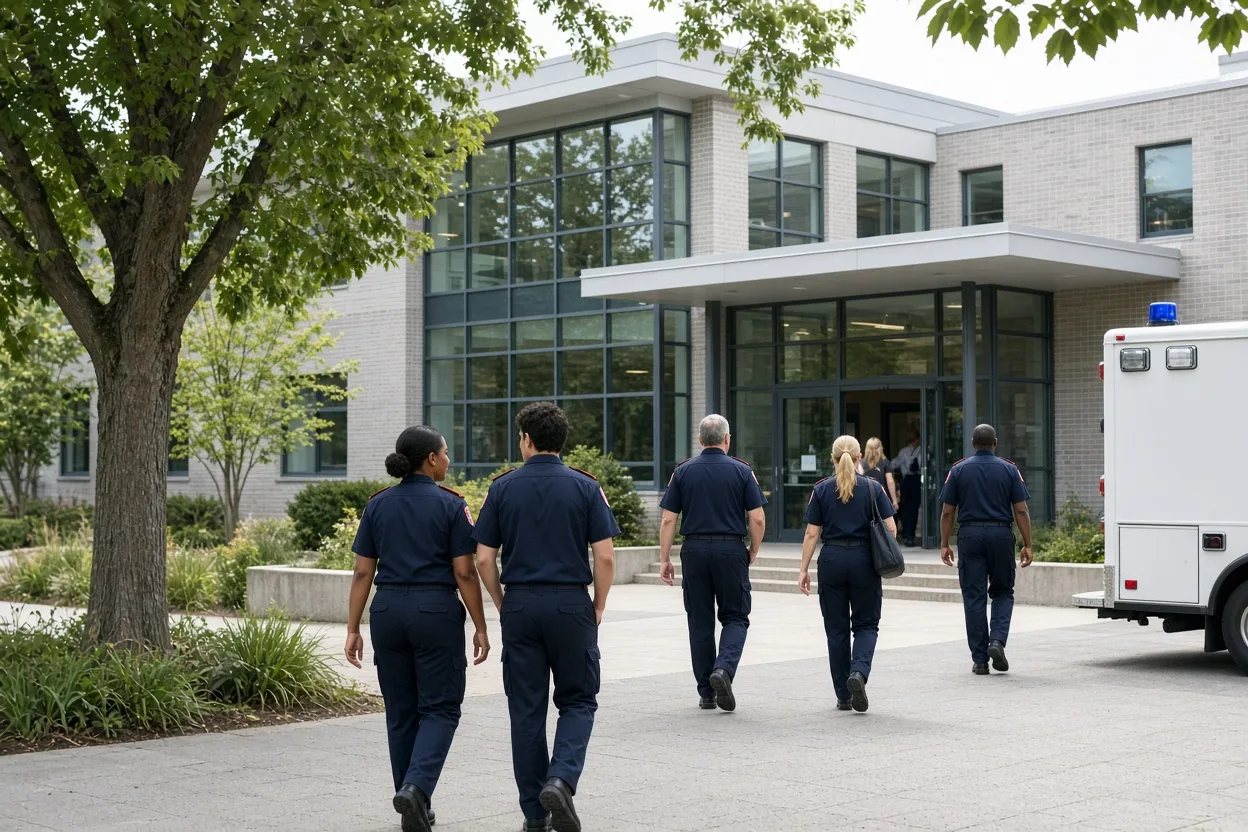
Founded in 2011, Kyukyu College trains paramedics to manage the critical minutes before hospital arrival. Our single campus at 41 Wexford Lane in Northmere provides realistic simulation environments for small cohorts of 24 students.
01
2011
Founding
How was Kyukyu College founded?
Kyukyu College was founded in 2011 by Principal Dr. Ruth Adeyemi-Holm, a former emergency physician, alongside two active station paramedics. The founders recognized that traditional academic programmes often separated emergency theory from the physical pressure of real-time clinical decisions. They established the college to teach the essential clinical and operational work that must occur before a patient reaches hospital care. Since welcoming its first class, the college has maintained cohorts of 24 students to ensure direct access to instructors and simulation bays. Every tutor continues to work active operational shifts, ensuring that classroom doctrine matches current field practice.
Founded 2011 · 41 Wexford Lane, Northmere

02
Scenario first
How we teach
How does our scenario-first teaching method work?
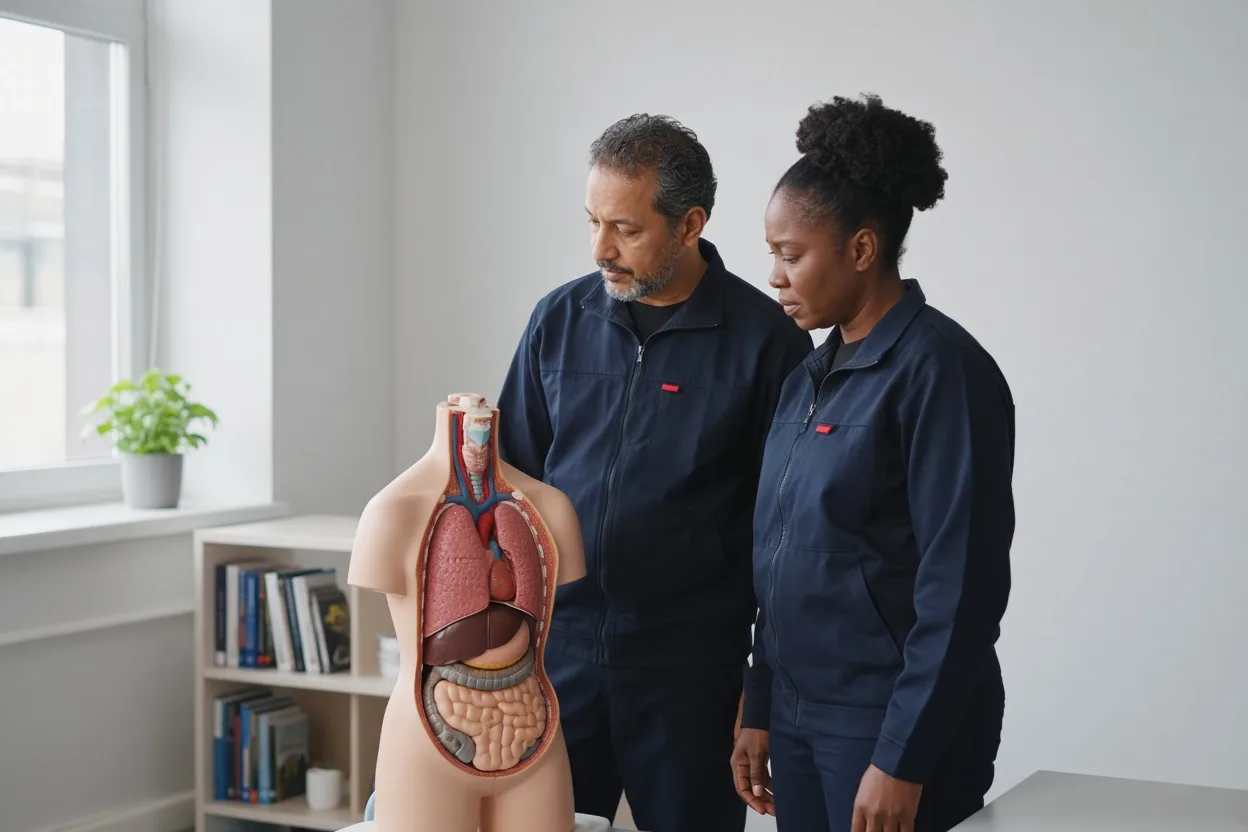
At Kyukyu College, learning begins in the simulation bay rather than the lecture hall. Instructors introduce clinical cases through active drills, requiring students to assess manikins under timed conditions before unpacking the underlying pharmacology and pathophysiology. This scenario-first structure forces students to confront scene management, radio communication, and clinical priority in the first eight minutes of an emergency. Once the drill finishes, tutors lead detailed debriefs, dissecting decisions with physiological data recorded by our simulation equipment. Students then examine medical literature with an immediate understanding of why precise timing and diagnostic accuracy matter on scene.
1 instructor : 8 students · 24 places per intake
03
The building
Where we work
What facilities are housed at 41 Wexford Lane?
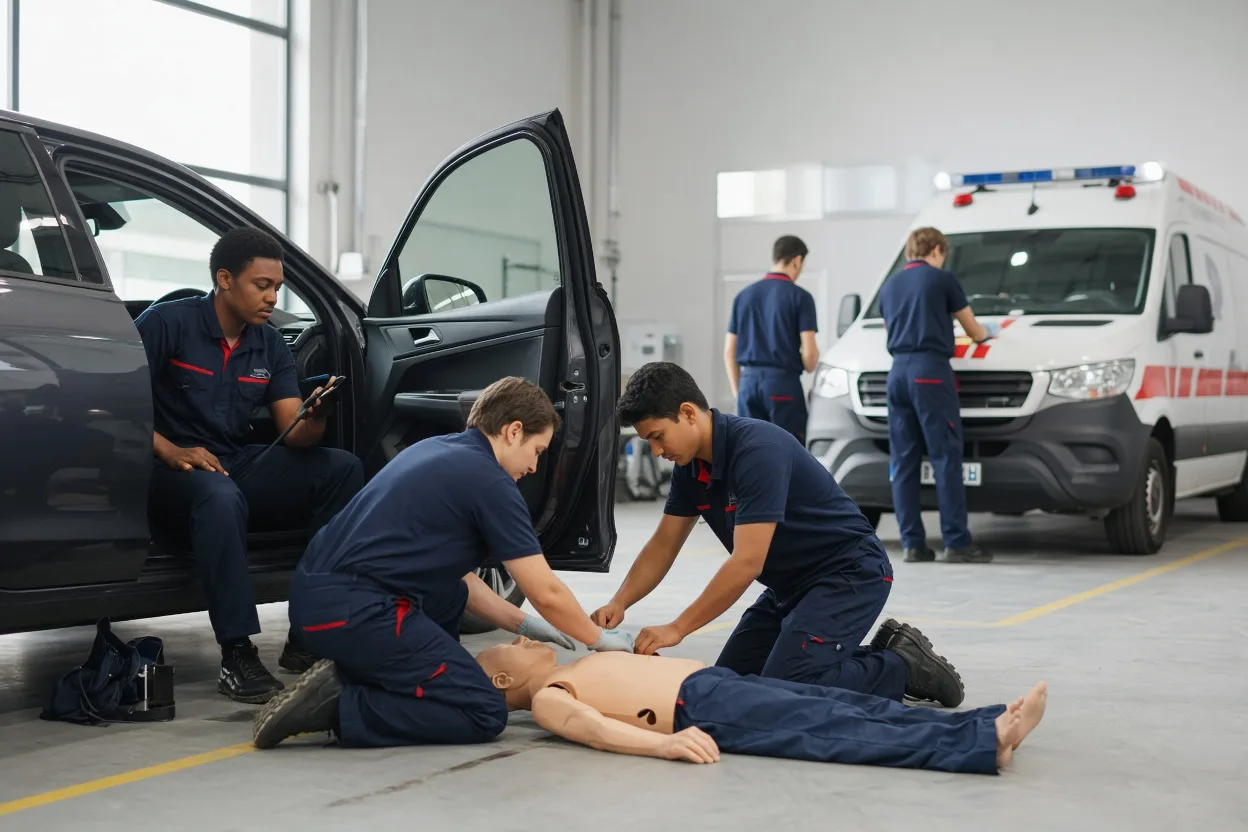
Our campus at 41 Wexford Lane in Northmere is designed entirely around emergency simulation. The facility houses two lecture classrooms for theoretical coursework, a medical library with anatomy models, and an expansive drill hall for large-scale vehicle extrication scenarios. At the centre of the building is our specialized skills lab, equipped with two full-scale ambulance-body simulators where students practice patient transfers, airway management, and cardiac monitoring. Training occurs in small groups with an instructor-to-student ratio of one to eight, ensuring constant supervision. The skills lab remains open to students from Monday to Saturday, 07:30 to 21:00.
2 classrooms · 2 ambulance-body simulators · 1 drill hall
The building
- 01Two classrooms. Lecture rooms for anatomy, pharmacology and ECG work.
- 02A skills lab. Two ambulance-body simulators, open to students Monday to Saturday, 07:30–21:00.
- 03A drill hall. Room for staged roadside scenarios and carry-chair assessments.
- 04A library corner. Anatomy models and quiet study space.
Next