
Conditions We Care For
We evaluate and care for joint stiffness, muscle strain, and postural fatigue caused by prolonged sitting and repetitive screen work.
WHAT WE SEE
Three concerns, and what else we see

Neck and Shoulder Tension
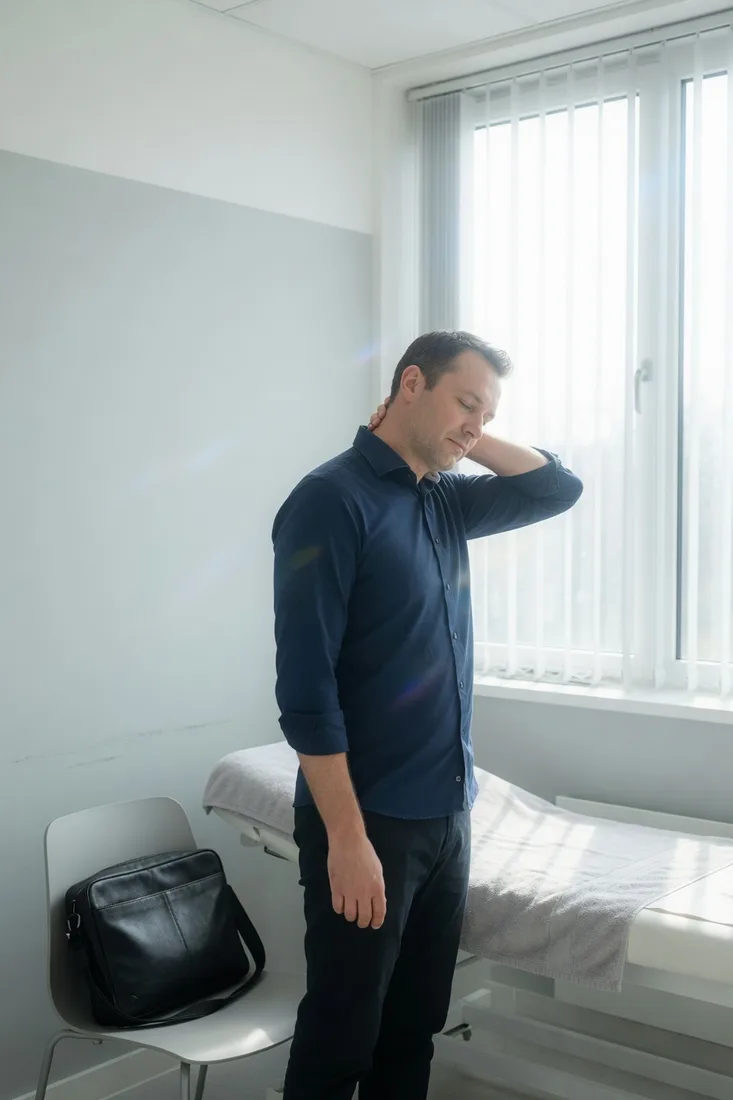
Holding your head forward while staring at monitors places substantial strain on the cervical spine and the upper trapezius muscles. Over forty hours of weekly desk work, this sustained muscular contraction can cause persistent stiffness, limited rotation, and uncomfortable tightness across the tops of both shoulders. Our chiropractors evaluate segmental joint motion in the cervical and thoracic spine, using precise manual adjustments and gentle soft-tissue releases to alleviate joint restrictions. We pair these treatments with manageable posture adjustments so you can sit at your screen without constantly elevating your shoulders.

Lower Back and Hip Stiffness
Prolonged sitting locks the hips in flexion and flattens the natural lordotic curve of the lumbar spine, transferring continuous hydrostatic pressure onto the lower lumbar discs and surrounding ligaments. Many office workers notice an ache when rising from their desk chair at the end of the day or when bending down to tie their shoes. We evaluate pelvic alignment, hip mobility, and lumbar spine mechanics, utilizing specific adjustments to restore fluid movement to stiff spinal joints and relieve accumulated mechanical fatigue across the lower back.

Headaches and Jaw Tension
Tension-type headaches and clenching of the jaw frequently accompany long stretches of concentrated desk work. Forward head posture can irritate the suboccipital nerves at the base of the skull, referring dull pressure behind the eyes, across the forehead, or around the temples. Furthermore, subconscious stress often manifests as clenching in the temporomandibular joints. We address these patterns by restoring gentle motion to the upper cervical joints, releasing tight suboccipital musculature, and providing practical guidance on jaw relaxation during high-focus working sessions.

Mid-Back Stiffness, Forearm Strain, and Sciatica
We also frequently see mid-back stiffness between the shoulder blades, wrist and forearm strain from keyboard use, and sciatica-type leg discomfort linked to piriformis tension or lumbar disc irritation. Our team takes time to assess the root mechanism behind your symptoms. If an examination suggests nerve root compression or soft-tissue distress that falls within our scope, we provide gentle joint adjustments, myofascial releases, and nerve gliding exercises. However, we refer when it is not for us, directing patients promptly to specialized medical practitioners whenever findings warrant further evaluation.
When to See a Physician First
Certain symptoms require immediate medical assessment rather than chiropractic care. If you experience sudden muscle weakness in an arm or leg, numbness in the saddle area around your groin, unexplained changes in bowel or bladder function, high fever accompanying spinal pain, or back pain following traumatic injury, please consult a medical physician or visit an emergency department promptly. We maintain strict red-flag screening protocols during every initial consultation to ensure that every patient in our clinic receives safe, appropriate, and medically responsible care.
Questions first? Call +1 604 555 0142 or write to hello@shisei.example. Reception is open six days a week.