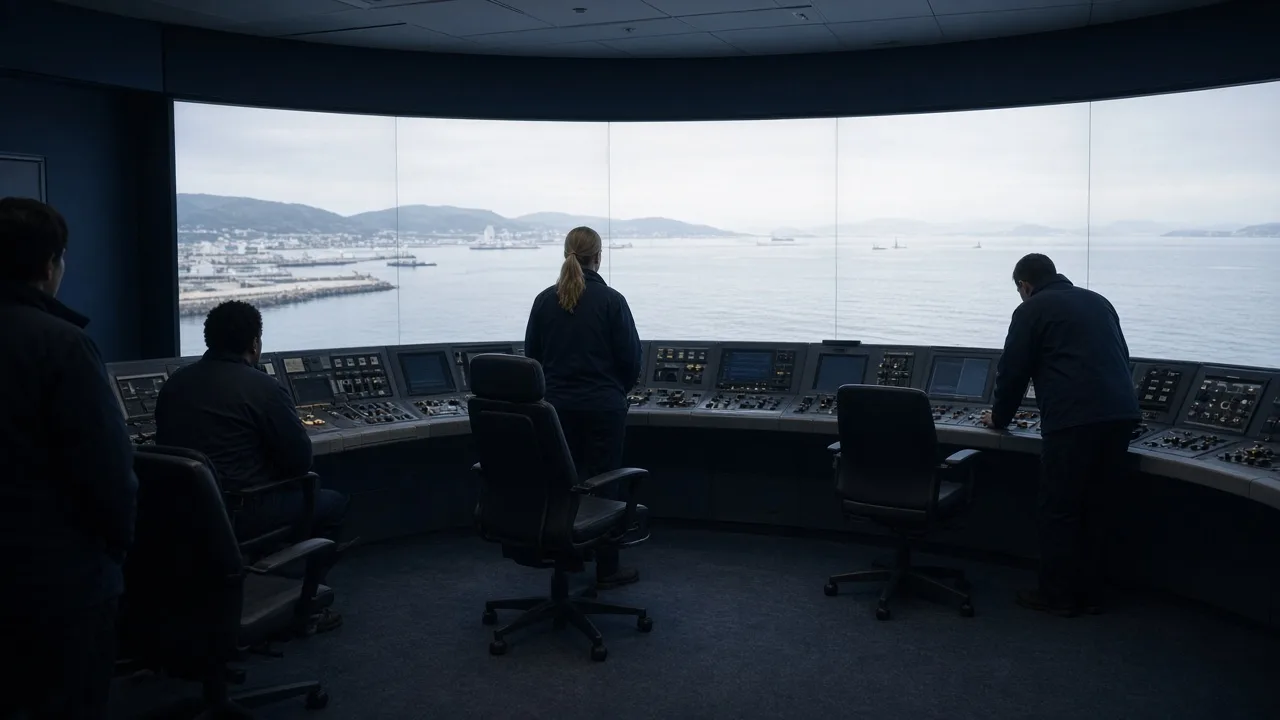
Full-mission bridge simulator room, dim, with wide screens showing a calm sea view.

Harbour Foundation · Weeks 1–12

The Course

Harbour Foundation is a 12-week course on Pier 3, taught in five stages from shore school to a written berth confirmation. Each intake is 18 cadets, in January, April or September.

STAGES

Weeks 1–12
Stage 1

Shore school

Weeks 1–4

Weeks 1 to 4 are shore school. The cadet works on paper charts at the training-bridge console and learns the harbour before taking a watch: symbols, courses, and a bearing drawn in pencil. In week 4 the instructor traces the first bearing with the cadet, with the quay, the cranes and a tug visible through the bridge windows. The college keeps the charts on the table, runs the class on Pier 3, and puts a navigation instructor beside the cadet for the correction. You leave with a logbook started in your own hand and a bearing you can plot again without a prompt. The stage stays inside the 12 weeks of Harbour Foundation. It does not by itself confirm a berth.

Stage 2

Simulator bridge

Weeks 5–7

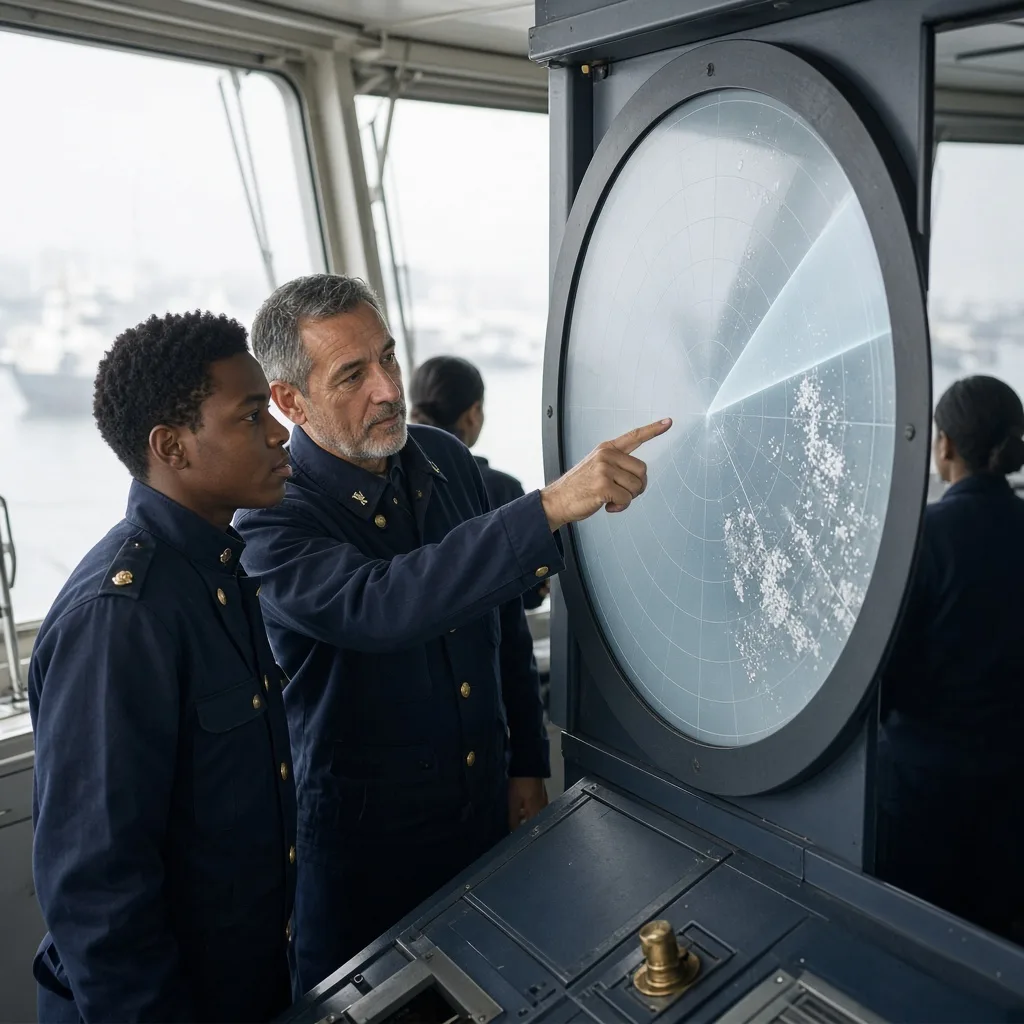
Weeks 5 to 7 move to the full-mission bridge simulator. The cadet stands a watch on the simulator bridge, takes a helm order, and reads the radar well enough to talk about it in the debrief. The college sets that debrief at 12:00 on simulator days, with the simulator lead in the room and the screen free of any drill that needs a printed script. You leave with a habit of saying what you saw, what you did, and what you would change, in plain words an instructor can follow. Simulator time in these three weeks is part of Harbour Foundation. It is separate from the four-day Radar / ARPA Simulator short course, which has its own fee and its own booking.

Stage 3

Harbour watch

Weeks 8–10

Weeks 8 to 10 are harbour watch on the real quay. The cadet takes a line at the mooring bollards, watches the grey water and the moored vessel, and keeps a watch that can be explained back to an instructor. Week 8 is the first of these weeks on the quay. The college provides the training berth at Pier 3, the lines, and an instructor who stays in sight of the cadet. You leave with hours on the quay that were logged, and with a clearer sense of tide, traffic and the pace of a working harbour. Harbour watch is still training. A letter confirming a berth with an operator comes only after week 12, and only in writing.

Stage 4

Tug and pilot runs

Week 11

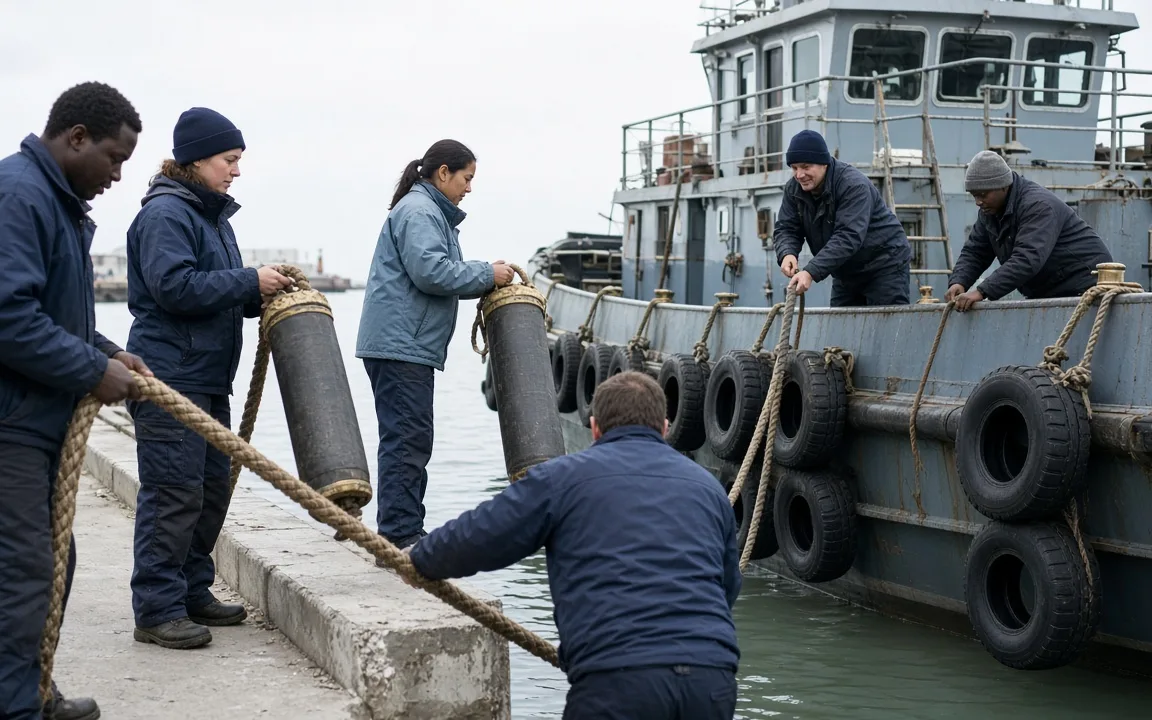
Week 11 is tug and pilot runs, a single week inside the twelve. The cadet handles lines with the tug crew, works with fenders, and sees how a pilot boarding is set up from the deck rather than from a diagram. The afternoon line-handling period is at 16:00. The college arranges the week with the harbour pilot liaison and the tug crew who train with the cadets, and keeps the work on the college’s own training routines. You leave with one logged week of tug and pilot work and a short account, in the logbook, of the runs you actually made. The college does not publish a quota of runs, and this week is not yet the assessment.

Stage 5

Assessment and berth

Week 12

Week 12 is assessment and berth. For the intake that begins on 12 January 2027, the assessment date is 26 March 2027 and the berth is confirmed on 2 April 2027. The berth is confirmed in writing on the Friday of week 12, after the assessment. The cadet attends the assessment and waits for the letter. The college runs the assessment, and the berth placement officer prepares the written confirmation when a berth has been arranged with an operator. You leave, when the letter is issued, with that written confirmation and with the logbook of the twelve weeks. A completed week 12 is not, by itself, a promise that every cadet will receive a berth.

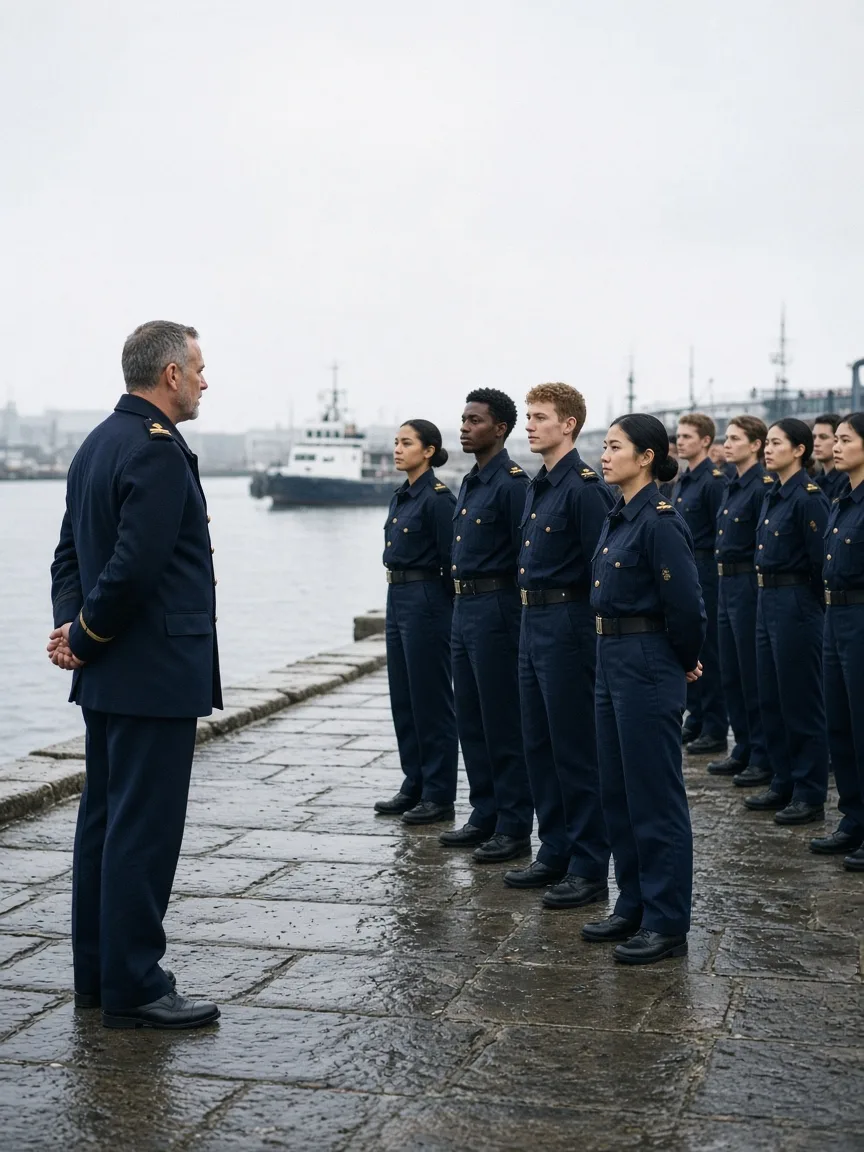
Cadets stand in a line with an instructor for morning muster on the quay.

07:30 — Muster on the quay

Instructor points at a radar screen during a simulator debrief with a cadet.

12:00 — Simulator debrief

Cadets and a tug crew handle ropes and fenders during line handling.

16:00 — Line handling

RHYTHM

Weekly rhythm

The twelve weeks change task, but the day keeps three anchors. Muster is on the quay at 07:30. On days when the simulator bridge is in use, the debrief is at 12:00. When the stage is on the water, line-handling with the tug crew is at 16:00. Shore school fills the middle of the day with charts. Harbour watch stays on the quay. Week 11 belongs to the tug and the pilot runs. The office is open Monday to Friday, 08:30 to 17:00. The college is closed on Sundays and public holidays. The first Saturday of the month is the open quay, 10:00 to 13:00, which is a visit, not a sixth training day. On a narrow screen the week is the same list, read in order, rather than a wide table.

TimeWhat happens
07:30Muster on the quay. The cadets form a line with an instructor and hear the day’s task, whether chart work, a harbour watch or a tug run.
12:00Simulator debrief. Each cadet explains the bearing, the traffic and the choice just made. The screen is only useful once that account is given.
16:00Line handling. Cadets work ropes and fenders with the tug crew. The hour is slow and physical, and gloves stay on until the line is secure.

WEEK 12

What week 12 assesses

Week 12 assesses the work the cadet has already practised. The instructors look at a bearing plotted on a paper chart, a watch on the simulator bridge, a harbour watch on Pier 3, and line work from the tug week. The cadet uses the logbook as the record of those weeks. There is no published pass mark and no score released as a ranking. The assessment date for the 12 January 2027 intake is 26 March 2027. After that assessment, a berth that has been arranged is confirmed in writing on the Friday of week 12, which for this intake is 2 April 2027. The application and berth assessment fee is EUR 90, counted inside the programme fee, not added again at week 12.

Berth confirmed

12 January 2027 Intake

26 March 2027 Assessment

2 April 2027 Berth confirmed

Demo · Use it free in ShipPress · Or buy without the app for US$10English · 繁體中文 · 日本語 · Français · Deutsch
Demo only: this is switched off here.