
Cadet Stories
Three cadets describe a berth that was confirmed for them: a coastal ferry, a harbour tug, and a short-sea cargo ship. Their letters belong to them, not to the next intake.
NOOR
Noor Haddad
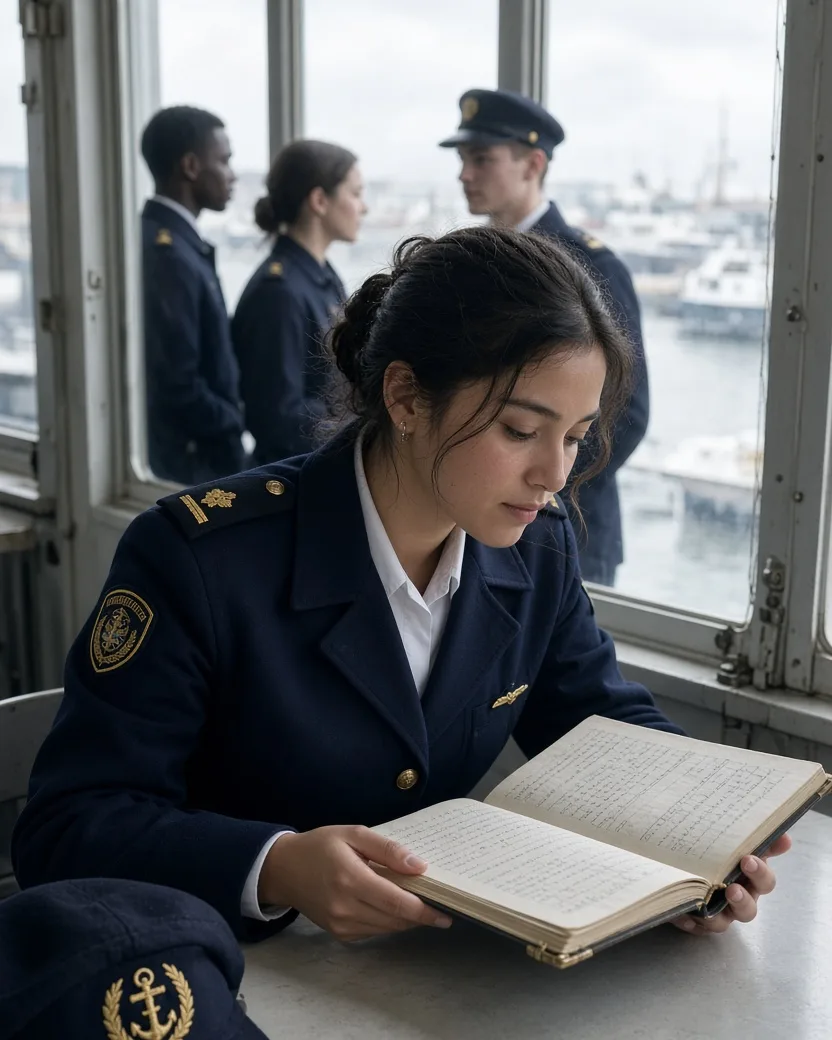
Noor Haddad is from the January 2026 cohort. Her training berth, confirmed in writing after assessment, is on a coastal ferry. She talks about the course as a change of table, from the chart at Pier 3 to a working deck, and she keeps the week-12 letter with her logbook.
“Week 4 was a pencil and a bearing. On the ferry I still want to know where I am before I touch a line.”
She does not describe the ferry company, and the college does not name it. What she will say is that the berth was not offered at her enquiry. It came after harbour watch, the tug week, and the assessment. People reading this as a forecast for January 2027 are reading it the wrong way. Her cohort was January 2026.
ELIAS
Elias Varga
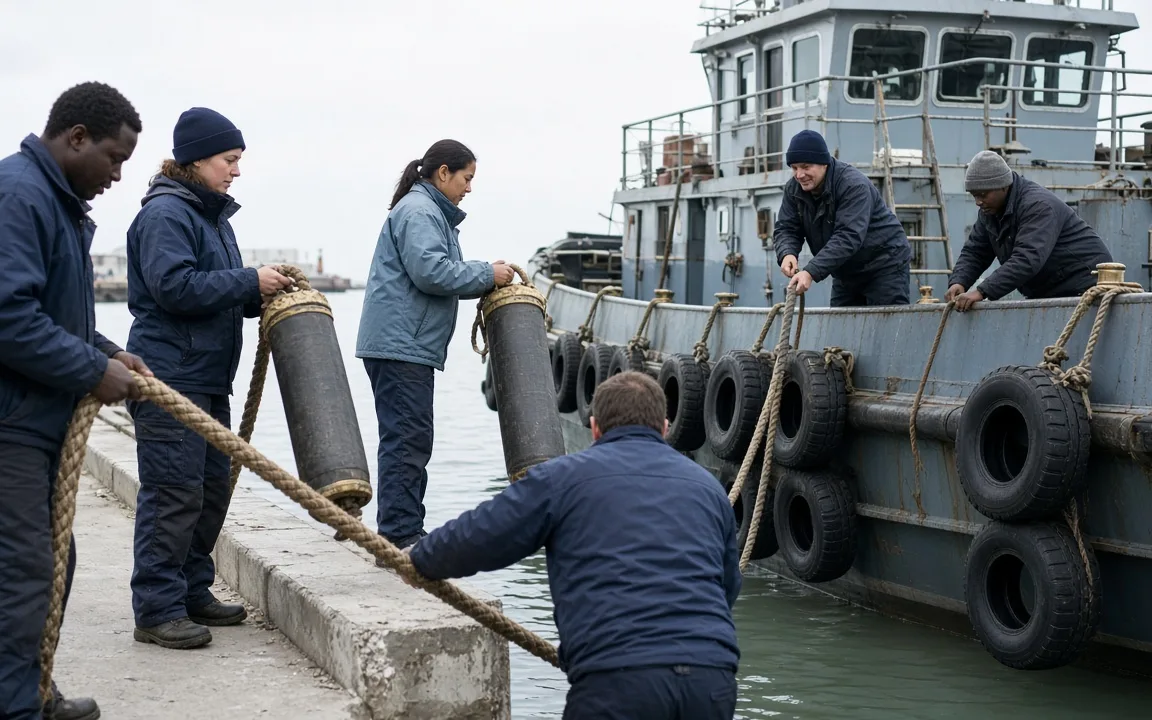
Elias Varga came to the college from logistics, and his training berth is on a harbour tug. He describes the change as a move from a desk that tracked other people’s cargo to a deck where his own hands held the line.
“I could plan a quay all day in my old job. The bollard does not care about the plan until the line is made up.”
He does not give a count of years in logistics, and none is printed here. The tug remains an unnamed operator of the harbour-tug type that Helena Brandt works with. Elias is clear that a career change is not a shorter assessment. He still sat week 12, and the berth was a letter afterwards, not a welcome note on the first Monday.
JOANA
Joana Prieto

Joana Prieto trained as an engine room rating, and her berth is on a short-sea cargo vessel. Her account stays with the workshop diesel and with the checks she now does in a cargo engine room, rather than with the deck stages of the twelve-week foundation.
“The workshop taught me to stand still and listen before I touched anything. The cargo ship is louder, and the habit is the same.”
Engine Room Rating is the 10-week programme, priced at EUR 4,200, and her story should be read against that course, not against Harbour Foundation’s week numbers. The operator is unnamed, identified only as short-sea cargo. She received a written berth confirmation. She does not suggest that the next engineering cadet will be placed the same way.