Founded in 1998 by former site electrician Ines Varga, Akiha College trains installation electricians in Calder Quay through rigorous workshop practice and supervised site placements.
College
The converted foundry shed in Calder Quay
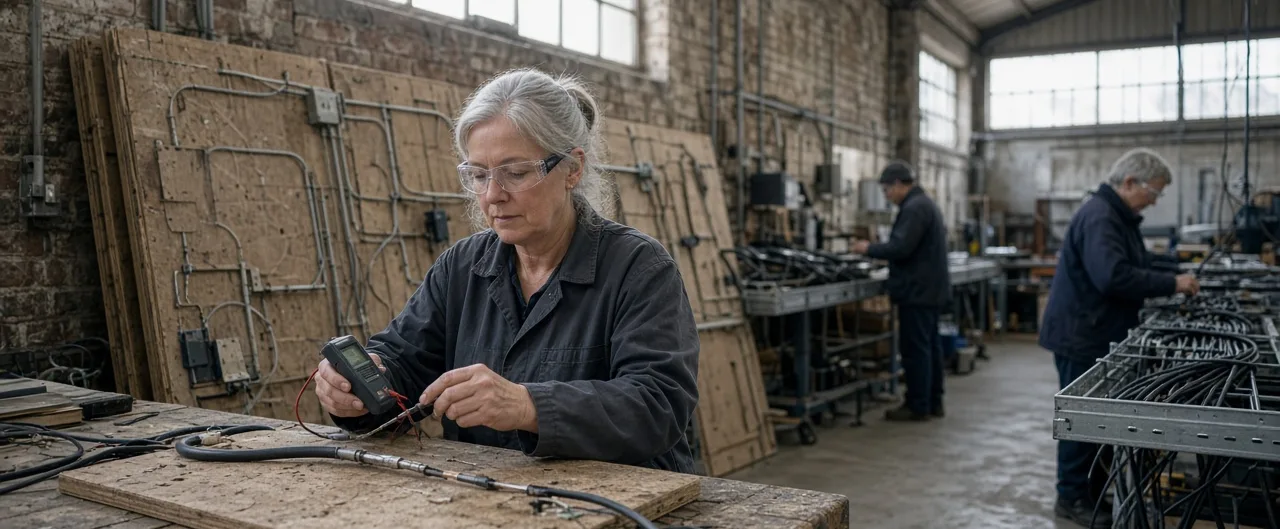
Akiha College began in 1998 inside a converted brick foundry shed on Foundry Row 9 in Calder Quay. Ines Varga, who spent years working on industrial and commercial electrical installations, established the college around a direct principle: electricians learn their craft by building real circuits under continuous supervision. The original timber benches and cast-iron frame still stand today, housing our modern training facilities. We have resisted the urge to expand into generic classroom blocks. Calder Quay remains an active industrial district where ships, warehouses, and manufacturing shops operate every day. The environment outside our tall workshop windows matches the demanding realities of the construction sites our apprentices enter. Here, every installation begins with practical isolation and clean preparation.
Showing the work before the explanation
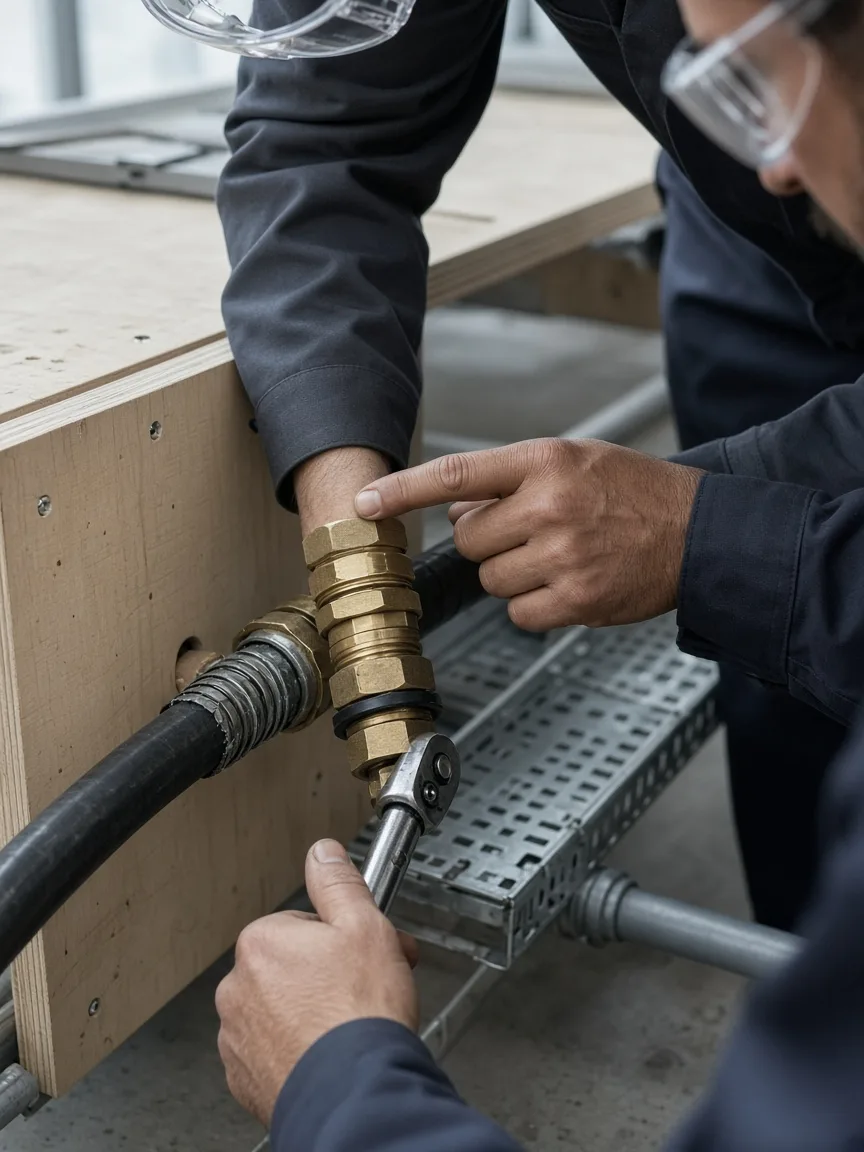
At Akiha College, we believe in showing the work before explaining the theory. Many courses ask students to memorise regulations from textbooks before touching a cable. We reverse that sequence. On your first morning, an instructor places a pair of pliers and a length of armoured cable in your hands. You learn the resistance of conductors by feeling copper yield under bending tools, and you understand mechanical containment by cutting and aligning steel tray. Theory is taught in direct reference to what stands on your plywood board. When an apprentice understands why a connection generates heat or why an unreamed conduit burrs insulation, safety regulations cease to be abstract rules. They become sensible habits ingrained through daily muscle memory and quiet repetition.
The shed in 1998
Four workshop bays and twenty-four places
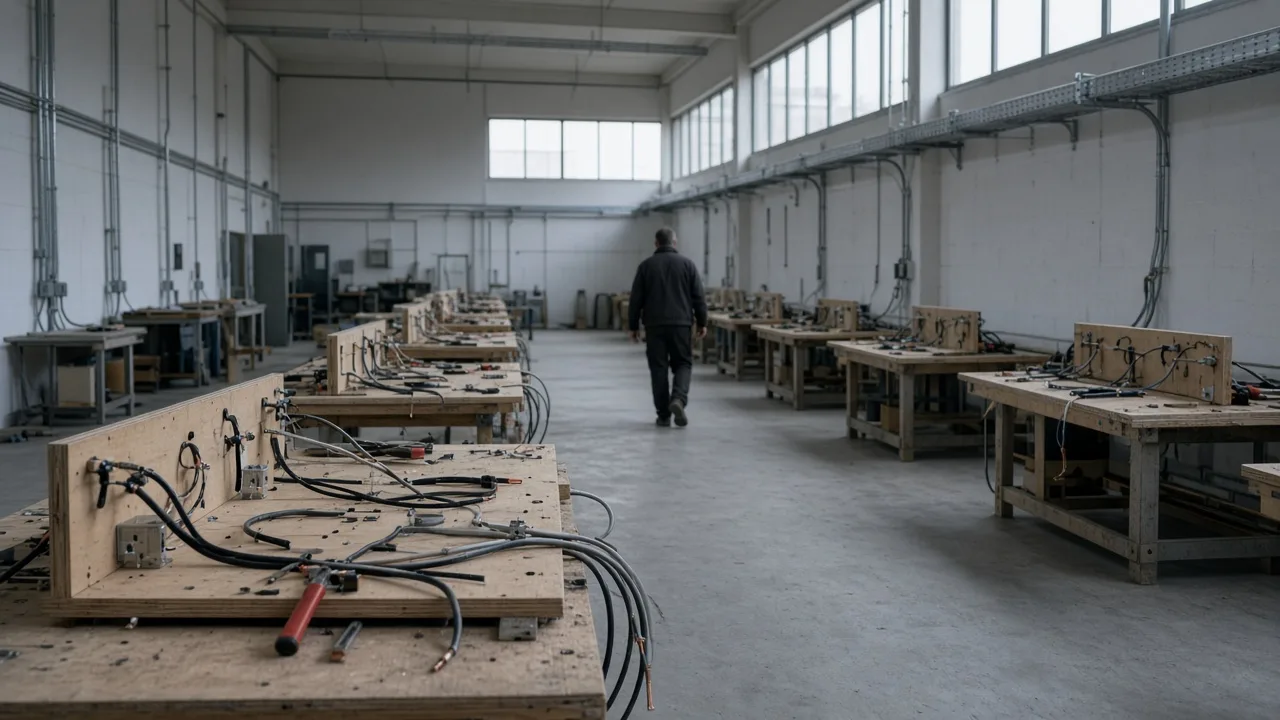
Our workshop floor is deliberately partitioned into four distinct bays, each fitted with six vertical plywood training boards. This physical arrangement limits our cohort strictly to twenty-four places per intake. With twenty-four students on the floor, instructors like Rhea Lindqvist and Kofi Mensah can stand at every board, watching individual cable terminations, checking isolation locks, and inspecting containment runs. We do not herd large lecture halls or rotate students through overcrowded workstations. Each trainee owns their designated board for the entire term, keeping their tools, test meters, and ongoing containment assemblies undisturbed. This layout establishes professional order and accountability, ensuring that no piece of work is ever signed off without an instructor having personally inspected every screw, bend, and torque setting.
Four bays, six boards each, one instructor always in sight.
Four bays
Each bay is a row of plywood training boards under long high windows.
Six boards a bay
One apprentice to a board, so every termination can be watched.
Twenty-four places
The number of boards sets the size of every intake.
Come and terminate a cable on a Saturday.
Open board Saturdays run on the first Saturday of each month from 09:00 to 12:00. Attendance is free: you try a termination with an instructor, in the workshop.