The report
The report
A Noki Surveyors report is a written record of what we could see on the day, in plain words, with a photograph for every finding. It arrives within five working days of the visit, and we follow it with a 30-minute call.
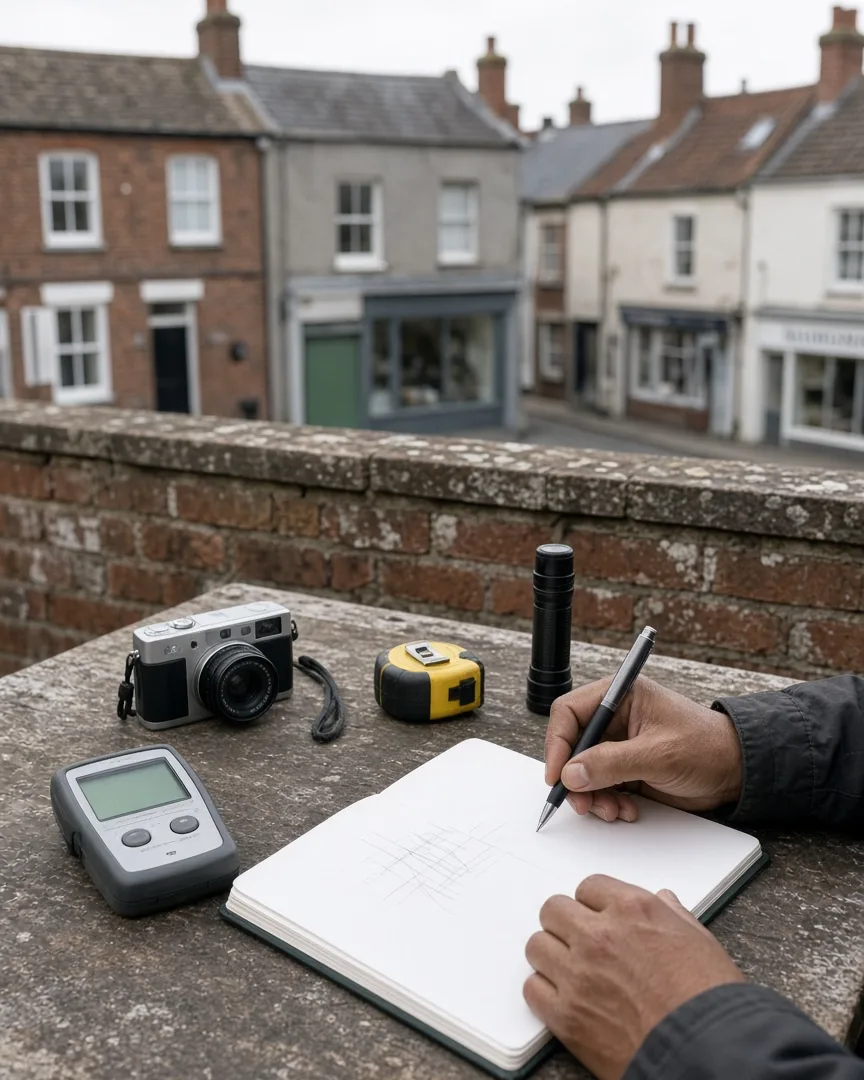
What should the report tell you?
How we write
The report
We write the way we would explain the house to you on the pavement. Each finding is one photograph and one sentence in plain words: what we saw, where it is, and why it matters before you sign. The report uses eight numbered sections, and the last of them sorts the findings into three columns: now, within two years, and keep an eye on.
Each item in those columns carries a rough cost range, so you can talk to the seller with something concrete in front of you. The range is a scale for that conversation. We do not sell or arrange repairs. The report is prepared for the named client. A survey is not a valuation. Where a floor, a roof or a service could not be seen, the sentence says that plainly.
Eight sections, one report
The ledger
01
Structure and movement
This section covers cracks, lintels, floors and the chimney. We look at whether a crack is only in the plaster or whether it steps through the brick, and which way it runs. On a cracked brick lintel over a bay we note whether the lintel has dropped and whether the masonry above is opening.
Floors are read for slope and for how they feel underfoot. The chimney is checked where we can see it, inside and out, for cracked pots, open joints and movement where it meets the roof. We do not open up the structure. If a finding needs a structural engineer, we say so on the 30-minute call and name that kind of specialist.
02
Roof and rainwater
This section covers roof coverings, flashings, gutters and downpipes. We look at slipped or cracked slates, open joints at a valley, and felt flat roofs that hold water. Flashings are checked where the roof meets a wall or a chimney. Gutters and downpipes are read for leaks, blockages and stains on the wall beneath them.
In frost or rain we check roofs from the ground and with a pole camera, and the report says plainly what could not be seen. Ladders go to about 3 m, and we look at single-storey roofs from a ladder. Otherwise we use the pole camera and binoculars. We never walk on roofs.
03
Damp and ventilation
This section records damp readings, air bricks and signs of condensation. We hold a damp meter against walls and skirtings where we can reach them, and we write the readings into the report. A high reading is not a diagnosis on its own. We look for a tide mark above the skirting, a blocked air brick, and cold surfaces where moisture can settle.
A damp patch at the skirting can be condensation rather than rising damp, and the report says which one the readings and the ventilation support. We do not lift fixed floors. Where a carpet corner can be turned, we look at the boards and the skirting behind it.
04
Walls, windows and doors
This section covers outside walls, windows and doors. We look at brick and render for cracks, open joints and patches of repair. Window sills are checked for cracks, and frames for rot and for sashes that do not close. Doors are noted where they bind, where the threshold lets water in, or where the frame has moved with the wall.
A cracked sill or a lintel over a window is written with a photograph and one plain sentence, so you can see the same thing we saw. The note stays with the condition of the fabric. A survey is not a valuation of the house, and it does not price the windows as a quote for replacement. We do not sell or arrange repairs.
05
Services we can see
Services we can see covers visible electrics, heating and drainage covers. The inspection is visual only. It is not a test. We note cables, fittings and the heater where they are in sight, and we look at drainage covers we can open. If a cover stays shut, or a fitting is hidden, the report says what could not be seen.
When a finding needs an electrician, a heating engineer or someone who tests drains, we name that kind of specialist on the 30-minute call. You arrange any further test yourself. We do not sell or arrange the work, and looking at a service does not amount to saying it is safe or complete.
06
Inside
Inside, we look at ceilings, stairs and fire escape routes. Ceilings are checked for cracks and stains, including stains that line up with a leak above. Stairs are walked. We note loose treads, a missing handrail and any slope that is hard to ignore. In a house, the escape route is the stair and the hall to the outside door.
In a shop with a flat above, we look at the separation between the shop and the flat and whether the escape route from the flat is clear. We write what we could see on the day, with a photograph where the ceiling or the route needs one. We do not design a fire strategy, and we do not sell or arrange repairs.
07
Outside
Outside, we look at boundaries, paths, outbuildings and trees near walls. Boundaries are walls, fences and the ground along them: we note cracks, leans and places where the ground is higher on one side. Paths are checked where water sits against the house. Outbuildings are included when they belong with a large house, and they are part of why that visit runs to three or four hours.
A tree close to a wall is recorded where the canopy, the roots or a stain meet the building. We do not say who owns a boundary. The note is there so you can raise a tree or a leaning wall before you sign.
08
Priorities
The last section sorts findings into three columns: now, within two years, and keep an eye on. Now means something to deal with before you commit, or as soon as the building is yours, such as a lintel to replace before winter or a flat roof that is holding water. Within two years means work that can wait and should not be forgotten.
Keep an eye on means a crack, a stain or a slope we record so you can look again later. Each item has a rough cost range for a conversation with the seller. We do not sell or arrange the repairs. The 30-minute call after the report walks through these three columns with you.
Now
Deal with it before you commit, or as soon as the building is yours.
Within two years
Work that can wait, and should not be forgotten.
Keep an eye on
A crack, a stain or a slope we record so you can look again later.
Photographs from recent reports
Findings
Recent reports have included slipped slates at a valley on a 1930s semi, a tide mark above the skirting in a ground-floor flat, a cracked lintel over a bay window on a 1920s terrace, an upstairs floor falling 18 mm towards the front wall, and ponding on a felt flat roof behind a shop with a flat above.
On the lintel, the lintel had dropped about 4 mm, and we wrote: replace before winter, ask the seller. Each photograph sits with one plain sentence. The same five subjects are the ones we return to when a buyer asks what a visit actually finds. They are condition, written down, before anyone signs.
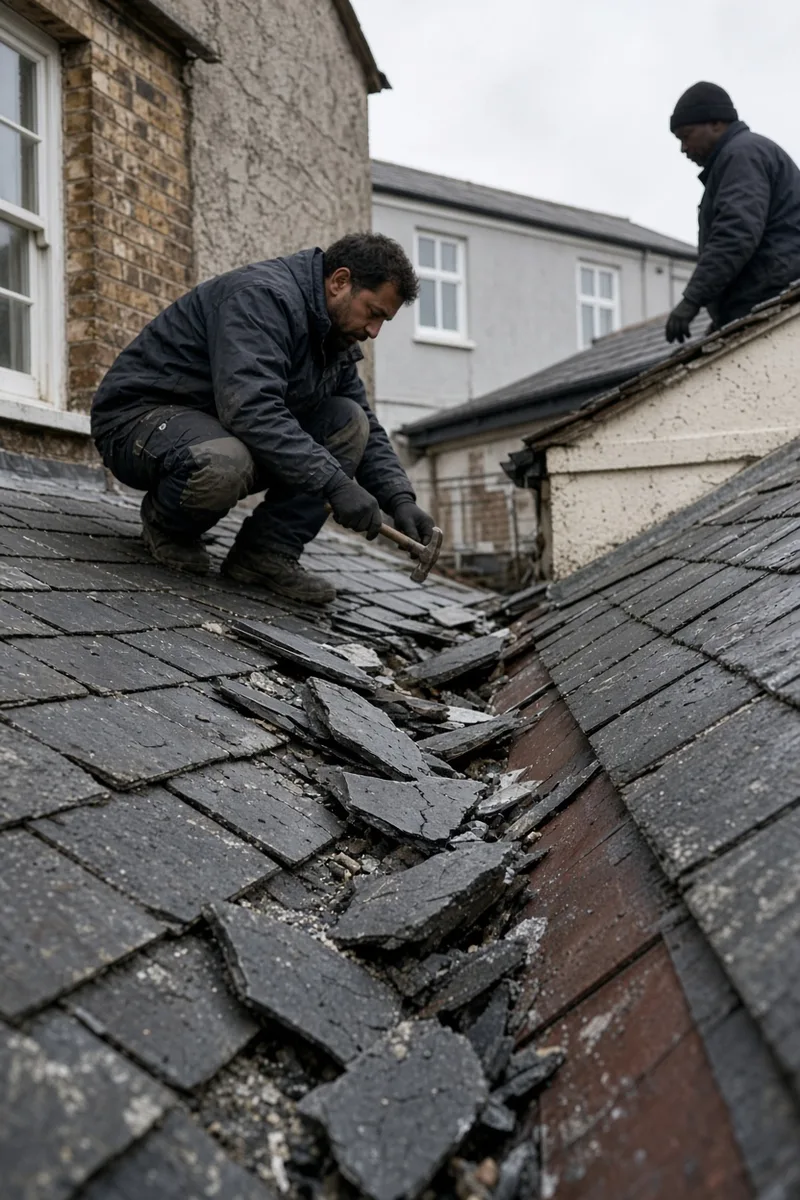
Slipped slates at a valley
1930s semi
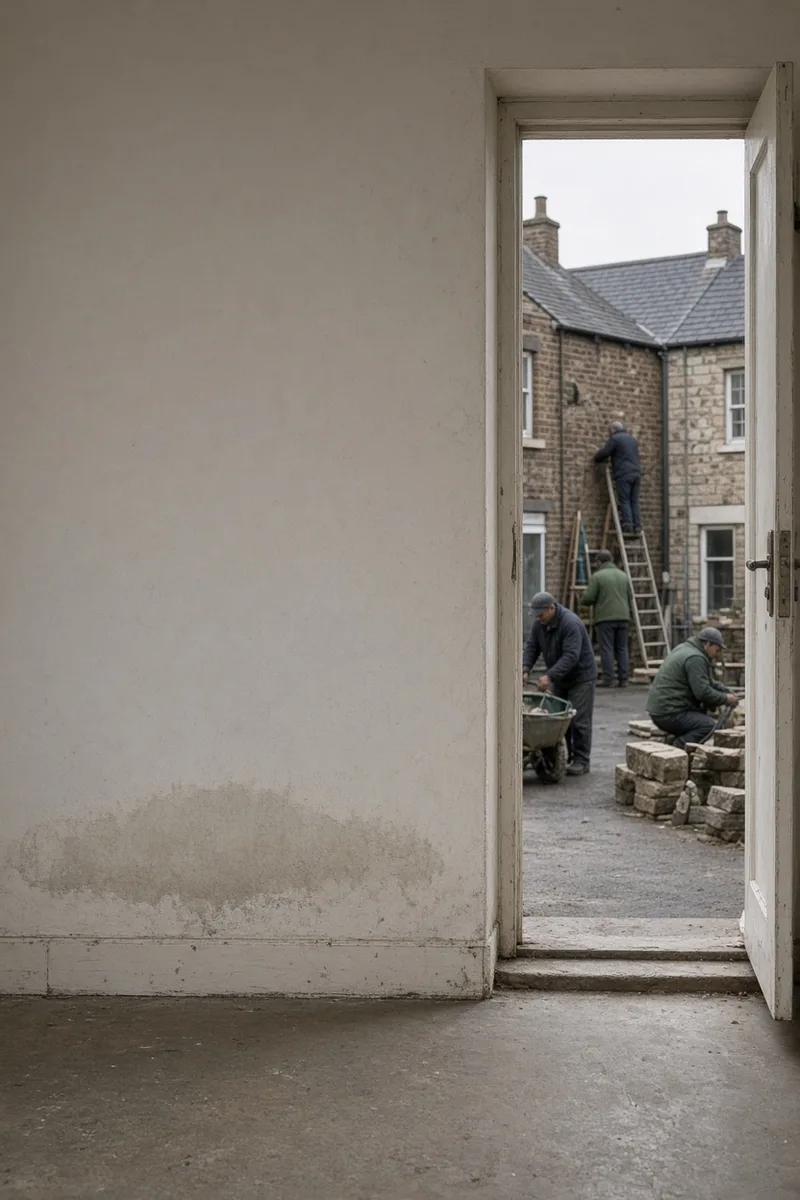
Tide mark above the skirting
ground-floor flat
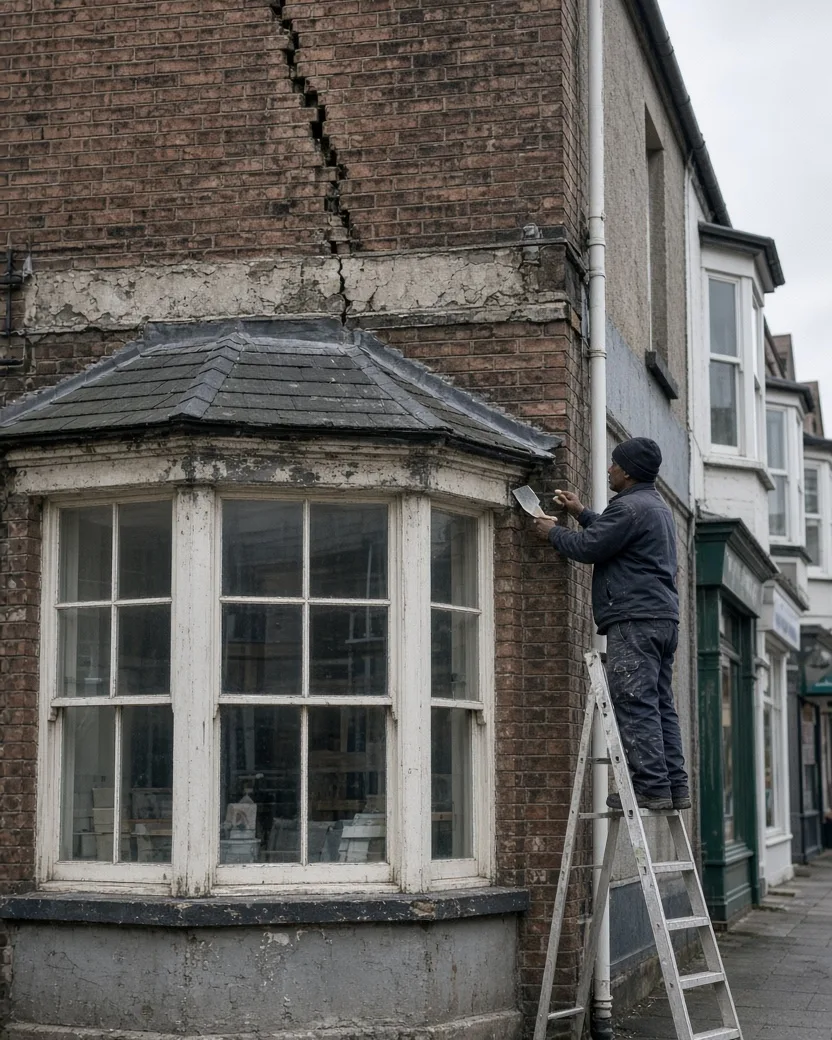
Cracked lintel over a bay window
1920s terrace
The lintel had dropped about 4 mm; we wrote: replace before winter, ask the seller.
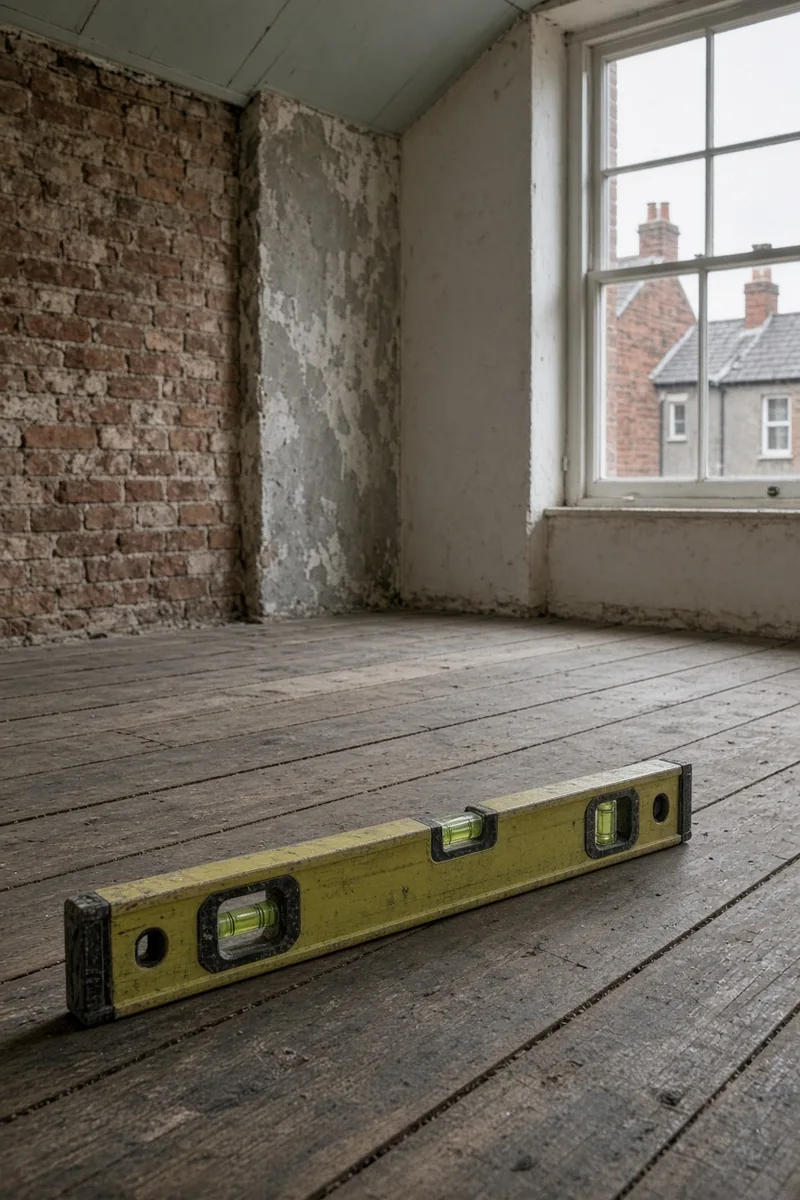
Upstairs floor falling toward the front wall
18 mm over the room
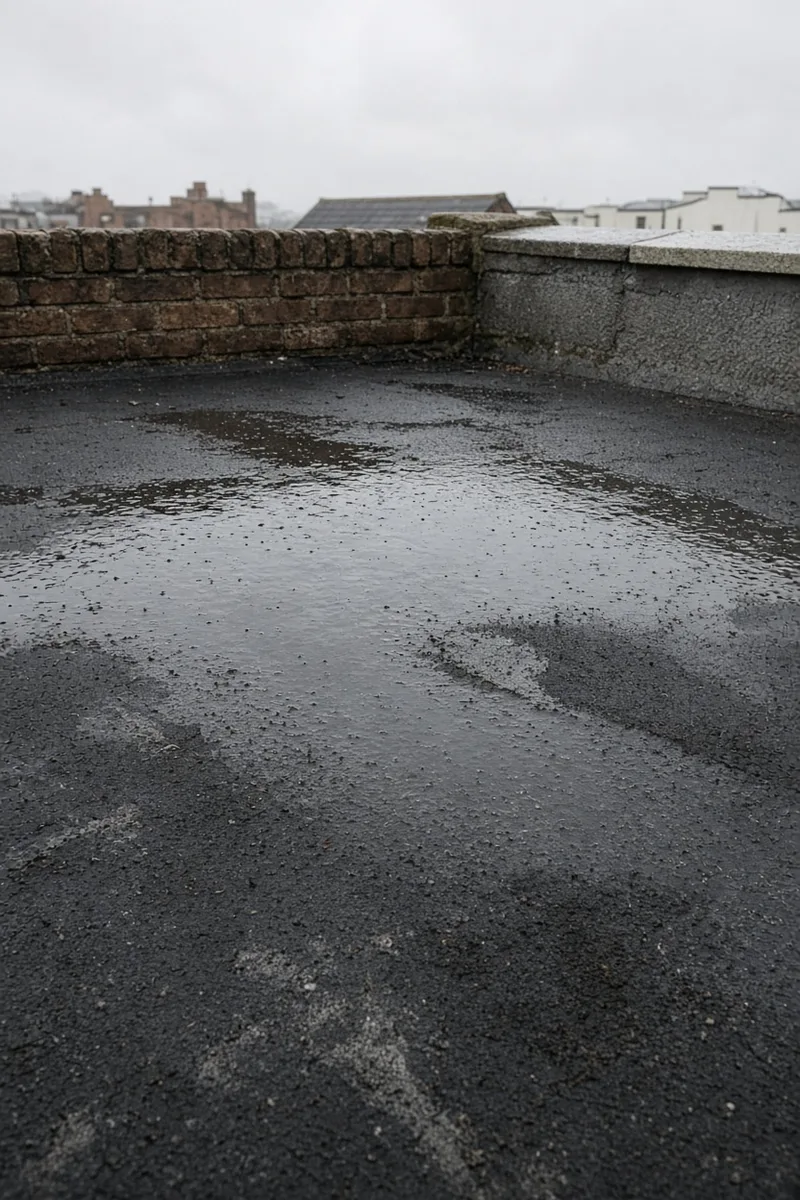
Ponding on a felt flat roof
shop with a flat above
Request a survey
Tell us the address, the type of building and the date you need the report by. Lucía replies within one working day with a fixed price and a visit slot.