Findings
Findings
These notes are the kind of thing a visit turns up: a valley, a tide mark, a lintel, a sloping floor, and a flat roof holding water. Each one says what we usually mean by it, and what the report says.
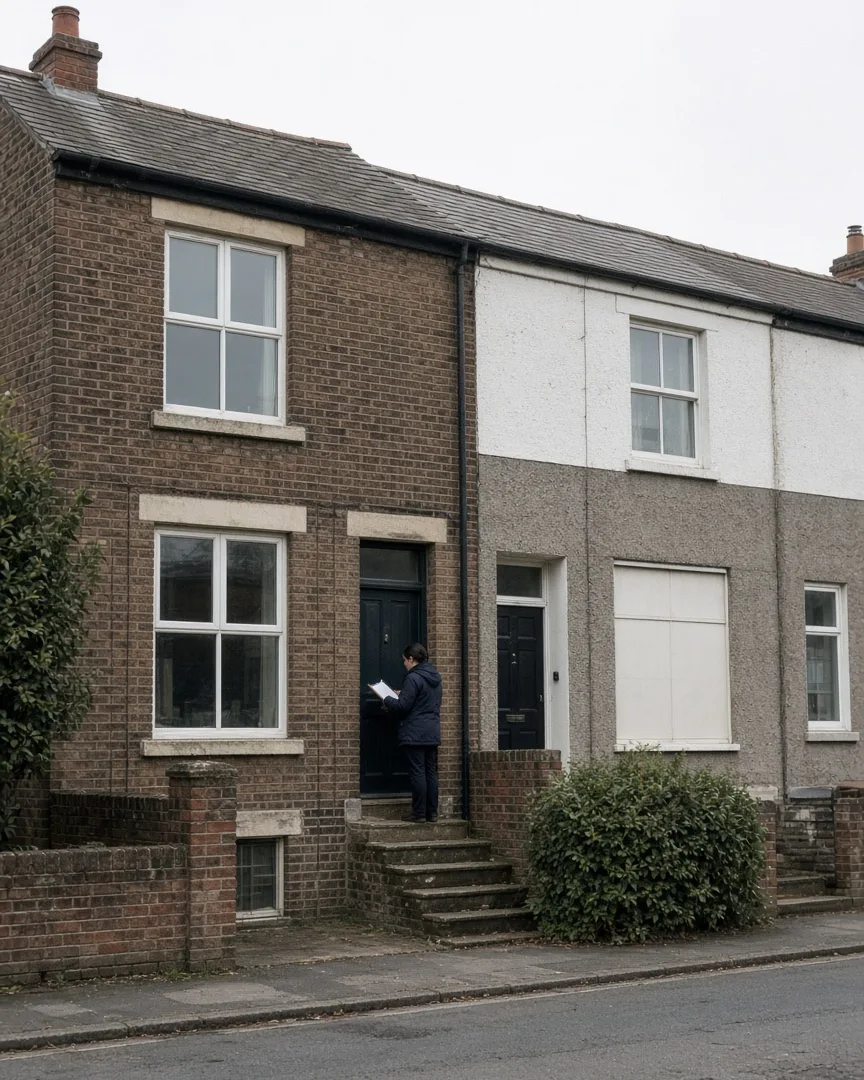
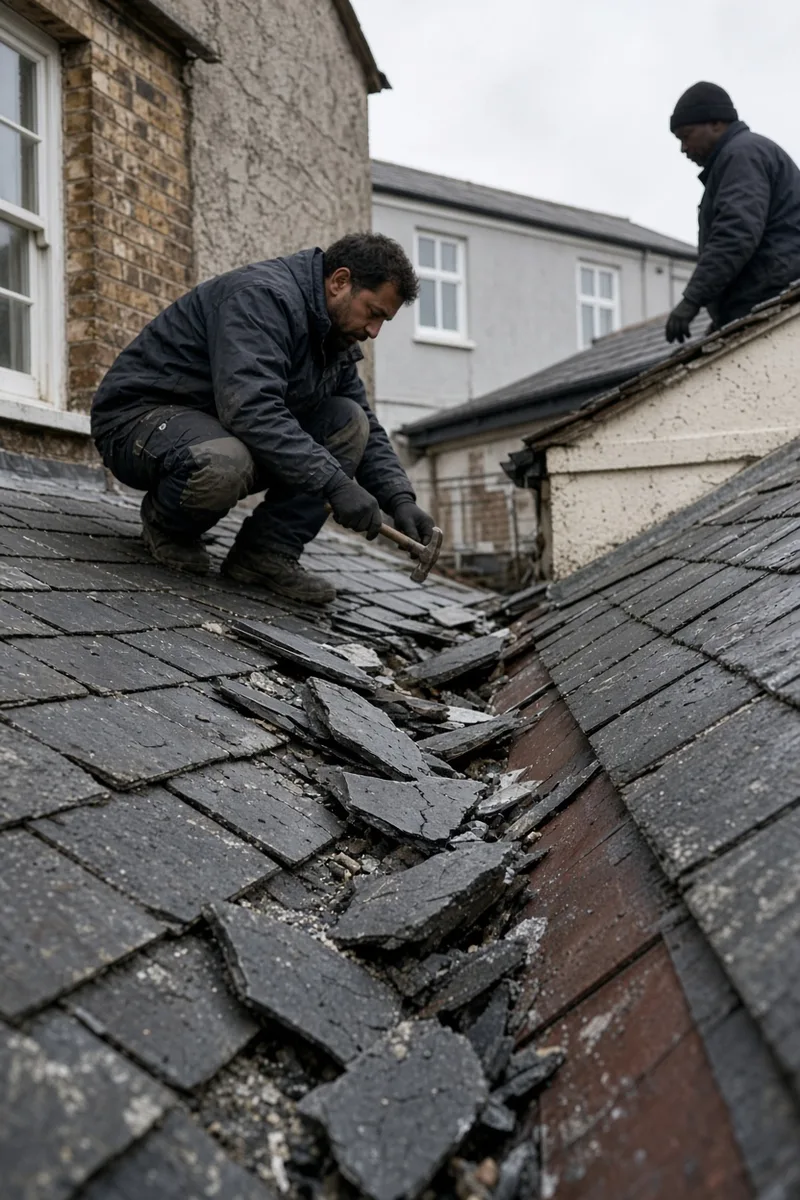
Slipped slates at a valley
1930s semi
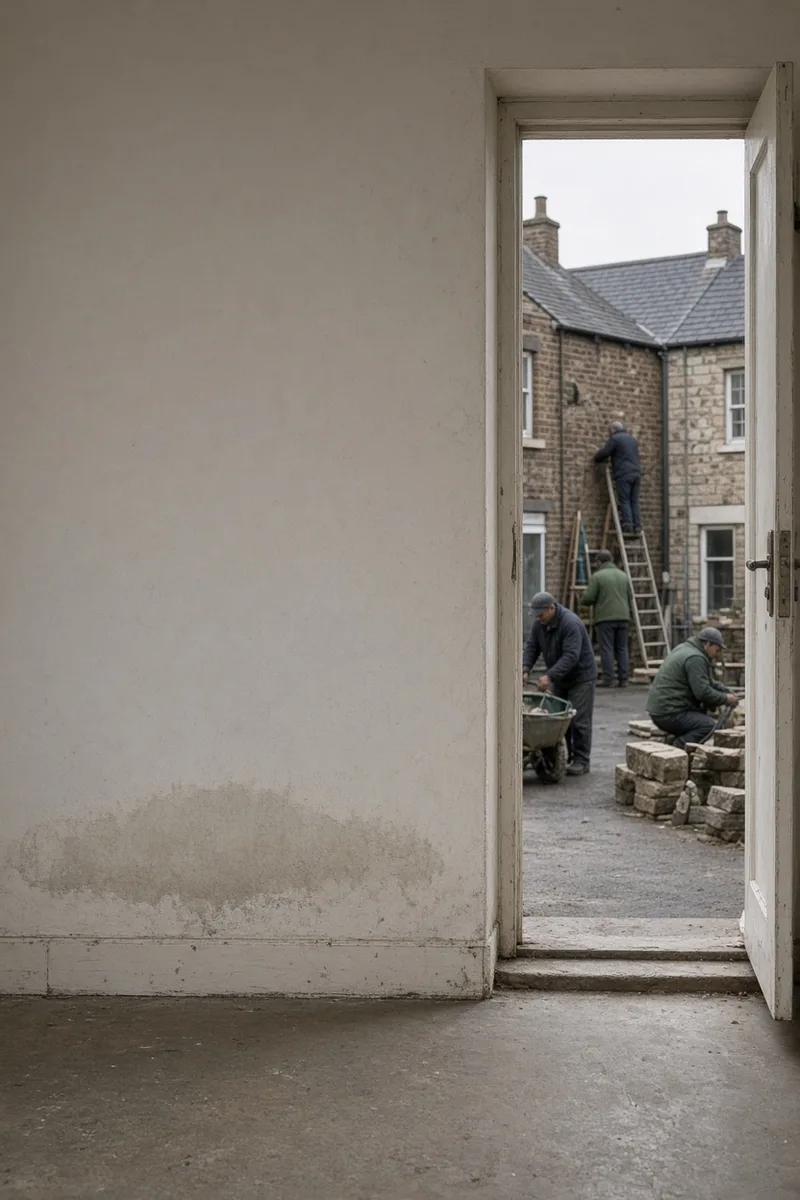
Tide mark above the skirting
ground-floor flat
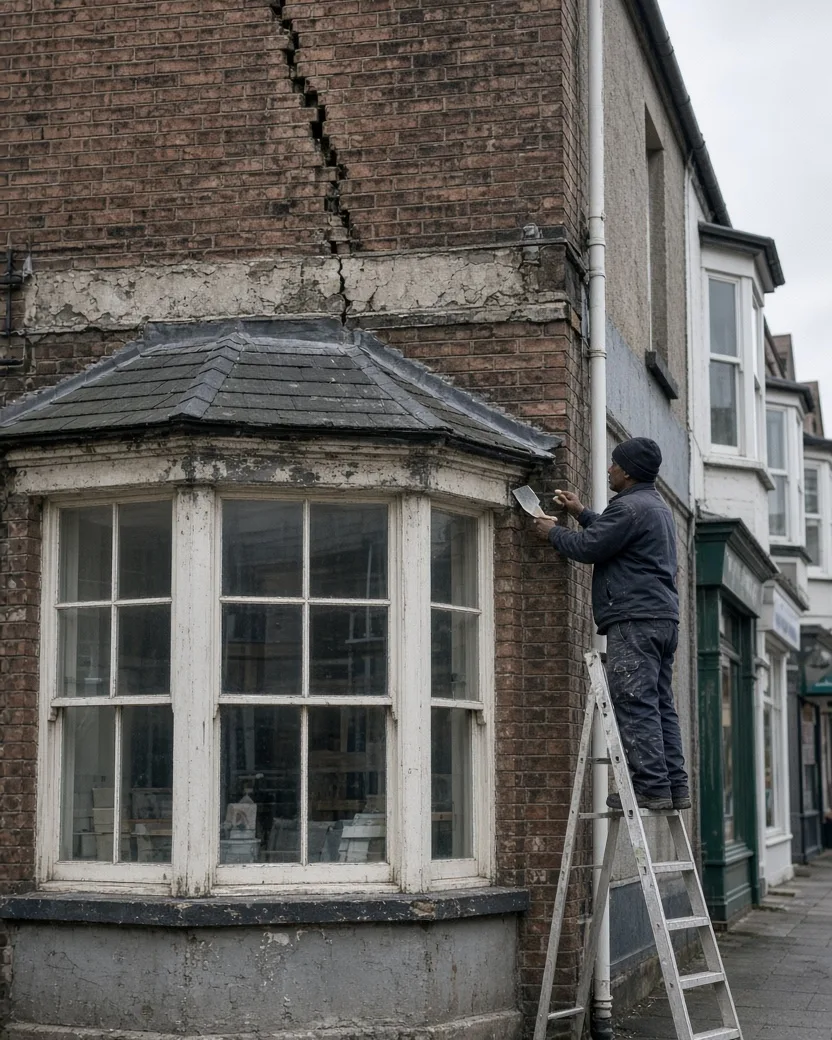
Cracked lintel over a bay window
1920s terrace
The lintel had dropped about 4 mm; we wrote: replace before winter, ask the seller.
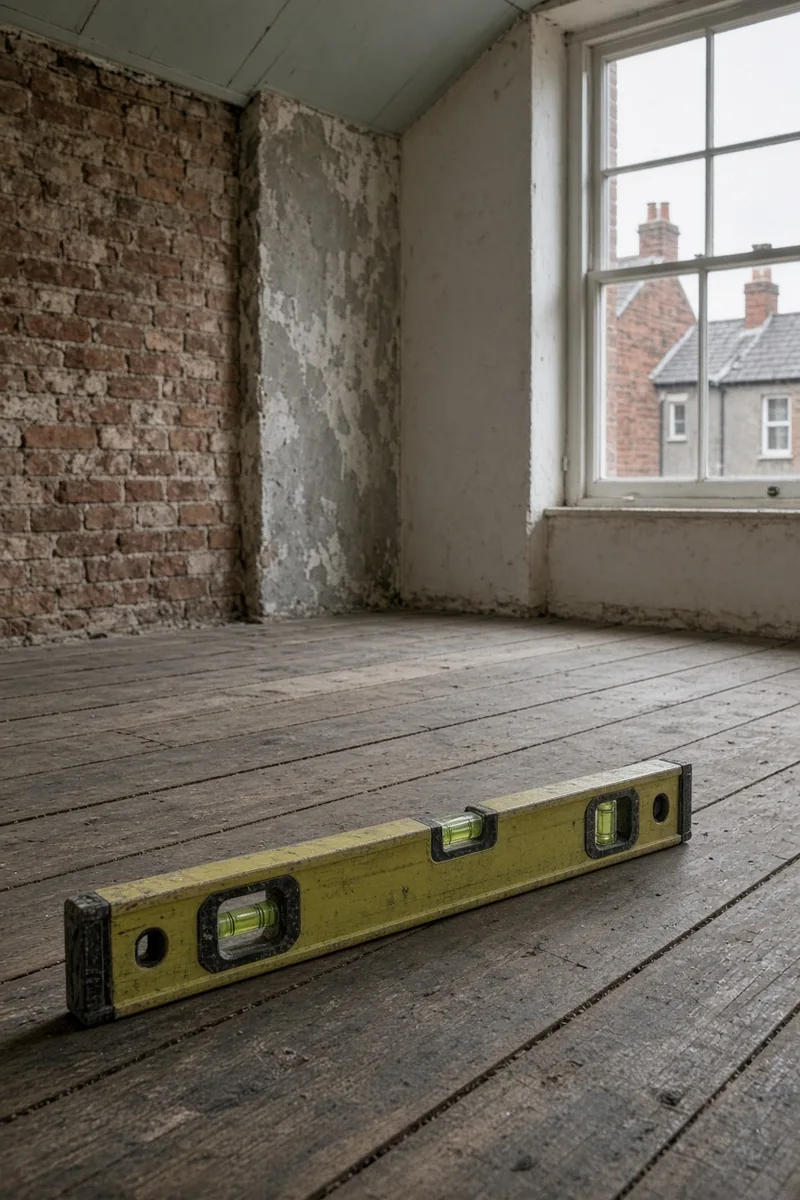
Upstairs floor falling toward the front wall
18 mm over the room
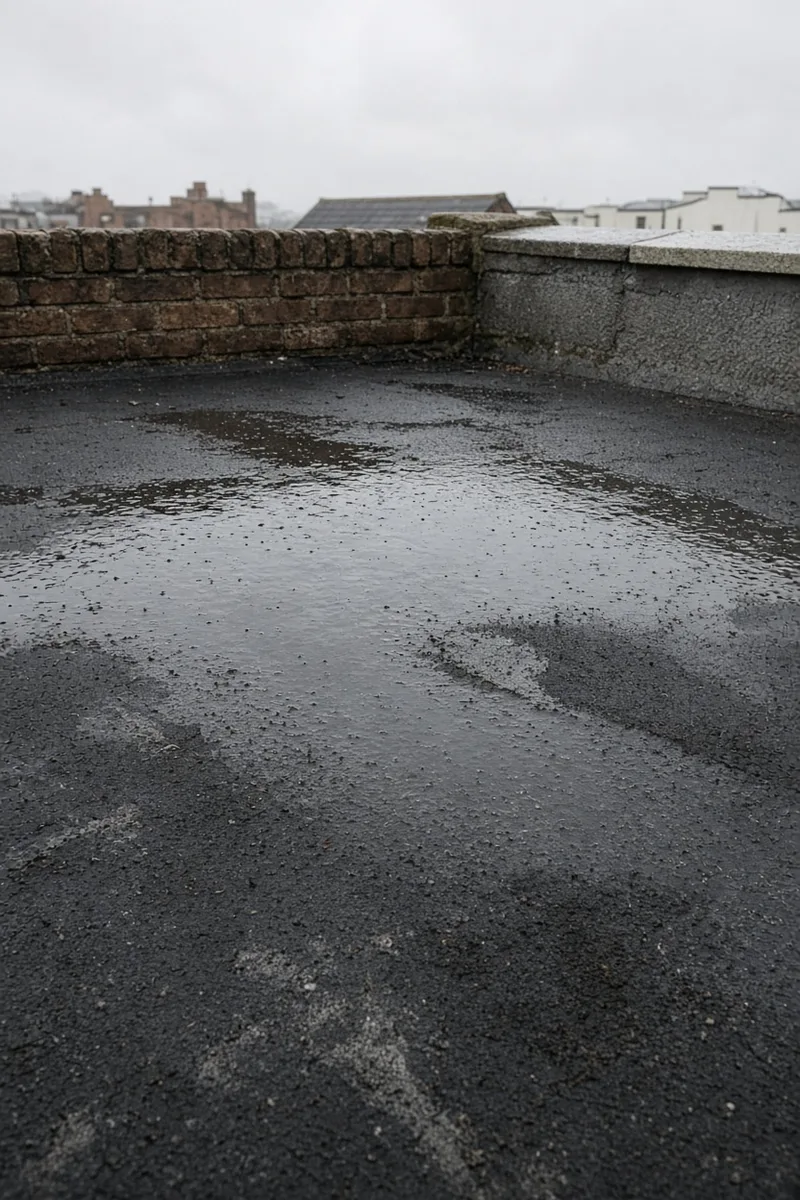
Ponding on a felt flat roof
shop with a flat above
What should the report tell you?
1930s semi
Slipped slates at a valley
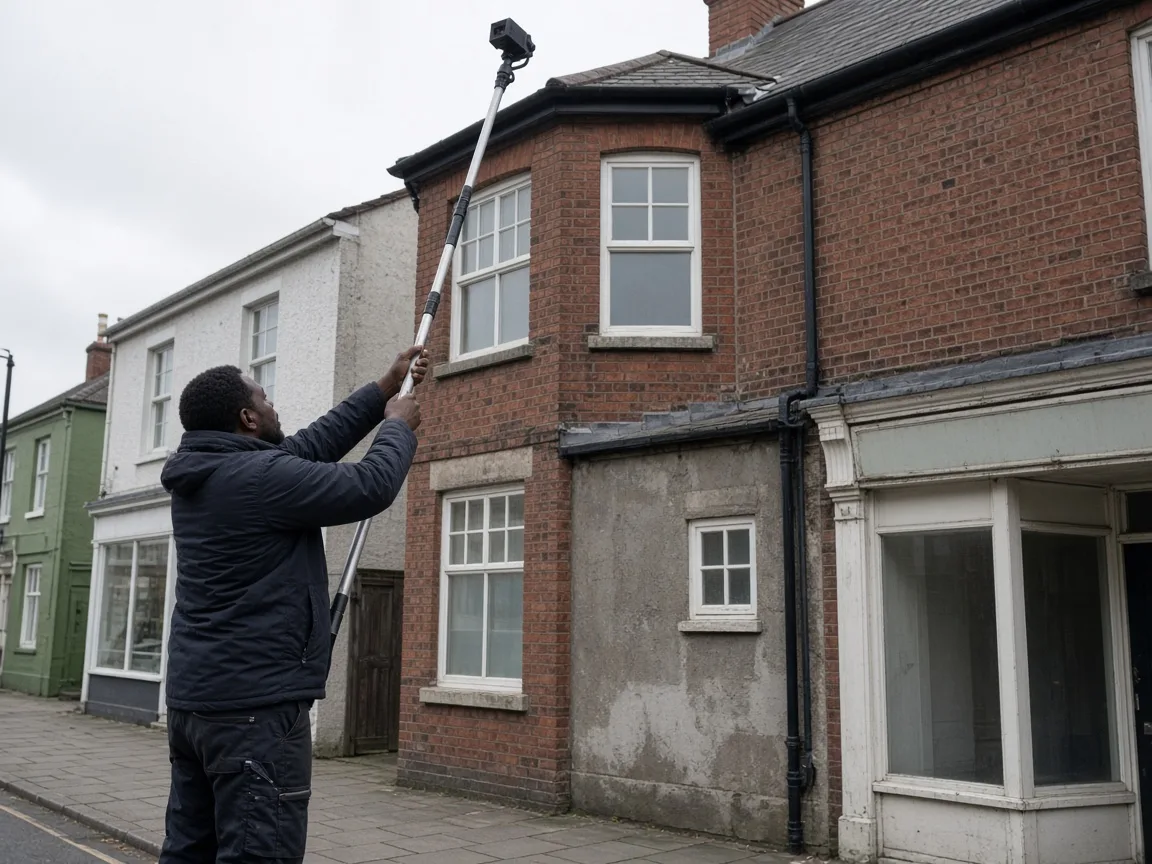
On a 1930s semi we photographed slipped and cracked slates in a roof valley, from a pole camera, without walking on the roof. A valley is where two slopes meet, and rain looks for a gap there. Slates that have slipped leave the neighbouring slates to do work they were not set to do. Ladders go to about 3 m, and a single-storey roof can be seen from a ladder.
Above that, and in frost or rain, we check from the ground with the pole camera and binoculars, and the report says plainly what could not be seen. The sentence names the valley and the slipped slates, and it tells you if a roofer's quote belongs before you sign. We do not arrange that quote. The photograph is there so you can see the valley as we saw it.
ground-floor flat
Tide mark above the skirting
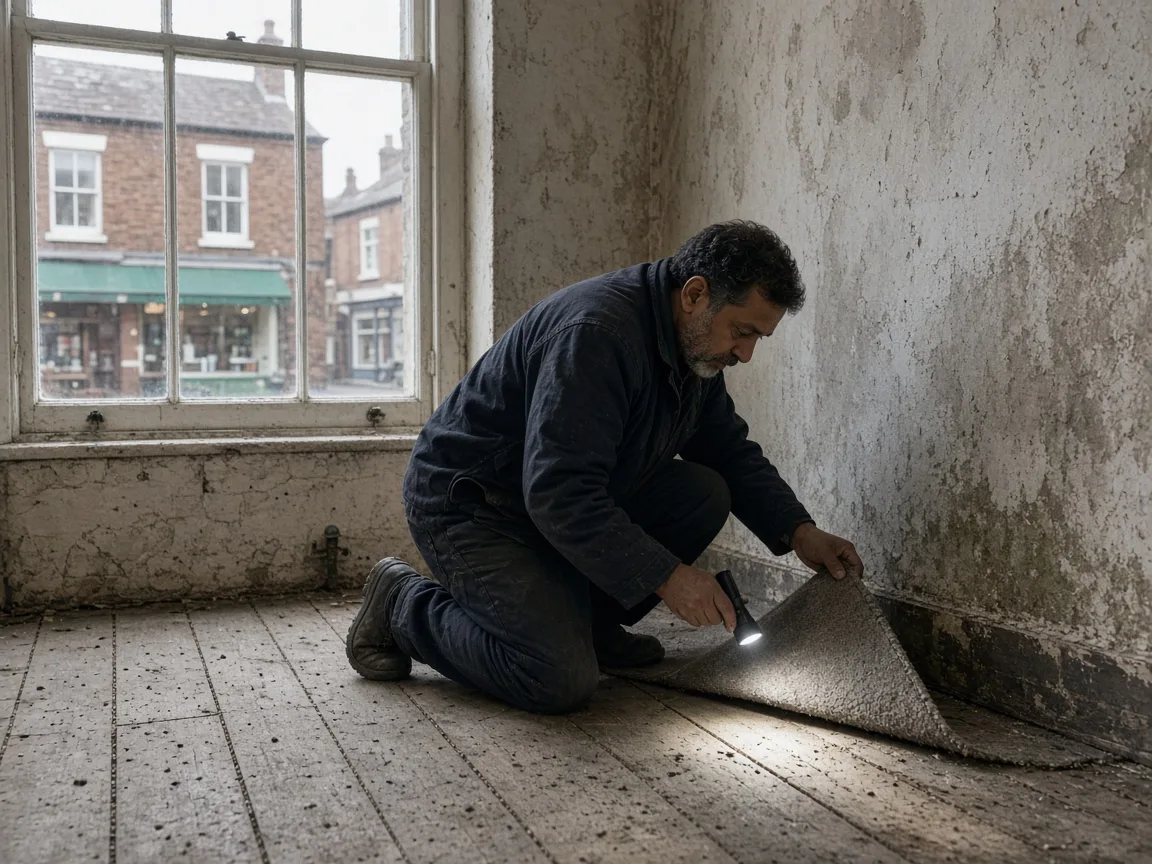
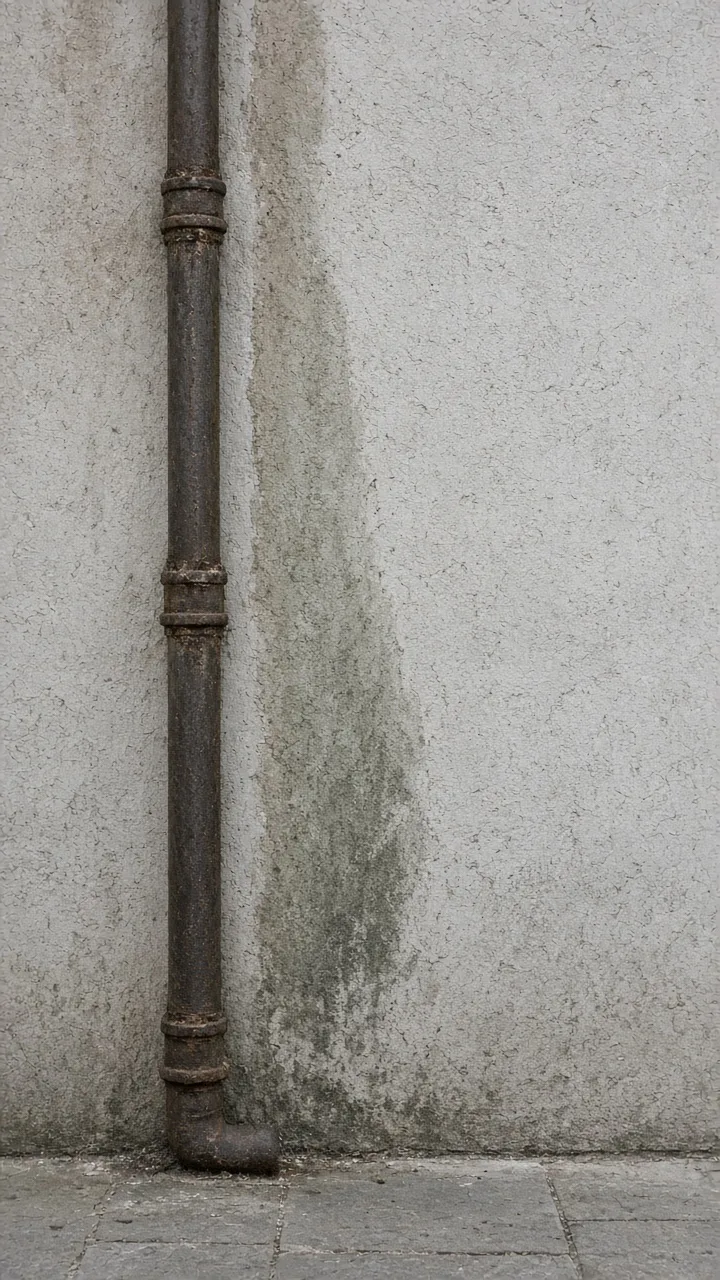
In a ground-floor flat the plaster above the skirting carried a tide mark. A line like that is often taken for rising damp, and the name pushes people toward work the wall may not need. We take readings with a damp meter and we look for the air bricks that serve the same wall. On a ground-floor flat in a converted 1890s house, Adaeze Nwosu found a damp patch at the skirting.
The readings and a blocked air brick showed condensation, not rising damp, and the report called the remedy a small fix. Dev Anand had that note, with a photograph, before he had to decide. A high reading on its own is not the diagnosis. We do not lift fixed floors. Where a carpet corner can be turned, we look at the board and the skirting behind it.
1920s terrace
Cracked lintel over a bay window
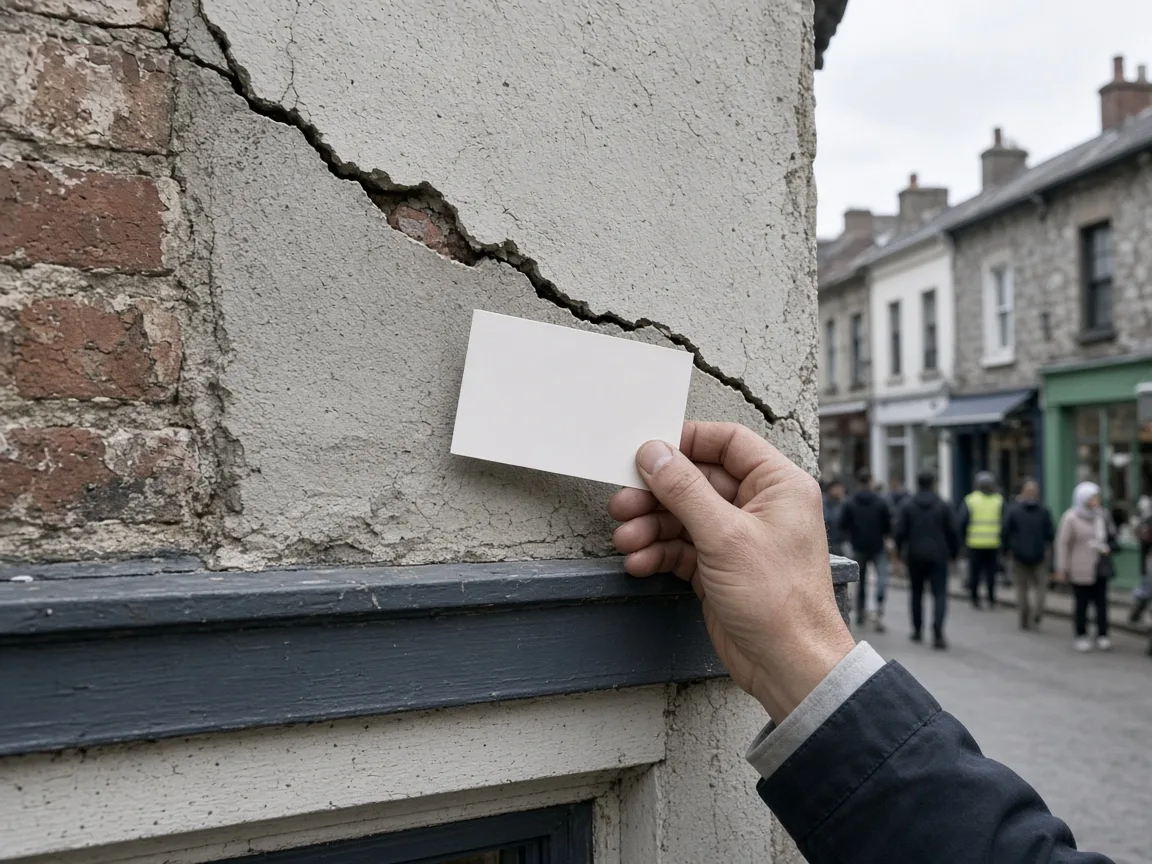
On a 1920s terrace the brick lintel over the bay was cracked, and the crack stepped up through the mortar. The lintel had dropped about 4 mm. We wrote: replace before winter, ask the seller. Tomasz Wren is the surveyor who reads house fronts from a short ladder, and this lintel sat in the structure section, in the column marked now, with a rough cost range.
Ruth Bell was buying the two-bed terraced house. She agreed the repair with the seller before signing. We do not sell or arrange repairs, and we do not work for the seller or the agent. A lintel crack is read by its width, by the way it steps, and by whether the lintel has dropped. Those three points decide the sentence. This lintel had dropped. A survey is not a valuation.
18 mm over the room
Upstairs floor falling towards the front wall
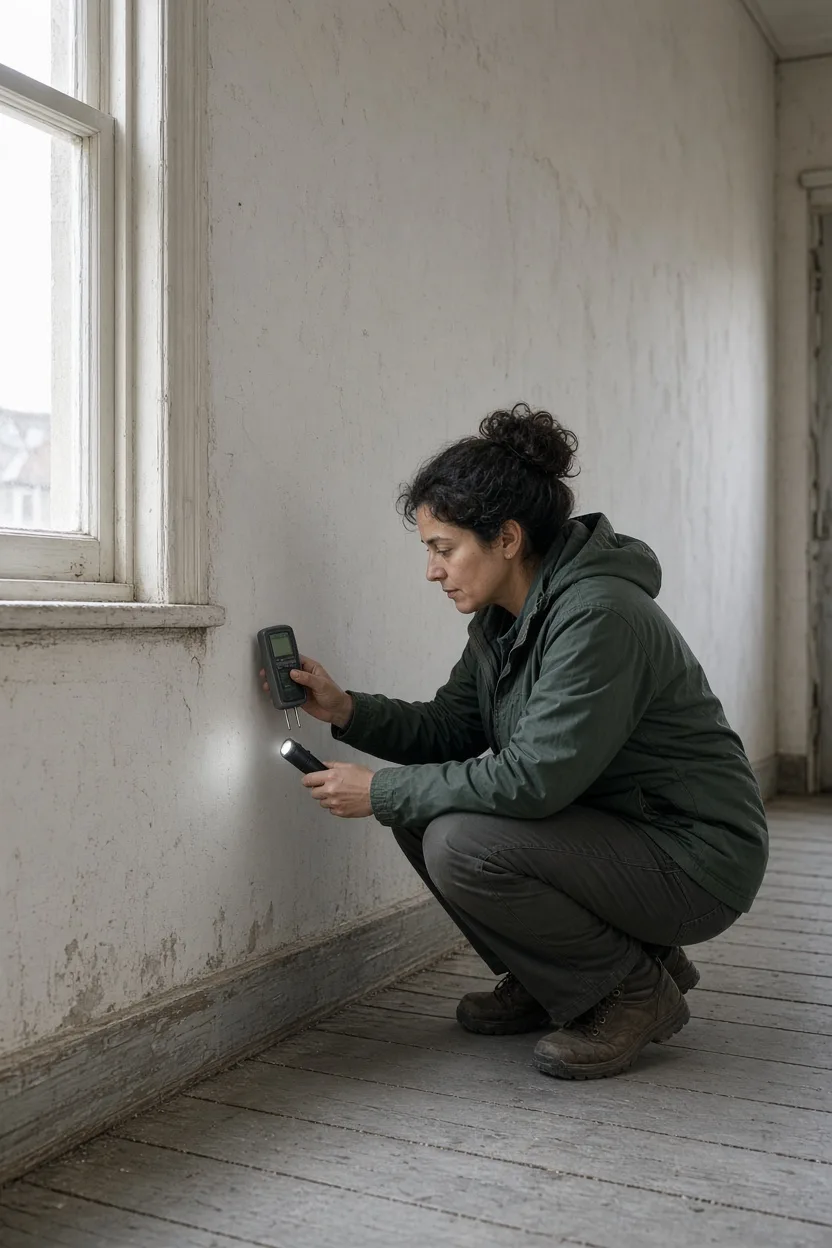
In an empty upstairs room a spirit level on the floorboards showed the floor falling 18 mm towards the front wall. The report records that fall, the direction, and a photograph of the level on the boards, so the figure stays tied to the room. The note sits in structure and movement, and it is read beside any cracks that line up with it and beside doors or windows that bind.
A slope is written for what it is. We do not open the floor to invent a cause, and we do not lift fixed boards. The priorities then place it in now, within two years, or keep an eye on, with a rough cost range for the conversation with the seller. We do not sell or arrange repairs. The 18 mm is the measurement from that visit, not a rule for every old house.
shop with a flat above
Ponding on a felt flat roof
Behind a shop with a flat above, water was ponding on the felt of the flat roof. Henrik Saari surveyed the corner shop for Sana Iqbal. The report recommended a roofer's quote before exchange, and the seller re-covered the roof. We did not commission the roofer, and we do not sell or arrange repairs. A felt roof that holds water is photographed from where we can see it safely.
We never walk on roofs. The wider commercial visit also takes in the shopfront, the fire escape and the separation between the shop and the flat, and it runs to about four hours. The plain sentence under the photograph is what Sana could use before exchange: ask for the quote, then decide. The finding is condition, not a valuation of the shop.
Request a survey
Tell us the address, the type of building and the date you need the report by. Lucía replies within one working day with a fixed price and a visit slot.