Feeding guides
The 10-day switch.
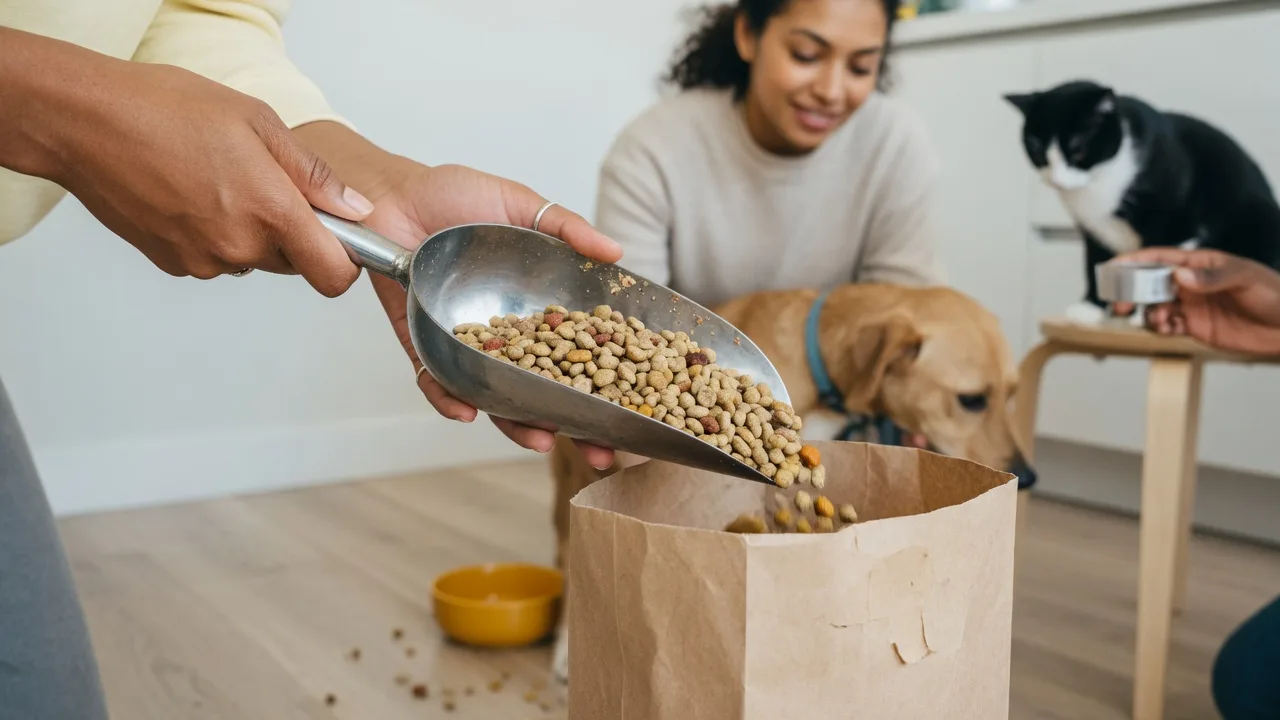
When food changes, change it slowly: a quarter, a half, three quarters, then all. The table is the one we use, and it works for dogs, cats and small pets alike.
Feeding guides
Slow changes,
steady bowls.
Most upset tummies come from changing too fast. These are the notes we give at the counter, kept short so they can go on the fridge.
Switch plan
Ten days,
four steps.
| Days | New food | Current food | Look for |
|---|---|---|---|
| Days 1–3 | 25% | 75% | Normal stools and appetite |
| Days 4–6 | 50% | 50% | Eating the mix without sorting |
| Days 7–9 | 75% | 25% | Settled, steady energy |
| Day 10 | 100% | 0% | Fully switched |
Chiens
Two meals, weighed
Weigh the portion for the weight and age shown on the pack, and split it into two meals. Puppies eat more often than seniors; adult dogs do well on two. Always check the pack and your vet for the amount.
Chats
Slower if the bowl is left
Cats can be fussy about change, so go slower if the bowl is left. Wet trays and dry food can share a day; keep the total to the pack guide. Always check the pack and your vet.
Petits animaux
Hay first, always
Hay is most of the diet and should always be available. Add other foods by the pack guide, and your vet for anything more. Hay changes take the same 10 days.