THE REVIEW
The Review
A readiness review is the look we take before an office move, a furniture purchase, or a return to the office.
We watch the desks that are already in use, then we write down only the changes that follow from that.
What readiness means
Readiness means the floor is understood before money is spent on moving it, furnishing it, or bringing people back to it. Office and operations managers, and HR and facilities leads, ask us in when a team of five to sixty people is about to change the room or the week. We do not start from a preferred product. We start from the person at the desk. The review has three parts: workstation fit, light, noise and layout, and movement through the day. You receive a written plan, one page per desk and a floor summary, within five working days. A purchase list is included only if what you already have cannot be adjusted. Six weeks later we return for a ninety-minute check.
01 / 03
Workstation fit
Workstation fit is the first part of the review, and it stays at the desk itself. We look at the chair and the seat, the desk height, the screen and the keyboard, and the way a laptop is set when the laptop is the computer. The question is whether this person, at this desk, can work without the furniture fighting them. Adjustments that the chair and the monitor arm already allow are made in the twenty-minute session when they are safe and obvious. Anything that needs a purchase is named on that person's page, not urged in the room. The four checks under this part are chair and seat, desk height, screen and keyboard, and laptop set-ups.

02 / 03
Light, noise and layout
The second part lifts the view from one chair to the room. On the visit morning, from 08:30 to 10:00, we walk the floor for light, noise, routes and how the room is used. A bright window can make a good screen unreadable. A quiet desk can sit on a route that never stays quiet. Layout is not a drawing in this part; it is where people actually stand, pass and gather while the work is going on. What we usually change is position: the screen relative to the window, the person relative to the aisle, the shared kit relative to the people who share it. Buying a new lamp or a new screen is a later line, and only if the move on the floor plan is not enough.

03 / 03
Movement through the day
The third part is movement through the day: standing and sitting, breaks, and the routes that already exist between desks, rooms and the way out. A sit-stand desk that stays at standing height for a whole shift is not, by itself, a varied day. A chair that fits does not help a person who never leaves it between the start of work and the findings we write down. We watch what the work allows. Some jobs pin someone to a headset and a queue. The plan then says what can change inside that constraint, and what cannot. We do not prescribe a medical programme, and we do not promise that a new rhythm will feel a certain way. We write the rhythm the person can actually keep.
Eight checks, one desk at a time
CHECK 01
Chair and seat
At the chair we look at the person who is sitting in it today, not at the chair's reputation. Seat height, seat depth, the position of the back, and the armrests relative to the elbows are the usual points. We ask the person to work as they normally do for a few minutes, and we watch where the shoulders and the feet settle. What we usually change is the setting of the chair that is already there: a lever, a tension, an armrest brought down or in. If the chair has been set for someone else, resetting it is the work. A different chair is named only when this one cannot be made to fit. That judgement goes in the written note. We do not sell the replacement, and we do not take a commission if you buy one.
CHECK 02
Desk height
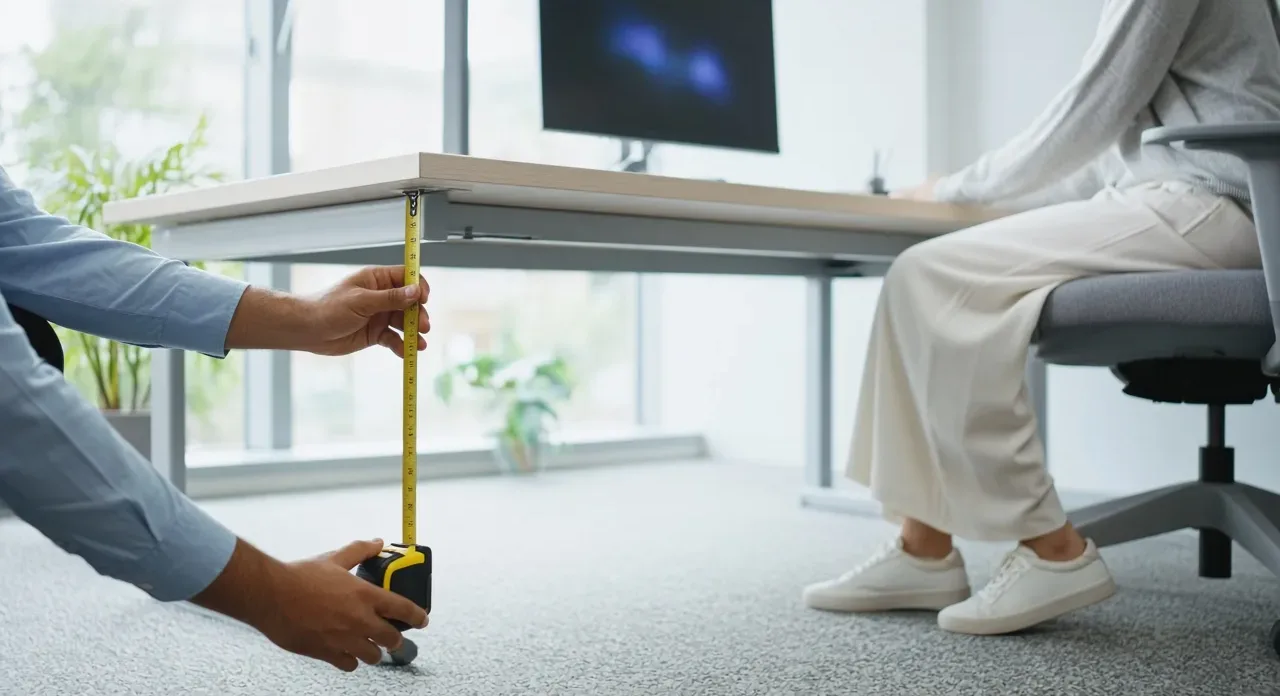
Desk height is read from the person, not from a standard sticker. We look at the elbow once the shoulders are dropped, and at whether the feet are supported, on the floor or on a footrest the team already has. A sit-stand desk is measured at the height the person is actually using, which is sometimes not the height they think they use. What we usually change is the surface height, and the chair height that has to move with it. If the desk cannot reach a workable height for that person, the page says so, and the purchase list, if there is one, says what range is missing. Small fixes are made on the spot during the twenty minutes. The rest waits for the plan.
CHECK 03
Screen and keyboard
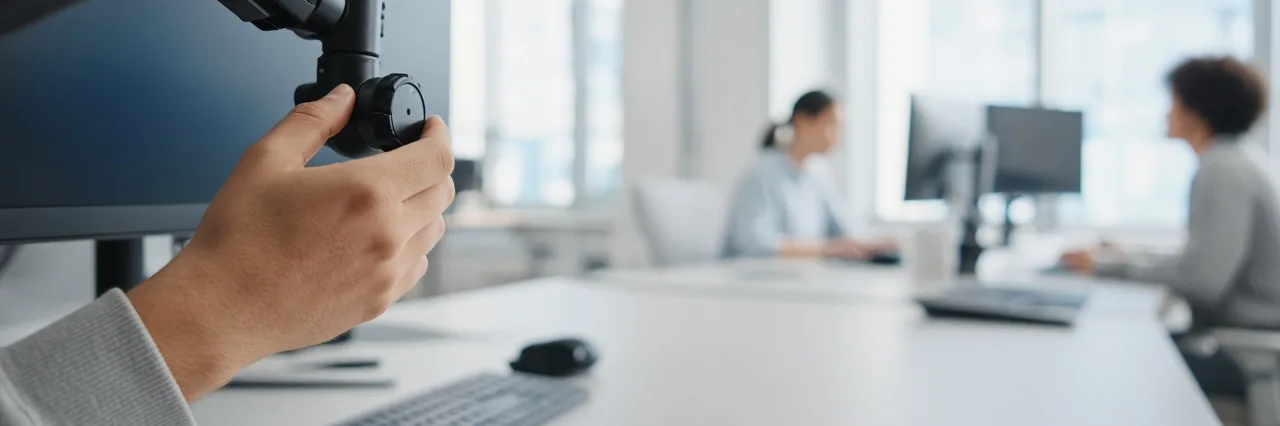
For the screen we look at the top edge against the eye line, the distance the person has chosen, and whether glare from a window is washing the panel. The keyboard is part of the same look: how far it sits from the body, and whether the shoulders lift to reach it. The mark we use in the room is simple. A hand held flat at the top of the monitor tells us, and the person, where the screen is relative to the eyes. What we usually change is the monitor arm or the stand already on the desk, and the place of the keyboard. A new screen is not the first recommendation. If the arm cannot rise far enough, that limit is written down. We are watching the set-up the person will use tomorrow morning.
CHECK 04
Laptop set-ups
A laptop used as the only screen often puts the eyes on a low panel and the hands on a keyboard that cannot move. We look at whether the screen can reach eye height, and whether a separate keyboard and pointing device are already in the drawer. What we usually change is the arrangement: raise the laptop, bring in a separate keyboard if one is on site, and write the rule on that person's page. The rule we use is the one we can check later, the laptop screen at eye height, not a brand of stand. Remote desk reviews, forty minutes by video, use the same look when the desk is at home. A purchase list appears only if the home or the office has nothing that will raise the screen.
CHECK 05
Light and glare
Light is watched at the desk, not averaged across the floor. We look at the window beside or behind the screen, at the brightness on the desk surface, and at whether the person is squinting, tilting or moving their head to escape a reflection. A small meter reading can help the conversation; the decision still comes from where the person is sitting. What we usually change is orientation. Turn the screen, shift the desk, or move the person to a place on the same floor where the window is no longer in the panel. We do not start by specifying blinds, films or new lamps. If none of the existing places work for that role, the floor summary says what the room cannot do.
CHECK 06
Noise and layout
Noise and layout are one check because they describe the same floor. We listen for the voices, headsets and routes that pass a desk, and we watch where work actually gathers: a printer, a question, a shared table. The morning walk, from 08:30 to 10:00, is when this is clearest, while people are in. What we usually change is a place or a small piece of kit the team already relies on, written as a floor note rather than a personal fault. A desk on a route may need a different neighbour, not a different chair. We do not redesign the tenancy. We describe how this room is used, and the few moves that would make the described work easier to hear and to reach.
CHECK 07
Standing and sitting
We look at how long a person stays in one position, and at whether the desk they have can change height. Standing is not treated as the better half of the day. A floor that bought sit-stand desks and then stood for whole shifts is a floor we have seen; the useful change was alternation that matched the work, not more time on foot. What we usually change is the way this person uses the desk they already own: a pattern of sitting and standing written on their page, and the chair or perch they use when they come down. Anti-fatigue mats and other kit are named only where the day on foot makes them relevant. We do not claim a health result from the pattern. We record what was agreed.
CHECK 08
Breaks and movement
Breaks and movement are about the day around the desk. We look at whether the person can leave the chair, where they go, and whether the work, a queue, a call, a drawing, actually lets them. Routes between desks, the quiet room, and the way out of the floor are part of the note. What we usually change is a written cue the team can keep: when a break sits in this job, and which existing route makes it a real break rather than a lap of the same aisle. We do not issue a wellness programme, and we do not time people's lunches. If pain or a medical condition is the reason someone cannot move as the work asks, we say so plainly and refer to a physiotherapist or a doctor.
What you receive
Every readiness review includes the scoping call, the visit day, the written plan and the six-week check. The plan arrives within five working days. It holds one page per desk and a floor summary. Each desk page records what we looked at and what we changed or recommend changing. The floor summary records light, noise, routes and anything that does not belong to a single chair. A purchase list is added only if it is needed. The six-week check is ninety minutes on site, to see what has stayed in place. The findings conversation with the manager happens at 16:30 on the visit day, so the plan is not the first time you hear what we saw. Single-desk and remote notes are shorter, and they follow the fee you booked.
What we will not do
We will not sell you furniture. We will not take a commission on furniture you buy from anyone else. We will not diagnose a medical condition. The review is advice about the desk, the room and the working day. It is not treatment. Where a person needs a diagnosis, we refer to a physiotherapist or a doctor, including when the lead consultant's own background is physiotherapy. We will not promise that shoulders, feet or concentration will change by a given date. Field notes on this site report what people told us at a six-week check. They are not a forecast for your floor. If you want a readiness review, the scoping call is free, thirty minutes by phone or video, and the visit is booked from there.