
FIELD NOTES
Field notes
Three visits, told without the company names. What changed is what the people at those desks told us.
These notes are not a promise that another floor will turn out the same way.
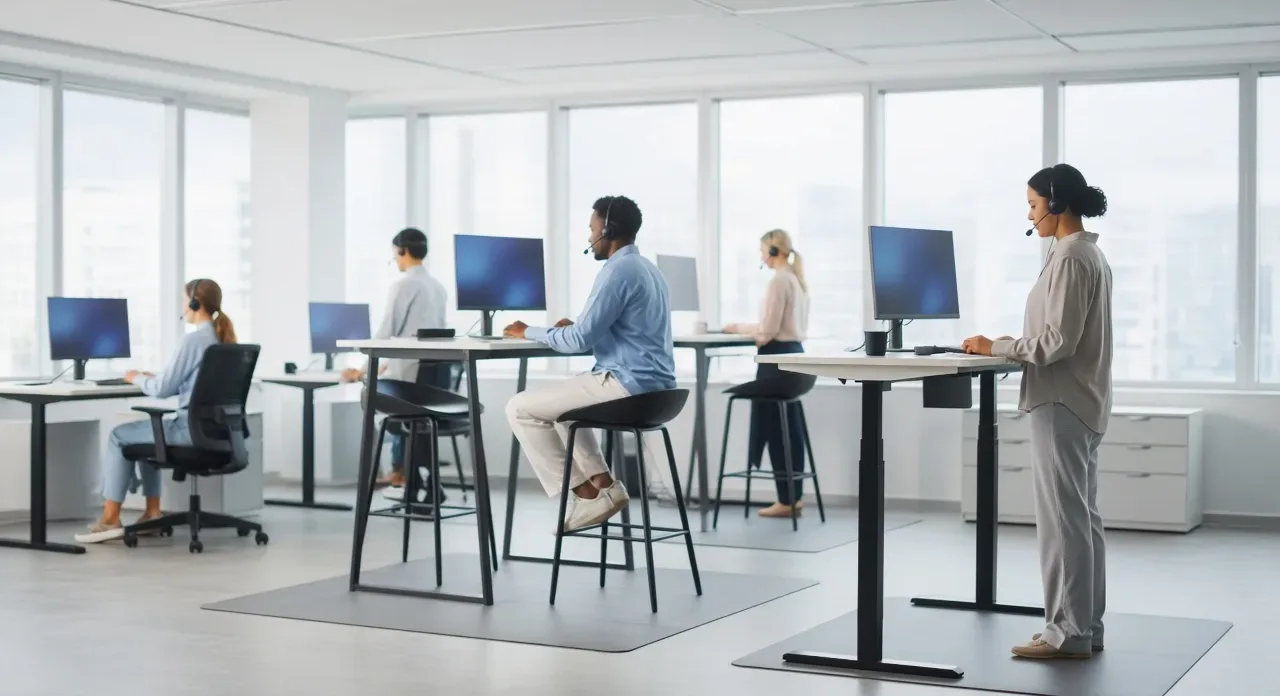
NOTE 01 · 24 desks · call centre
Standing all day
The floor was a twenty-four-desk customer-service room. New sit-stand desks had arrived, and they were being used standing for whole shifts. People wore headsets and worked the queue on their feet from the start of the day to the end. A few sat on high perch stools. The desks themselves were not the problem we had been asked to admire; the pattern was. During the morning walk the aisle was clear enough, and the light was even. The strain showed at the individual desks: people who had not sat down since they logged on, and cables that stopped a step away from the desk because the headset lead was short. We watched one person finish a call, look for a place to put the weight back into a chair, and find the desk still at standing height with the perch stool pushed aside.
The plan was specific and small. Alternate sitting and standing every thirty to forty-five minutes. Put anti-fatigue mats at six desks, the ones where the queue kept people on their feet longest. Replace two headsets with ones on longer cables, so a step away from the desk did not pull the call short. We did not ask the floor to buy a new run of desks. The sit-stand desks were already there. What they needed was a way of using them that matched a job which cannot leave the headset for long. Each person's page named the pattern. The floor summary named the six mats and the two longer cables. Nothing else went on a purchase list.
At the six-week check, most people said end-of-day sore feet were rarer. That is what they told us. We did not measure feet, and we did not treat the comment as a result we can offer the next customer-service floor. A few people had gone back to standing for most of the shift when the queue was heavy. The mats were still at the six desks. The longer cables were still on the two headsets. Company name withheld. What changed is what the people at those desks told us.
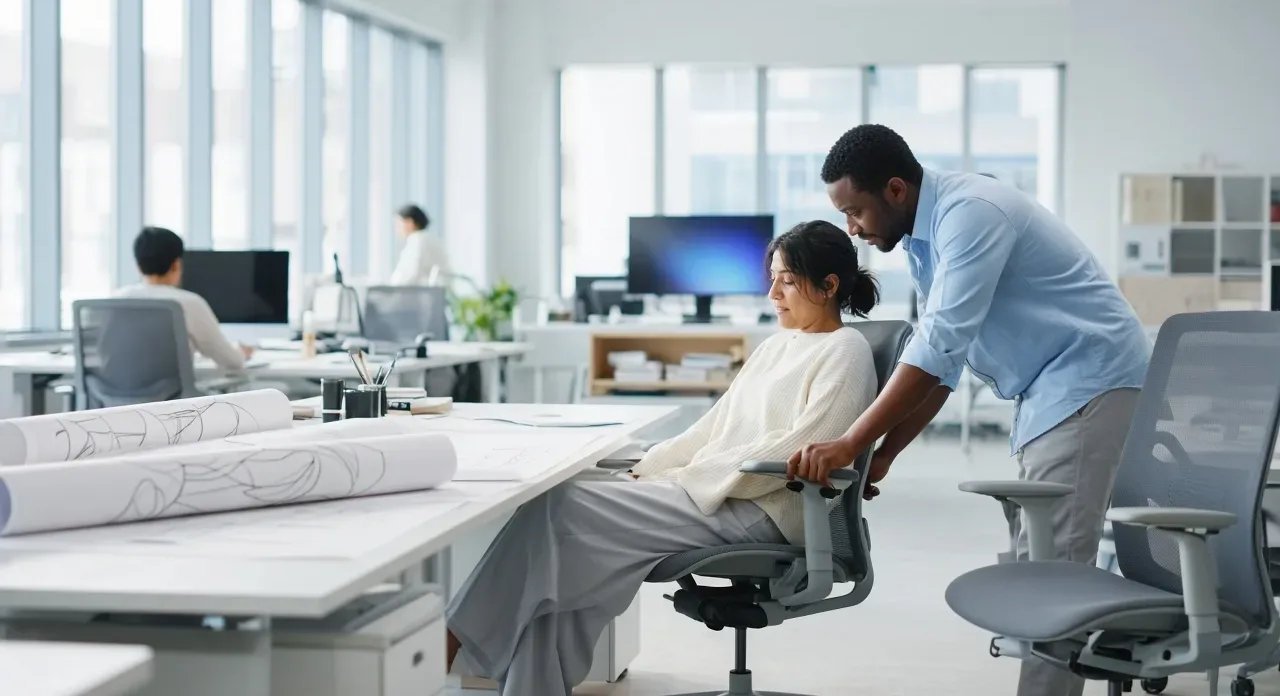
NOTE 02 · 12 desks · architecture studio
Good chairs, set wrong
The floor was a twelve-desk architecture studio. The chairs were already good. They had been set for someone else: a previous sitter, a showroom height, a lever nobody had moved since installation. Drawings covered the large desks. People leaned back or hunched forward depending on which lever had been left where it was. The work did not need a new chair. It needed the existing chair set for the person in it. We watched each person draw for a few minutes before anyone touched a control, because a chair looks different once the arm is reaching for a sheet rather than resting for a photograph.
We booked one adjustment session, a half day on site, and fitted the chairs that were there. Seat height, the back and the armrests were the work. Where a chair had been set deep for a taller colleague, we brought the seat forward for the person who actually sat there. Where an armrest was holding a shoulder up, we dropped it. Nothing was bought. There is no purchase list in this note because changing the least was the whole recommendation. The written note for each desk recorded the settings in plain language the person could return to if someone else borrowed the chair and left it wrong.
At the six-week check the chairs were still at the settings made for the people who sat in them. The studio had not added furniture on the back of the visit. We do not attach a comfort score to that. The change we can describe is the one they kept: their own chairs, set for them. One person had moved desks in the six weeks and had taken the settings with them, which is what the page was for. Company name withheld. Twelve desks, one half day, no new chairs.
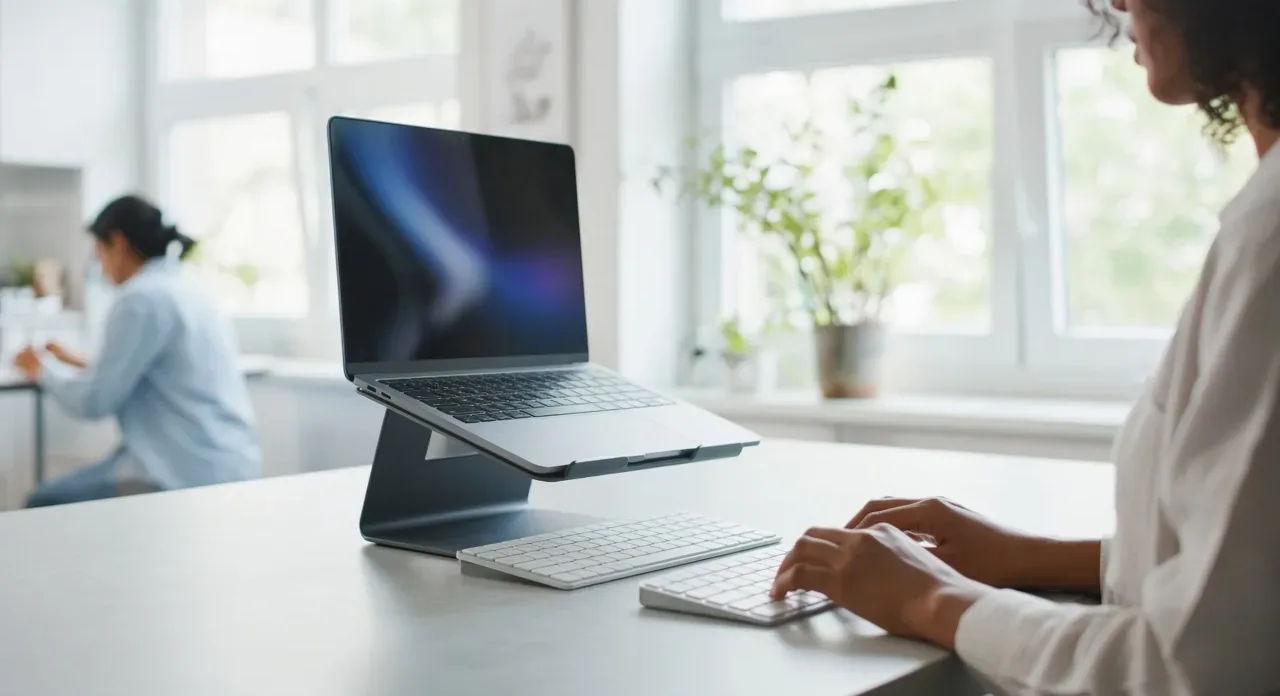
NOTE 03 · a hybrid team of 8
Laptops on the kitchen table
The team was hybrid, eight people, with part of the week at a kitchen table. We did not ask them to invent an office at home. We ran remote desk reviews, forty minutes by video for each person, and looked at the laptop where it actually sat. On most tables the screen was low because the keyboard in the lid was the keyboard being typed on. Window light was often fine. The height was not. A person would tilt the lid, then drop the chin, then bring the shoulders up to reach the keys. The same pattern showed up in eight different rooms.
The plan lent laptop stands and separate keyboards, and wrote one rule on every page: the laptop screen at eye height. The separate keyboard let the hands stay on the table while the screen rose. We did not specify a brand of stand, and we did not ask anyone to buy a desk for a day or two a week at home. Where a table was too low for the elbows once the screen was raised, the note said so and named a cushion or a chair the person already owned, rather than a new piece of furniture. The office days, for the people who had them, stayed on the visit that had already covered the shared floor. The kitchen table was its own desk, reviewed on its own.
At the six-week check the rule was the thing people repeated back. Screens were up. Keyboards were separate. A couple of stands had migrated to the office bag and come home again, which was fine: the rule travels, the brand does not matter. One person had gone back to typing on the lid when the stand was in another room, and said so. We wrote that down rather than smoothing it. Company name withheld. Eight remote reviews, kit lent, one rule. No promise that a home day will feel like the office.
Company names withheld. What changed is what the people at those desks told us.