
NEUROLOGY CLINIC · WESTMERE
Listen first.
Scan later.
Hisagi is a small neurology clinic in Westmere. We take an hour to hear your symptom, examine you by hand, and explain what we found before any scan is ordered.

WHY WE TALK FIRST
Most of neurology
begins with a conversation.
A scan is a picture of structure. It does not say when a shake began, whether a cup makes it worse, or what you fear it means. That history is the longest part of the first hour, and it comes before any test is discussed.
Most people who come to Linden Row have already searched the symptom and left more worried. We start again, in plain words, and write down what we heard. If a scan is not needed, we say so, and we say why.
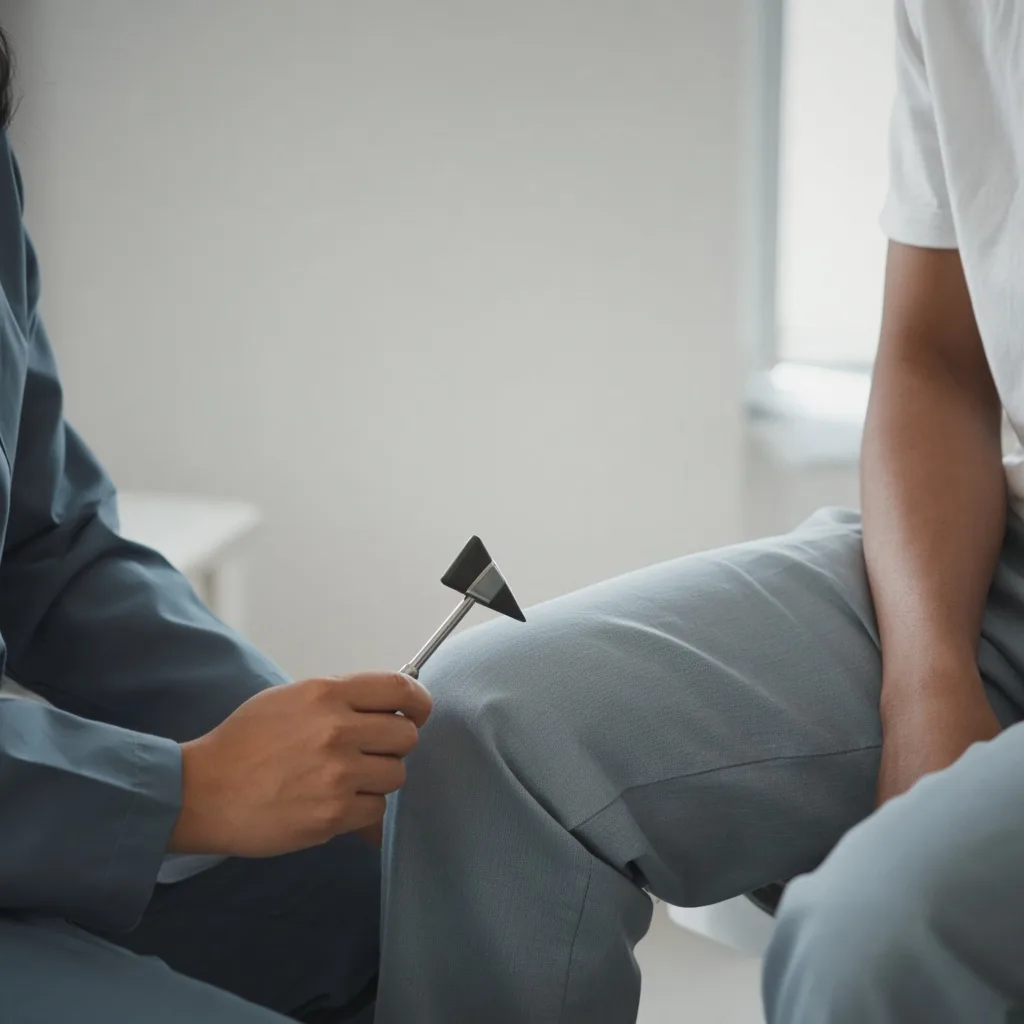
The examination uses a reflex hammer, a tuning fork, and a pen and paper. A spiral drawing, gait and sensation sit beside the history. You leave knowing a written plan will follow within five working days, with a copy sent to your GP.
WHAT BRINGS PEOPLE IN
Three symptoms we see every week
These are three of the six problems adults bring to a first consultation. Each can be ordinary or urgent, and the difference is in the detail of how it started.

Tremor at rest
Pen pressure
Line steadiness
SYMPTOM 01
A hand that shakes
A tremor may appear when the hand is at rest, or only when it reaches for a cup or a pen. A spiral drawing and the family history often sort this more clearly than a scan on day one. We name the pattern we see.
- Book a first consultation if the shaking is new, unexplained, or getting in the way of eating or writing.
- Call emergency services if you have sudden weakness, face droop, speech trouble, or the worst headache of your life.
SYMPTOM 02
A headache that keeps returning
A headache that comes back needs dates, not a guess. We ask how often it arrives, what you take for it, and whether mornings are the worst part. A diary kept over the weeks can show painkiller overuse. When that is the picture, the headache programme runs over 12 weeks.
- Book a first consultation if the headache keeps returning and you want the pattern set down properly.
- Call emergency services if you have sudden weakness, face droop, speech trouble, or the worst headache of your life.
SYMPTOM 03
Fingers that go numb at night
Night-time numbness in the fingers can come from the nerve at the wrist. A nerve conduction study takes about 45 minutes and can confirm carpal tunnel syndrome. When that is the finding, we refer to a hand surgeon and write down why no brain scan is needed.
- Book a first consultation if the fingers go numb or tingle and the cause is still unexplained.
- Call emergency services if you have sudden weakness, face droop, speech trouble, or the worst headache of your life.
HOW WE EXAMINE
THREE
PRINCIPLES
The examination follows three principles, in this order, on every first visit. Listening takes the longest. The hands come next, with a reflex hammer, a tuning fork, and a pen and paper. A scan is ordered only when its result would change the plan, and the reason is written down.

01
Listen before we look
The history comes first and takes the longest part of the hour.
02
Examine by hand
We use a reflex hammer, a tuning fork, and a pen and paper.

03
Scan only when the answer would change the plan
If a scan would not change the plan, we do not order one.
60 min
first visit
Plan in writing
in 5 working days
Scan only if
it changes the plan

THE CONSULTING ROOM
One room, one hour, one doctor.
You sit with one doctor, in one room, for the full hour, from the first question through the examination by hand.
ONE CASE
A cup that shook

BEFORE
Ruth’s hands shook around a teacup. She was 64, a retired teacher, and she was afraid the tremor meant Parkinson’s. The blur in the cup was worse when she reached for it.
10 weeks

AFTER
She was writing at her kitchen table with a steadier hand. The tremor had come on action, not at rest. In her words, she writes letters again.
Ruth came afraid of Parkinson’s. The tremor appeared when she used her hands, not while they rested, and the spiral drawing together with her family history pointed to essential tremor. We did not order a scan. The plan was written with her GP. After 10 weeks she was writing at the kitchen table, and in her words she writes letters again.
Name and details changed. Every case is different; this is one person’s account.
FEES
What a visit costs
A first visit is priced as one hour of listening and examination, not as a scan. The five fees below are the ones most people meet first.
| First consultation 60 min: 40 min history, 20 min examination, written plan | €180 |
| Follow-up consultation 30 min | €95 |
| Nerve conduction study Arms or legs, about 45 min, with report | €240 |
| Routine EEG 40 min recording, with report | €210 |
| Headache programme First visit + 2 follow-ups + diary review over 12 weeks | €360 |
Receipts are itemised for insurers. We do not bill insurers directly.
| Mon, Tue, Thu, Fri | 08:30–17:30 |
| Wed (evening clinic) | 11:00–19:30 |
| Sat (follow-ups and tests only) | 09:00–13:00 |
| Sun and public holidays | Closed |

14 Linden Row, Westmere
2nd floor. Tram line 4 to the Linden Row stop, then 2 minutes on foot. A lift serves the 2nd floor, the entrance is step-free, and two accessible parking bays sit in the courtyard.
THE JOURNAL
Notes on symptoms and the examination
THE CASE LETTER
One symptom explained, once a month
The Case Letter arrives on the first Tuesday of each month. One symptom is explained in about four minutes of reading, and there is no advertising.