
Teate Clinic · Osteopathy
Conditions
People come to Teate Clinic with three kinds of trouble: neck and shoulders from desk work, a lower back, or a sport niggle from running, cycling or swimming.
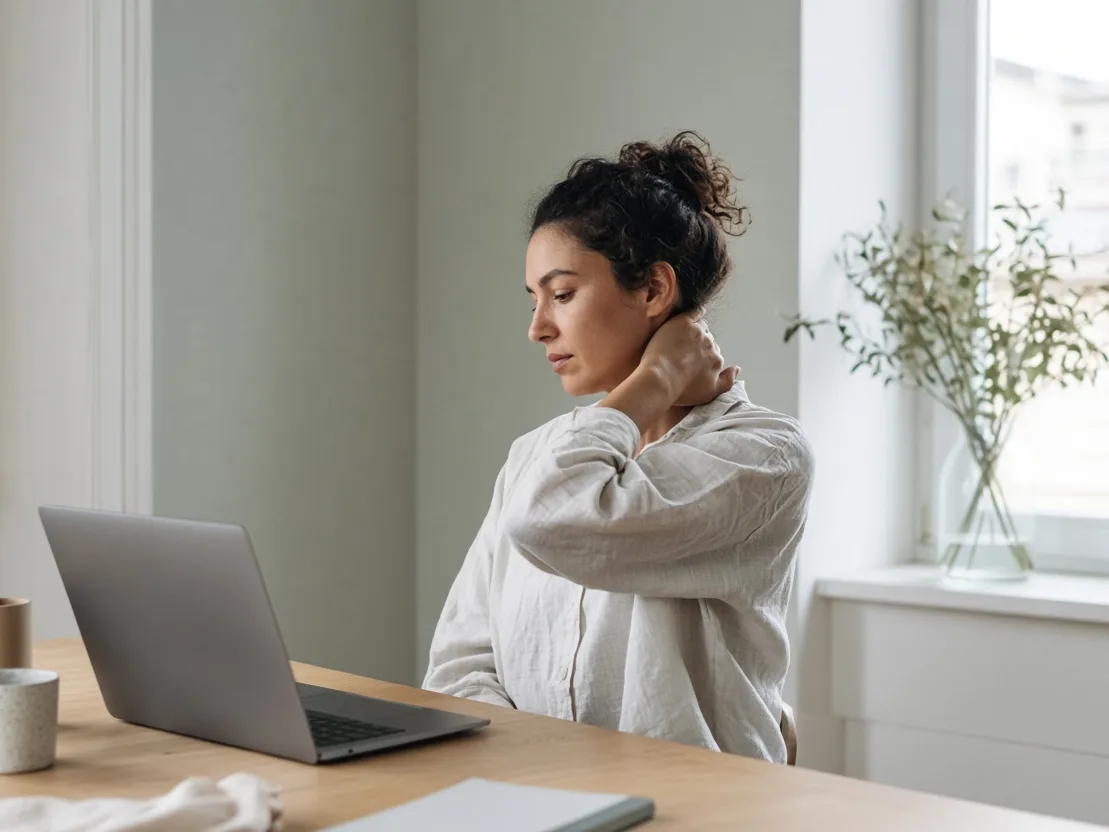
Neck and shoulders from desk work
Stiffness by the end of the day, headaches that arrive with the afternoon, and a shoulder that sits up toward the ear: this is what we hear most from people who work at a desk. The week has been spent looking slightly down, or off to one side, and the neck has been holding on. What we often do is the first hour in full. Ten minutes of talk, fifteen minutes watching you sit, stand and turn, then twenty-five minutes of hands-on work on the neck, the shoulder and the shoulder blade, and ten minutes for a plan.
Maren Holt sees most of these visits, on Monday, Tuesday, Thursday and Saturday. What you can do at home is usually small: two or three exercises, a change in screen height, and a reason to stand before the afternoon locks in. Daniel Okafor, an accountant, came after the year-end deadlines. Across four visits over six weeks he changed his screen height, learned two exercises, and could check over his shoulder on the bike again without turning his whole body. Your plan may be shorter. We will tell you.

Lower back
Lower back trouble here comes from long sitting, from lifting, from moving house, or from a sudden twinge that did not have a dramatic cause. What we often do is watch how you bend and how you come back up, then treat with the hands while you lie on the linen couch, face down, over a t-shirt. The hour still follows the same split: talk, movement, hands-on work and a plan. Maren Holt sees most of these visits.
What you can do at home is learn how to lift, and how to break up long sitting, so the back is not asked to hold one shape until evening. Tomás Rivera, a designer, did that work over three visits after he moved house. He now comes back twice a year for a service, which is his phrase, and his rhythm. Some people need two to four follow-ups over a few weeks. Some need one visit. If fever, numbness, night pain or a fall is part of what you tell us, we stop and refer you to a doctor.

Sport niggles
Knees, ankles, hips and shoulders, for runners, cyclists and swimmers who train for fun: that is the third complaint. This room is for the person who runs on weekends, rides to work or swims before the office. What we often do is a sport check, 50 minutes at EUR 85, with a movement review for running, cycling or swimming, and treatment in the same visit. Kofi Mensah leads this work. He runs and cycles himself, and he is in the clinic on Monday, Wednesday, Thursday and Friday evenings.
What you can do at home might be one strength session a week and a slower build in the long run. That is what Sofia Brandt used for the outside of her left knee. She had a sport check and three follow-ups, then ran her autumn half marathon at an easy pace. Shorts help if the niggle is at the knee, the ankle or the hip. Kofi will say if the training week should change, and he will say if you do not need another appointment.
When we send you to a doctor
We do not diagnose disease. If something you tell us needs a doctor, we stop and refer you. Four things always pause the visit, and we keep them on the same ledger so they are easy to remember. Fever means we do not treat through an illness that belongs with a doctor. Numbness means we do not keep working on an area that has gone numb. Night pain, the kind that wakes you and stays, needs a medical opinion before osteopathy continues.
A fall means we want a doctor to see you before hands-on treatment. We would rather spend ten minutes listening than guess, and listening includes knowing when 14 Linden Row is the wrong room. Bring the one-page form even if you are unsure, because the talk at the start of the hour is where this comes out. Inès Laurent can help you change or cancel a later visit. Cancel up to 24 hours before at no cost, by phone or by email.