Commercial Waste Streams
Meguri Waste manages five distinct commercial waste streams on assigned weekly collection days. Every stream uses dedicated container sizes to ensure clean segregation and efficient processing.
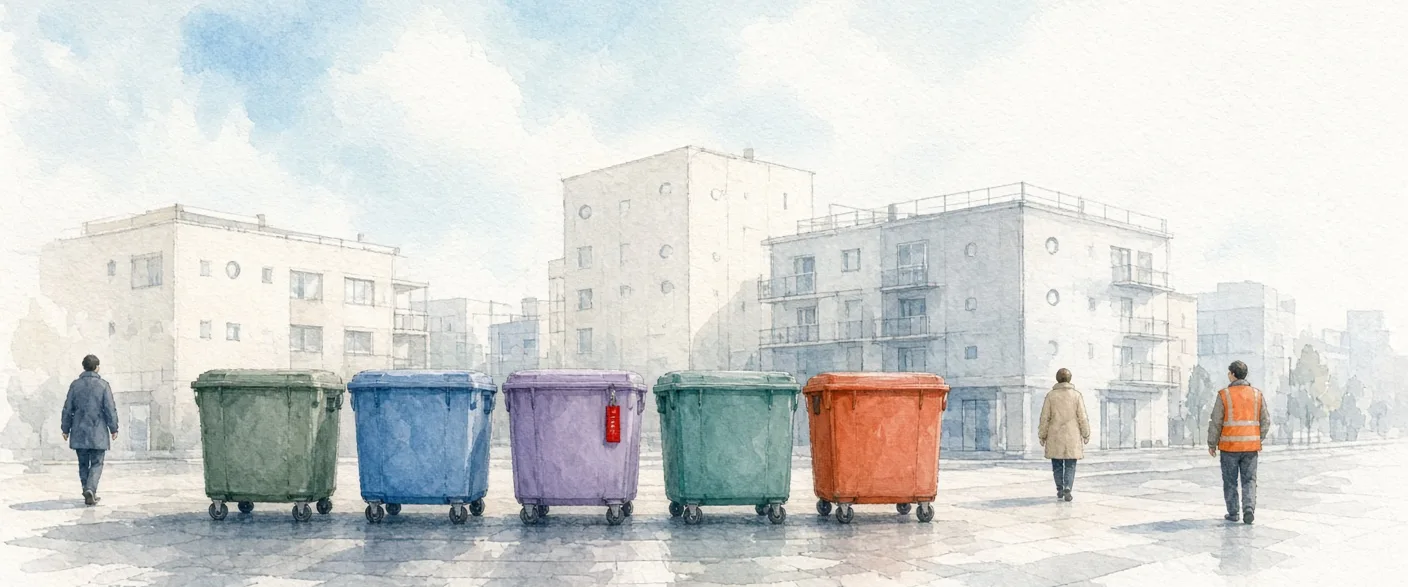
Five dedicated streams, one tag for each
General waste stream
Mon · Thu
660 L · grey lid
General waste is collected on Monday and Thursday rounds. This stream accommodates non-recyclable commercial packaging, floor sweepings, and residual operational waste that cannot be reprocessed. Liquids, hazardous chemicals, electrical items, and loose builder rubble must stay out. Sites receive robust 660 L four-wheel lidded bins fitted with durable rubber castors and secure locks. Bins carry grey lids and clear identification day tags to prevent sorting errors during early morning servicing.
Goes in
- Non-recyclable packaging
- Floor sweepings
- Residual operational waste
Stays out
- Liquids
- Hazardous chemicals
- Electrical items
- Loose builder rubble
Mixed recycling stream
Tue
660 L wheelie
Mixed recycling is scheduled for Tuesday collection. Accepted materials include clean office paper, flattened cardboard boxes, aluminium drinks cans, clean steel tins, and clean plastic bottles and containers. Polystyrene packing, soiled takeaway cartons, greasy greaseproof paper, and general refuse must stay out. We supply 660 L wheelie containers designed for compact indoor bin stores and external loading bays. Each container features a prominent Tuesday identification tag to maintain single-stream integrity across shared commercial buildings.
Goes in
- Clean office paper
- Flattened cardboard
- Aluminium cans and steel tins
- Clean plastic bottles and containers
Stays out
- Polystyrene packing
- Soiled takeaway cartons
- Greasy paper
- General refuse
Glass collection stream
Wed
660 L reinforced
Commercial glass is collected every Wednesday. This service accepts clean glass beverage bottles, food jars, and unbroken container glass across all colours. Ceramic plates, window panes, drinking glasses, Pyrex cookware, and light bulbs must stay out to protect recycling batches. Glass is stored in dedicated heavy-duty 660 L wheeled bins engineered with reinforced bases and quiet-running rubber wheels for hospitality venues and office courtyards.
Goes in
- Beverage bottles
- Food jars
- Unbroken container glass, all colours
Stays out
- Ceramic plates
- Window panes
- Drinking glasses and Pyrex
- Light bulbs
Food and organics stream
Mon · Wed · Fri
Sealed caddies
Food and organics collection runs on a three-day cycle on Monday, Wednesday, and Friday mornings. What goes in includes raw kitchen prep cuttings, cooked food leftovers, coffee grounds, tea bags, and bakery scraps. Packaging films, plastic bags, napkins, metal cutlery, and general packaging must stay out. To ensure hygienic storage, we provide sealed organics caddies and heavy-duty lidded containers that prevent odour build-up and vermin access between scheduled collections.
Goes in
- Raw kitchen prep cuttings
- Cooked leftovers
- Coffee grounds and tea bags
- Bakery scraps
Stays out
- Packaging films and plastic bags
- Napkins
- Metal cutlery
- General packaging
Confidential paper stream
Fri · fortnightly
240 L console
Confidential paper is collected fortnightly on Friday mornings. This secure stream accepts printed client paperwork, personnel files, payroll documentation, and archived commercial records. Metal binder clips, heavy cardboard lever-arch files, plastic folders, and electronic devices and discs must stay out. Collection takes place via lockable 240 L internal consoles equipped with narrow paper deposit slots, ensuring documents remain completely secure prior to scheduled destruction.
Goes in
- Printed client paperwork
- Personnel files
- Payroll documents
- Archived records
Stays out
- Metal binder clips
- Heavy lever-arch files
- Plastic folders
- Electronic devices and discs
How are contaminated bins handled on collection day?
When our route driver identifies non-conforming items inside a container during the pre-lift check, the bin is paused to protect the processing batch. Amina Yusuf, our contamination lead, records photographic evidence and logs the item details. Our customer desk immediately alerts your facilities coordinator with the image and notes. You can choose to remove the non-conforming material before a re-collection lift or request an extra general waste lift.