SEPTEMBER 2027 INTAKE
Two-year plumbing and heating course
Warm homes
start at
the bench.
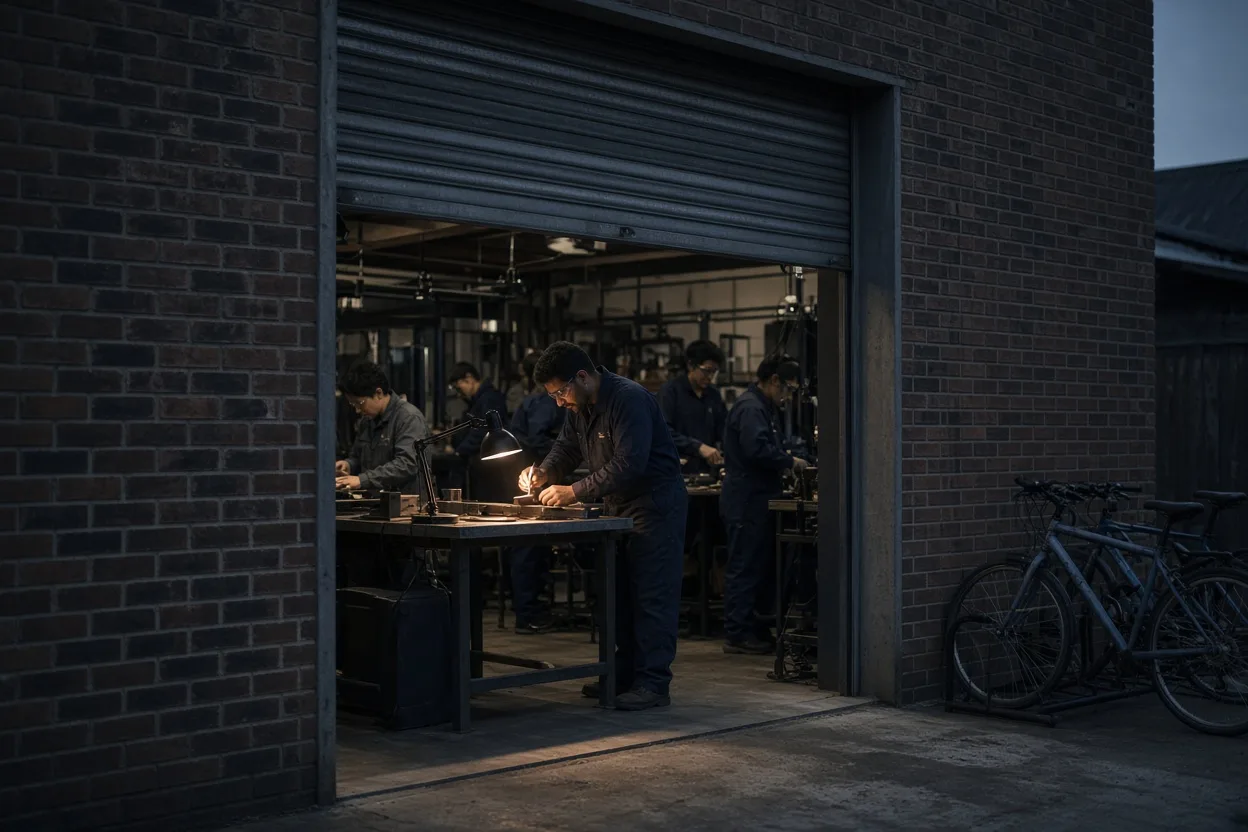
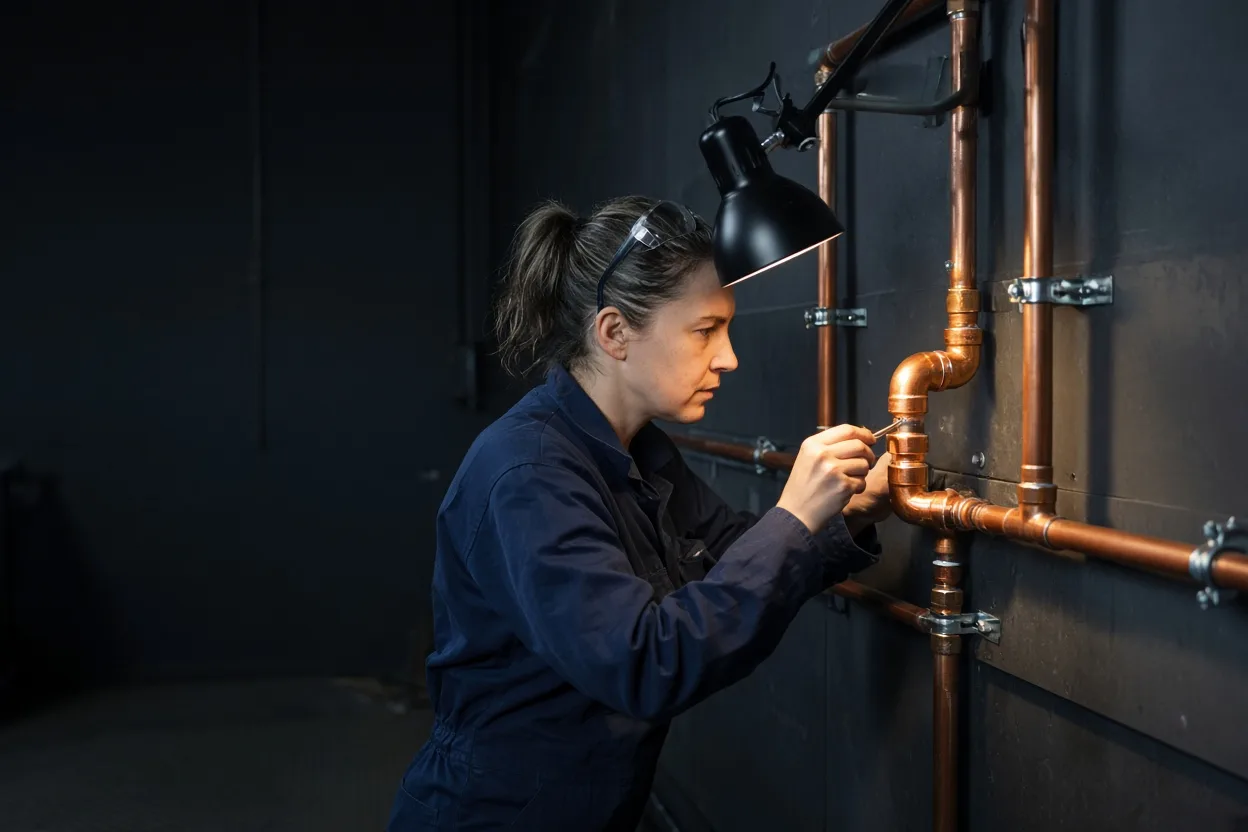
One year at the bench in our Wrenfield halls, one year placed with a working firm. For adults of any age; no trade experience needed.
PLUMBING AND HEATING
2
years
4 + 1
bench and theory days a week
24
places each September
18
placement partners
From September 2027
Every month

Open bench
Year 2

Employers
01
Who the course is for
Adults who want a trade they can see working.
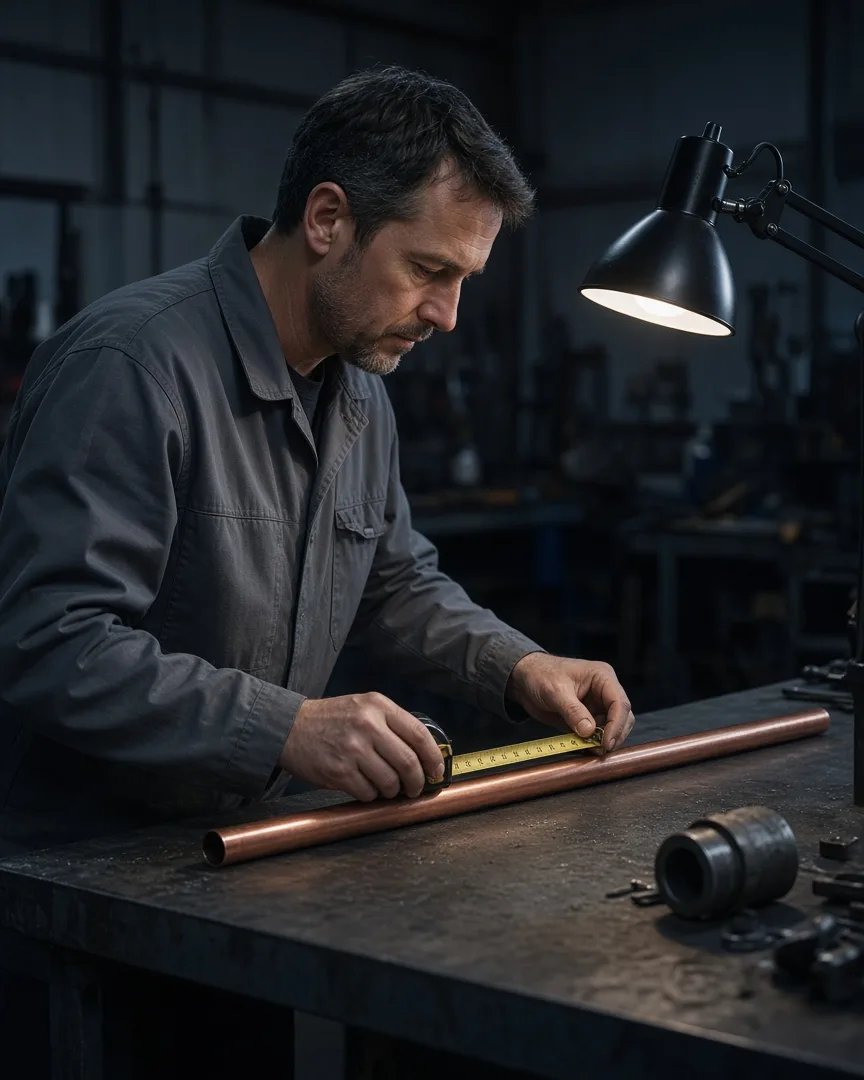
Most of our apprentices arrive from somewhere else. Some have run a café, driven a van or stacked shelves in a warehouse, and have decided that they would rather finish a day having made something that works. Nobody on the course is expected to know a compression fitting from a union. We start with the tape measure, the pipe cutter and the habit of checking every joint twice, and we teach the rest at the bench, one week at a time.
Others are coming back to work after years of raising a family or caring for a relative. They tell us the bench year suits them because it is predictable: four set days, one theory day, and a workshop quiet enough to think in. There is no upper age limit, and the oldest person in a recent group was forty-six. What matters is that you turn up at a quarter to eight and are willing to be bad at soldering for a few weeks.
A smaller group are school leavers over eighteen who want a bench rather than a lecture hall. They learn beside people twice their age and, in our experience, are better for it. You do not need a driving licence to apply, although many placement firms will ask about one in the second year. We would rather talk it through at a taster Saturday than read it on a form.
No experience needed
No upper age limit
Minimum age 18
02
How a training day is split
Four bench days and one theory day, every week of Year 1.
Tool check
07:45
Bench block one
08:00–10:15
Break
10:15
Bench block two
10:35–12:30
Lunch
12:30
Rig block
13:15–15:00
Logbook
15:00
Light blocks: Tool check · Break · Lunch · Logbook
Friday: theory day
Theory room
08:30–12:30
Lunch
12:30
Open bench and resits
13:15–15:30

Morning at the bench
Between a quarter to eight and half past twelve you cut, bend and joint. The first block is the week’s measuring and cutting; after a short break the second block turns it into the week’s piece, an assembly of copper pipe that has to hold pressure on Friday. Instructors walk the benches and check joints with a torch, not a lecture.
Afternoon on the rig
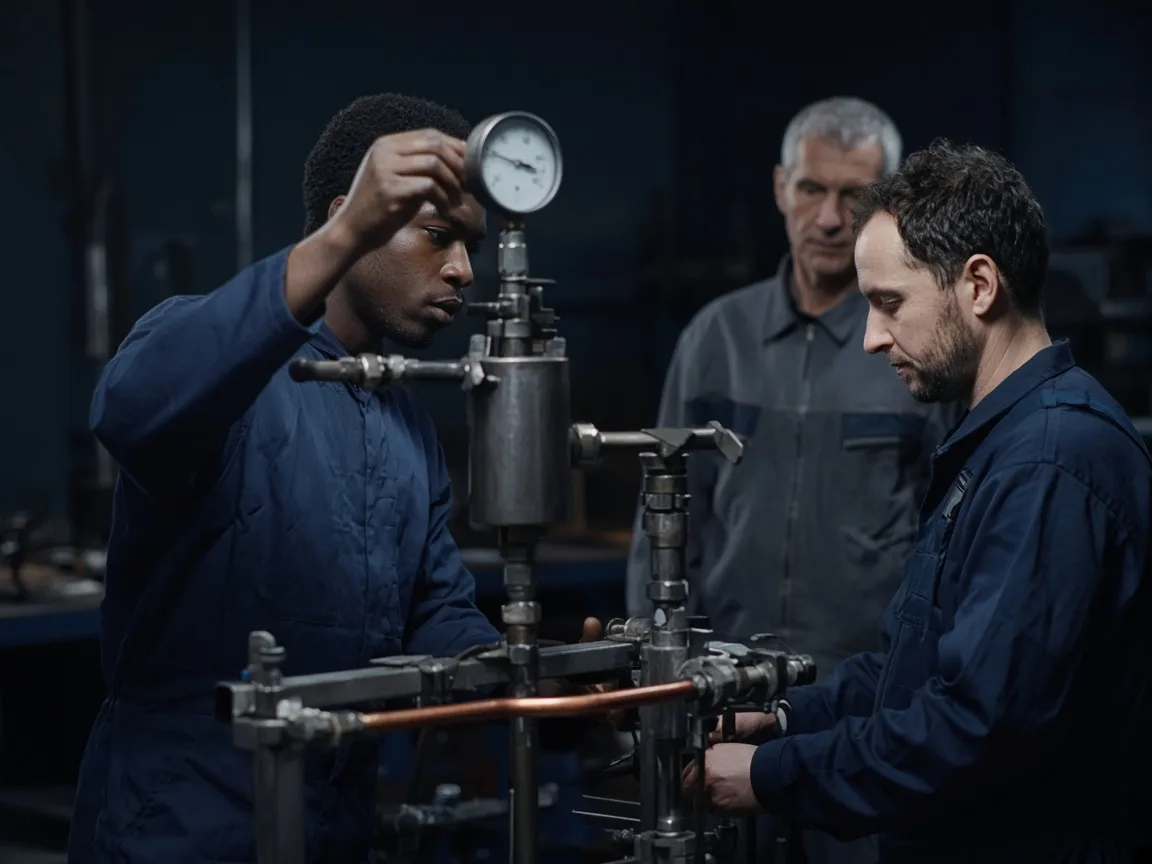
After lunch the group moves to the boiler rig. You pressure-test the pipework you made, bleed a radiator circuit and learn to read a gauge and a fault. The rig is made a little wrong each week on purpose, because finding the fault is the lesson and the repair is the easy part.

End of the day
The last half hour belongs to the logbook. You write down what you made and what went wrong, your instructor signs it, and the bay is swept before anyone goes home. The signed logbook is what the bench assessments are marked from, so it matters more than it looks.
03
The two years
One year at the bench, one year placed with a working firm.
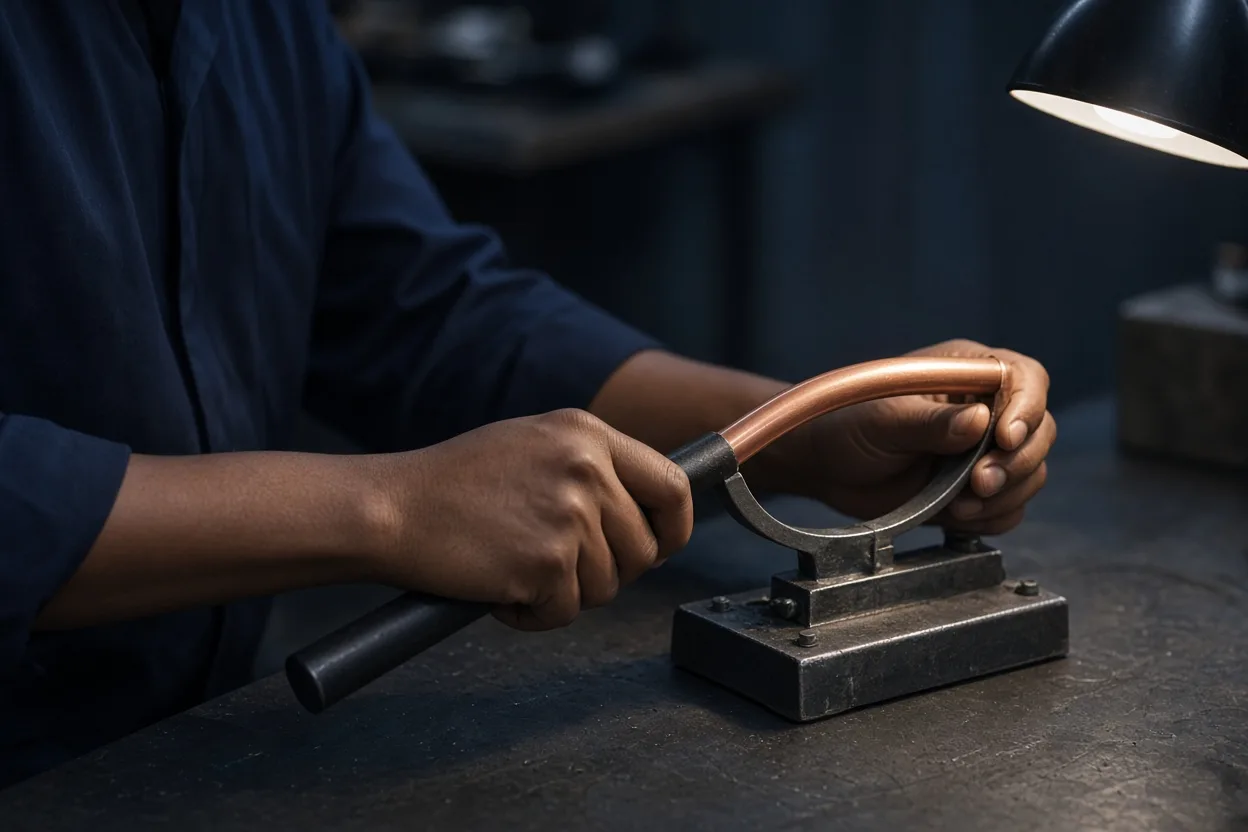
Year 1 — the bench year
Thirty-eight teaching weeks from September to July. Four days a week at the bench in Bench Hall A and Bench Hall B, and one day of theory: water regulations, heat loss, reading drawings and safe working. By the summer you have made, tested and signed off a full set of pipework, a boiler rig repair and a heat-pump connection.
Sep: start
Feb: mid-year review
Jul: bench assessment
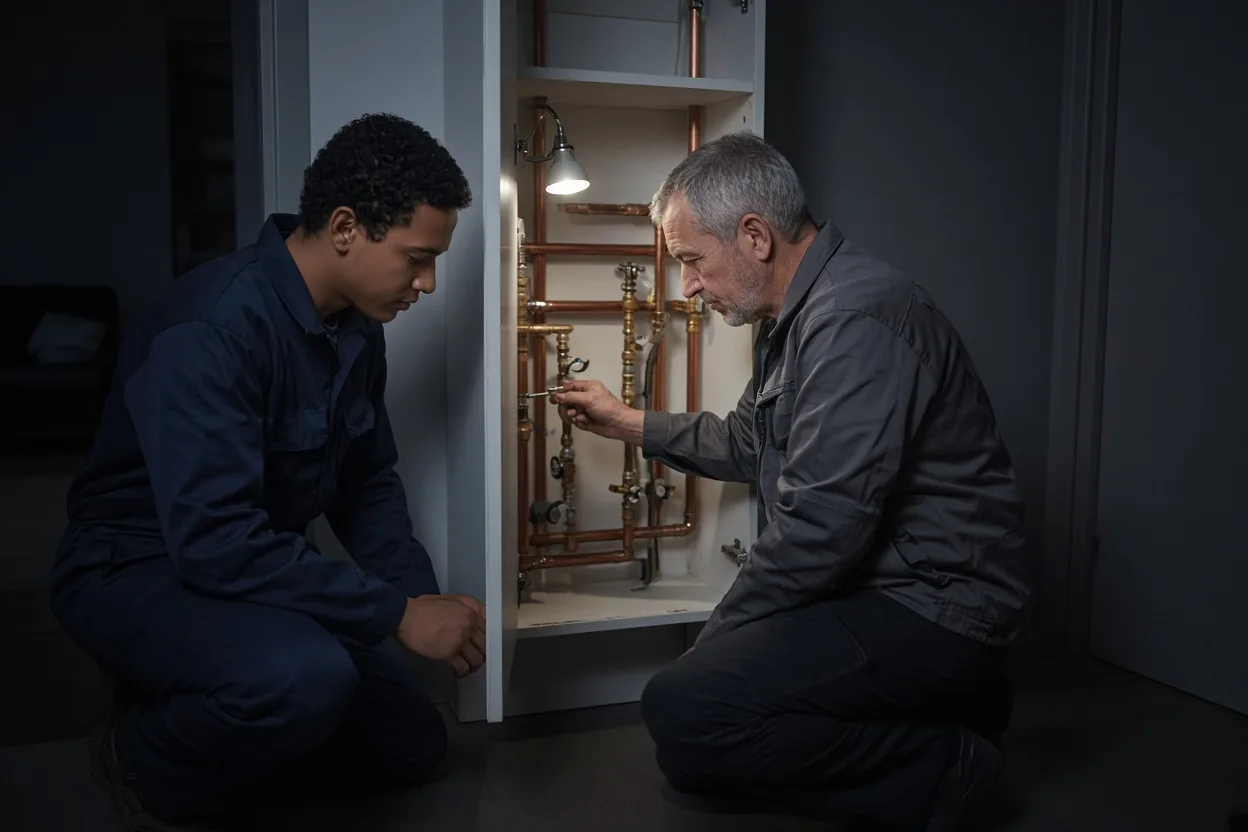
Year 2 — the placement year
Four days a week with one of our partner firms and one day back at college on Friday. You work beside a named engineer on real jobs, and our placement coordinator visits you on site once each term. A placement is a training year, not a job offer, although many firms do keep their apprentice on.
Sep: placement starts
Each term: a site visit
Jun: final assessment
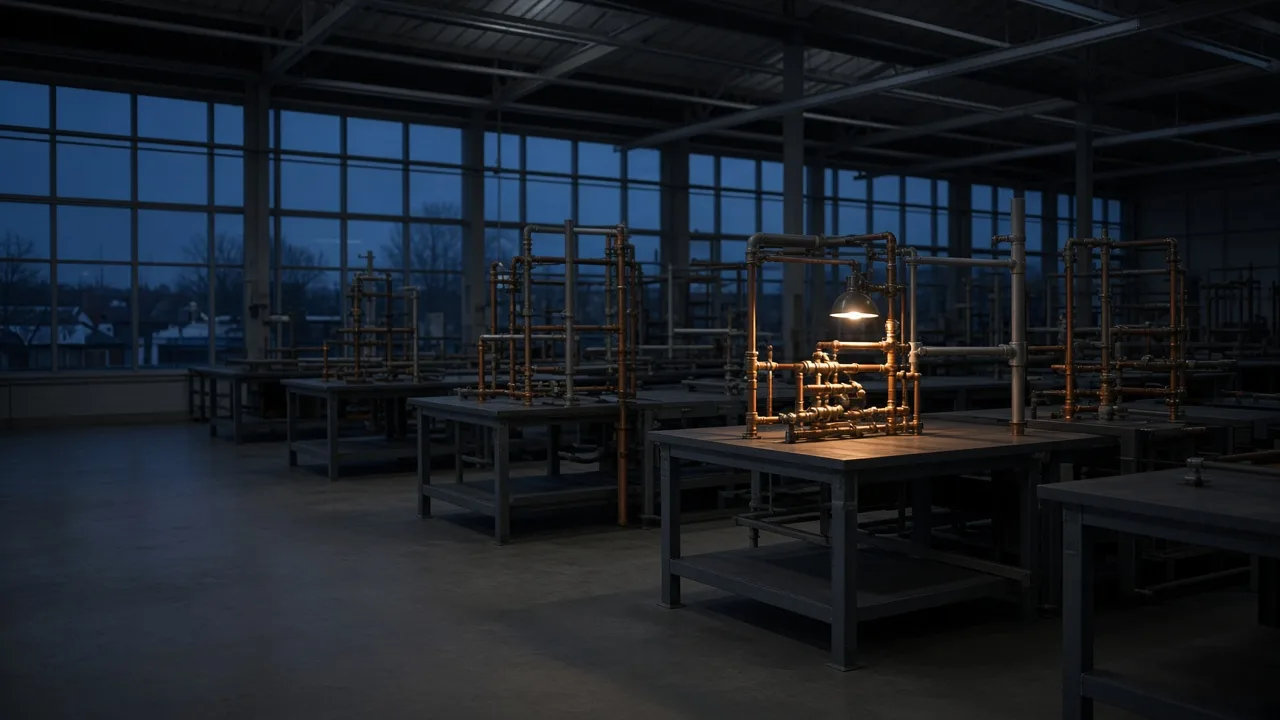
Nobody is good at soldering in week one. By June you will not remember why it was hard.
Hana Petrović, instructor
04
Where graduates are placed
Eighteen firms within 40 km of Wrenfield.
7
Small heating firms
Family-run firms of two to ten people: boiler services, repairs and new systems.
5
Housing maintenance teams
Planned repairs and heating upgrades across social and rented homes.
4
Commercial plumbing contractors
Larger buildings: plant rooms, hot water and drainage.
2
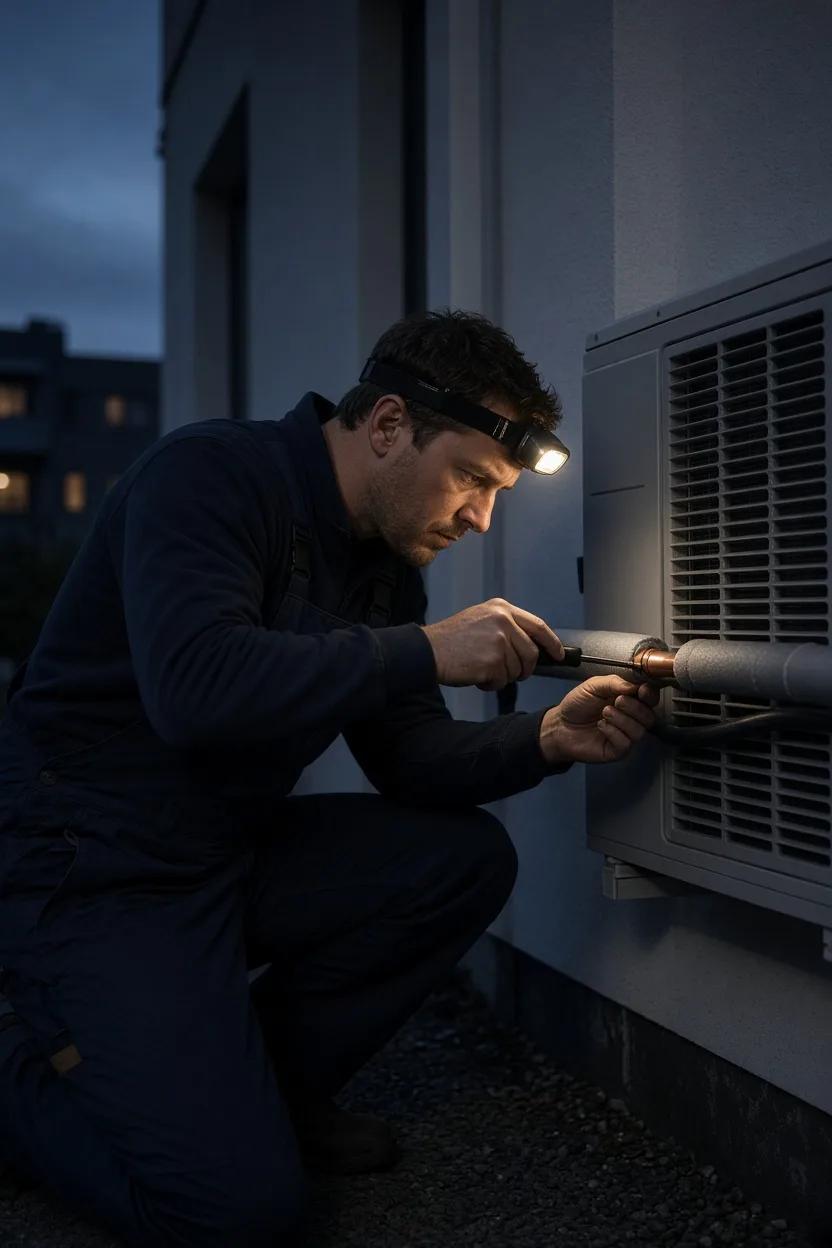
Heat-pump installers
Low-carbon heating: pipe runs, controls and commissioning.
18 partner firms within 40 km of Wrenfield
Grace Mwangi, our placement coordinator, matches each apprentice to a firm in the spring of Year 1. She looks at where you live, what you enjoyed at the bench and which engineer is likely to be a good teacher, and she visits every Year 2 apprentice on site once a term. If a placement is not working, she moves you, and the college stays your base.
A placement is a training year, not a job offer. Many firms do keep their apprentice on; we never promise it.
05
Instructors
Five people, named, who teach every day.

Rosa Lindqvist
Principal and co-founder
Rosa has been a master plumber for over thirty years and founded the college with Emeka in 2009. She leads Bench Hall A, where Year 1 learns pipework, soldering and drainage, and she still takes the first bench morning of every intake herself. She is strict about tidy benches and generous about mistakes.
Teaches: pipework, soldering, bending, drainage
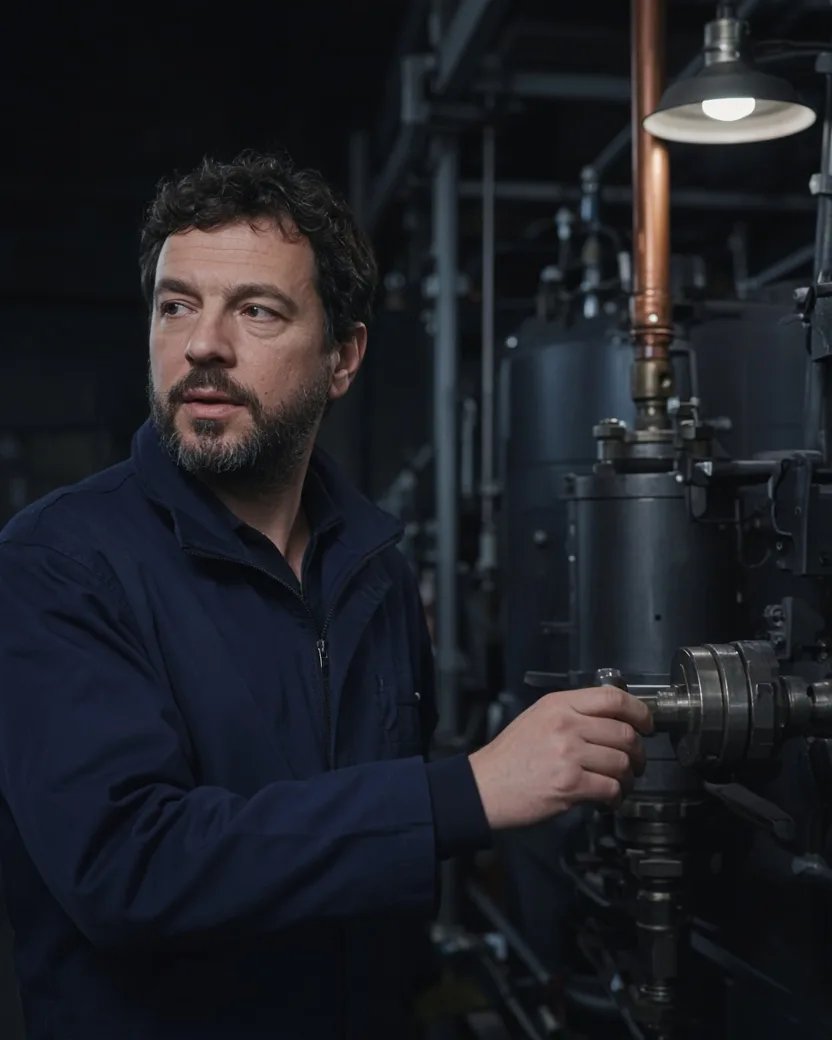
Emeka Obi
Co-founder and head of heating
Emeka runs Bench Hall B and the boiler rig. He spent two decades servicing boilers before teaching, and he builds the weekly faults that the rig block is about. Ask him why a radiator is cold and expect a question back before you get an answer.
Teaches: boiler rig, controls, commissioning
Hana Petrović
Soldering and pipework
Luis Carvalho
Heat pumps, controls and the Friday theory day
Grace Mwangi
Placement coordinator
06
Three apprentices
What changing trade looked like for three of them.
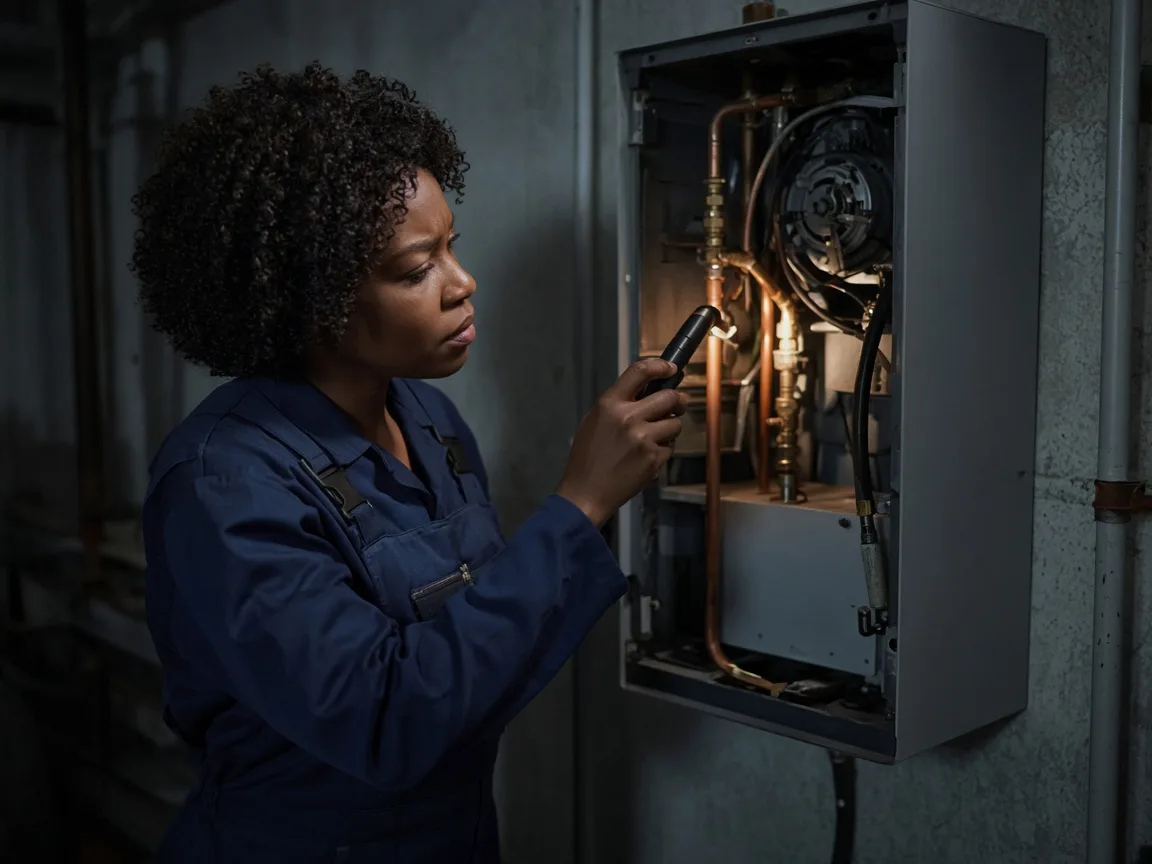
Aiyana Brooks
was a café manager · placed with a heating firm
Aiyana fixed the café’s water heater with a plumber on the phone and decided to learn how. In Year 2 she joined a four-person heating firm in Wrenfield, and she now works there, mostly on boiler services.
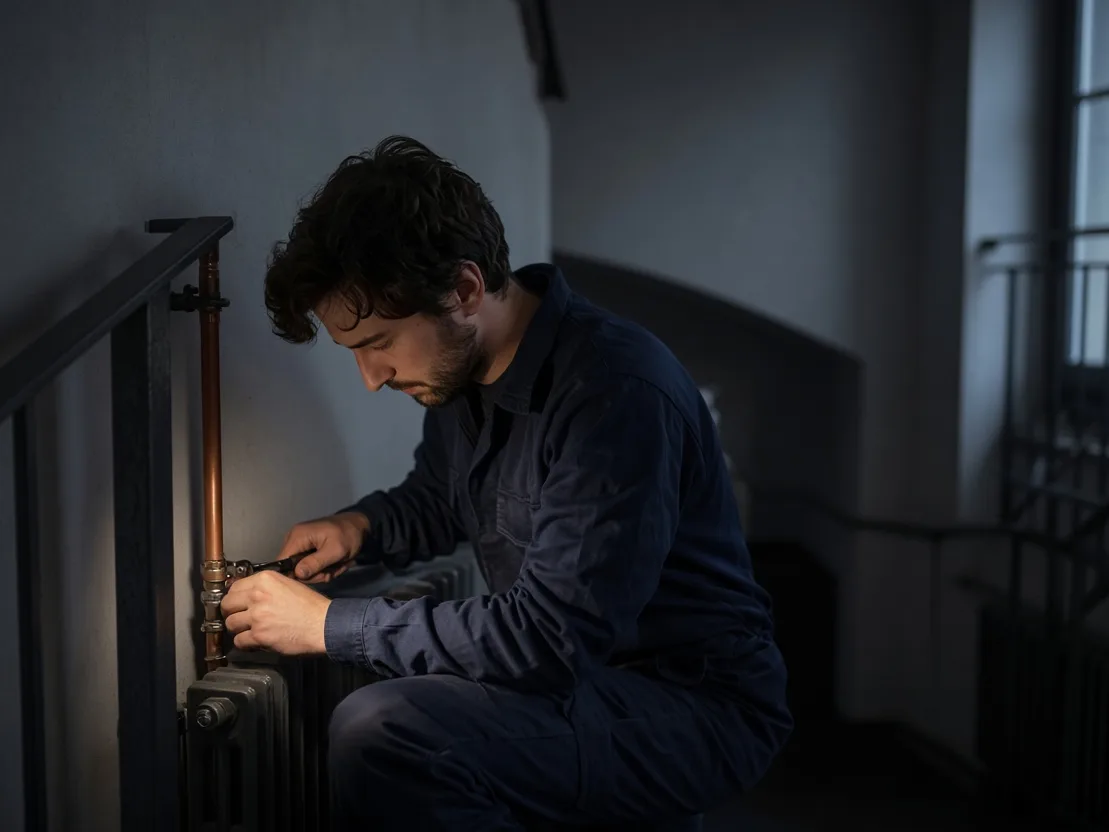
Farid Haddad
worked in a warehouse · placed with a housing team
Farid was slow at soldering for the first term and spent several Fridays at the bench with Hana. He was placed with a housing maintenance team, and the team kept him on after the placement year.
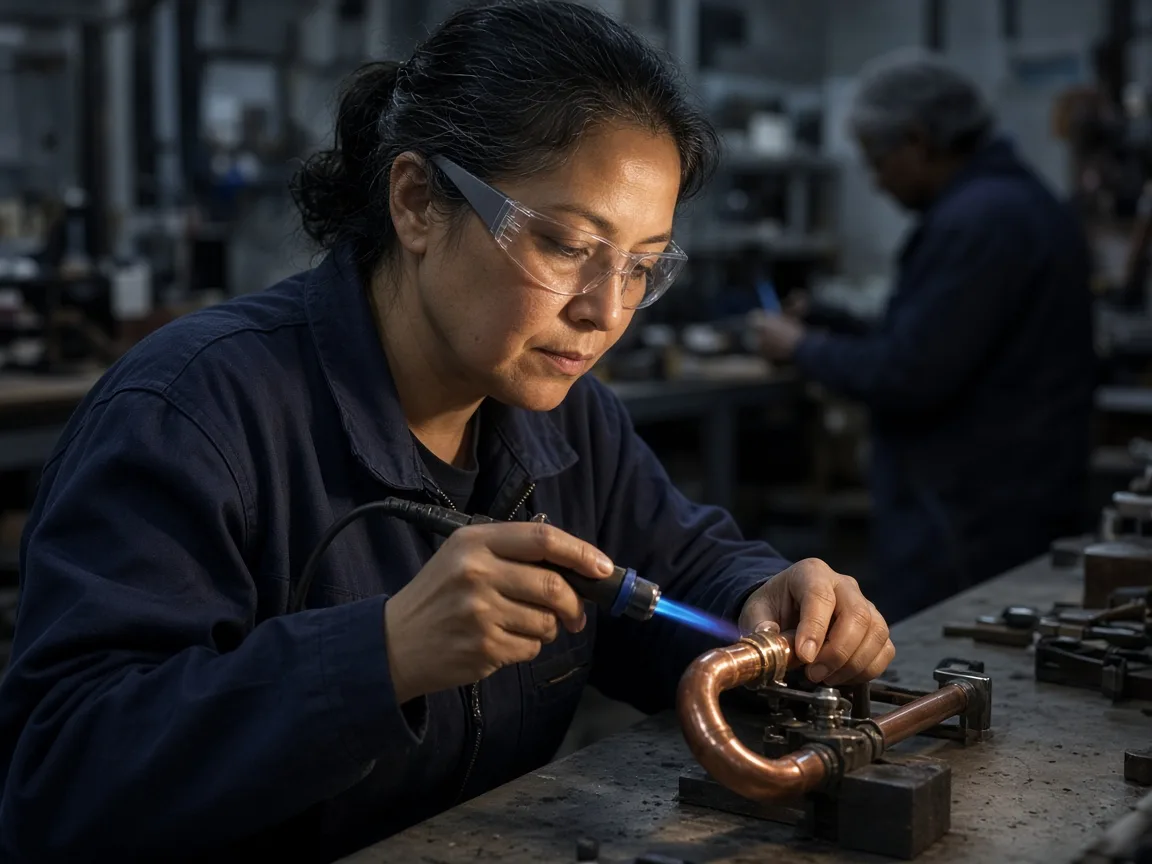
Ingrid Solberg
returned to work after raising three children
Ingrid was the oldest in her group. She was placed with a heat-pump installer and now plans the pipe runs on site before the crew arrives, with a bench habit of checking every joint twice.
These are three people’s experiences, not promises.
07
Fees
Seven items, in euros.
| # | Item | What it covers | When | Price |
|---|---|---|---|---|
| 1 | Year 1 — bench year | 38 weeks, 4 bench days + 1 theory day | Sep–Jul | EUR 4,800 |
| 2 | Year 2 — placement year | 4 days placed + 1 college day, 3 site visits | Sep–Jul | EUR 2,400 |
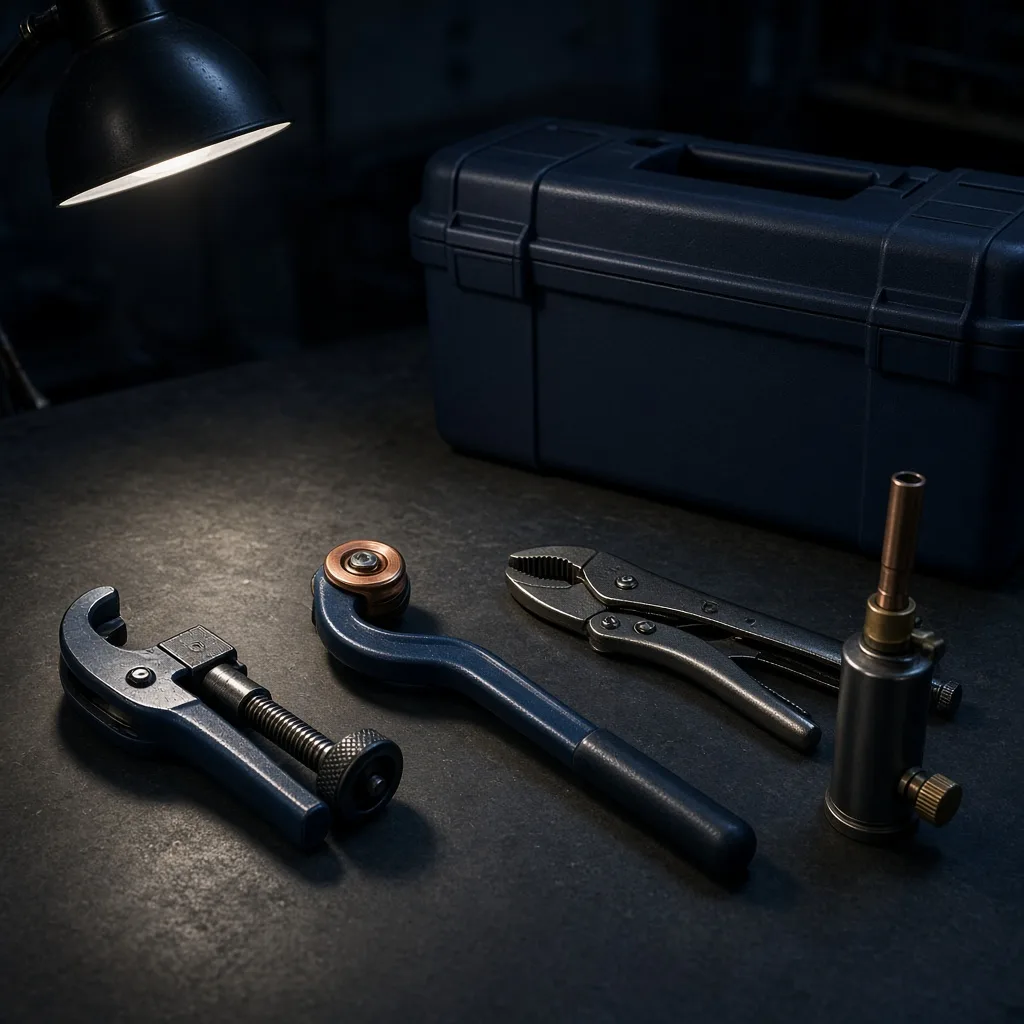
| 3 | Starter tool kit | cutter, bender, grips, torch, case; yours to keep | Year 1, week 1 | EUR 640 |
| 4 | Workwear and safety pack | two overalls, boots, gloves, glasses | Year 1, week 1 | EUR 180 |
| 5 | Assessment and logbook | bench assessments and the signed logbook | per year | EUR 220 |
| 6 | Evening refresher | six Tuesday evenings for people already in the trade | rolling | EUR 390 |
| 7 | Taster Saturday | one Saturday at the bench, lunch included | monthly | Free |
Year fees can be paid in ten monthly instalments at no extra cost. A EUR 300 deposit holds a place and counts towards Year 1. Placement firms pay apprentices a training wage in Year 2; the amount is agreed with each firm.
08
Come to a taster Saturday
No booking needed for the morning
Boots and glasses provided
Next dates
1st
Saturday
every month
#BenchHallA #BoilerRig
First Saturday of every month, 09:00–15:00, except in August.