When someone experiences persistent coughing, wheezing, or uncharacteristic breathlessness during normal activity, the most common clinical response is a trial prescription. A patient sits down for ten minutes, describes a tight chest, and walks away with an inhaler canister and instructions to see how they feel in a month. When Dr. Ines Halvorsen founded Kaze Clinic in 2014, she established a different standard for Northmere: respiratory care should always begin with objective physiological measurement, never guesswork.
The human respiratory system produces similar symptoms across fundamentally different conditions. Breathlessness can stem from variable smooth muscle constriction in asthma, irreversible loss of alveolar elasticity in COPD, post-viral airway hyperresponsiveness, or disordered breathing patterns. Prescribing an inhaled corticosteroid without verifying whether airway inflammation actually exists frequently leads to months of ineffective treatment. Conversely, withholding anti-inflammatory medicine because a stethoscope exam sounded clear can allow chronic bronchial irritation to progress unchecked.
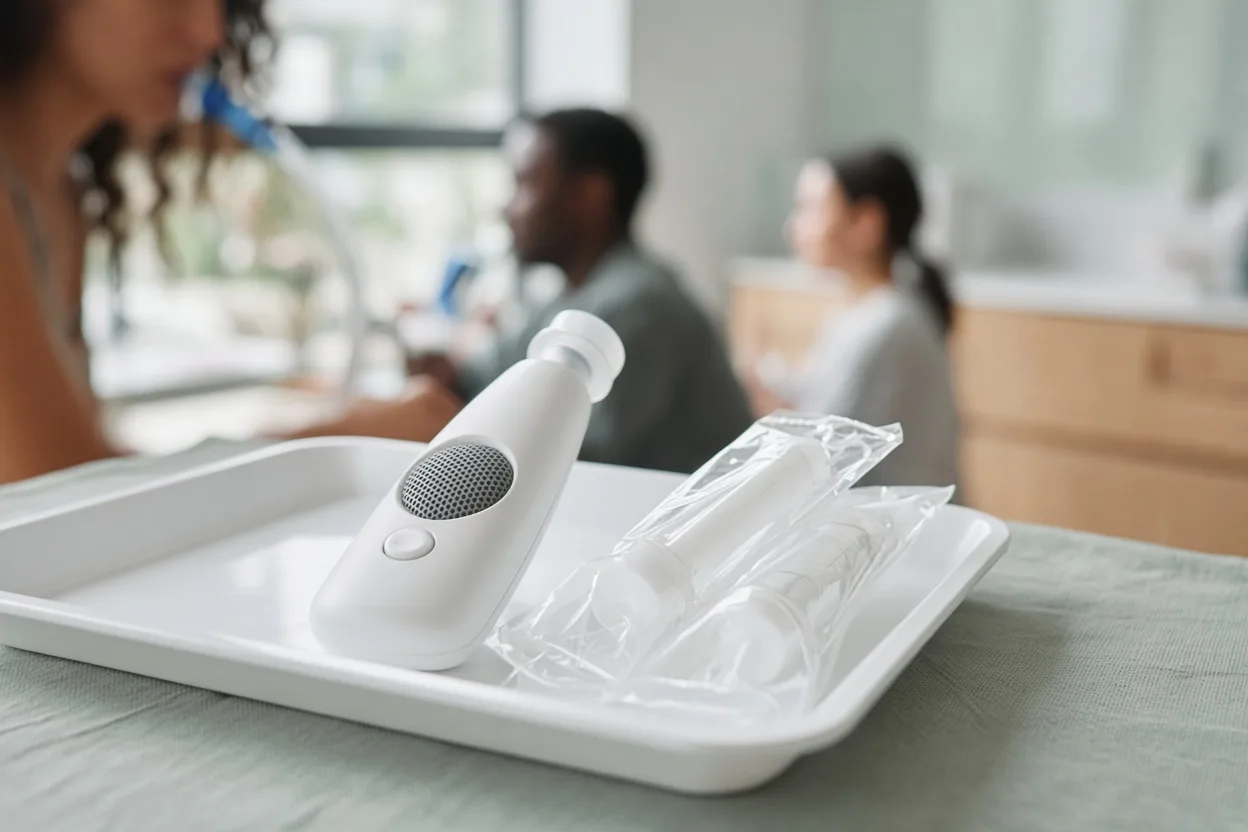
This is why we measure first. During a 45-minute first consultation at our clinic, spirometry is performed on the same day by our respiratory physiologist, Tomás Reyes. By having a patient blow forcefully into a calibrated sensor, we measure forced expiratory volume and vital capacity. When airflow limitation is detected, we administer a bronchodilator and retest to assess reversibility. Coupled with FeNO testing, which measures fractional exhaled nitric oxide to detect eosinophilic inflammation, we obtain a precise diagnostic signature before selecting a single medicine.
Having objective numbers transforms the consultation from a passive prescription into a collaborative agreement. When doctor and patient sit together looking at a printed flow-volume curve, the physiology becomes visible. We can point directly to where the airflow dips and explain exactly why walking up a hill produces that familiar chest tightness. In Step 03 of our clinical process, we write down a personalized care plan in plain English. You see your baseline numbers, the exact mechanism targeted by your medicine, and the specific daily routines recommended by our clinical pharmacist, Daniel Okoro.
Measurement also provides the only reliable benchmark for follow-up. In our model, a named nurse—such as respiratory nurse specialist Lena Park—stays with your case. Two weeks after your initial visit, we telephone you during our 17:30 to 18:00 call window to check how your lungs are responding. At six weeks, we welcome you back for a follow-up consultation and repeat spirometry. Comparing your new flow-volume curve to your baseline confirms whether the airways have opened and inflammation has quieted. We do not need to ask if you think the inhaler is working; the lung function curve provides clear, objective evidence.
Breathing is something you can measure, track, and steady. By taking the time to test before we prescribe, we eliminate unneeded medications, resolve persistent symptoms faster, and ensure you remain in control of your health. Whether you are dealing with a cough that has outlasted a winter or unexplained shortness of breath, careful measurement at 18 Linden Walk gives your lungs the thorough, unhurried care they deserve.