Lung function
Lung function and sleep tests
Diagnostic testing at Kaze Clinic is calm, non-invasive, and completed without clinical rush. We explain what each test measures, how it feels, and how to prepare beforehand.
Four tests
What each one feels like
Spirometry
Lung function with reversibility
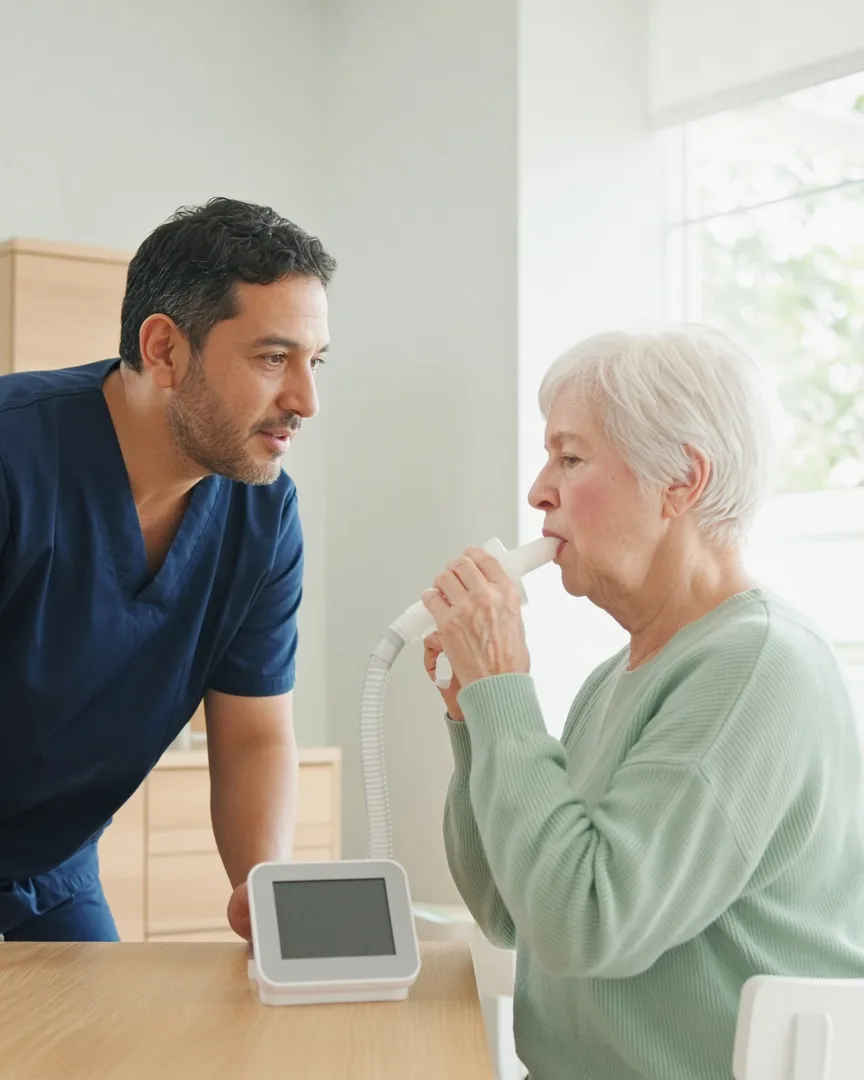
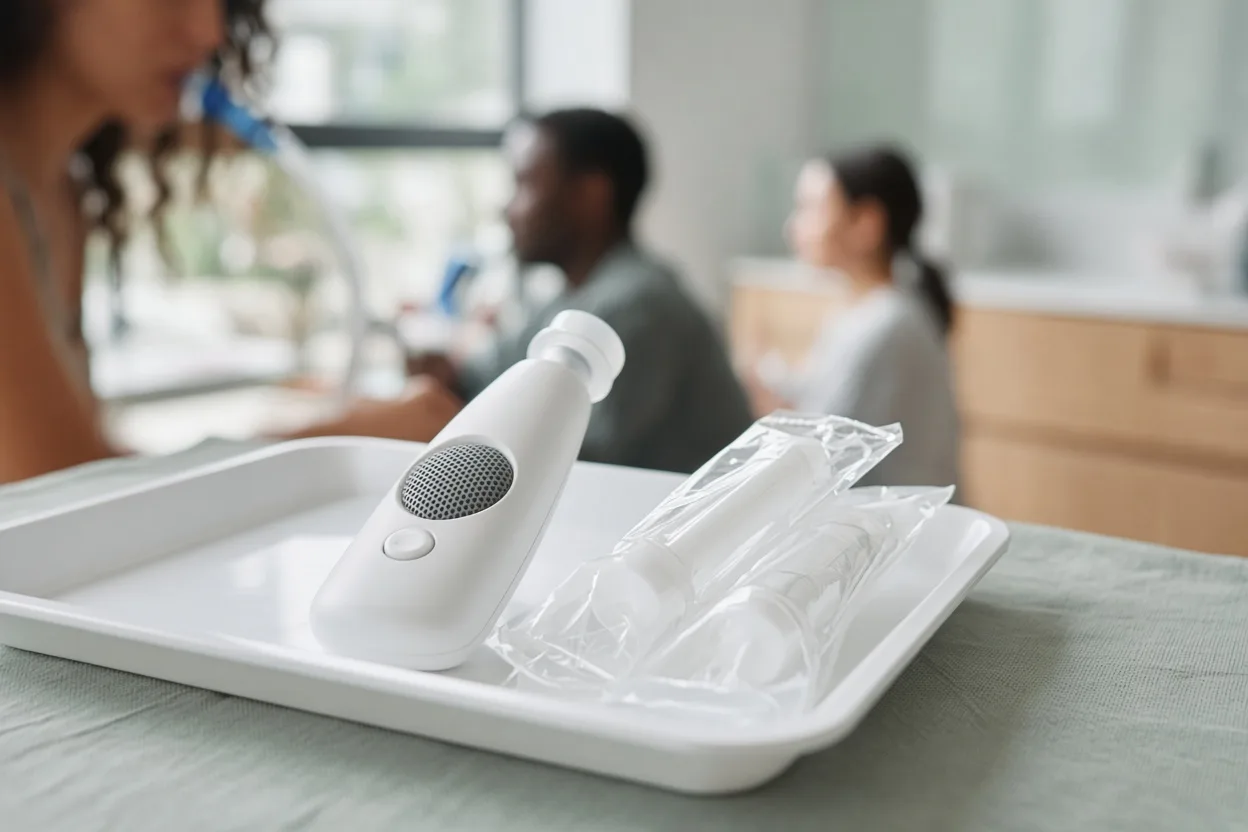
Spirometry measures how much air your lungs can hold and how rapidly you can exhale it. You will sit comfortably, place a soft clip on your nose, and blow forcefully through a clean, single-use mouthpiece into a sensor guided by respiratory physiologist Tomás Reyes. To assess reversibility, we repeat the measurement after administering a bronchodilator to check if narrowed airways open. The complete assessment takes place during your 45-minute consultation. Please avoid heavy meals and vigorous exercise immediately before testing, and follow the pre-test inhaler instructions provided by our reception team when booking.
FeNO
Airway inflammation
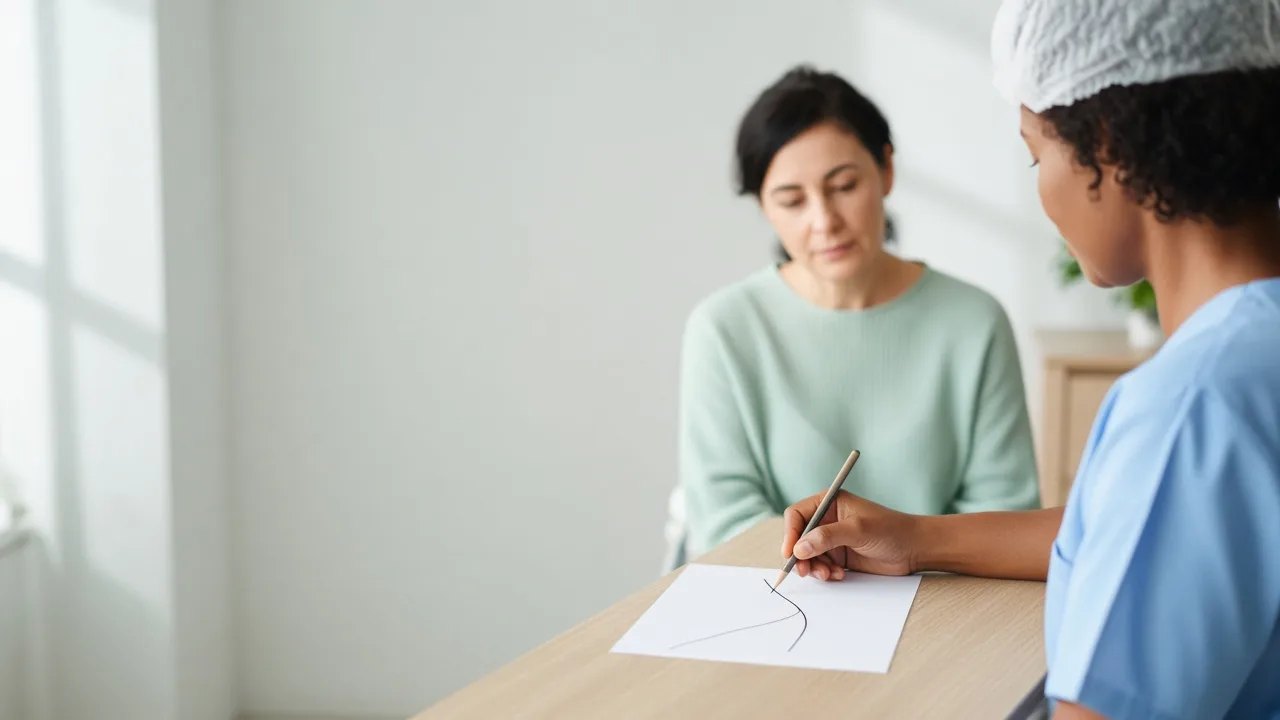
FeNO testing measures fractional exhaled nitric oxide, an established indicator of eosinophilic airway inflammation commonly associated with asthma. During the test, you inhale deeply through a filtered device and exhale steadily at a gentle, continuous pace against light resistance. It feels completely effortless, requiring no forced exhalation, and takes only a few minutes during your appointment. To prepare, please refrain from eating, drinking anything other than plain water, smoking, or vigorous exertion for an hour before testing, ensuring your measurement reflects an accurate baseline of airway activity.
Overnight oximetry
Oxygen saturation
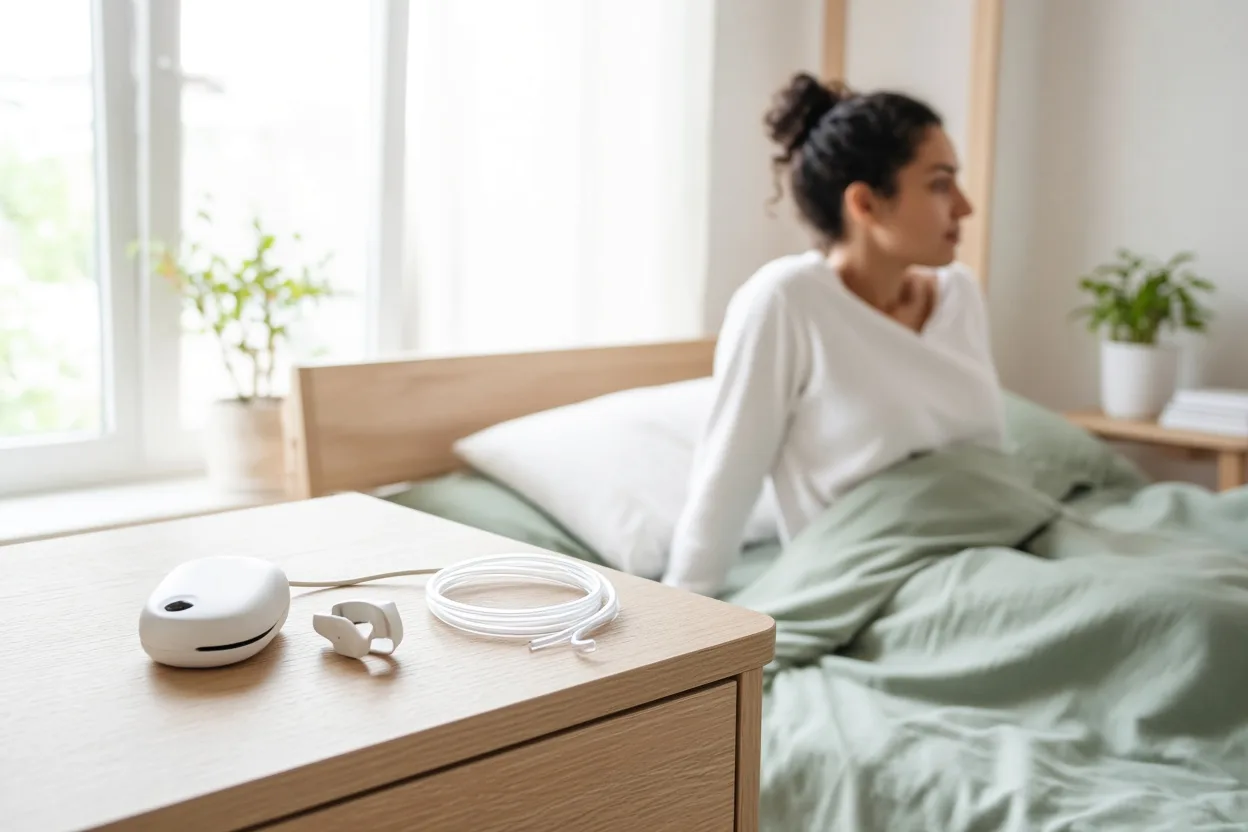
For sleep breathing assessments, we provide lightweight diagnostic equipment to use in your own bed. Overnight oximetry tracks pulse and oxygen saturation through a small fingertip sensor worn while you sleep.
Home sleep study
Respiratory polygraphy
A home sleep study (respiratory polygraphy) records nasal airflow, chest breathing effort, body position, and oxygen levels using a compact unit worn on a soft chest band. You collect the kit from reception, sleep in your usual surroundings for one night, and return the device the following morning for report analysis. Please wear comfortable sleepwear and avoid alcohol on the test night.