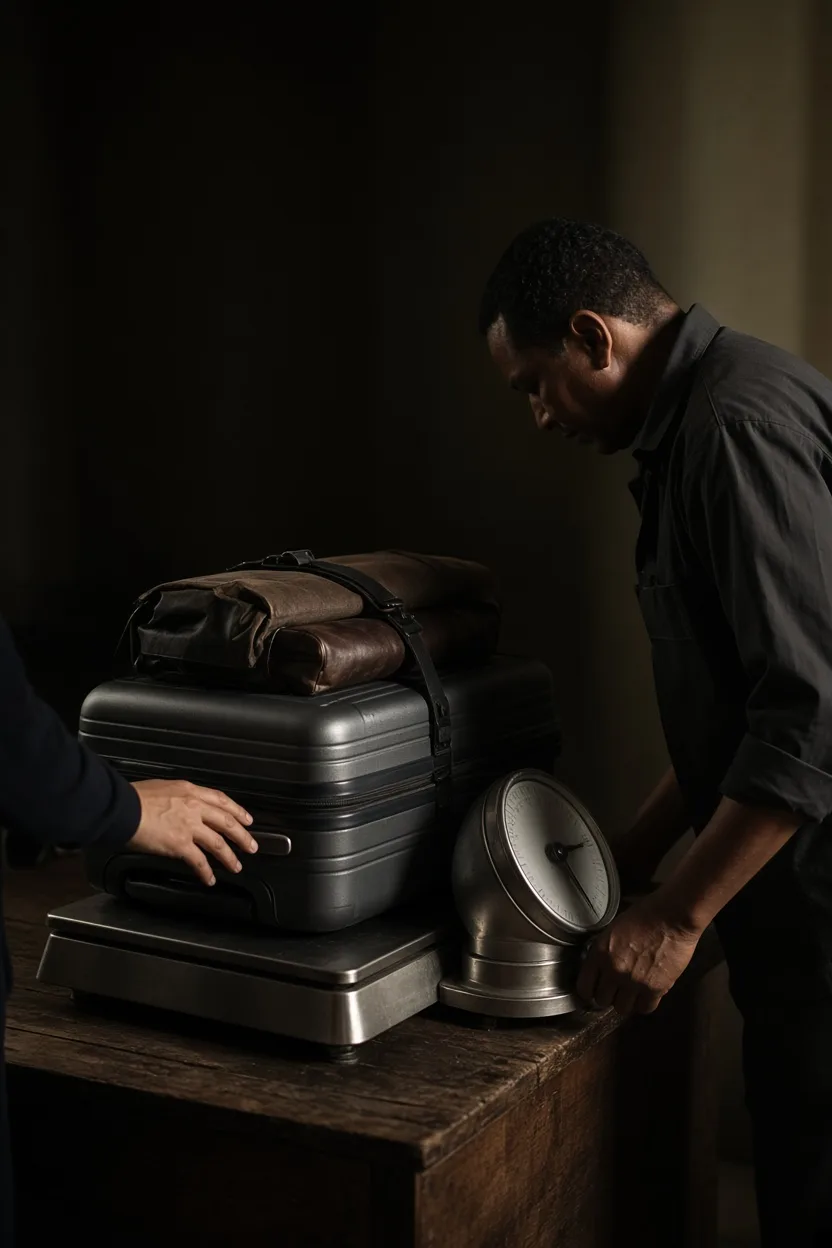
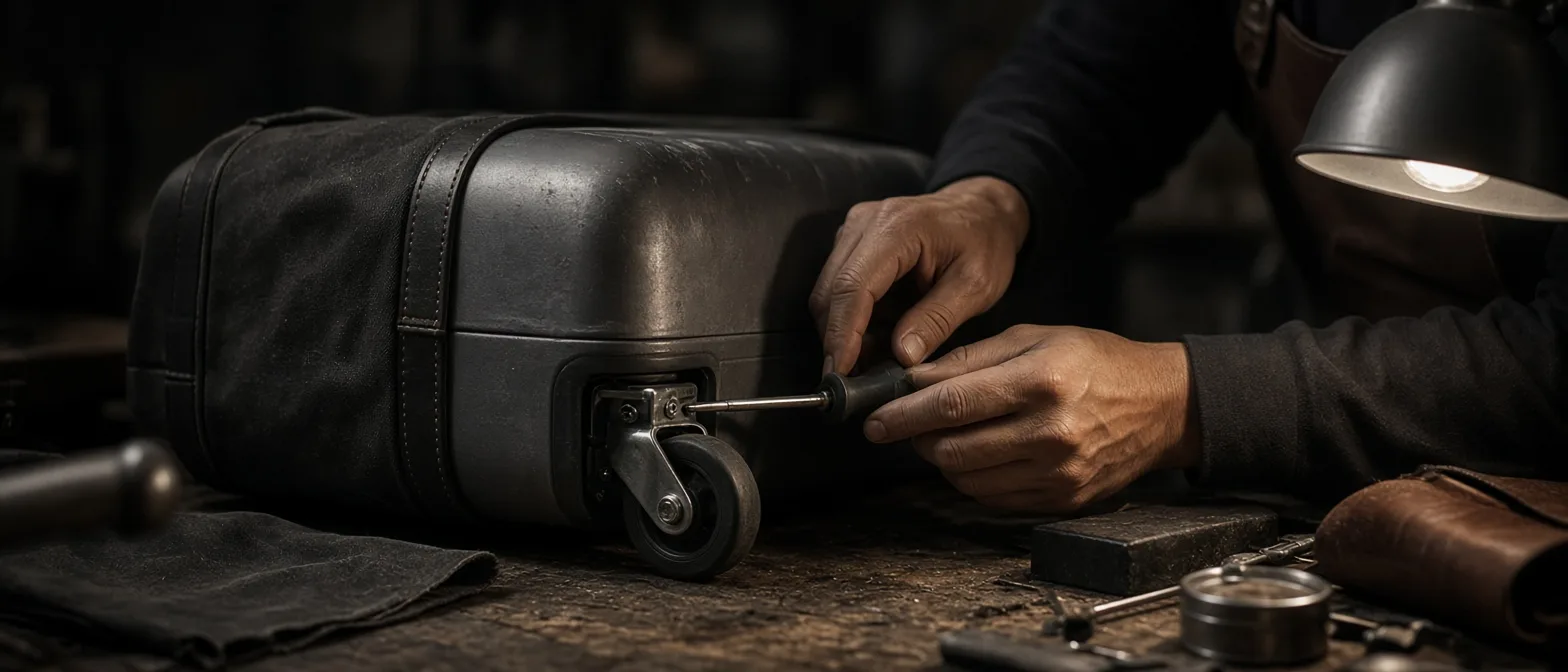
If you step through the retail showroom at Veerkaai 14 in Antwerp, past the low wooden plinths displaying our Ridge aluminium cases and Lumen polycarbonate shells, you will find a heavy timber door leading into the back room. Behind that door sits our workshop bench, lit by a single adjustable task lamp and surrounded by orderly wooden bins. Inside those bins are hundreds of replacement spinner wheel assemblies, axles, sealed ball bearings, and stainless steel fasteners. While modern retail logic encourages consumers to discard a suitcase the moment a wheel housing cracks or a tyre wears down to the rim, our founder Ines Vandamme built Kaban Luggage in 2009 on an opposing principle: luggage is a mechanical tool, and tools must be serviced.
Wheels are the most vulnerable component of any piece of luggage. A case shell of brushed aluminium or matte polycarbonate can survive decades of luggage carousels and train racks without losing structural integrity. Metal will pick up characterful scuffs and shallow dents, while polycarbonate will flex under compression and snap back into form. But wheels operate directly at the brutal intersection between your packing load and the physical world. In a city like Antwerp, a wheeled suitcase must traverse wet granite setts, railway platform expansion joints, grit, tram tracks, and curbs. Over several years of steady travel, the polyurethane tread wears thin, road grime penetrates unshielded bearings, and shocks transmit upward through the mounting bracket.
When a wheel begins to drag or wobble, travel changes instantly. What should be an effortless, gliding roll beside your hip turns into a frustrating, vibrating drag that strains your wrist and tires your shoulder. In the wider luggage industry, this is typically the moment a bag is thrown into the rubbish heap. Most commercial brands bond their wheel brackets to the internal shell with permanent solvent adhesives or blind plastic rivets, making replacement impossible without destroying the bag. From our first day at Veerkaai 14, we refused this deliberate obsolescence. Every suitcase we stock is designed so that workshop lead Tomasz Wierzbicki can unscrew the wheel housing with a hand tool, clean the seat, and fit a factory-fresh pair in less than fifteen minutes.
We also repair cases bought elsewhere. Travellers often arrive at our counter apologising for wheel damage on a suitcase they bought a decade ago in another country. If the shell has a sound chassis, Tomasz can usually source or adapt an appropriate spinner pair from our shelves. Our wheel pair replacement costs €38, and our workshop turnaround is strictly 5 working days. That modest investment returns a trusted suitcase to active duty, saving hundreds of euros and preventing kilograms of high-grade alloy and polymers from entering the waste stream.
A case is fitted to the trip you are actually taking, not the other way round. When you come to our counter for our free 40-minute fitting session, we assess not only volume and packing weight, but also how you move through transit hubs. Having fresh, perfectly balanced running gear is what keeps your journey calm. We keep wheels in our back room because we respect the journeys you take and the cases you carry. As long as our doors remain open on Veerkaai, no journey will ever be cut short by a broken wheel.