How a Batch is Paced
The full pacing
Every batch at Himuro Gelato follows an uncompromising five-stage pacing schedule. From overnight resting to evening closure, temperature and timing dictate every movement in our kitchen.

Five stages
Pace 01.
The base rests overnight
12 hours at 4 °C so the milk and fruit settle
Pace 02.
Churned four litres at a time
Eleven minutes in the batch freezer, never more
Pace 03.
Hardened, then set aside
Two hours at −22 °C, served at −12 °C
Pace 04.
Brought up to −12 °C
Tempered in the counter wells until it yields to the spatula
Pace 05.
Set aside or discarded
What is left goes to the hold shelf at −18 °C, or is discarded at close
Pace 01: Overnight resting at 4 °C
Before any batch enters the batch freezer, the liquid base rests undisturbed for twelve hours at 4 °C. This resting period allows milk proteins to hydrate fully and gives delicate fruit infusions, citrus oils, and roasted nuts time to settle into the dairy. By cooling the mixture slowly and holding it steady overnight, we ensure the sugars bind cleanly with water molecules, laying the foundation for ultra-fine crystal formation when churning begins the following morning.
Pace 02: Churning four litres in eleven minutes
In the morning, Tomas Lind pours exactly four litres of rested base into our vertical batch freezer. The paddle turns for precisely eleven minutes, never more. Limiting each freeze to four litres ensures that the cold penetrates evenly and swiftly, incorporating just enough air to yield a dense, velvety consistency without puffing the gelato. Once eleven minutes elapse, the batch is extracted directly into stainless steel tins at the cold slab.
Pace 03: Hardening at −22 °C
Immediately after churning, the steel tins are transferred to our blast freezer for two hours at −22 °C. This rapid deep-freeze locks the newly formed structure in place, stabilizing the tiny ice crystals before they can migrate or enlarge. Without this precise hardening phase, the gelato would slump and lose its signature elastic resistance. Two hours at deep sub-zero temperatures secures the silky texture we require before tempering.
Service temperature at −12 °C
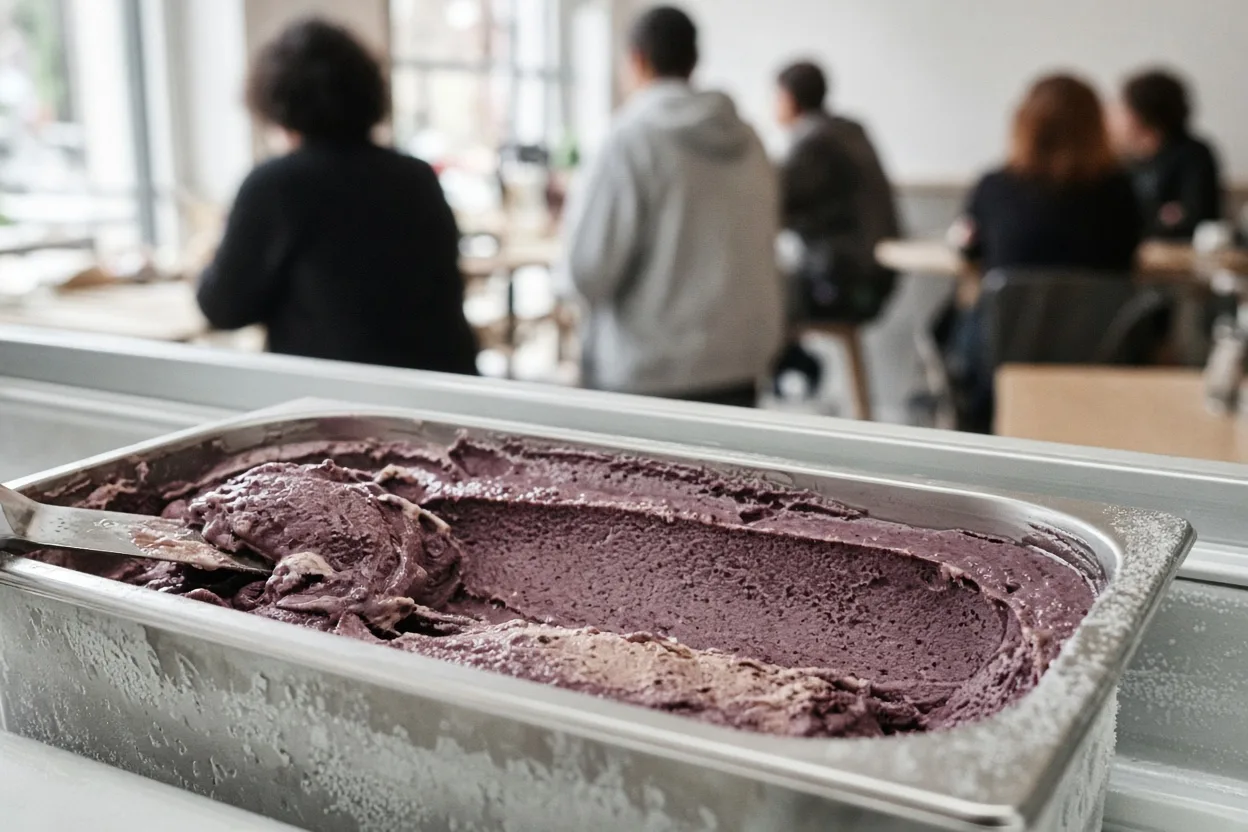
Gelato cannot be tasted properly when frozen too hard. After two hours of deep freezing, the tins are moved to the counter well, where they temper to an exact serving temperature of −12 °C. At −12 °C, the gelato is soft enough to yield under Ines Varga's spatula, melting immediately on the tongue to release its aromatic fats and sugars without numbing the palate. We monitor this temperature continuously from opening at 12:00 until closing at 21:00.
The hold shelf and daily close
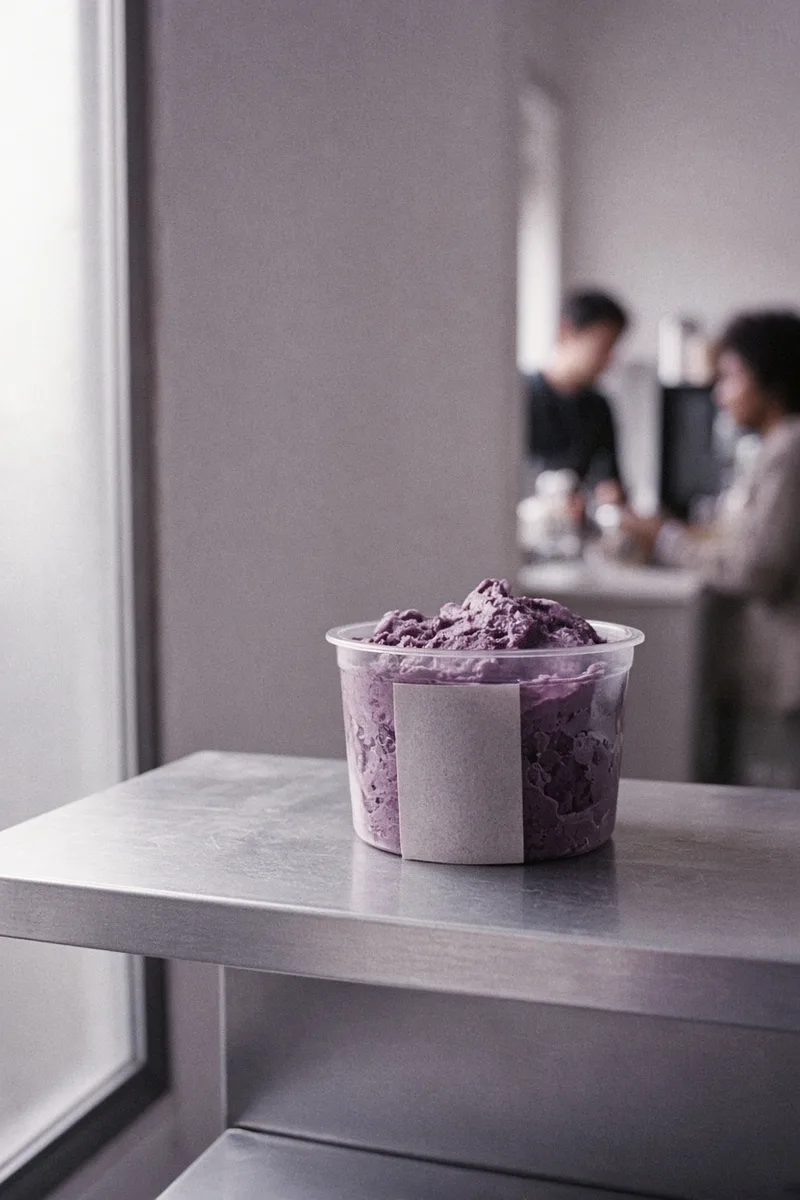
When our doors close at 21:00, no open tin carries over to the next day's display. Gelato packed into 500 ml or 1 L takeaway tubs is moved into the −18 °C hold shelf for customer collections, while any remaining open gelato in the display wells is discarded. Every morning begins fresh with new churns, ensuring that the gelato you taste at 14 Quay Lane is always from that day's production.