This range
Tested at the counter
This range
Round brushes, 2–12
Brushes
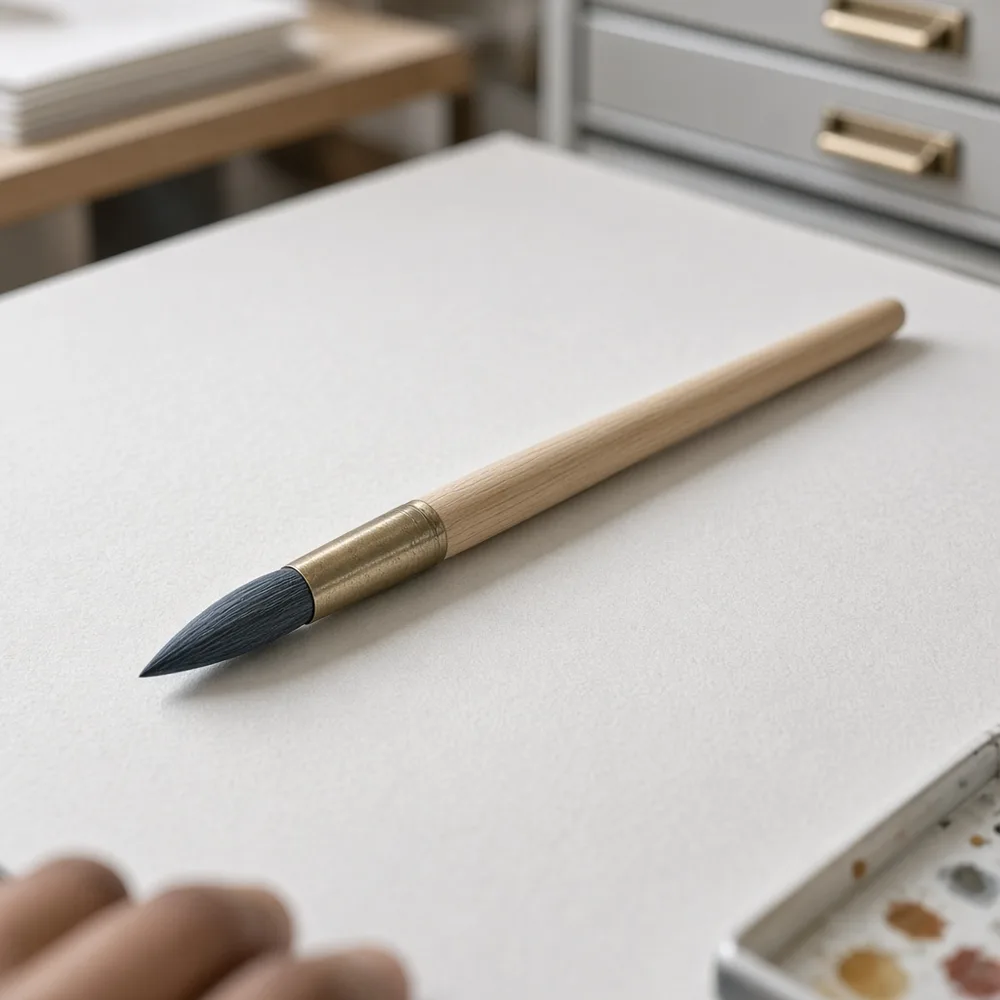
Our brush collection is built around balanced synthetic sable rounds and versatile flats designed to hold crisp points and generous wash reservoirs. We encourage every customer to wet and test our brushes before purchasing.
ROUND
SABLE
TESTED
Testing Brushes at the Counter
You cannot evaluate the spring, belly capacity, or point of a brush while its filaments remain stiffened with factory gum. At our shop counter on Calder Row, Amara Nwosu keeps clean water pots and heavy cotton test strips ready for anyone considering a brush. We invite you to dip the hair into water, feel how the tuft snaps back after a loaded sweep, and check how fine the tip remains under light pressure. Experiencing the balance in your hand ensures you leave with a tool suited to your specific hand pressure and painting speed.
Sizes from Two to Twelve and Specifications
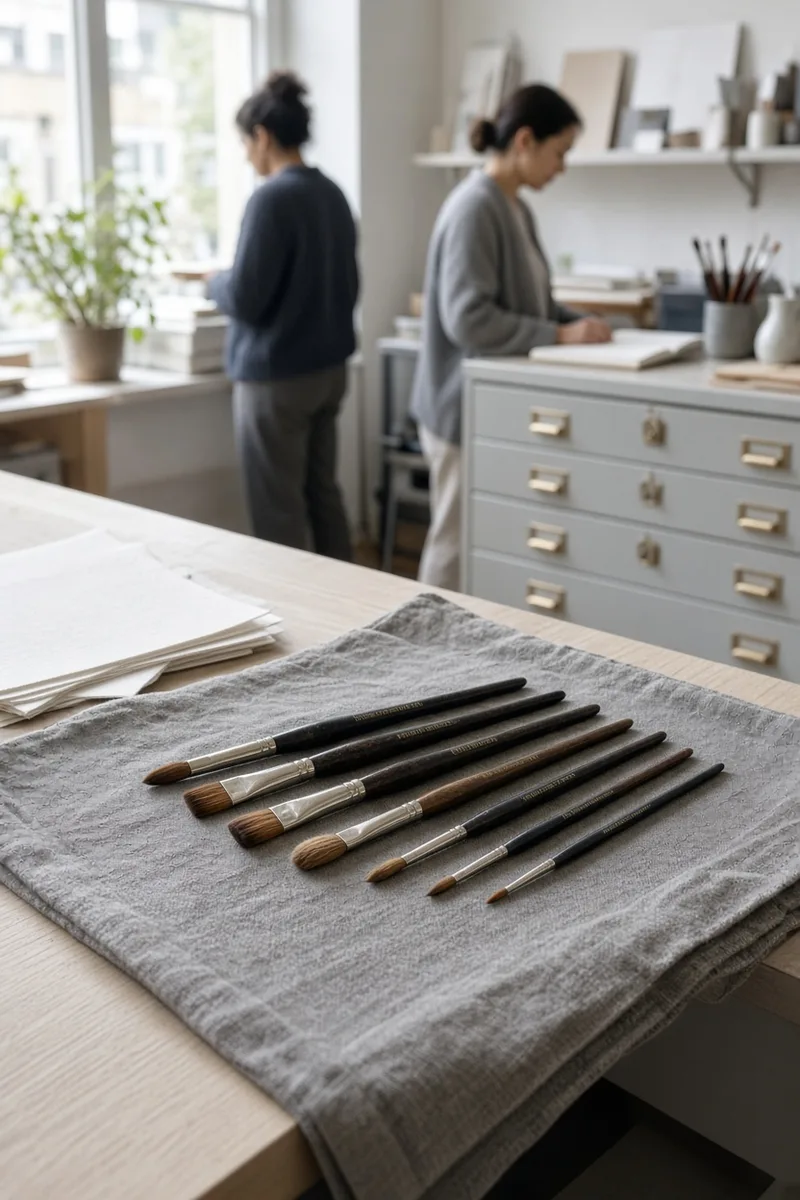
We stock synthetic sable rounds in sizes spanning two through twelve. Size 2 and size 4 provide tight control for fine contour linework and tiny botanical details. Size 6 and size 8 serve as core workhorses, holding sufficient pigment for steady rendering while retaining a needle-sharp point. Size 12 carries an expansive water belly capable of laying wide background washes. An individual short-handle size 8 round brush costs €21.00, while our protective cotton brush roll containing five rounds—sizes 2, 4, 6, 8, and 12—is €84.00 including VAT.
| Item | Specification | Price |
|---|---|---|
| Round brush | Synthetic sable, size 8, short handle | €21.00 |
| Brush roll of five rounds | Sizes 2, 4, 6, 8, 12, cotton roll | €84.00 |
Prices include VAT. Mill-order paper is quoted per sheet; we confirm within two working days.
How Should You Care for Synthetic Sable Brushes?
Proper cleaning extends the lifespan of synthetic sable filaments for years of continuous studio painting. Always rinse your brushes thoroughly in cool or lukewarm water immediately after painting, taking care never to let paint dry inside the ferrule. Reshape the damp tuft gently with your fingertips and lay the brush flat on a clean towel or suspend it bristles-down to dry. Never leave brushes resting on their hair in a water jar, as this bends the filaments permanently and loosens the wooden handle's protective lacquer.