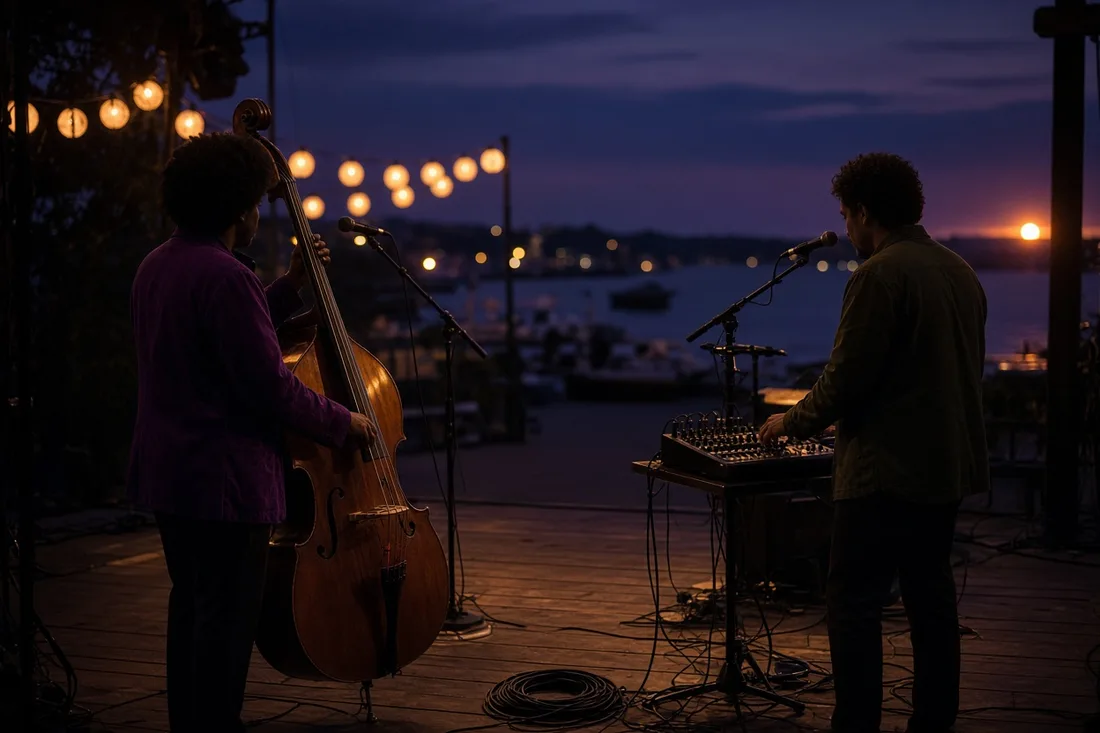
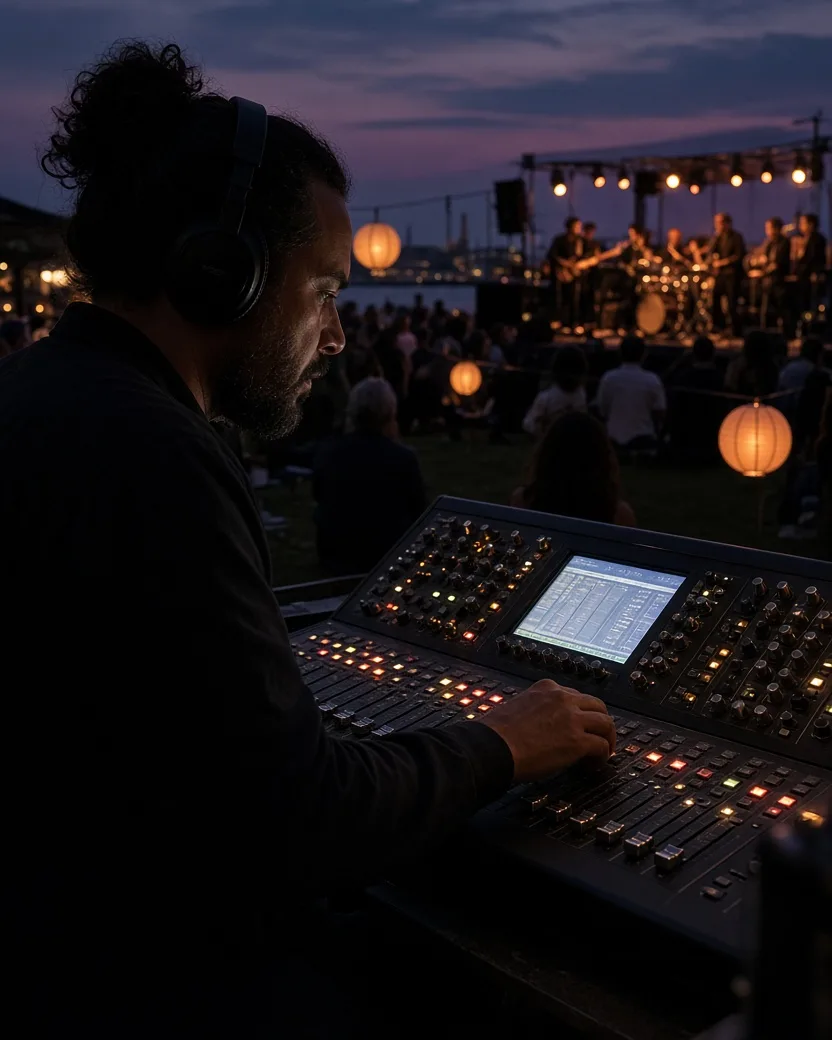
At two in the afternoon, Gate A is still locked and the grass of Harbour Lawn is deserted. The breeze coming off the basin at Saltmere Quay carries a faint smell of salt and drying timber. Up on the Lawn Stage, black flight cases stand open alongside coils of heavy microphone cables, and Daniel Osei is already seated at the mixing console. He wears worn headphones over his left ear, leaving his right ear open to the natural acoustics of the lawn. Sound check begins at fourteen hundred hours, but the real work of balancing instruments against the harbour breeze takes place during the quiet window around four o’clock.
Because Yunagi Jazz operates with only one stage, Daniel and stage manager Inès Laurent have spent twelve years refining the physical layout of the backline. There are no secondary tents bleeding bass frequencies across the lawn, and there are no giant speaker towers pushing sound into the sky. Instead, Daniel tunes the sound system specifically for 2,400 listeners sitting on blankets between the stage edge and the perimeter fence. When the upright piano is rolled into position under the stage awning, Felix Brandt steps up to test the keyboard. Daniel asks for a simple chromatic run, watching the green meters on the desk pulse against the dim ambient light of his monitor.
Every instrument requires careful adjustment to survive the coastal environment. By four in the afternoon, the sun has dropped behind the harbour warehouses, cooling the turf and subtly shifting how acoustic frequencies carry across the lawn. Tomás Reyes unlatches his tenor saxophone case, warming the brass bell with steady breaths before stepping up to the microphone. Daniel adjusts the high-pass filters on the console to prevent low-end rumble from wind hitting the vocal diaphragms. On an open lawn, unwanted resonances do not bounce off concrete walls; instead, low notes disperse quickly over the open water behind the musicians, requiring Daniel to preserve punch without driving overall volume.
A few minutes later, drummer Ravi Menon sits behind his kit to test his wire brushes against the coated snare head. The rustle of brass wire against textured plastic is quiet enough to get lost in a casual conversation, yet Daniel works the faders until every scrape and tap projects cleanly to the far row of low wooden chairs. Inès Laurent stands beside the stage stairs with her clipboard, timing the instrument swap down to the second. During the festival, every artist changeover must take place within ten minutes, meaning microphone positions and monitor mixes established during the four o’clock sound check must be logged with absolute precision.
By half past four, the Harbour Brass Collective gathers near the stage steps to blow short warming fanfares. Across the grounds, Hana Rahimi’s team completes the final check of the three drinking water taps, while Paolo Conti finishes testing the overhead wiring that will bring six hundred paper lanterns to life at twenty to nine. When gates open at four, the lawn will fill with picnic blankets, fabric wristbands, and quiet laughter. For now, however, the empty lawn belongs entirely to the ringing notes of a tuned upright piano and the measured taps of Daniel’s mixing board, anchoring the sound of the twelfth summer before the first ticket holder steps through the gate.