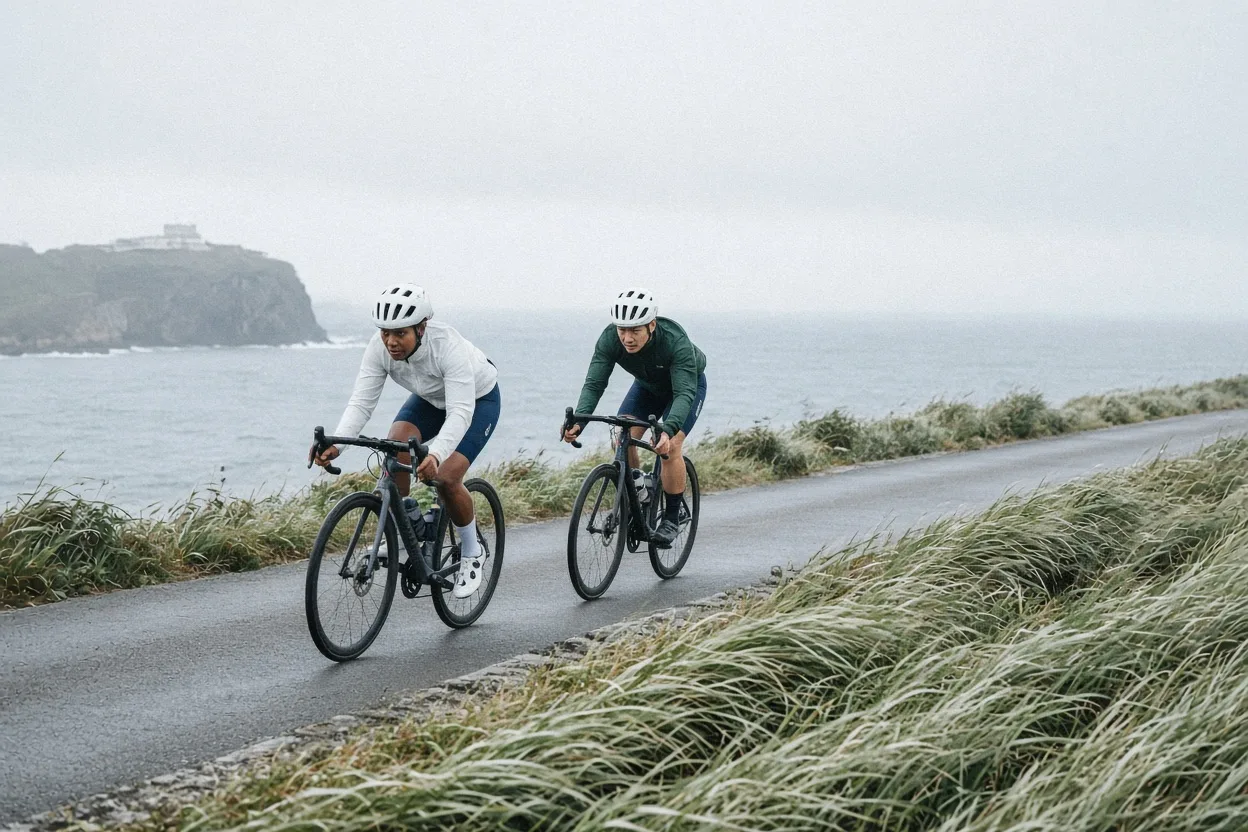
We rolled out from the harbour wall at Saltmere at nine in the morning, right after our customary tyre pressure checks and luggage loading. Eight guests clipped into their pedals behind Aiko Brandt and me, while Samuel Okafor steered the white support van out toward the coast road to carry their duffels ahead. The sky hung low and silver-grey over the water, a classic overcast morning with a cool salt breeze blowing off the bay. Our destination was the outer headland, a rugged twenty-kilometre stretch of tarmac that climbs gradually toward the whitewashed lighthouse standing guard over the reef.
The second day of any coastal tour always reveals the true temperament of the sea. As we turned onto the exposed cliff lane, the wind stiffened into a stubborn headwind, pushing against our handlebars and bending the tall sea oats flat against the verge. Riding into thirty kilometres per hour of brisk maritime air requires patience rather than raw force. Aiko took the front position to break the airflow, setting an even, steady cadence of eighteen kilometres per hour that allowed all eight riders to tuck in close and conserve their legs. Nobody hurried; we kept our neat single file intact, listening to the hum of tyres on tarmac and the rhythmic clicking of gear shifts on each rise.
By noon, we had climbed the final hairpin bend and pulled into the gravel apron beneath the lighthouse. The keeper’s cottage offered shelter from the gusts, and we leaned our tour bikes against the low stone boundary wall. Samuel had parked the van fifty metres down by the gate and brought up insulated flasks of hot coffee and fresh rolls from the bakery in Saltmere. We stood together with ceramic cups in our gloved hands, watching waves crash in white foam against the dark volcanic rocks sixty metres below. The wind was howling around the lantern gallery above, but everyone was smiling, buoyed by the shared accomplishment of reaching the high mark of the day.
Then, just as we packed our coffee cups back into the support crates, the weather performed the quiet miracle that coastal locals learn to watch for. The sharp whistle through the lighthouse railings abruptly died down to a gentle whisper. Out on the water, the dark lines of swell softened, and within ten minutes, the breeze swung clean around the compass from north-east to west. What had promised to be a gruelling two-hour battle against the elements for our return descent had suddenly transformed into a textbook tailwind.
Rolling away from the headland felt like taking flight. With forty kilometres of smooth tarmac stretching back toward the sheltered lagoons, the prevailing air currents pushed our small peloton forward with almost zero resistance. We barely needed to touch the big ring to maintain a brisk twenty-four kilometres per hour. Riders who had looked weary on the morning ascent were now grinning broadly as the shoreline unfurled beside us, grey-teal water glistening where faint sun broke through the cloud cover. The bikes ran silently and true, carrying us through fishing villages and across tidal causeways with effortless momentum.
We rolled into the harbour at three-thirty in the afternoon, right on schedule. Samuel’s van was already parked quietly beside the guesthouse, and every guest’s bag had been carried into their room forty minutes prior. Sitting on the warm harbour wall with a cold drink, listening to the halyards slapping against aluminium masts, our guests couldn’t stop talking about that sudden shift at the beacon. That is the honest magic of cycling the coast: you cannot control the weather or dictate the sea, but when you ride with patience and good company, the wind eventually turns in your favour.