The harbour bell has not yet rung when Tomas Varga unties the mooring lines at Berth 14. It is 05:30 on a Thursday morning in Port Ellery, and the water inside the stone breakwater is as flat as slate. The Wren, our small wooden day boat, hums quietly as its engine turns over in the cool morning air. Tomas coils the damp hemp lines on the wooden deck, checks the compass, and eases the bow out past the harbour beacon into open coastal water. There are no factory trawlers or deep-water dredging gear aboard; we fish strictly with hand lines and pots, working close to the rocky shelf that runs along our stretch of coastline.
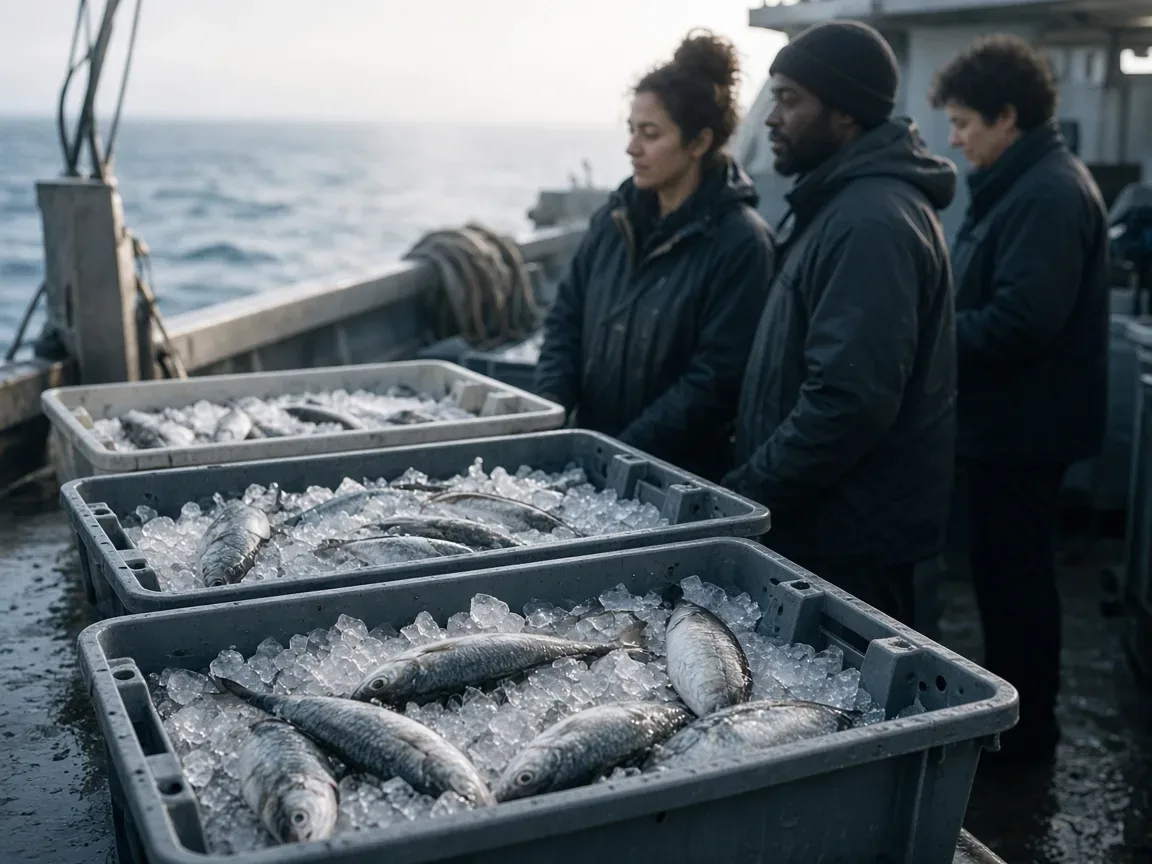
At dawn, the first grey light breaks across the sea, turning the swell from dark charcoal to pale silver. Tomas sets the drift along the outer reef, watching the depth finder and reading the tidal current through the movement of the boat. Hand-line fishing requires patience, touch, and an intimate understanding of the seabed. On this morning, the lines come up heavy with silver-skinned mackerel and firm sea bream. Further south, along the sandy banks, the pots yield tender squid and a basket of seasonal crab, while the deeper drops produce several prime hake. Everything that comes over the gunwale is handled by hand, inspected immediately, and layered carefully into wooden crates with crushed ice.
There are no holding tanks on the Wren, and we never keep catch at sea overnight. What is caught in the first hours of daylight is what our guests will eat that evening at 7 Harbour Row. Tomas works steadily through the morning tide, keeping track of the weather and the clock. As mid-morning approaches, the lines are stowed, the deck is washed down with sea water, and the Wren turns back toward the harbour entrance. Behind us, the wake dissolves into the calm grey sea, and the stone roofs of Port Ellery slowly resolve through the coastal mist.
At 10:30 sharp, the Wren glides alongside the stone quay at Berth 14. Waiting on the cobbles are chef Inès Calder and Noor Haddad, wearing their flour-dusted aprons under heavy wool coats. Tomas cuts the engine and hands the crates up from the deck, calling out the morning tally: hake, mackerel, sea bream, squid, and crab. Inès kneels beside the first crate, checking the clear eyes and firm gills of the sea bream before nodding. Without delay, the entire landing has been carried across Harbour Row and into the kitchen prep room.
By 11:00, Noor Haddad is already at the wooden prep table, breaking down the fish while the heads and bones are rinsed for the six-hour stock-pot. At 15:00, Inès will take chalk to the dark slate board in the dining room, writing out the five courses of tonight’s Boat Menu. When our guests sit down for the first seating at 18:00, the fish on their plates will carry the exact salt and cold of the morning tide. That direct unbroken line from Tomas’s boat to our charcoal hearth is why Nagisa Grill exists.