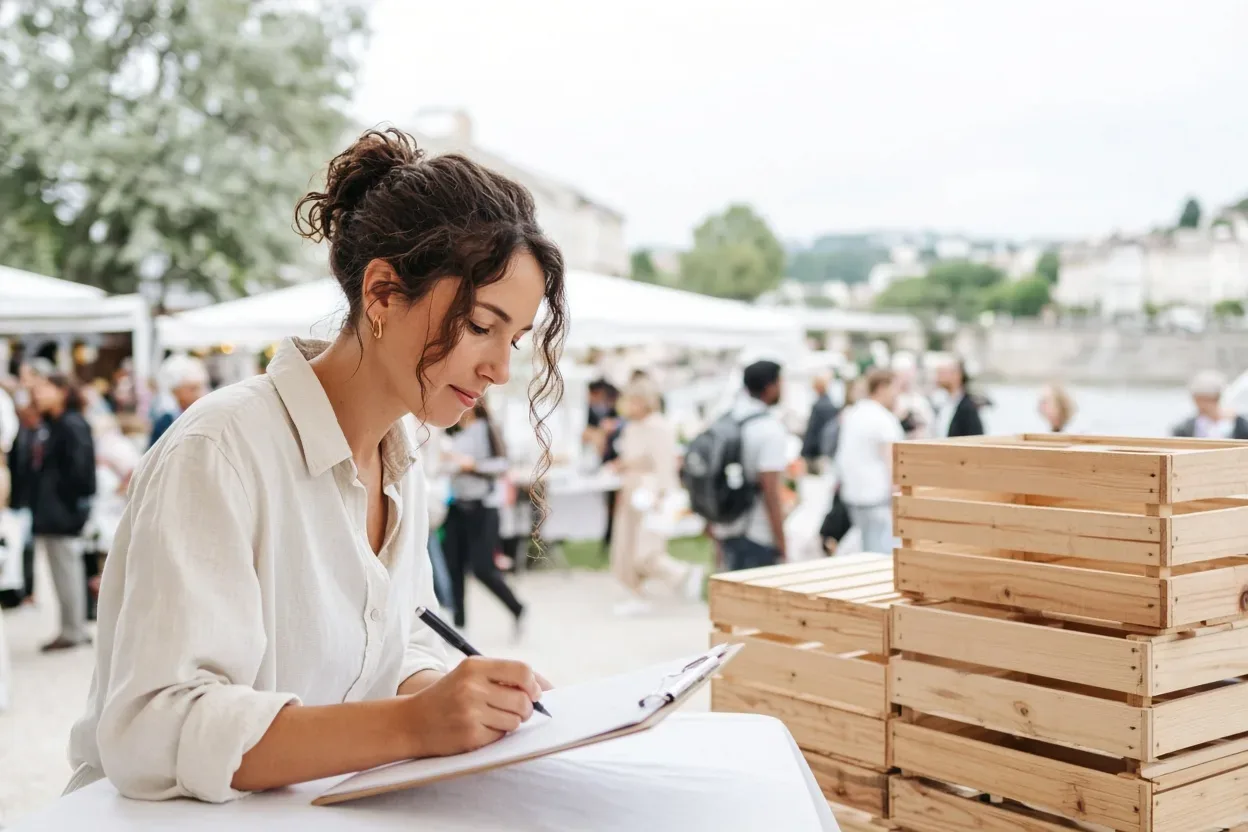
When we held the very first edition of Hozue Food Festival along the riverbank in 2016, we did not have a dedicated tasting pass. We had set up a handful of wooden tables under a canvas awning near the water, inviting several independent winemakers from across the valley to pour their bottles. Back then, visitors wandered between stalls purchasing single small pours in whatever tumblers were on hand. It worked, but by Sunday afternoon, we noticed two things that stayed with us: the tables were cluttered with disposable cups, and visitors were hesitant to explore unfamiliar bottles because each separate counter transaction interrupted the conversation with the winemaker.
During our second autumn in Hozue Riverside Park, I walked over to Achterberg Hill’s stall early on Saturday morning. Tomás was setting out his white wines along the timber counter, polishing a neat row of stemmed tasting glasses he had brought in wooden crates. We stood by the Weir Lane gate watching the mist lift from the river, discussing how to give guests the freedom to sample without turning the tent into a noisy tavern. Tomás suggested a simple proposition: give each visitor a single, well-made glass to carry through the weekend, paired with a modest book of tasting tokens that encouraged thoughtful sips rather than full glasses.
That quiet conversation beside the river gave birth to what is now our eight-tasting pass. We decided on eight pours because it offered the right measure of discovery across two days. With eighteen winemakers gathered inside the Wine Tent, eight tastings allow a guest to compare four crisp whites before lunch, take a long walk along the water, and return later in the afternoon to sample four deeper reds. It turned wine tasting from a hurried purchase into an unhurried dialogue. Visitors could ask Tomás about soil and rainfall, learn how a particular slope caught the afternoon sun, and taste the vintage directly from the hands that tended the vines.
The glass itself was equally important to our philosophy. We wanted something durable, elegant, and permanent—a physical keepsake rather than another piece of festival waste. Today, collecting your tasting glass at the Wine Tent counter has become an essential festival ritual. Guests carry it from stall to stall, rinse it at the communal water points, and pack it safely into their bags on Sunday evening to bring home to their own dinner tables. Even now, returning visitors often tell me they still use their Hozue glasses from years ago for Sunday suppers with family.
As we prepare for our tenth edition in September 2027, the eight-tasting pass remains unchanged in spirit and purpose. It remains an add-on to our regular admission, giving wine enthusiasts eight curated pours and a glass to keep. For eighteen regional winemakers, it represents a direct bond with people who appreciate their craft. Standing in the Wine Tent as glasses chime softly against the sound of the river, I am always reminded that our best traditions began not in boardrooms, but in quiet morning conversations between neighbours along the water.