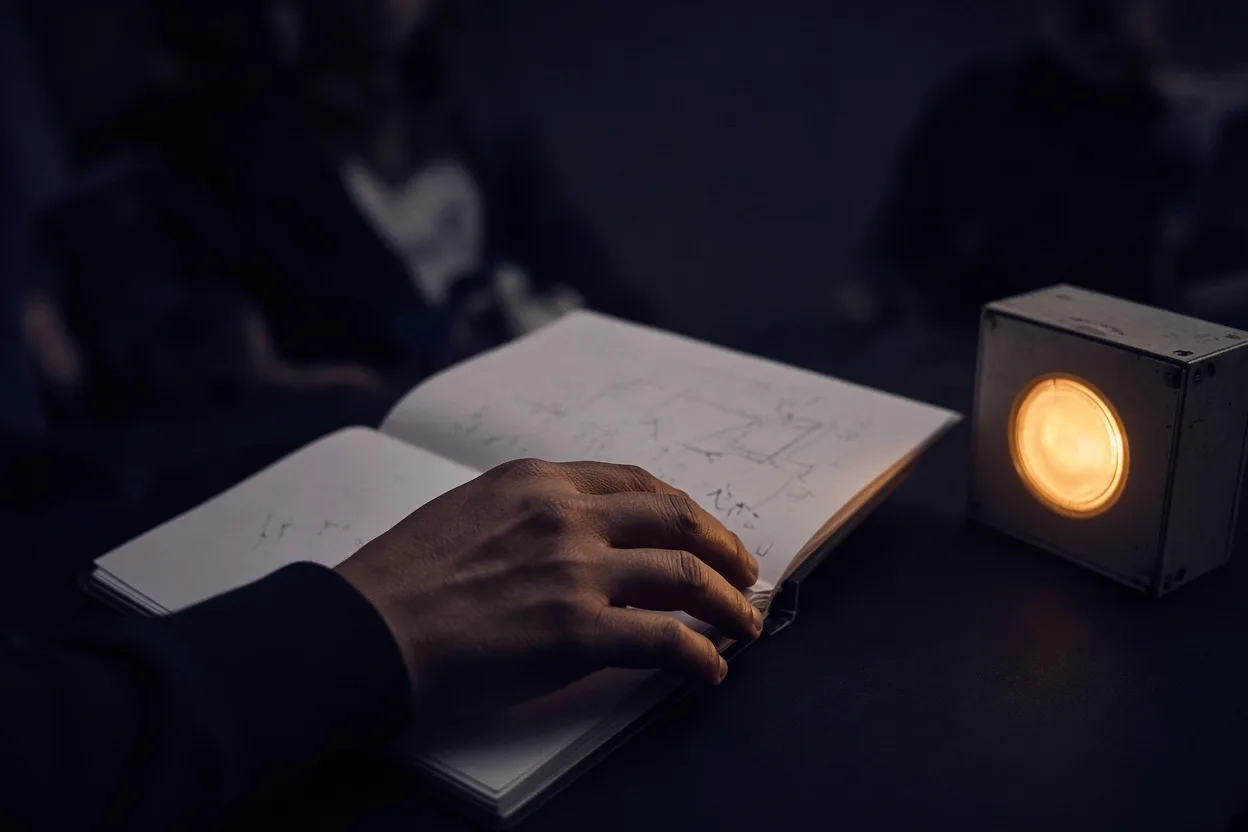
At 19:25 in the prompt corner of Butai Playhouse, the wing is almost entirely dark. The only illumination comes from a hooded goose-neck lamp mounted above the prompt desk, casting a narrow cone of amber tungsten across the open book. Beside the binder sits an intercom headset and a modest aluminium box fitted with a single toggle switch and a plum indicator light. Stage manager Imani Okafor rests two fingers against the desk edge, headset positioned over her left ear, listening to the quiet shuffle of two hundred patrons settling into their seats on the other side of the fire curtain.
Five minutes earlier, Imani called the half-hour call to the dressing rooms along the corridor, followed by the beginners call. Now the actors for the opening scene of The Lamp Room are standing quietly in the wings, adjusting wool coats and waiting for their eyes to adjust to the gloom. On stage, Lena Vogt and the lighting crew finished their technical checks at 16:00, verifying every lantern, dimmer circuit, and practical fixture across the 9.5-meter proscenium. Everything that will happen over the next two hours has been timed, rehearsed, and recorded in pencil notations that fill the margins of Imani’s prompt book.
In theatre terminology, a cue is never simply an instruction; it is a contract of trust between the stage management team and the technicians operating in the dark. Several minutes before an action occurs, the stage manager speaks the warning over the headset: “Electrics cue twelve and sound cue five on standby.” Lena Vogt at the lighting console and the sound operator acknowledge with a clipped “Standing by.” From that point forward, nobody speaks on the intercom unless safety requires an immediate halt. Hands hover over fader boards, fingers rest on go-buttons, and the silence backstage deepens.
The critical word is always “Go.” Until that single syllable is uttered, nothing moves. A stage manager might say “Electrics twelve,” pause while watching an actor cross the threshold of a doorway, wait for the actor’s hand to touch an oil lantern on the table, and only then say “Go.” Uttering the word half a second early leaves an actor stranded in shadow; speaking it half a second late breaks the illusion that light belongs to the world of the play rather than to an electrical panel in the ceiling. At Butai Playhouse, where our steeply raked auditorium places the front row just paces from the apron, timing must be immaculate.
At 19:29, front of house manager Jonas Berg confirms by headset that the doors are barred and all patrons are in their seats. Imani checks the stopwatch on her desk, raises her right index finger, and depresses the toggle switch on the prompt box. Out on the proscenium arch, the plum cue light glows softly, warning the house crew that the play is about to begin. She leans toward the microphone and speaks into the headset: “House lights to half. Standby on stage.” Two hundred people fall silent in the dark. Then comes the breath, the nod, and the quiet command: “House lights out. Sound cue one, electrics cue one, go.”