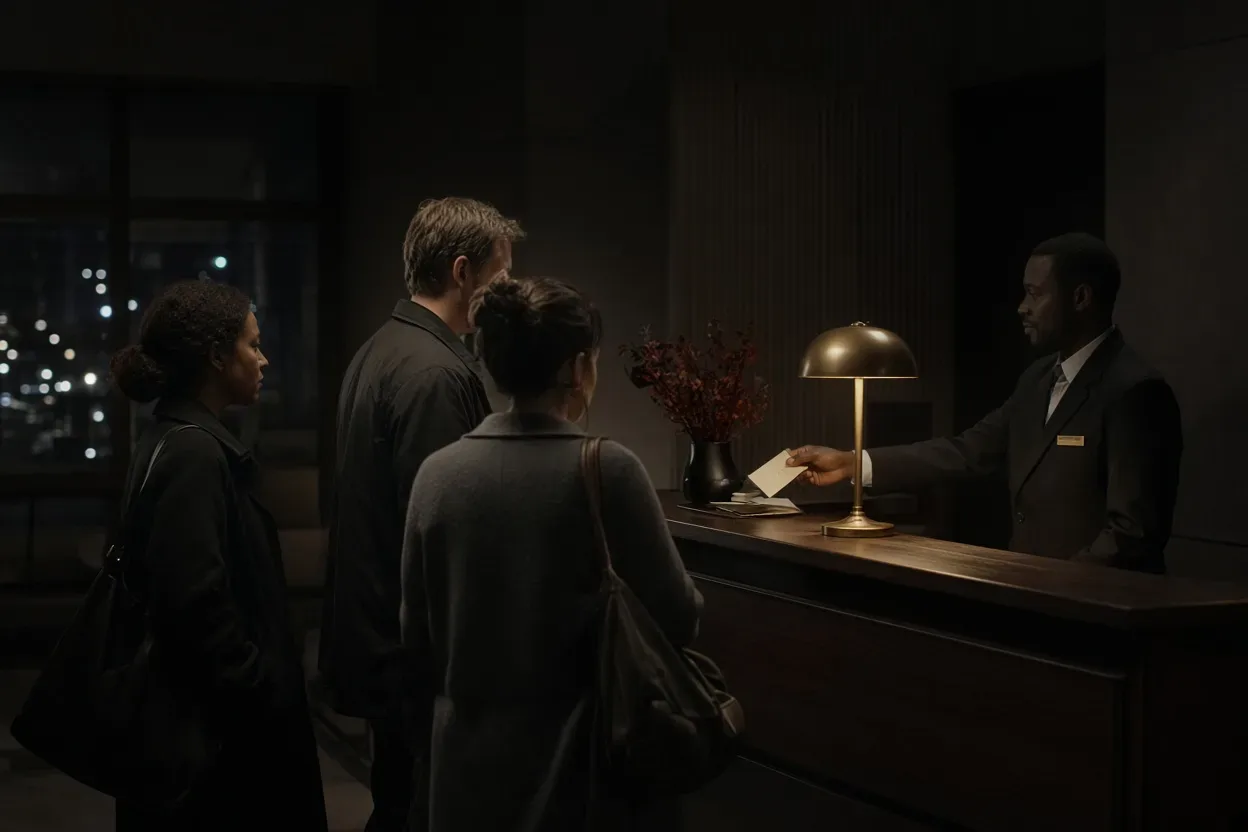
At 01:50, the terminal flight operations board at Aldmere International Airport flashed an unexpected redirection. An inbound transatlantic service, unable to land at its scheduled coastal destination due to heavy fog, was diverted inland to our runway. Inside the lobby of Asagiri Hotel at 14 Perimeter Road, the night had settled into its familiar quiet rhythm. Behind the dark wooden desk, lit only by a single brass reading lamp, night manager Tomasz Wierzbicki noted the sudden apron traffic in the station ledger while night porter Amara Okonkwo checked room allocations across our three quiet floors.
An unexpected flight diversion presents an immediate test for any airport hotel. Within minutes of the aircraft taxiing to the gate, the airport handling agent called our twenty-four-hour desk. Passengers disembarking into an unfamiliar terminal needed warm beds, quiet rooms, and transport from the airfield before dawn. Shuttle coordinator and driver Lucas Ferreira brought our hotel van around to the front kerb, checked the heating, and departed down the perimeter road toward Arrivals Door 4. In the kitchen, cook Samir Haddad turned on the burners in the night pantry, preparing hot chicken soup, toasted sandwiches, and pots of fresh tea for travellers whose long flights had ended without dinner.
Because Asagiri Hotel has operated beside Aldmere International Airport since 2009, our night routines are built precisely for these unpredictable moments. We keep sixty-four rooms ready between the last scheduled arrival and the first morning departure. Rather than subjecting exhausted travellers to slow administrative questionnaires or self-service screens, Tomasz and Amara prepared key card envelopes in advance under the lamp. As Lucas arrived from the terminal with the first group of passengers, key cards were handed across the counter with quiet efficiency. Within twenty minutes of walking through our entrance canopy, guests were unlocking their doors, turning down clean cotton linens, and drawing the heavy blackout curtains against the apron lights.
Rest in an airport environment requires deliberate architecture. Every room at Asagiri Hotel is built with triple-glazed windows and insulated wall assemblies designed to muffle aircraft thrust and taxiway noise. The layout intentionally places no guest rooms above the lift lobby or front desk, ensuring that even when a sudden influx of guests arrives in the small hours, those sleeping on the upper floors remain entirely undisturbed. For the diverted passengers, the contrast between the stress of a redirected journey and the deep quiet of a dark room was immediate and complete.
By 04:30, the lobby had shifted into its early morning cadence. In the dining nook, Samir set out the hot breakfast buffet, offering warm porridge, fresh baked breads, eggs, and dark-roast coffee for those who had to catch early connecting flights at dawn. Lucas resumed the scheduled twenty-minute shuttle runs to Terminal 1 and Terminal 2, assisting passengers with their luggage at the kerb. When the morning light finally touched the airfield fence, fifty travellers had rested, eaten, and continued their journeys refreshed, made possible by a night team that never sleeps.